Industry News
Curation by industry experts
Hot Articles
- Thermodynamic Tech TrendsHow to Size Heat Exchange Systems for Refrigeration Plants at Peak Load
- Parallel Compressor RacksHow to Size Reciprocating Compressors for Cold Storage Load and Temperature Range
- Flake Ice MachinesHow to Size a Commercial Ice Dispenser for Peak Demand in Foodservice Operations
Popular Tags
F-Gas Regulations Are Changing Equipment Choices Faster Than Expected
F-Gas regulations are reshaping refrigeration investment decisions faster than many businesses anticipated. For enterprise decision-makers, the shift is no longer only about compliance—it now directly affects equipment selection, operating costs, energy efficiency, and long-term competitiveness. As refrigerant rules tighten across global markets, understanding which systems can meet both performance and regulatory demands has become essential for making smarter, future-ready cold-chain and cooling infrastructure choices.
Why are F-Gas regulations changing procurement decisions so quickly?
For many companies, the old approach was simple: buy proven refrigeration equipment, maintain it well, and expect a long operating cycle. F-Gas regulations have disrupted that logic. The refrigerant inside the system now influences legal market access, future servicing costs, retrofit feasibility, and resale value.
This is especially important in cold-chain, industrial cooling, food retail, pharmaceuticals, and temperature-sensitive logistics. A system that looks cost-effective today may become difficult to service tomorrow if refrigerant quotas tighten, leakage controls become stricter, or high-GWP fluids face additional restrictions.
Enterprise decision-makers are therefore moving from equipment-first thinking to lifecycle-first thinking. Instead of asking only about cooling capacity and upfront price, they are now asking whether a system can remain compliant, efficient, and serviceable across multiple regulatory phases.
- Will the refrigerant remain commercially viable in the target export or operating market?
- Will future maintenance become more expensive because of refrigerant scarcity or reporting obligations?
- Can the equipment still meet energy targets when ambient temperatures, load profiles, and defrost cycles vary in real operation?
- Does the selected platform support long-term retrofit paths, control upgrades, and safety compliance?
What do F-Gas regulations mean for different refrigeration system types?
The practical impact of F-Gas regulations depends on the application. Industrial chillers, cold storage compressors, commercial display refrigeration, ice-making systems, and ultra-low temperature freezers do not face the same operating pressures. CCRS tracks these differences because regulatory timing and technical suitability rarely move in perfect sync.
The table below summarizes how enterprise buyers should interpret refrigerant strategy across common cooling assets. It is not a legal checklist, but it helps frame equipment selection under tightening F-Gas regulations.
The main lesson is that F-Gas regulations do not eliminate one technology and validate another overnight. Instead, they narrow the margin for poor choices. A system can still be technically functional but commercially weak if it relies on a refrigerant path with shrinking long-term support.
Why natural refrigerants are gaining attention
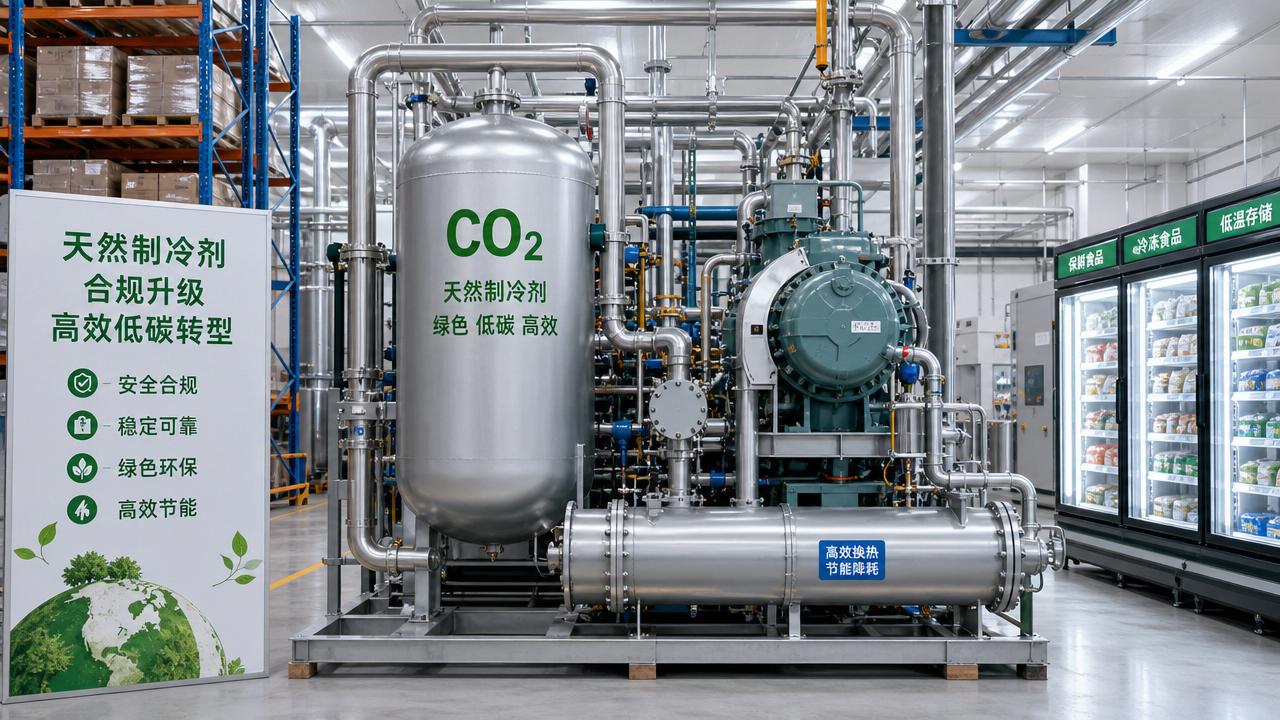
Natural refrigerants such as CO2 are increasingly discussed because they align with long-term decarbonization and lower-GWP strategies. However, suitability depends on ambient conditions, installation design, pressure management, technician capability, and load profile. Decision-makers should not treat them as universal replacements without scenario analysis.
CCRS follows this transition closely, especially in cold storage hubs and export-oriented manufacturing, where refrigerant choice can affect both bid competitiveness and ongoing compliance risk.
Which business scenarios are most exposed to F-Gas regulations?
Some sectors feel the pressure earlier than others. The trigger is usually not regulation in isolation, but the combination of refrigerant restrictions, energy targets, service continuity, and customer requirements. Enterprise decision-makers should map exposure by use case rather than by product category alone.
High-exposure scenarios
- Cross-border cold-chain projects that must satisfy both local installation rules and destination market refrigerant expectations.
- Food retail networks operating many cabinets and condensing units, where even small efficiency gaps multiply across stores.
- Industrial plants with large chillers and high annual operating hours, where refrigerant strategy and power consumption directly affect total cost of ownership.
- Pharmaceutical and biomedical storage sites, where downtime risk is far more costly than a higher initial equipment budget.
- Cold storage hubs planning 10 to 15 year asset life, where future retrofit limits can become a major financial burden.
In these scenarios, F-Gas regulations become a board-level issue because they influence capex planning, operating expenditure, ESG reporting, and supply chain resilience all at once.
How should buyers compare equipment options under F-Gas regulations?
A common mistake is to compare systems only by nominal cooling capacity and purchase price. That method misses the operational effect of refrigerant choice, service access, control logic, ambient performance, and future compliance cost. A better comparison model is shown below.
This comparison method helps procurement teams avoid false savings. In many refrigeration projects, the wrong refrigerant platform produces hidden cost through higher maintenance complexity, lower bid acceptance, or earlier replacement pressure.
A practical procurement checklist
- Define the legal market and expected asset life before requesting quotations.
- Compare refrigerant paths, not just equipment models.
- Ask for part-load performance data, especially for variable-demand operations.
- Review service infrastructure, technician familiarity, and spare parts continuity.
- Quantify retrofit risk if regulations tighten faster than expected.
What costs do companies overlook when reacting to F-Gas regulations?
The visible cost is the equipment invoice. The overlooked cost is usually operational. When companies delay adaptation to F-Gas regulations, they may pay more later through refrigerant supply volatility, redesign work, emergency replacement, or reduced energy performance caused by compromise retrofits.
Hidden cost areas
- Refrigerant availability risk, especially for systems dependent on fluids facing tighter quota pressure.
- Higher leak management and reporting burden for large-charge equipment.
- Efficiency penalties when a retrofit refrigerant does not match original system design.
- Downtime cost during unplanned conversion, testing, and recommissioning.
- Lost commercial opportunities if equipment no longer fits target-market expectations.
This is why CCRS emphasizes full-lifecycle thermodynamic thinking. Refrigeration decisions should connect refrigerant chemistry, compressor architecture, heat exchanger behavior, digital controls, and field operating conditions. A lower-GWP label alone does not guarantee a better business outcome.
How can CCRS support smarter equipment selection?
CCRS is positioned as an intelligence portal rather than a generic content source. That matters because enterprise buyers do not need more broad statements about sustainability. They need decision support grounded in application reality, thermodynamic performance, and regulatory direction.
Where CCRS adds value
- Tracking F-Gas regulations and refrigerant bans across export markets so buyers can reduce compliance surprises.
- Analyzing industrial chillers, cold storage compressors, commercial refrigeration cabinets, ice-making systems, and ultra-low temperature platforms by scenario.
- Interpreting technical factors such as cascade condenser heat transfer, AI defrost logic, part-load efficiency, and refrigerant substitution impact.
- Helping manufacturers and project owners align ultra-high energy efficiency goals with environmentally responsible refrigerant strategies.
For decision-makers balancing cost, risk, and delivery schedules, this kind of focused intelligence shortens the gap between technical complexity and commercial action.
Common misconceptions about F-Gas regulations
“Compliance only matters at the time of purchase”
Not true. F-Gas regulations influence the full operating life of refrigeration assets. Maintenance, refrigerant refill access, leak obligations, and retrofit feasibility all matter after commissioning.
“Any low-GWP alternative will perform the same”
Performance depends on compressor matching, control logic, heat exchanger design, ambient conditions, and safety requirements. A refrigerant change without system-level evaluation can reduce efficiency or reliability.
“Natural refrigerants are always the cheapest long-term choice”
They can be strategically strong, but not automatically cheapest in every case. Installation complexity, technician readiness, operating climate, and system scale can change the economics significantly.
FAQ: what do enterprise buyers ask most about F-Gas regulations?
How do I know if a refrigeration system is future-ready?
Check four things together: refrigerant roadmap, serviceability, efficiency under real load conditions, and compatibility with the compliance demands of your target market. If one of those is weak, the system may not be future-ready even if the initial quotation is attractive.
Are F-Gas regulations relevant outside Europe?
Yes. Even where the exact legal framework differs, global buyers, multinational food chains, pharmaceutical operators, and export projects increasingly expect lower-GWP and better-documented refrigeration solutions. Regulatory influence spreads through trade and procurement standards.
Should we retrofit existing equipment or replace it?
That depends on system age, refrigerant type, compressor condition, energy use, and downtime tolerance. Retrofitting may be reasonable for selected assets, but if the equipment is already inefficient or difficult to service, replacement often offers a more stable long-term result.
What matters most during supplier evaluation?
Ask for application-specific performance data, not only catalogue values. You should also request clarity on refrigerant selection, control strategy, certification support, maintenance access, and delivery implications. F-Gas regulations make vague supplier answers more expensive than before.
Why acting early creates a competitive advantage
Companies that respond early to F-Gas regulations usually gain more than compliance. They often achieve better energy planning, stronger export readiness, lower retrofit disruption, and improved procurement confidence. In sectors where refrigeration reliability protects inventory, product quality, and biomedical safety, delay is rarely neutral.
The strongest strategy is to combine regulatory awareness with technical judgment. That means evaluating refrigerants, controls, compressor technology, heat exchange efficiency, and scenario-specific economics as one decision set rather than separate tasks.
Why choose us for F-Gas regulation insight and equipment decision support?
CCRS helps enterprise decision-makers move from uncertainty to actionable planning across industrial cooling, cold storage, commercial refrigeration, ice systems, and ultra-low temperature applications. Our value lies in connecting thermodynamic analysis, eco-refrigerant direction, and market compliance intelligence in a way procurement teams can use.
You can consult us on practical issues such as refrigerant pathway review, product selection logic, delivery-cycle considerations, retrofit versus replacement judgment, export-market compliance questions, control optimization priorities, and quotation comparison criteria. If your team is evaluating a new cold-chain project or reassessing existing refrigeration assets under F-Gas regulations, CCRS can help structure the decision before cost and compliance risks become harder to control.
Recommended News
 Eco-Refrigerant & ComplianceF-Gas Regulations Are Changing Equipment Choices Faster Than ExpectedAnalyst :Dr. Henrik Weber
 Eco-Refrigerant & ComplianceEco-Friendly Refrigeration: What Looks Green but Performs Poorly?Analyst :Dr. Henrik Weber
 Eco-Refrigerant & ComplianceNatural Refrigerants: Are Compliance Benefits Worth the Transition Cost?Analyst :Dr. Henrik Weber
 Eco-Refrigerant & ComplianceWhat drives low carbon refrigeration adoption in 2026?Analyst :Dr. Henrik Weber
 Eco-Refrigerant & ComplianceEco-friendly cooling is changing compliance planning fastAnalyst :Dr. Henrik Weber
 Eco-Refrigerant & ComplianceLow carbon cooling trends that could reshape investmentsAnalyst :Dr. Henrik Weber
 Eco-Refrigerant & ComplianceHow F-Gas regulations are changing refrigerant decisionsAnalyst :Dr. Henrik Weber
 Eco-Refrigerant & ComplianceIs eco-friendly refrigeration worth the higher upfront costAnalyst :Dr. Henrik Weber
 Eco-Refrigerant & ComplianceWhy low carbon cooling is becoming a compliance priorityAnalyst :Dr. Henrik Weber
 Eco-Refrigerant & ComplianceLow carbon refrigeration options that cut long-term costsAnalyst :Dr. Henrik Weber
 Eco-Refrigerant & ComplianceWhat buyers miss when choosing eco-friendly refrigerationAnalyst :Dr. Henrik Weber
 Eco-Refrigerant & ComplianceWhy low carbon refrigeration is becoming a board issueAnalyst :Dr. Henrik Weber
 Eco-Refrigerant & ComplianceWhat F-Gas regulations mean for equipment choices in 2026Analyst :Dr. Henrik Weber
![]() Eco-Refrigerant & ComplianceIndonesia Launches Green Refrigeration Channel for R290 Cold CabinetsAnalyst :Dr. Henrik Weber
Eco-Refrigerant & ComplianceIndonesia Launches Green Refrigeration Channel for R290 Cold CabinetsAnalyst :Dr. Henrik Weber Eco-Refrigerant & ComplianceWhy low carbon cooling is becoming a safer long betAnalyst :Dr. Henrik Weber
 Eco-Refrigerant & ComplianceWhat makes eco-friendly cooling cheaper over time?Analyst :Dr. Henrik Weber
 Eco-Refrigerant & ComplianceF-Gas regulations are changing how cooling gets approvedAnalyst :Dr. Henrik Weber
 Eco-Refrigerant & ComplianceHow eco-friendly refrigeration cuts compliance riskAnalyst :Dr. Henrik Weber
 Eco-Refrigerant & ComplianceHow low carbon cooling cuts compliance risk in 2026Analyst :Dr. Henrik Weber
 Eco-Refrigerant & ComplianceLow Carbon Refrigeration: Compare Refrigerants, Energy Use, and ComplianceAnalyst :Dr. Henrik Weber
 Eco-Refrigerant & ComplianceEco-Friendly Cooling Options: Refrigerants, Efficiency, and Compliance ChecksAnalyst :Dr. Henrik Weber
![]() Eco-Refrigerant & ComplianceWhat Are Natural Refrigerants? Types, GWP Limits, and Where They Fit BestAnalyst :Dr. Henrik Weber
Eco-Refrigerant & ComplianceWhat Are Natural Refrigerants? Types, GWP Limits, and Where They Fit BestAnalyst :Dr. Henrik Weber Eco-Refrigerant & ComplianceEco-Friendly Cooling vs Conventional Systems: What Buyers Should Compare FirstAnalyst :Dr. Henrik Weber
 Eco-Refrigerant & ComplianceEco-Friendly Refrigeration vs Conventional Systems: Refrigerants, Energy Use, and ComplianceAnalyst :Dr. Henrik Weber
 Eco-Refrigerant & ComplianceLow Carbon Refrigeration: Key Standards, Refrigerant Options, and ROI FactorsAnalyst :Dr. Henrik Weber
 Eco-Refrigerant & ComplianceTemperature Control Standards for Food Storage: Critical Limits, Logging, and Audit ChecksAnalyst :Dr. Henrik Weber
 Eco-Refrigerant & ComplianceLow Carbon Cooling Options Explained: Refrigerants, Compliance, and System Trade-OffsAnalyst :Dr. Henrik Weber
 Eco-Refrigerant & ComplianceDigital Refrigeration vs Conventional Controls: What Improves Monitoring and Compliance?Analyst :Dr. Henrik Weber
 Eco-Refrigerant & ComplianceLow Carbon Cooling Options for Commercial Refrigeration: CO2, Ammonia, and Hybrid SystemsAnalyst :Dr. Henrik Weber
 Eco-Refrigerant & ComplianceLow Carbon Cooling Options Compared: CO2, Ammonia, and HFO Systems for ComplianceAnalyst :Dr. Henrik Weber
 Eco-Refrigerant & ComplianceIndustrial Refrigeration Systems Buying Guide: Lifecycle Cost, Efficiency, and ComplianceAnalyst :Dr. Henrik Weber
 Eco-Refrigerant & ComplianceEco-Friendly Cooling Options: Refrigerants, Energy Use, and Compliance Factors ComparedAnalyst :Dr. Henrik Weber
 Eco-Refrigerant & ComplianceNatural Refrigerants vs HFCs: How to Compare Compliance, Safety, and System DesignAnalyst :Dr. Henrik Weber
 Eco-Refrigerant & ComplianceHow to Read Specification-Oriented Product Guides for Refrigeration EquipmentAnalyst :Dr. Henrik Weber
 Eco-Refrigerant & ComplianceLow Carbon Refrigeration Options for Supermarkets: CAPEX, Energy Use, and Compliance ComparedAnalyst :Dr. Henrik Weber
 Eco-Refrigerant & ComplianceRACC 2026 to Host PFAS Compliance Briefing in HangzhouAnalyst :Dr. Henrik Weber
 Eco-Refrigerant & ComplianceEPA Rule Challenge Raises HFC Supply Chain ConcernsAnalyst :Dr. Henrik Weber
 Eco-Refrigerant & ComplianceLow Carbon Refrigeration Systems vs Conventional Setups: Which Delivers Lower Lifecycle Cost?Analyst :Dr. Henrik Weber
 Eco-Refrigerant & ComplianceLow GWP Refrigeration Explained: Refrigerants, Regulations, and System Trade-OffsAnalyst :Dr. Henrik Weber
 Eco-Refrigerant & ComplianceLow Carbon Refrigeration Systems Retrofit: When to Upgrade and Which Changes Matter MostAnalyst :Dr. Henrik Weber