Industry News
Curation by industry experts
Hot Articles
Popular Tags
CO2 Refrigeration: Where It Pays Off and Where It Still Struggles
CO2 refrigeration is moving from niche adoption to mainstream evaluation across food retail, logistics, industrial cooling, and selected healthcare cold-chain settings.
The shift is driven by tighter refrigerant regulation, net-zero targets, and rising pressure to reduce lifecycle emissions without sacrificing temperature stability.
Still, the commercial case is not universal. CO2 refrigeration can outperform legacy systems in the right conditions, yet struggle in others.
For global cold-chain planning, the practical question is simple: where does CO2 refrigeration pay off, and where does it still face real limits?
What CO2 Refrigeration Means in Commercial and Industrial Use
CO2 refrigeration uses carbon dioxide, known as R744, as the refrigerant in cooling systems for medium-temperature and low-temperature applications.
Its strongest environmental advantage is a very low global warming potential compared with many HFC and HFO alternatives.
That matters because refrigeration decisions now involve compliance risk, future retrofit exposure, and long-term operating efficiency, not only first cost.
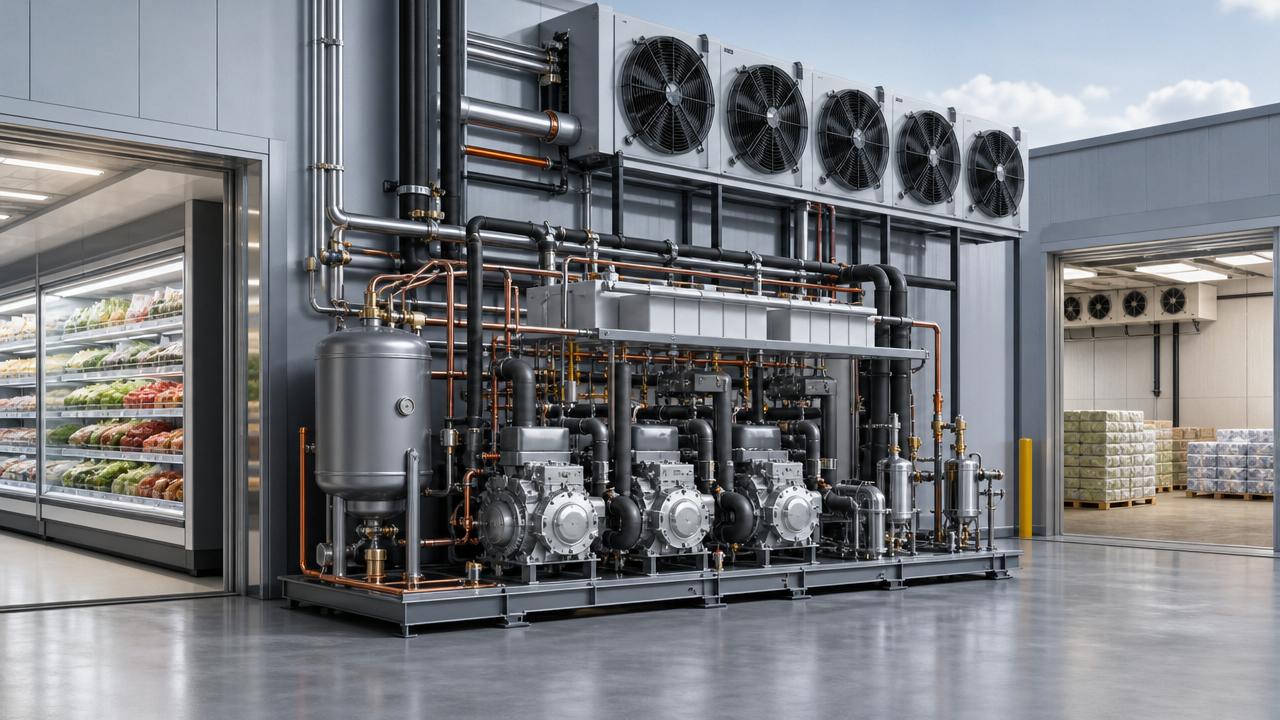
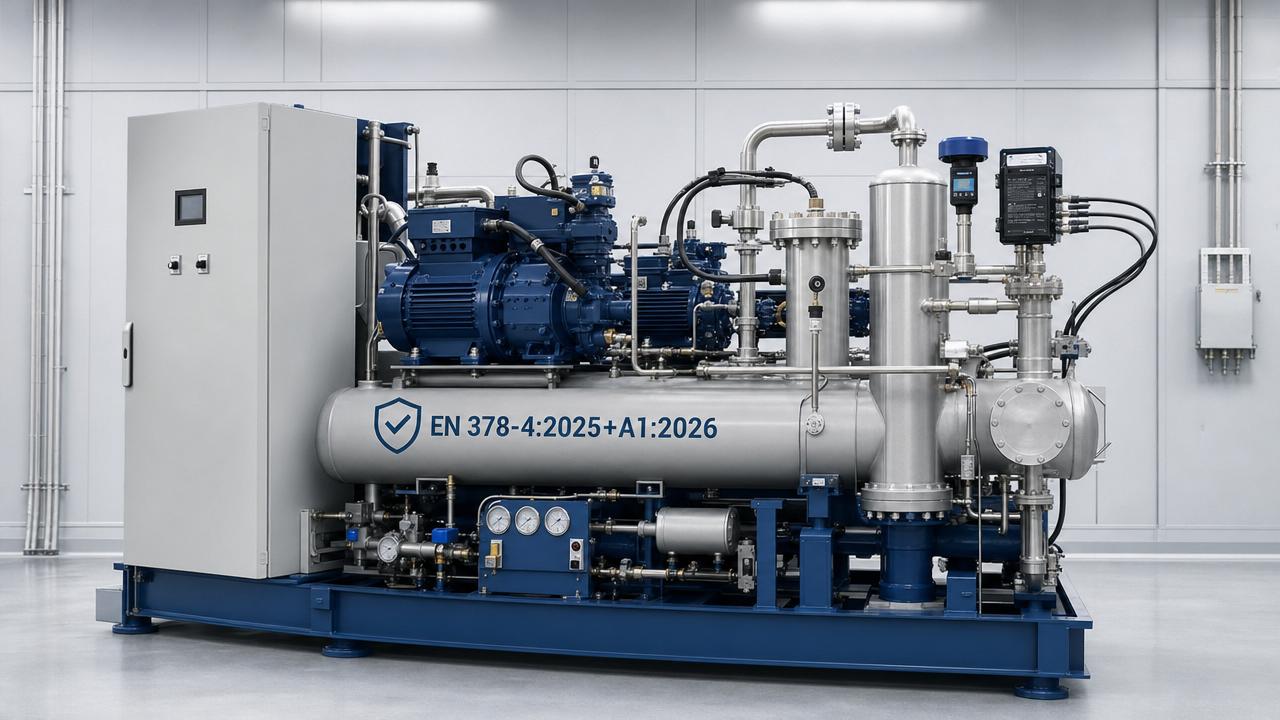
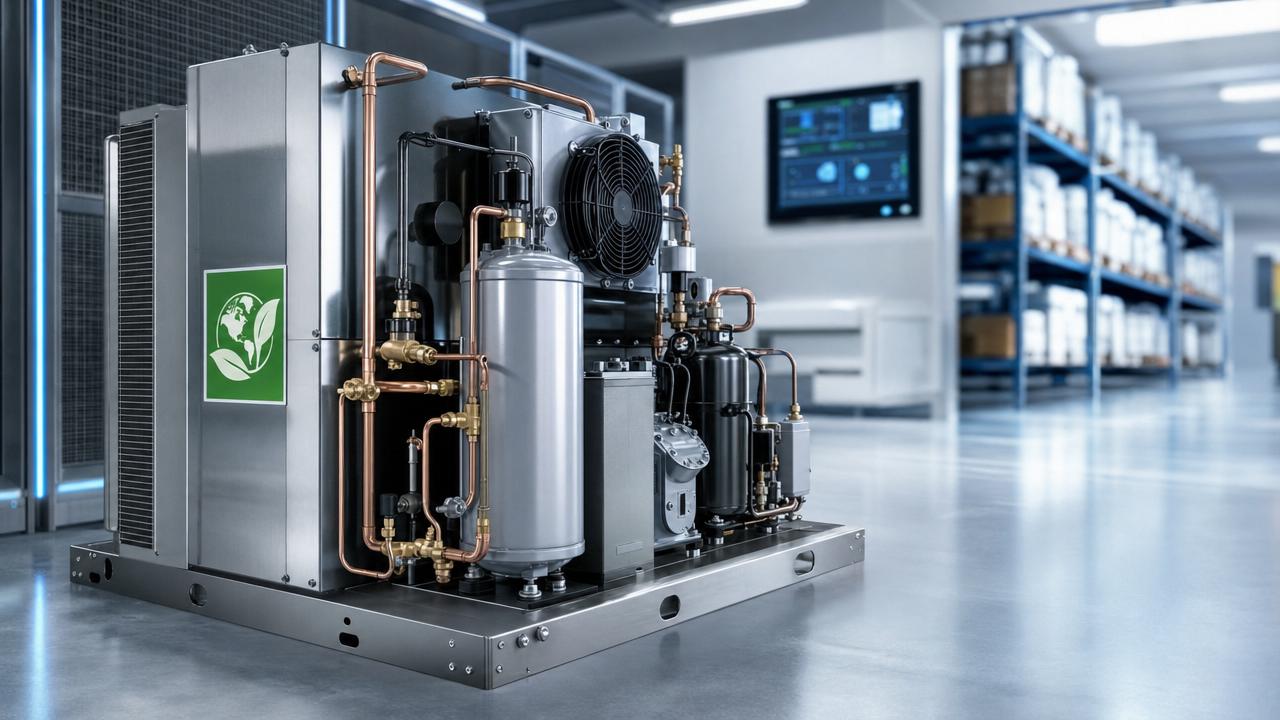
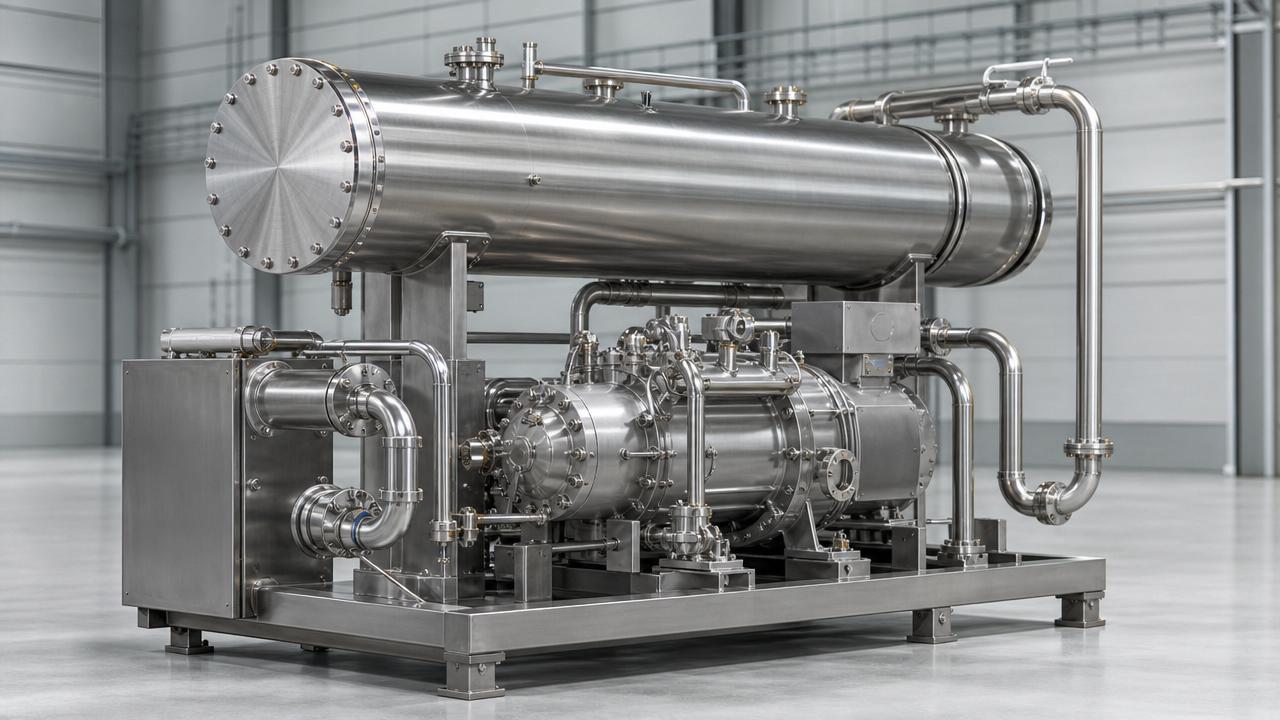
In practice, CO2 refrigeration appears in transcritical booster systems, cascade arrangements, condensing units, and integrated heat recovery designs.
It is especially visible in supermarkets, cold storage hubs, food processing, distribution centers, and selected industrial chillers.
However, CO2 refrigeration operates at much higher pressure than many conventional systems, which affects design, components, training, and service strategy.
Why CO2 Refrigeration Is Gaining Industry Attention
Across the broader refrigeration market, five signals explain why CO2 refrigeration is receiving sustained investment attention.
- F-Gas restrictions and phasedown programs are making high-GWP refrigerants less attractive for long-life assets.
- Large retailers and cold-chain operators want lower direct emissions with auditable sustainability reporting.
- Heat recovery from CO2 refrigeration can improve site energy economics in mixed cooling and heating facilities.
- OEMs now offer more mature controls, ejectors, parallel compression, and gas cooler optimization.
- Natural refrigerant branding supports long-term asset positioning in regulated international markets.
For intelligence-driven platforms like CCRS, this trend connects thermodynamic performance with policy exposure and operational resilience.
The result is a broader shift from refrigerant price comparison to full-system economic evaluation.
Where CO2 Refrigeration Delivers the Best Commercial Value
The strongest business case for CO2 refrigeration appears where regulation, energy performance, and system scale reinforce each other.
1. Supermarkets and Hypermarkets
Food retail remains the most established segment for CO2 refrigeration, especially in regions with strong environmental policy and experienced service networks.
Booster systems can support display cabinets, back rooms, and freezer zones within one integrated architecture.
When heat recovery is added, CO2 refrigeration can also offset space heating or domestic hot water demand.
2. Distribution Centers and Cold Storage Hubs
Larger cold-chain sites benefit from centralized plant design, tighter leak management, and stronger technical supervision.
In these controlled environments, CO2 refrigeration often gains value through compliance durability and lower refrigerant-related risk over asset life.
3. Food Processing and Industrial Cooling
CO2 refrigeration performs well in process cooling where consistent load profiles and integrated heat management improve annual efficiency.
It can be paired with ammonia in cascade systems, reducing ammonia charge while preserving robust low-temperature performance.
4. Regions with Moderate or Cool Climates
Ambient temperature remains a major economic variable. In cooler climates, transcritical CO2 refrigeration can operate more efficiently and predictably.
That improves the payback outlook, especially where electricity prices are stable and heating recovery has value.
Where CO2 Refrigeration Still Struggles
Despite progress, CO2 refrigeration is not a perfect fit for every climate, facility, or investment horizon.
Hot regions are the most discussed challenge. Advanced ejectors, adiabatic gas coolers, and parallel compression help, but not always enough.
The economics depend on climate profile, utility tariff structure, and whether recovered heat can offset other energy use.
Another barrier is technical depth. CO2 refrigeration rewards good engineering, but punishes weak controls, poor piping, or incomplete startup tuning.
Typical Application Paths by Facility Type
A practical way to judge CO2 refrigeration is to match system architecture to operating profile.
- Retail stores: Best suited to integrated medium- and low-temperature loads with heat reclaim potential.
- Cold rooms: Strong fit where centralized monitoring and compliance longevity are top priorities.
- Food plants: Valuable in cascade or hybrid systems with steady process demand.
- Ice production: Possible in selected designs, but economics depend on ambient conditions and duty cycle.
- Medical cold chain: Relevant for support cooling and storage infrastructure, though ultra-low platforms often need specialized solutions.
This is where CCRS-style intelligence becomes useful. Different categories demand different thermodynamic logic, not one generic refrigerant answer.
How to Evaluate CO2 Refrigeration Beyond Simple Payback
A sound CO2 refrigeration decision should combine energy, compliance, maintenance, and asset-life considerations.
- Model annual performance under real local ambient conditions, not only nameplate efficiency.
- Include refrigerant phaseout exposure and future retrofit risk in total cost calculations.
- Assess technician availability, spare parts access, and remote diagnostics support.
- Quantify heat recovery value where heating or hot water demand exists.
- Review leakage management, controls strategy, and defrost logic before final equipment selection.
In many projects, CO2 refrigeration wins not because it is cheapest on day one, but because it reduces uncertainty over ten to fifteen years.
That distinction matters in export-oriented, compliance-sensitive, and sustainability-audited operations.
Practical Considerations Before Deployment
Before moving forward, several technical checkpoints should be confirmed early in project planning.
- Verify whether the climate favors transcritical CO2 refrigeration or a cascade alternative.
- Check component quality for valves, compressors, gas coolers, and high-pressure protection.
- Plan commissioning in detail, including controls calibration and emergency procedures.
- Train operations teams on alarm interpretation and performance deviation tracking.
- Use digital monitoring to detect pressure anomalies, frosting issues, and heat rejection inefficiencies.
The strongest outcomes usually come from integrated design, not isolated equipment substitution.
That includes cabinets, compressors, controls, condensers, defrost strategy, and building energy interaction.
A Balanced Outlook for the Next Investment Cycle
CO2 refrigeration is no longer an experimental option. In many sectors, it is already a credible long-term platform.
Its value is strongest in regulated markets, cooler climates, centralized systems, and facilities able to capture heat recovery benefits.
It still struggles where high ambient temperatures, weak service infrastructure, or small project scale undermine lifecycle economics.
The next step is to compare CO2 refrigeration against actual site loads, climate data, compliance timelines, and maintenance capability.
With that structured approach, cold-chain and refrigeration investments can move from trend-following to evidence-based selection.
Recommended News
 CO2 Transcritical SystemsCO2 Refrigeration: Where It Pays Off and Where It Still StrugglesAnalyst :Cold Chain Dynamics Scientist
 CO2 Transcritical SystemsEU F-Gas Regulation Revision Effective Oct 2026, CO₂ Transcritical Certification Window NarrowsAnalyst :Cold Chain Dynamics Scientist
 CO2 Transcritical SystemsEU Imposes Final Anti-Dumping Duty on Chinese Adipic AcidAnalyst :Cold Chain Dynamics Scientist
 CO2 Transcritical SystemsMSCI to Release Global Accessibility Review on June 18, 2026Analyst :Cold Chain Dynamics Scientist
![]() CO2 Transcritical SystemsEU F-Gas Regulation Phase III Starts, CO₂ System Export Certification TightensAnalyst :Cold Chain Dynamics Scientist
CO2 Transcritical SystemsEU F-Gas Regulation Phase III Starts, CO₂ System Export Certification TightensAnalyst :Cold Chain Dynamics Scientist CO2 Transcritical SystemsEU Raises Steel Tariffs to 50%, Impacting CO₂ Transcritical Compressor ExportsAnalyst :Cold Chain Dynamics Scientist
![]() CO2 Transcritical SystemsEU F-Gas Regulation Phase III Launches, Tightens CO₂ System Export CertificationAnalyst :Cold Chain Dynamics Scientist
CO2 Transcritical SystemsEU F-Gas Regulation Phase III Launches, Tightens CO₂ System Export CertificationAnalyst :Cold Chain Dynamics Scientist