Industry News
Curation by industry experts
Hot Articles
- Flake Ice MachinesCommercial Ice Machines Buying Guide: Ice Type, Output Capacity, and Water Quality
- CO2 Transcritical SystemsCO2 Refrigeration vs HFC Systems: Efficiency, Pressure, and Compliance Compared
- Precision ChillersIndustrial Cooling System Selection: Air-Cooled vs Water-Cooled vs Evaporative
Popular Tags
Is a variable frequency screw better for load swings?
When cooling demand fluctuates, choosing the right compressor technology becomes a critical issue for technical evaluators. Is a variable frequency screw better for load swings? In industrial chillers, cold storage systems, and other refrigeration applications, a variable frequency screw can improve part-load efficiency, stabilize temperature control, and reduce energy waste. This article examines where it performs best, what limits may appear, and how to assess its real value in dynamic operating conditions.
Why a checklist matters when judging variable frequency screw performance
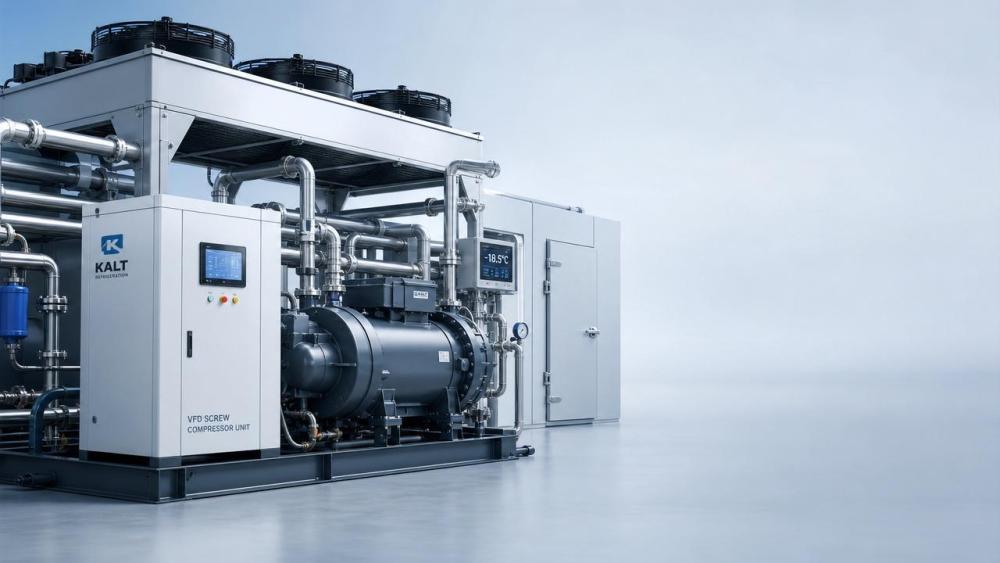
Load swings do not affect every refrigeration system in the same way. A variable frequency screw may excel in one plant, yet offer only modest gains in another.
That is why checklist-based evaluation works better than broad claims. It connects compressor behavior with thermodynamic conditions, control logic, maintenance realities, and energy economics.
In the broader refrigeration sector, including industrial chillers, cold storage hubs, ice-making lines, and medical cooling systems, a variable frequency screw is usually strongest under uneven demand profiles.
Core checklist: how to decide if a variable frequency screw is better for load swings
- Measure hourly load variation before selecting equipment. If cooling demand often drops below 70% and rises again quickly, a variable frequency screw usually gains efficiency.
- Check part-load operating hours, not just peak tons. Annual savings from a variable frequency screw come mainly from long periods away from full load.
- Review leaving fluid temperature stability. Where process or storage temperatures must stay tight, speed modulation often controls supply conditions better than simple step unloading.
- Compare the turndown ratio with the real system minimum load. A variable frequency screw performs best when compressor minimum capacity matches night, winter, or idle operation.
- Inspect the control sequence between compressor, condenser fans, pumps, and expansion valves. Poor coordination can erase the expected gains of a variable frequency screw.
- Verify oil management across the speed range. Low-speed operation may affect oil return, separator performance, and bearing lubrication if the package design is weak.
- Assess motor, inverter, and harmonic conditions. Drive quality, power factor, and electrical protection influence long-term reliability as much as compressor efficiency.
- Model annualized energy use under local weather and operating schedules. A variable frequency screw should be judged by seasonal performance, not by catalog point data.
- Examine refrigerant compatibility and discharge temperature behavior. Different refrigerants respond differently at reduced speed, especially in low-temperature refrigeration applications.
- Calculate payback with maintenance, downtime risk, and control upgrades included. The best variable frequency screw decision is technical and financial at the same time.
Where a variable frequency screw performs best
Industrial chillers with shifting process demand
In factories, cooling loads move with machine cycles, ambient conditions, and production timing. Laser cutting, injection molding, fermentation, and electronics cooling rarely stay flat all day.
Here, a variable frequency screw can reduce compressor cycling, improve chilled water temperature stability, and lower unnecessary lift during part-load periods. It is often more valuable than oversized fixed-speed capacity.
Cold storage systems with daytime and seasonal variation
Cold rooms, distribution centers, and food logistics hubs experience changing heat loads from door openings, defrost schedules, pull-down events, and product turnover. These patterns reward flexible compressor control.
A variable frequency screw can smooth suction pressure, lower start-stop stress, and support better humidity and temperature control. That matters for freshness preservation and product consistency.
Large ice-making or thermal storage applications
Ice systems often operate against highly uneven demand windows. Some hours require aggressive production, while others only need holding capacity or standby cooling.
In these conditions, a variable frequency screw helps match compressor output to brine temperature targets or storage recharge cycles, reducing electrical waste and improving operational flexibility.
Medical and precision cooling environments
When thermal drift is unacceptable, stable modulation matters more than raw peak capacity. Labs, pharma storage, and certain cryogenic support systems value tight temperature control.
A variable frequency screw may help reduce overshoot and improve control response, although ultra-low temperature cascades still require application-specific validation before any broad conclusion.
When a variable frequency screw may not be the best answer
Not every load swing justifies inverter-driven compression. In steady base-load plants, the efficiency advantage may be too small to offset added controls and electrical complexity.
Short pipework, limited storage mass, or unstable sensor logic can also make the system react too aggressively. In that case, tuning problems get mistaken for compressor limitations.
Very low evaporating temperatures may narrow the practical speed range. Some systems still need parallel compressors, economizers, or staged control instead of relying on one variable frequency screw alone.
Commonly overlooked risks
Ignoring the full system instead of the compressor alone
A variable frequency screw cannot fix poor heat exchanger sizing, fouled condensers, wrong expansion valve settings, or weak water flow stability. System integration determines actual results.
Overestimating savings from nameplate data
Catalog ratings often reflect favorable test points. Real savings depend on lift, weather, load duration, refrigerant choice, and controls. Annual simulation is more useful than point efficiency.
Missing low-speed reliability details
If oil return, motor cooling, minimum slide valve position, or separator design are not validated, low-speed operation can create reliability concerns. This deserves direct technical confirmation.
Forgetting power quality and drive environment
Dust, heat, voltage fluctuation, and harmonics can reduce inverter life. A variable frequency screw package should be reviewed as electrical equipment, not only as refrigeration hardware.
Practical execution steps
- Log cooling load, suction pressure, condensing temperature, and supply temperature for at least two representative operating weeks.
- Separate base load from swing load. This shows whether one variable frequency screw or a hybrid compressor arrangement fits better.
- Request seasonal energy modeling at several ambient conditions, not just a single full-load performance sheet.
- Confirm minimum stable speed, oil strategy, inverter protections, and acceptable refrigerant envelope in writing.
- Review controls for pumps, fans, valves, and defrost logic so the variable frequency screw can operate in a coordinated sequence.
- Compare lifecycle cost, including maintenance intervals, spare parts, drive serviceability, and probable downtime exposure.
Conclusion: is a variable frequency screw better for load swings?
In many refrigeration and cooling systems, yes. A variable frequency screw is often better for load swings because it tracks demand more closely, improves part-load efficiency, and supports steadier temperature control.
However, the answer is not automatic. The real value of a variable frequency screw depends on load profile, refrigerant conditions, controls integration, and low-speed reliability design.
The next step is simple: gather operating data, test the checklist above, and compare annualized system behavior instead of relying on generic assumptions. That approach leads to a more defensible compressor decision.
Recommended News
 Air/Water-cooled ScrewIndustrial Cooling Systems: When Oversizing Becomes a Cost ProblemAnalyst :Industrial Cooling Architect
 Air/Water-cooled ScrewWhen does a variable frequency screw cut cooling costs?Analyst :Industrial Cooling Architect
 Air/Water-cooled ScrewWhy variable frequency screw systems win on part loadAnalyst :Industrial Cooling Architect
 Air/Water-cooled ScrewHow variable frequency cooling cuts energy waste fastAnalyst :Industrial Cooling Architect
 Air/Water-cooled ScrewIs a variable frequency screw better for load swings?Analyst :Industrial Cooling Architect
 Air/Water-cooled ScrewWhat Makes Industrial Chillers Worth the Upgrade?Analyst :Industrial Cooling Architect
 Air/Water-cooled ScrewWhen should industrial refrigeration be upgraded?Analyst :Industrial Cooling Architect