Industry News
Curation by industry experts
Hot Articles
Popular Tags
How variable frequency cooling cuts energy waste fast
For business decision-makers under pressure to cut operating costs and meet sustainability targets, variable frequency cooling offers one of the fastest paths to measurable savings. By matching compressor and fan output to real-time load, it reduces energy waste, improves temperature stability, and extends equipment life across industrial and commercial refrigeration systems. This article explains why the technology delivers rapid ROI and where its impact is greatest.
Why does variable frequency cooling reduce energy waste so quickly?
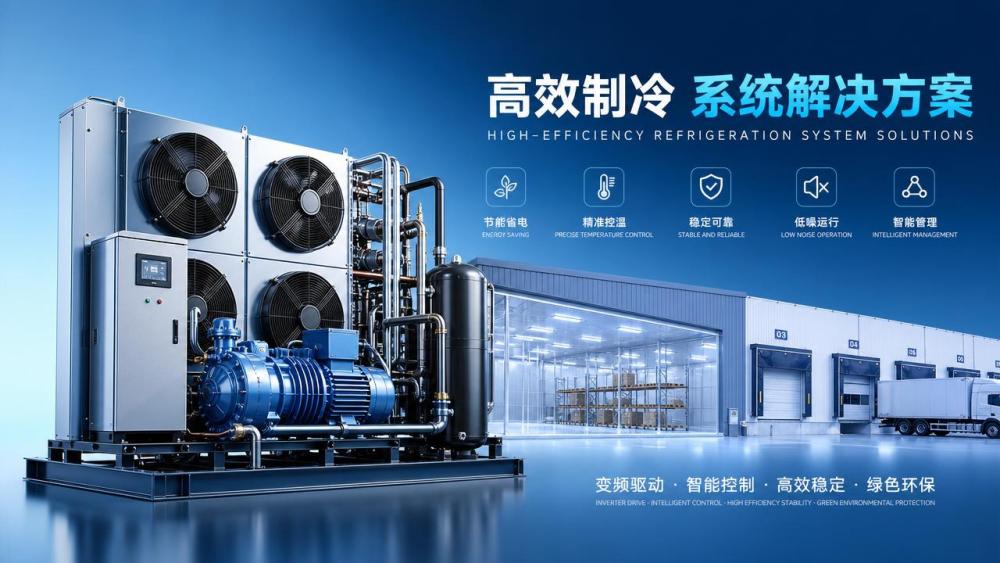
Many cooling systems still run like on-off machines in a world of variable demand. Production shifts change, ambient temperatures move, door openings spike, and product loads rise or fall. Yet fixed-speed compressors and fans often continue operating at near-constant output, creating avoidable energy waste.
Variable frequency cooling solves this mismatch by adjusting motor speed to the actual thermal load. In practical terms, the system delivers only the cooling capacity required at a given moment. That lowers power draw during partial-load operation, which is where many industrial chillers, cold rooms, refrigeration cabinets, and ultra-low temperature support systems spend much of their working life.
For enterprise buyers, the value is not just technical elegance. It is financial speed. Energy costs in refrigeration-heavy operations can quickly erode margin, especially in food logistics, biomedicine, manufacturing, and retail cold chain networks. When variable frequency cooling is paired with smart controls, the reduction in compressor cycling, fan overrun, and peak demand can often be visible in utility bills within the first operating cycle.
- Compressor speed tracks real cooling demand instead of staying fixed at maximum capacity.
- Condenser and evaporator fans modulate airflow, reducing unnecessary motor consumption.
- Softer starts help limit electrical surges and reduce stress on key components.
- More stable suction and discharge conditions can improve overall system control.
CCRS closely tracks this transition because variable frequency technology now influences all five major refrigeration pillars: industrial chillers, commercial ice machines, cold storage compressors, commercial refrigeration cabinets, and ultra-low temperature systems. In each case, the savings case depends on load variability, controls quality, refrigerant strategy, and lifecycle management rather than on one isolated component.
Where is the business impact strongest across refrigeration and cold-chain operations?
Decision-makers often ask a simple question: where does variable frequency cooling pay back fastest? The answer is usually where thermal demand fluctuates most, where uptime matters, and where temperature deviations create financial loss beyond the utility bill.
Industrial chillers
Factories rarely operate at a perfectly stable heat load. Laser cutting, plastics processing, data-intensive equipment, and precision machining all create variable process cooling demand. A variable-frequency chiller can better match changing heat rejection needs, reducing wasted compressor work and improving process stability.
Cold storage hubs
Distribution centers and food storage sites face frequent door openings, batch loading, changing product temperatures, and seasonal peaks. In these environments, variable frequency cooling supports tighter evaporating temperature control and better part-load efficiency, especially when combined with zoning and digital monitoring.
Commercial refrigeration cabinets
Retail operators care about product display, humidity control, anti-fog performance, and purchase conversion as much as energy savings. Modulated fans and compressors help stabilize cabinet temperature and reduce overcooling, which can support freshness while trimming operating costs across multi-site fleets.
Medical and deep-cryogenic support systems
In life sciences, stability matters more than headline power savings. Even so, variable frequency cooling can improve upstream condensing conditions, supporting cascade efficiency and lowering component stress in surrounding refrigeration architecture. The goal here is controlled performance with reduced lifecycle risk.
The following table shows where variable frequency cooling tends to deliver the clearest operational value in different application settings.
The key pattern is clear: the more variable the demand, the more likely variable frequency cooling will outperform fixed-speed operation. This is why it has become especially relevant in cold-chain expansion projects and retrofit programs where energy intensity is under direct board-level review.
Variable speed versus fixed speed: what should a buyer really compare?
A common mistake in procurement is comparing only nameplate capacity or upfront equipment price. For business decision-makers, the real comparison should cover power profile, control precision, maintenance behavior, compliance pathway, and lifecycle cost.
Before reviewing offers, it helps to organize the decision around measurable points rather than marketing labels.
This comparison shows why the cheapest quotation is not always the lowest-cost solution. CCRS frequently emphasizes total operating context: refrigerant choice, expected load swing, ambient conditions, controls logic, and local power pricing all shape the true return on a variable frequency cooling investment.
Which technical indicators matter before approving a project?
Executives do not need to become thermodynamics specialists, but they do need the right screening metrics. Projects fail when teams buy “inverter-ready” equipment without validating whether the full refrigeration system, control loop, and application profile support efficient variable operation.
Core indicators to review
- Operating load range: Ask how often the system will run below peak capacity and at what percentages.
- Control strategy: Check whether sensors, expansion control, defrost logic, and fan staging are designed for variable frequency cooling rather than fixed-speed assumptions.
- Annual operating hours: The longer the runtime, the stronger the case for efficiency-led investment.
- Refrigerant pathway: Ensure compatibility with current and expected environmental regulations, especially where F-Gas restrictions or natural refrigerant transitions affect future serviceability.
- Power quality and electrical environment: Drives require proper installation, harmonics review where relevant, and dependable protective design.
Why this matters in procurement
A high-performance compressor alone cannot guarantee savings. If condenser controls are crude, evaporator fans remain fixed, or defrost timing is poorly managed, expected gains shrink. That is why CCRS looks at variable frequency cooling as a system decision, not a parts decision.
In advanced cold-chain projects, especially where CO2 systems, low-GWP refrigerants, or cascade arrangements are under consideration, the interaction between control precision and thermodynamic conditions becomes even more important. Small design choices can affect discharge pressure behavior, frost formation, and annual power use.
How should buyers evaluate cost, payback, and alternatives?
The business case for variable frequency cooling is strongest when leaders move past headline capex and model total ownership. A sensible review should include energy savings, maintenance implications, peak demand charges, avoided product loss, and the cost of operational instability.
The table below provides a practical framework for cost evaluation and alternative options in mixed commercial and industrial settings.
This is often the most useful discussion for finance and operations teams. If a facility has long runtime, frequent load fluctuation, and expensive electricity, variable frequency cooling usually deserves serious priority. If load is stable and runtime limited, a different efficiency path may be more rational.
A practical payback checklist
- Measure actual hourly load patterns, not just design capacity.
- Review local electricity tariffs, including peak demand penalties.
- Estimate value from tighter temperature control and lower product spoilage risk.
- Include maintenance effects from reduced start-stop stress and smoother operation.
- Compare full-system upgrade costs against phased retrofit pathways.
What compliance and future-proofing issues should not be ignored?
Energy efficiency decisions are increasingly tied to environmental compliance. In many export-oriented or multinational operations, refrigeration investments must now satisfy both internal decarbonization goals and external regulatory pressure. That makes variable frequency cooling part of a broader strategic upgrade rather than a narrow utility-saving measure.
CCRS follows the impact of refrigerant transition closely. As F-Gas restrictions tighten in some regions and natural refrigerant adoption expands, buyers should check whether the selected variable-speed architecture aligns with future service conditions, technician capability, and component availability. A system that saves energy today but creates compliance friction tomorrow may not be the right long-term choice.
- Ask how the system performs with current and likely future refrigerant strategies.
- Confirm whether controls and drive components are suitable for the target operating envelope.
- Review documentation needed for cross-border projects, tenders, and internal engineering approval.
- Check whether maintenance teams can support diagnostics, commissioning, and tuning after installation.
For procurement leaders, future-proofing means balancing energy, refrigerant policy, reliability, and service reality. This is especially important in cold-chain networks scaling across regions with different standards and environmental rules.
FAQ: what do decision-makers ask most about variable frequency cooling?
Is variable frequency cooling suitable for every refrigeration project?
No. It is most attractive where load changes frequently, operating hours are long, and temperature precision matters. In stable-load, low-hour systems, the savings may not justify the additional investment. A proper load analysis should come before equipment selection.
What is the biggest mistake during procurement?
The biggest mistake is evaluating only the compressor or only the purchase price. Variable frequency cooling works best when controls, fans, sensors, expansion devices, defrost logic, and refrigerant conditions are considered together. A weak control strategy can erase expected gains.
Can variable frequency cooling help with sustainability reporting?
Yes, especially when electricity use from refrigeration is material in the facility energy profile. Lower energy consumption can support carbon reduction goals. If combined with lower-GWP refrigerant planning and digital monitoring, the reporting value becomes stronger and more auditable.
How fast can savings appear?
In many high-load or high-hours facilities, utility bill differences can appear quickly after commissioning and control tuning. The exact pace depends on baseline inefficiency, tariff structure, climate, operating discipline, and whether the upgrade includes full-system optimization or only a partial retrofit.
Why choose us for variable frequency cooling insight and project support?
CCRS supports business decision-makers who need more than generic efficiency claims. Our strength lies in connecting thermodynamic analysis, refrigerant transition intelligence, cold-chain application knowledge, and practical commercial judgment across industrial chillers, ice systems, cold storage compressors, refrigeration cabinets, and deep-cryogenic environments.
If you are evaluating variable frequency cooling for a new project, retrofit, tender response, or multi-site upgrade, you can consult us on the issues that directly affect investment quality.
- Parameter confirmation for cooling load, temperature range, duty cycle, and operating environment.
- Product selection guidance for chillers, compressors, cabinet systems, and supporting controls.
- Retrofit path comparison, including phased upgrade options when budget is limited.
- Compliance review related to refrigerant strategy, export requirements, and future regulatory exposure.
- Delivery-cycle discussion, integration priorities, and key technical questions for supplier negotiation.
- Quote communication support built around lifecycle economics rather than capex alone.
For companies under pressure to cut energy waste fast, variable frequency cooling is often one of the most practical moves available. The right result, however, depends on sound selection, realistic load data, and system-level judgment. That is where CCRS adds value: turning complex refrigeration choices into clearer, lower-risk decisions.
Recommended News
 Air/Water-cooled ScrewIndustrial Cooling Systems: When Oversizing Becomes a Cost ProblemAnalyst :Industrial Cooling Architect
 Air/Water-cooled ScrewWhen does a variable frequency screw cut cooling costs?Analyst :Industrial Cooling Architect
 Air/Water-cooled ScrewWhy variable frequency screw systems win on part loadAnalyst :Industrial Cooling Architect
 Air/Water-cooled ScrewHow variable frequency cooling cuts energy waste fastAnalyst :Industrial Cooling Architect
 Air/Water-cooled ScrewIs a variable frequency screw better for load swings?Analyst :Industrial Cooling Architect
 Air/Water-cooled ScrewWhat Makes Industrial Chillers Worth the Upgrade?Analyst :Industrial Cooling Architect
 Air/Water-cooled ScrewWhen should industrial refrigeration be upgraded?Analyst :Industrial Cooling Architect