Industry News
Curation by industry experts
Hot Articles
Popular Tags
Deep Cryogenic Storage vs -86°C Freezers: Temperature Range, Samples, and Risk
For quality control and safety managers, choosing between deep cryogenic storage and -86°C freezers is not just a temperature decision—it is a risk-control strategy. Different sample types, from vaccines and cell lines to enzymes and critical biological materials, respond differently to thermal exposure, recovery cycles, and storage failures. This article compares temperature ranges, sample suitability, operational risks, and monitoring priorities to help teams protect sample integrity, reduce compliance exposure, and select the right ultra-low temperature solution for long-term reliability.
Where the Temperature Boundary Really Matters
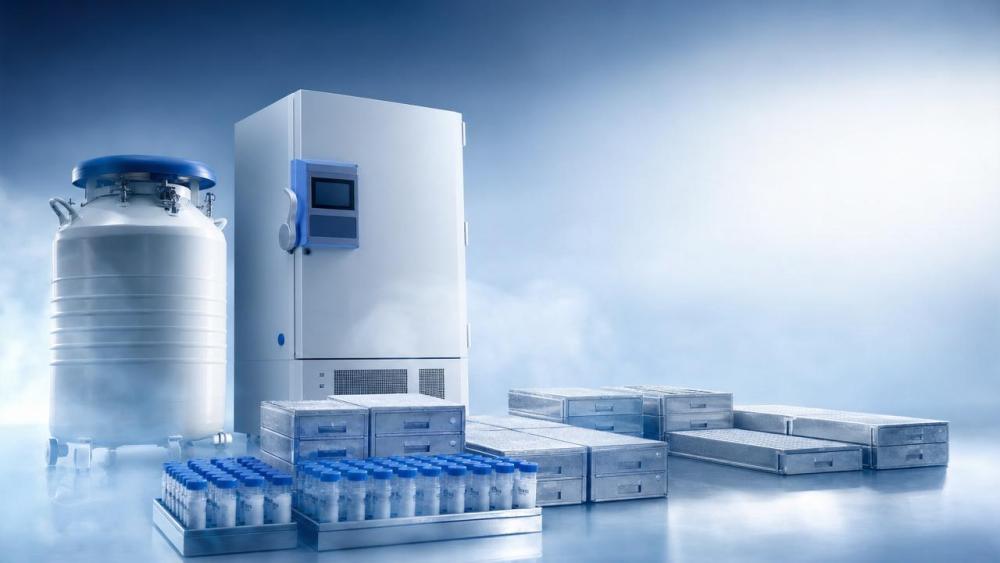
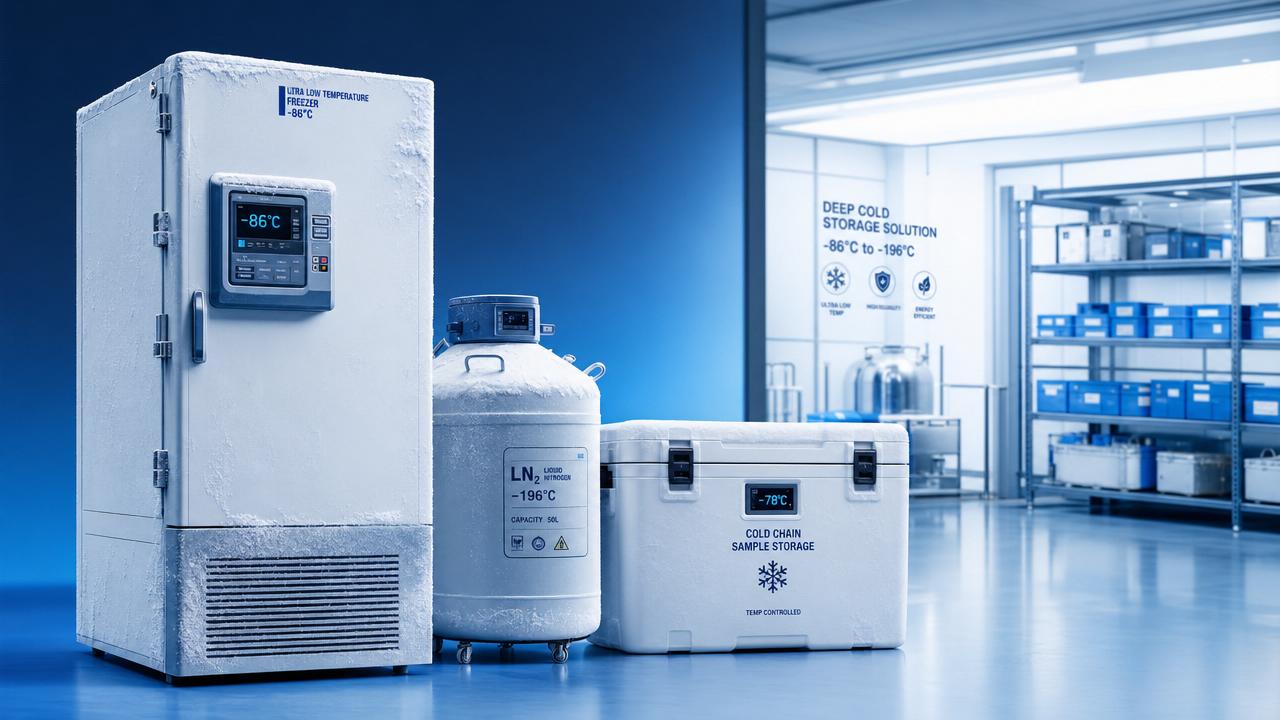
Deep cryogenic storage usually refers to preservation below conventional ultra-low freezer conditions, often using liquid nitrogen vapor phase or mechanical cryogenic systems reaching approximately -135°C to -196°C.
A -86°C freezer, by contrast, is a cascade refrigeration platform designed for ultra-low temperature storage without entering the glass transition zone required by many living cells.
For safety managers, the key question is not “Which is colder?” but “Which temperature prevents the specific failure mode of this material?”
Decision logic for sample protection
- If biological activity must be recoverable, deep cryogenic storage may be necessary to slow molecular motion and reduce long-term degradation risk.
- If the material is stable at -80°C to -86°C, a mechanical freezer may offer simpler access, lower handling complexity, and easier facility integration.
- If samples are frequently retrieved, access pattern and temperature recovery time can matter as much as the nominal setpoint.
CCRS evaluates cold-chain decisions through thermodynamic performance, refrigerant compliance, compressor behavior, monitoring architecture, and the actual use environment.
Deep Cryogenic Storage vs -86°C Freezers: Practical Comparison
The following comparison helps quality teams connect storage temperature with sample risk, access frequency, infrastructure demand, and routine operating controls.
The table shows why deep cryogenic storage should not be treated as a simple upgrade from -86°C storage. It is a different risk model.
For procurement teams, the correct solution depends on sample value, recovery requirements, facility constraints, monitoring maturity, and response capability during abnormal events.
Which Samples Should Move Below -135°C?
Deep cryogenic storage is most valuable when the cost of losing viability, genetic stability, or recovery performance exceeds the additional operating burden.
Living cells are the clearest example. Many cell banks require conditions below the glass transition temperature to limit damaging biochemical and physical changes.
High-consequence sample categories
- Master cell banks and working cell banks where viability, identity, and consistency affect downstream batch release.
- Stem cells and immune cells that may lose recovery performance after repeated exposure above recommended limits.
- Critical biological reference materials stored for years, especially when replacement is difficult or impossible.
- Clinical or research collections where traceability, chain of custody, and long retention periods are required.
A -86°C freezer remains appropriate for many reagents, nucleic acids, proteins, diagnostic materials, and vaccines when validated stability data supports that range.
Quality managers should avoid moving every sample into deep cryogenic storage without justification, because unnecessary cryogenic handling can add safety and workflow risks.
Risk Control: What Fails First in Real Operations?
In controlled documents, storage systems look stable. In daily operation, risk often comes from access behavior, alarm fatigue, maintenance gaps, and unclear escalation rules.
For -86°C freezers
Mechanical ultra-low freezers rely on cascade refrigeration, condenser cleanliness, refrigerant charge, door sealing, and stable electrical supply.
When a door stays open, warm air enters, frost forms, and the compressor must remove added heat while recovering cabinet temperature.
- Review pull-down and recovery performance under realistic loading, not only empty-chamber specifications.
- Separate high-access materials from long-term storage to reduce temperature cycling for critical samples.
- Define backup transfer routes before failure, including validated containers, labels, and emergency contacts.
For deep cryogenic storage
Deep cryogenic storage shifts the main concern from compressor reliability to cryogen level, vapor temperature, oxygen safety, and controlled retrieval technique.
A vapor-phase tank may protect samples from liquid cross-contamination risk, but it still needs level monitoring and validated temperature distribution.
- Install oxygen deficiency monitoring where liquid nitrogen is stored or transferred in enclosed spaces.
- Train operators on face protection, cryogenic gloves, vial explosion hazards, and slow sample retrieval.
- Audit inventory maps to prevent extended exposure while searching for unverified sample locations.
Selection Matrix for Quality and Safety Teams
Before purchasing, teams should connect deep cryogenic storage or -86°C freezer selection with documented quality attributes and foreseeable misuse.
This matrix turns equipment selection into a defensible quality decision. It also helps safety managers explain budget requests with operational evidence.
CCRS recommends documenting assumptions during procurement, because future deviations are easier to assess when the original storage rationale is clear.
Monitoring, Alarms, and Compliance Priorities
Both deep cryogenic storage and -86°C freezers require more than a display temperature. The decisive factor is how data triggers action.
In regulated or quality-sensitive environments, common references include Good Distribution Practice concepts, ISO 13485 principles, GMP expectations, and internal validation procedures.
Monitoring points that deserve attention
- Use calibrated independent probes rather than relying only on the equipment controller display.
- Set alert limits that allow response time before samples reach a critical temperature threshold.
- Test alarm routing during nights, weekends, holidays, and network outages.
- Review temperature mapping for loaded conditions, especially near doors, upper racks, and vapor-phase gradients.
For deep cryogenic storage, temperature probes, liquid nitrogen level sensors, and oxygen deficiency alarms should be considered part of one risk system.
For -86°C freezers, temperature alarms should be paired with preventive maintenance records, condenser cleaning schedules, and power contingency plans.
Cost, Infrastructure, and Hidden Burdens
The purchase price rarely reflects total risk cost. Deep cryogenic storage may require liquid nitrogen supply, ventilation, PPE, and operator training.
A -86°C freezer may appear simpler, but energy demand, heat rejection, floor loading, backup power, and compressor maintenance still affect lifecycle value.
Budget items often missed
- Facility heat load from multiple ultra-low freezers, which can increase HVAC demand in storage rooms.
- Emergency backup capacity, including spare storage locations and validated transport containers.
- Calibration, qualification, mapping, and periodic verification required by internal quality systems.
- Training time for personnel who rotate between research, production, quality, and warehouse roles.
CCRS pays close attention to energy performance and refrigerant transition because compliance pressure on F-Gases is changing global refrigeration procurement.
For mechanical ultra-low systems, refrigerant selection, compressor architecture, and heat exchanger efficiency influence both sustainability reporting and operating cost.
Implementation Checklist Before Commissioning
A good purchase can still fail if commissioning is rushed. Quality and safety teams should treat installation as a controlled change.
Recommended execution sequence
- Define the sample list, target temperature, retention period, and acceptable excursion criteria before selecting equipment.
- Confirm site readiness, including power supply, ventilation, drainage, access path, and room temperature control.
- Perform installation checks, alarm tests, temperature mapping, and documentation review before sample transfer.
- Transfer samples using a written plan that limits exposure time and records chain-of-custody information.
- Schedule periodic review of alarms, deviations, maintenance, and storage capacity to prevent gradual risk accumulation.
For deep cryogenic storage, commissioning should include liquid nitrogen filling procedures, pressure safety awareness, oxygen alarm verification, and emergency evacuation rules.
For -86°C freezers, commissioning should include pull-down observation, door gasket checks, controller verification, and backup power interface testing.
FAQ: Common Questions from QC and Safety Managers
Is deep cryogenic storage always safer than a -86°C freezer?
No. Deep cryogenic storage is safer only when the sample requires that temperature and the facility can manage cryogenic handling risks properly.
For stable reagents or materials validated at -86°C, unnecessary cryogenic transfer may increase handling exposure, safety workload, and operating complexity.
Can one storage strategy cover vaccines, cells, enzymes, and seafood samples?
A single strategy is rarely ideal. Vaccines and enzymes often follow validated ultra-low protocols, while living cells may need deep cryogenic storage.
High-value pelagic seafood may use ultra-low freezing for quality preservation, but it should be separated from biomedical inventory governance.
What should be checked first when replacing older equipment?
Start with sample criticality, historical deviations, energy use, refrigerant compliance, spare capacity, and alarm reliability.
Older -86°C freezers may have declining recovery performance, while older cryogenic storage setups may lack modern oxygen and level monitoring.
How long should qualification take?
Timing depends on internal procedures, mapping requirements, and site readiness. Teams should plan for installation checks, stabilization, alarm testing, and documentation review.
Urgent deployment is possible in some scenarios, but skipping qualification can create greater compliance and sample integrity exposure later.
Why Consult CCRS Before Final Selection?
CCRS connects industrial refrigeration intelligence with medical deep-cryogenic technology, helping teams translate thermodynamic performance into practical storage decisions.
Our focus covers cascade refrigeration, cold storage compressors, eco-refrigerant trends, digital temperature control, and ultra-low temperature risk management.
Quality control and safety managers can consult CCRS for parameter confirmation, sample suitability review, monitoring priorities, compliance considerations, and procurement comparison.
If your team is evaluating deep cryogenic storage or -86°C freezer deployment, prepare your sample list, access frequency, room conditions, and required records.
CCRS can support structured selection discussions covering delivery cycle, customized configuration, certification expectations, backup planning, and quotation communication with refrigeration equipment providers.
The right ultra-low temperature solution should protect samples, simplify audits, reduce avoidable excursions, and align with long-term energy and refrigerant compliance pressure.
Recommended News
 -86℃ ULT FreezersGlobal Deep-Sea Tuna Fishing Season Starts Early; China’s -86°C ULT Vessel Orders Surge 300%Analyst :Cryogenic Preservation Expert
 -86℃ ULT FreezersWhy is medical cryogenic storage under stricter review?Analyst :Cryogenic Preservation Expert
 -86℃ ULT FreezersIs ultra-low temperature cooling worth the higher costAnalyst :Cryogenic Preservation Expert
 -86℃ ULT FreezersWhat matters most when choosing medical cryogenic storageAnalyst :Cryogenic Preservation Expert
 -86℃ ULT FreezersFourth CISSC Prep Underway; Ultra-Low-Temp Freezers HighlightedAnalyst :Cryogenic Preservation Expert
 -86℃ ULT FreezersWhen ultra-low temperature cooling becomes business-criticalAnalyst :Cryogenic Preservation Expert
 -86℃ ULT FreezersHow medical cryogenic systems reduce sample loss risksAnalyst :Cryogenic Preservation Expert
 -86℃ ULT FreezersWhen deep cryogenic storage is worth the extra costAnalyst :Cryogenic Preservation Expert
![]() -86℃ ULT FreezersGMCC VFD Series Compressor Passes UL 60335-2-89:2026 CertificationAnalyst :Cryogenic Preservation Expert
-86℃ ULT FreezersGMCC VFD Series Compressor Passes UL 60335-2-89:2026 CertificationAnalyst :Cryogenic Preservation Expert -86℃ ULT FreezersWhen ultra-low temperature cooling becomes a riskAnalyst :Cryogenic Preservation Expert
 -86℃ ULT FreezersWhat matters most when buying medical cryogenic storageAnalyst :Cryogenic Preservation Expert
 -86℃ ULT FreezersULT Freezers Draw Overseas Buyers at Guangzhou 2026Analyst :Cryogenic Preservation Expert
 -86℃ ULT FreezersDeep Cryogenic Storage vs -86°C Freezers: Temperature Range, Samples, and RiskAnalyst :Cryogenic Preservation Expert
 -86℃ ULT FreezersULT Freezer Inquiries Jump 210% at Guangzhou ShowAnalyst :Cryogenic Preservation Expert
![]() -86℃ ULT FreezersULT Freezers Draw Global Demand at Guangzhou 2026Analyst :Cryogenic Preservation Expert
-86℃ ULT FreezersULT Freezers Draw Global Demand at Guangzhou 2026Analyst :Cryogenic Preservation Expert -86℃ ULT FreezersJapan Enforces New JIS B 8615-2026 for -86°C ULT FreezersAnalyst :Cryogenic Preservation Expert
 -86℃ ULT FreezersDeep Cryogenic Storage Explained: Temperature Ranges, Use Cases, and System LimitsAnalyst :Cryogenic Preservation Expert
 -86℃ ULT FreezersTaobao Flash Buy Adds Pharma Cold Chain in 12 CitiesAnalyst :Cryogenic Preservation Expert
 -86℃ ULT FreezersDeep Cryogenic Storage Costs: What Drives CAPEX, Energy Use, and Maintenance Risk?Analyst :Cryogenic Preservation Expert
 -86℃ ULT FreezersPanama Canal Draft Review Threatens ULT Freezer ShippingAnalyst :Cryogenic Preservation Expert
![]() -86℃ ULT FreezersPanama Canal Draft Cut Extends ULT Freezer TransitAnalyst :Cryogenic Preservation Expert
-86℃ ULT FreezersPanama Canal Draft Cut Extends ULT Freezer TransitAnalyst :Cryogenic Preservation Expert![]() -86℃ ULT FreezersUltra-Low Temperature Freezers: How to Compare -86°C Storage Stability and Energy UseAnalyst :Cryogenic Preservation Expert
-86℃ ULT FreezersUltra-Low Temperature Freezers: How to Compare -86°C Storage Stability and Energy UseAnalyst :Cryogenic Preservation Expert -86℃ ULT FreezersCold-Chain Platform Adds Remote Factory AuditsAnalyst :Cryogenic Preservation Expert
 -86℃ ULT FreezersFDA Tightens ULT Freezer Import RulesAnalyst :Cryogenic Preservation Expert
 -86℃ ULT FreezersFDA Tightens Entry Rules for -86°C ULT FreezersAnalyst :Cryogenic Preservation Expert
 -86℃ ULT FreezersHow to Choose Ultra-Low Temperature Freezers for Labs: Key Specs and CapacityAnalyst :Cryogenic Preservation Expert