Industry News
Curation by industry experts
Hot Articles
Popular Tags
Ultra-Low Temperature Freezers: How to Compare -86°C Storage Stability and Energy Use
Comparing ultra-low temperature freezers starts with a simple correction: the -86°C setpoint is not the whole story. Storage risk is shaped by temperature uniformity, pull-down speed, alarm logic, door-opening recovery, and the energy required to hold performance every hour of the year.
That matters across biomedicine, food research, specialty materials, and cold-chain quality systems. In the broader CCRS view of industrial refrigeration, ultra-low temperature freezers sit where thermodynamics, compliance, and sample protection meet daily operating cost.
What a reliable -86°C freezer really needs to deliver
In practice, ultra-low temperature freezers are judged by control under disturbance. A cabinet can display -86°C at steady state, yet still expose stored material to warm pockets after loading, defrost cycles, or repeated access.
The strongest units balance cascade refrigeration design, insulation quality, airflow management, sensor accuracy, and compressor control. That balance determines whether stored contents remain protected in the center, near the doors, and on upper shelves.
For this reason, comparing ultra-low temperature freezers should focus on stability under real use, not only brochure values collected under ideal ambient conditions.
Key performance signals behind the label
- Temperature uniformity across shelves, corners, and door-side zones
- Recovery time after a standard door opening
- Pull-down speed after loading warm product or restocking racks
- Alarm response for high temperature, sensor failure, and power loss
- Holdover time during outage or compressor interruption
Why stability and energy use are now linked
Energy use was once treated as a purchasing line item. Now it is part of storage assurance. A freezer that consumes less power only matters if it maintains the same temperature control during hot seasons, higher room loads, and frequent door activity.
This is where current market attention has shifted. CCRS tracks how eco-refrigerants, compressor transitions, and tighter efficiency expectations are changing refrigeration decisions across the cold chain, from compressors and cabinets to deep-cryogenic storage.
For ultra-low temperature freezers, the core question is no longer efficiency alone. It is stable efficiency: how much electricity is required to keep true storage conditions within acceptable limits over years of operation.
What usually drives energy demand
Ambient room temperature has a major effect. A freezer in a warm mechanical room may consume far more power than the same model in a controlled laboratory or clean support area.
Door openings also matter more than many buyers expect. Poor gasket sealing, inner door leakage, and long retrieval routines create repeated heat gain, forcing longer compressor runtime.
Load pattern matters too. Empty cabinets, densely packed racks, and uneven product placement all change airflow behavior, which affects both compressor work and local temperature stability.
The comparison points that deserve closer attention
A practical evaluation becomes easier when performance is translated into a few measurable checks. The table below highlights the comparison points that usually reveal meaningful differences between ultra-low temperature freezers.
The most useful supplier data is condition-specific. If test results do not state ambient temperature, loading condition, and door-opening protocol, comparison becomes far less reliable.
Where these freezers create value across industries
Ultra-low temperature freezers are often associated with vaccines and cell storage, but their value reaches further. They support retention programs, stability studies, reference sample preservation, and controlled storage for sensitive high-value goods.
In life sciences, the risk is obvious: degraded biological material may invalidate research or disrupt regulated workflows. In premium food and marine applications, the issue can be texture loss, oxidation, or traceability disputes.
Some industrial settings also use deep-cold storage for specialty compounds, calibration materials, and long-term archives. In each case, the freezer is not just a box. It is a controlled evidence environment.
Common use conditions that change the buying decision
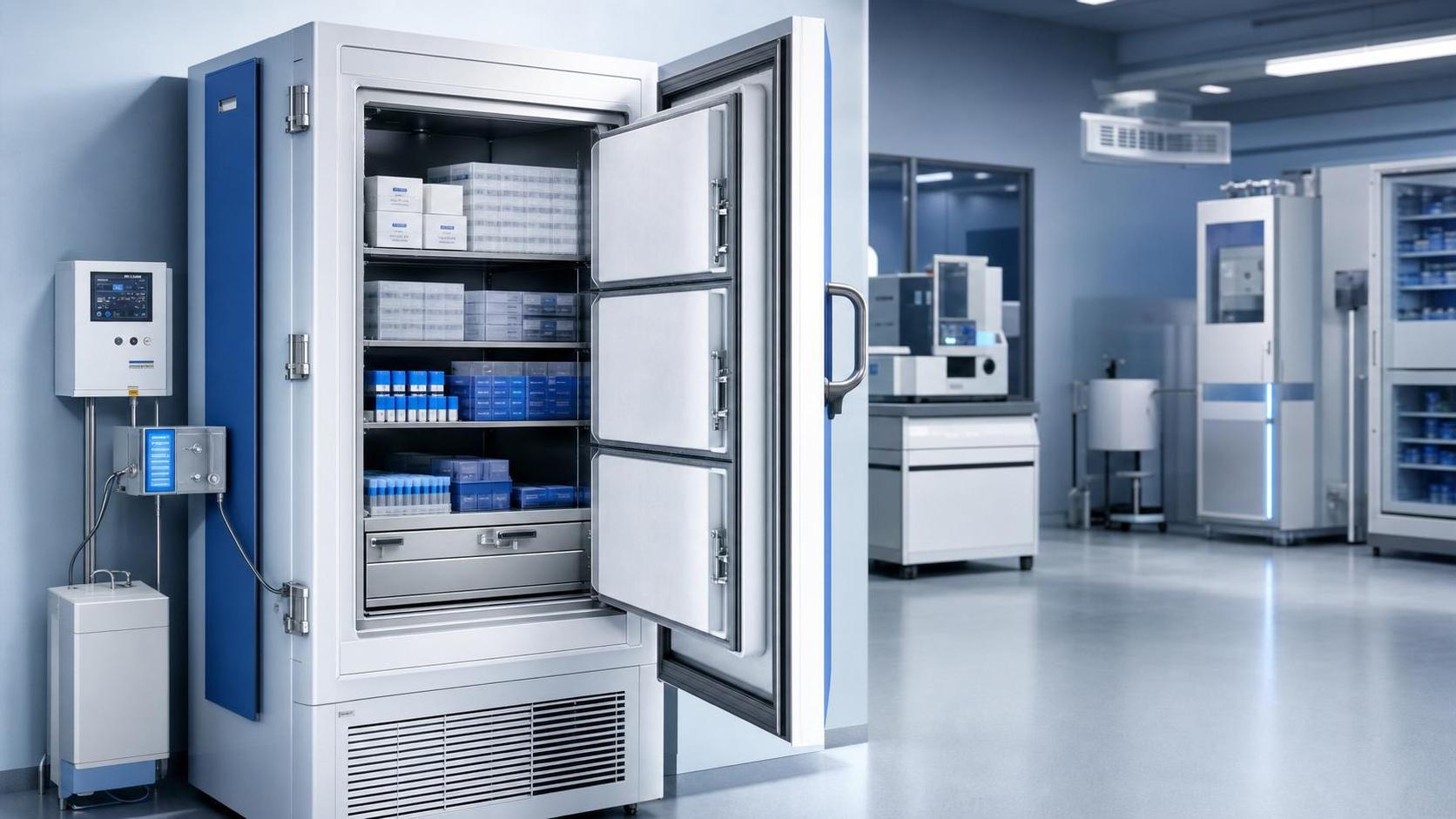
- High-access storage requires fast recovery and strong inner door design
- Long-term archive storage favors uniformity, alarm traceability, and holdover time
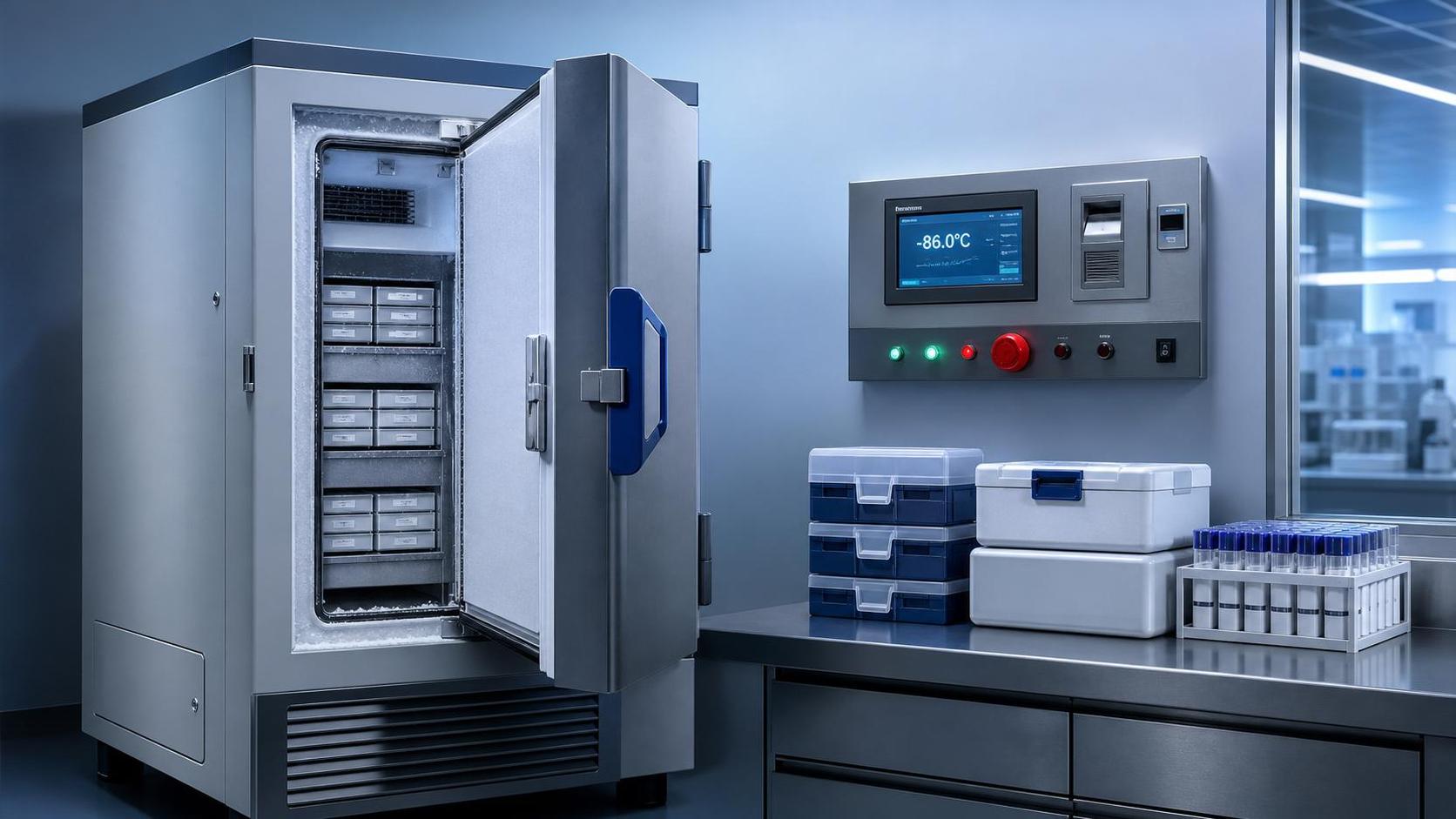
- Shared facilities need clear access control and visible status indication
- Remote sites benefit from efficient power use and dependable service intervals
How to evaluate risk before comparing price
Purchase price can be misleading when stored material is valuable or irreplaceable. A lower-cost unit may carry higher total exposure if alarms are weak, temperature mapping is inconsistent, or maintenance support is uncertain.
A useful starting point is to classify stored contents by consequence of loss. Once that is defined, acceptable recovery time, allowable deviation, and backup expectations become easier to set.
This approach aligns with the broader CCRS perspective: refrigeration decisions should connect thermodynamic performance with operational reality, regulatory pressure, and lifecycle efficiency.
A practical review checklist
- Request temperature mapping data, not only the setpoint specification
- Compare energy figures under the same ambient and load conditions
- Check how the unit behaves after one, three, and five door openings
- Confirm alarm pathways, log retention, and remote notification options
- Review refrigerant compliance and service availability in the target market
- Estimate annual power cost and backup power requirement together
What stronger specifications look like in everyday use
The best ultra-low temperature freezers do not merely hit a low number. They make operations more predictable. Staff spend less time managing temperature excursions, emergency transfers, frost-related access issues, and unexplained energy spikes.
That predictability has financial value. Fewer alarms, shorter recovery periods, and lower daily consumption reduce disruption around sampling, audits, and routine storage control.
It also supports environmental goals. As cold-chain systems move toward lower-carbon refrigerants and smarter control strategies, efficient deep-cold storage becomes part of a wider refrigeration upgrade path, not an isolated appliance choice.
A better next step for comparison
When reviewing ultra-low temperature freezers, build the comparison around risk, operating pattern, and verified test conditions. That usually produces a clearer answer than sorting models by cabinet size or headline temperature alone.
A short list of candidate units should include documented stability data, realistic energy performance, and alarm architecture that fits the storage consequence. From there, site conditions, service support, and refrigerant direction become easier to judge with confidence.
For organizations following CCRS intelligence across refrigeration systems, that method keeps one principle in focus: deep-cold storage works best when temperature protection, energy discipline, and lifecycle decisions are evaluated together.
Recommended News
 -86℃ ULT FreezersGlobal Deep-Sea Tuna Fishing Season Starts Early; China’s -86°C ULT Vessel Orders Surge 300%Analyst :Cryogenic Preservation Expert
 -86℃ ULT FreezersWhy is medical cryogenic storage under stricter review?Analyst :Cryogenic Preservation Expert
 -86℃ ULT FreezersIs ultra-low temperature cooling worth the higher costAnalyst :Cryogenic Preservation Expert
 -86℃ ULT FreezersWhat matters most when choosing medical cryogenic storageAnalyst :Cryogenic Preservation Expert
 -86℃ ULT FreezersFourth CISSC Prep Underway; Ultra-Low-Temp Freezers HighlightedAnalyst :Cryogenic Preservation Expert
 -86℃ ULT FreezersWhen ultra-low temperature cooling becomes business-criticalAnalyst :Cryogenic Preservation Expert
 -86℃ ULT FreezersHow medical cryogenic systems reduce sample loss risksAnalyst :Cryogenic Preservation Expert
 -86℃ ULT FreezersWhen deep cryogenic storage is worth the extra costAnalyst :Cryogenic Preservation Expert
![]() -86℃ ULT FreezersGMCC VFD Series Compressor Passes UL 60335-2-89:2026 CertificationAnalyst :Cryogenic Preservation Expert
-86℃ ULT FreezersGMCC VFD Series Compressor Passes UL 60335-2-89:2026 CertificationAnalyst :Cryogenic Preservation Expert -86℃ ULT FreezersWhen ultra-low temperature cooling becomes a riskAnalyst :Cryogenic Preservation Expert
 -86℃ ULT FreezersWhat matters most when buying medical cryogenic storageAnalyst :Cryogenic Preservation Expert
 -86℃ ULT FreezersULT Freezers Draw Overseas Buyers at Guangzhou 2026Analyst :Cryogenic Preservation Expert
 -86℃ ULT FreezersDeep Cryogenic Storage vs -86°C Freezers: Temperature Range, Samples, and RiskAnalyst :Cryogenic Preservation Expert
 -86℃ ULT FreezersULT Freezer Inquiries Jump 210% at Guangzhou ShowAnalyst :Cryogenic Preservation Expert
![]() -86℃ ULT FreezersULT Freezers Draw Global Demand at Guangzhou 2026Analyst :Cryogenic Preservation Expert
-86℃ ULT FreezersULT Freezers Draw Global Demand at Guangzhou 2026Analyst :Cryogenic Preservation Expert -86℃ ULT FreezersJapan Enforces New JIS B 8615-2026 for -86°C ULT FreezersAnalyst :Cryogenic Preservation Expert
 -86℃ ULT FreezersDeep Cryogenic Storage Explained: Temperature Ranges, Use Cases, and System LimitsAnalyst :Cryogenic Preservation Expert
 -86℃ ULT FreezersTaobao Flash Buy Adds Pharma Cold Chain in 12 CitiesAnalyst :Cryogenic Preservation Expert
 -86℃ ULT FreezersDeep Cryogenic Storage Costs: What Drives CAPEX, Energy Use, and Maintenance Risk?Analyst :Cryogenic Preservation Expert
 -86℃ ULT FreezersPanama Canal Draft Review Threatens ULT Freezer ShippingAnalyst :Cryogenic Preservation Expert
![]() -86℃ ULT FreezersPanama Canal Draft Cut Extends ULT Freezer TransitAnalyst :Cryogenic Preservation Expert
-86℃ ULT FreezersPanama Canal Draft Cut Extends ULT Freezer TransitAnalyst :Cryogenic Preservation Expert![]() -86℃ ULT FreezersUltra-Low Temperature Freezers: How to Compare -86°C Storage Stability and Energy UseAnalyst :Cryogenic Preservation Expert
-86℃ ULT FreezersUltra-Low Temperature Freezers: How to Compare -86°C Storage Stability and Energy UseAnalyst :Cryogenic Preservation Expert -86℃ ULT FreezersCold-Chain Platform Adds Remote Factory AuditsAnalyst :Cryogenic Preservation Expert
 -86℃ ULT FreezersFDA Tightens ULT Freezer Import RulesAnalyst :Cryogenic Preservation Expert
 -86℃ ULT FreezersFDA Tightens Entry Rules for -86°C ULT FreezersAnalyst :Cryogenic Preservation Expert
 -86℃ ULT FreezersHow to Choose Ultra-Low Temperature Freezers for Labs: Key Specs and CapacityAnalyst :Cryogenic Preservation Expert
 -86℃ ULT FreezersUltra-Low Temperature Cooling Explained: Key Ranges, Use Cases, and System LimitsAnalyst :Cryogenic Preservation Expert
 -86℃ ULT FreezersFDA Tightens Rules for -86°C ULT FreezersAnalyst :Cryogenic Preservation Expert
 -86℃ ULT FreezersIndia Eases HSE Registration for ULT Freezer ExportsAnalyst :Cryogenic Preservation Expert
 -86℃ ULT FreezersIndia Eases HSE Rules for -86°C ULT FreezersAnalyst :Cryogenic Preservation Expert
 -86℃ ULT FreezersFDA Tightens ULT Freezer Validation for Power-Outage RecoveryAnalyst :Cryogenic Preservation Expert
 -86℃ ULT FreezersSaudi SASO Expands ULT Freezer Compliance ScopeAnalyst :Cryogenic Preservation Expert
 -86℃ ULT Freezers-86°C Ultra-Low Temperature Freezers: What to Check Before Buying for Lab StorageAnalyst :Cryogenic Preservation Expert
 -86℃ ULT FreezersSaudi SASO Rule Tightens ULT Freezer ImportsAnalyst :Cryogenic Preservation Expert
 -86℃ ULT FreezersHow to Choose Ultra-Low Temperature Freezers: Key Specs for Lab and Biobank UseAnalyst :Cryogenic Preservation Expert
 -86℃ ULT FreezersSaudi SASO Rule Takes Effect for -86°C ULT FreezersAnalyst :Cryogenic Preservation Expert
 -86℃ ULT FreezersHow to Choose Ultra-Low Temperature Freezers: Key Specs, Storage Needs, and ComplianceAnalyst :Cryogenic Preservation Expert
 -86℃ ULT FreezersUltra-Low Temperature Freezers: Which Features Matter Most for Vaccine and Sample Storage?Analyst :Cryogenic Preservation Expert
 -86℃ ULT FreezersSaudi ULT Freezer Rule Adds Dual Safety ComplianceAnalyst :Cryogenic Preservation Expert