Industry News
Curation by industry experts
Hot Articles
- Cold Chain & Retail Energy InsightsHow North American Cold Facilities Can Benchmark Refrigeration System Efficiency
- -86℃ ULT FreezersHow to Select Medical Cryogenic Vials for Long-Term Sample Storage
- Cold Chain & Retail Energy InsightsFood-Grade Panel Requirements for Hygienic Meat Cold Storage Systems
Popular Tags
What makes commercial cooling solutions easier to scale
Scaling facilities, cold-chain networks, or industrial plants becomes far more manageable when commercial cooling solutions are modular, energy-efficient, and compliance-ready from the start. For project managers and engineering leads, the real advantage lies in systems that simplify expansion, reduce retrofit risks, and maintain reliable temperature control as demand grows across retail, biomedicine, and industrial applications.
Why some commercial cooling solutions scale smoothly while others become expensive bottlenecks
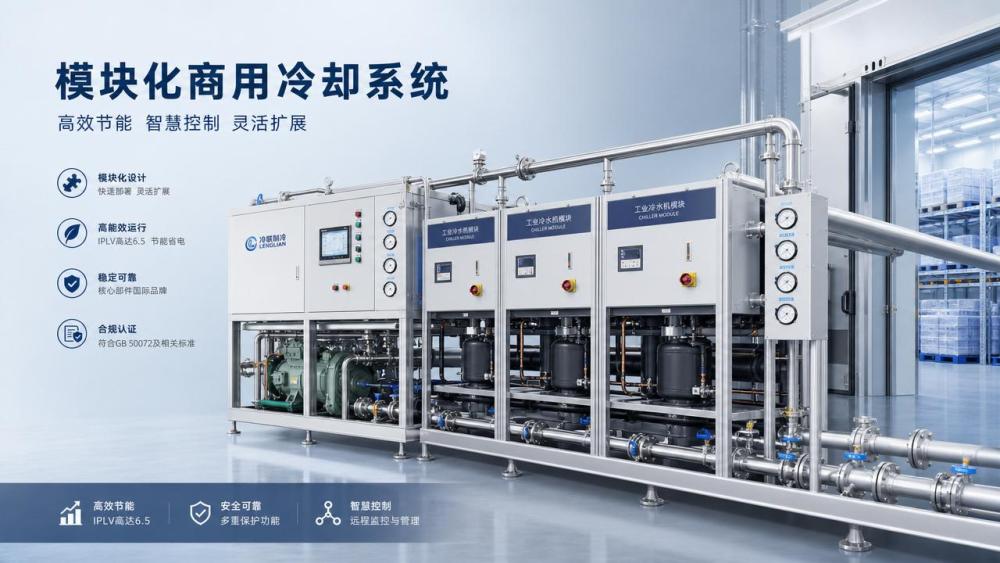
Project managers rarely ask whether a cooling system works today. They ask whether it will still work after capacity doubles, regulations tighten, and operating costs come under pressure.
That is the core search intent behind commercial cooling solutions in a scaling context. Readers want to know which design choices make expansion easier, faster, and less risky.
In practice, scalable systems share a few traits. They are modular, standardized, energy-efficient, digitally visible, and adaptable to refrigerant and compliance changes across markets.
By contrast, systems become bottlenecks when they are oversized for the wrong load profile, built around rigid layouts, or dependent on retrofits that interrupt operations later.
For engineering leads, the most useful way to evaluate scalability is not by nameplate capacity alone. It is by lifecycle flexibility, uptime protection, and expansion cost per added ton of cooling.
What project managers and engineering leads care about most
Target readers in this sector are not looking for abstract refrigeration theory. They need practical guidance that improves planning decisions and reduces downstream surprises.
The first concern is expandability without major redesign. If a site adds production lines, cold rooms, cabinets, or low-temperature storage, the cooling system should accommodate growth in stages.
The second concern is total cost. A lower upfront bid can quickly lose value if piping changes, electrical upgrades, refrigerant conversion, or frequent maintenance inflate lifecycle spending.
Third, they care about reliability under real operating conditions. Scaling is not useful if temperature stability degrades during peak load, defrost cycles, ambient swings, or partial-load operation.
Fourth, compliance matters more than ever. Refrigerant policy, energy rules, food safety standards, and pharmaceutical storage obligations can all reshape equipment decisions before full depreciation is reached.
Finally, they need a clear framework for comparing options. That means understanding which technical features translate into faster deployment, easier replication, and lower expansion risk.
Modular architecture is the strongest foundation for scalable growth
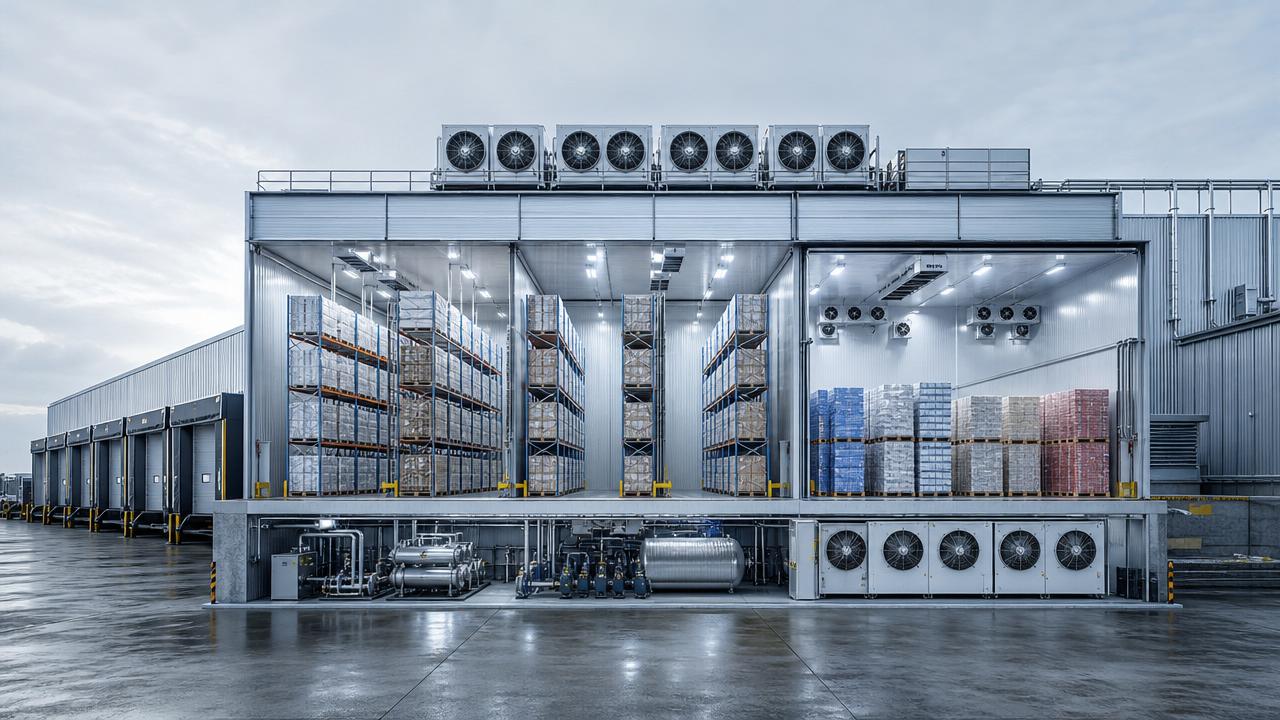
If one factor most consistently makes commercial cooling solutions easier to scale, it is modular architecture. Modular systems allow capacity to be added in controlled increments instead of through disruptive replacement.
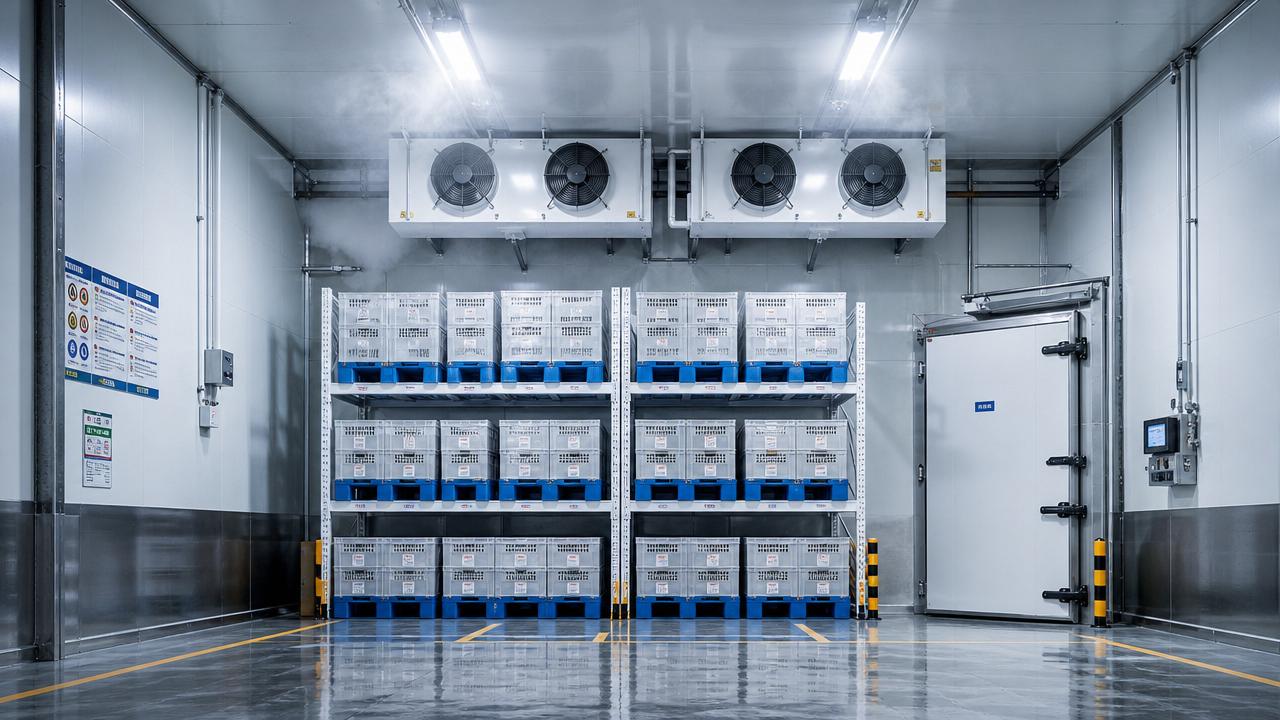
This matters across industries. A food distribution hub may add freezer rooms one phase at a time. A manufacturing plant may extend process cooling as lines are commissioned.
In biomedicine, a research campus may need additional ultra-low temperature storage without rebuilding the refrigeration backbone. Modular design supports all of these growth patterns more cleanly.
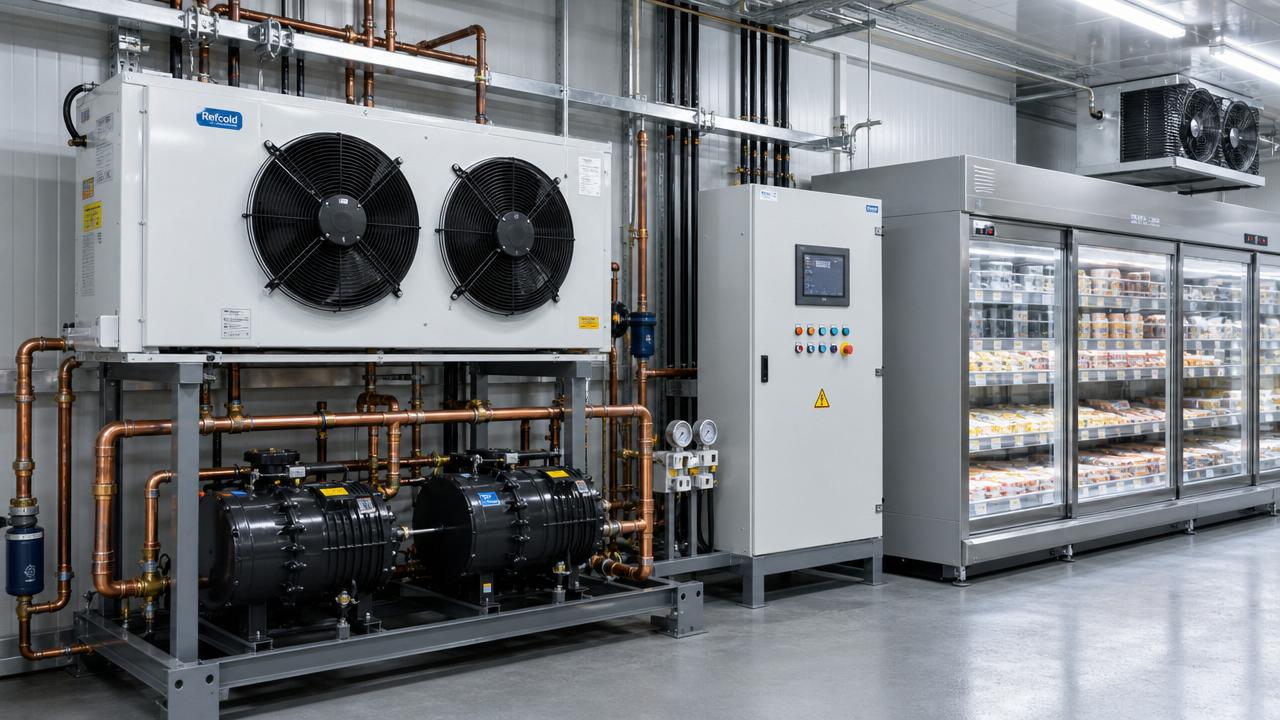
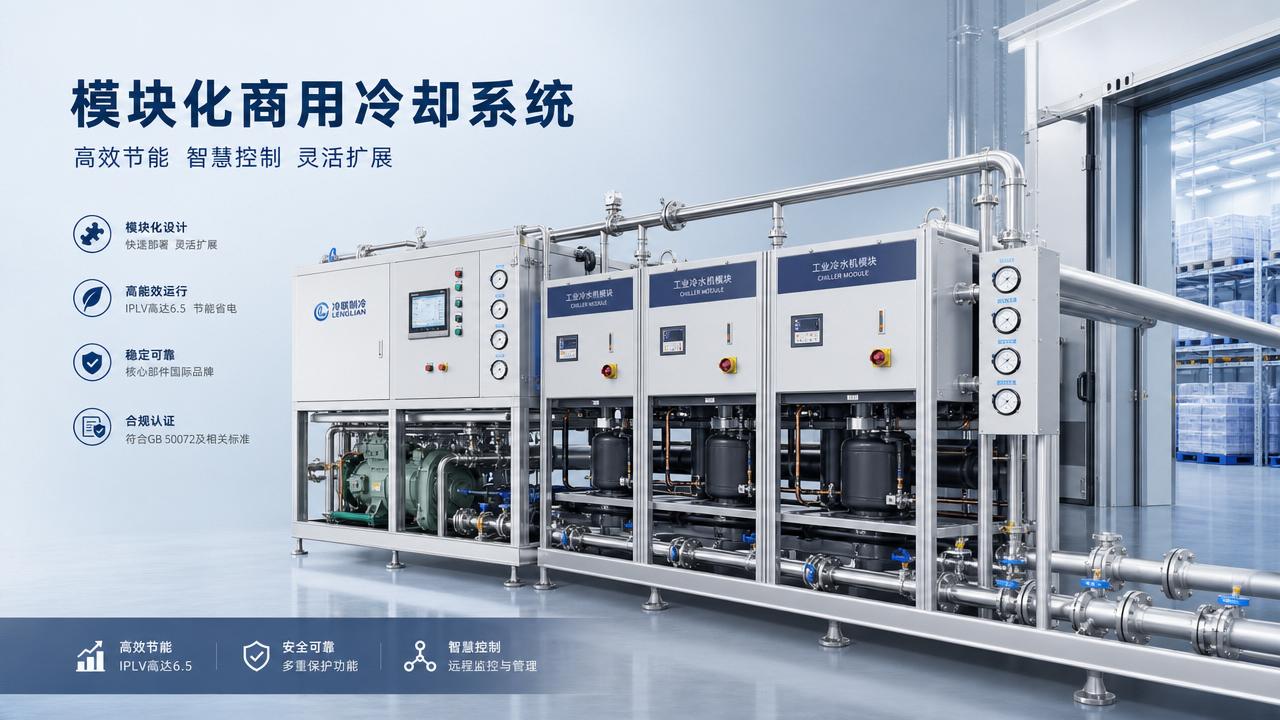
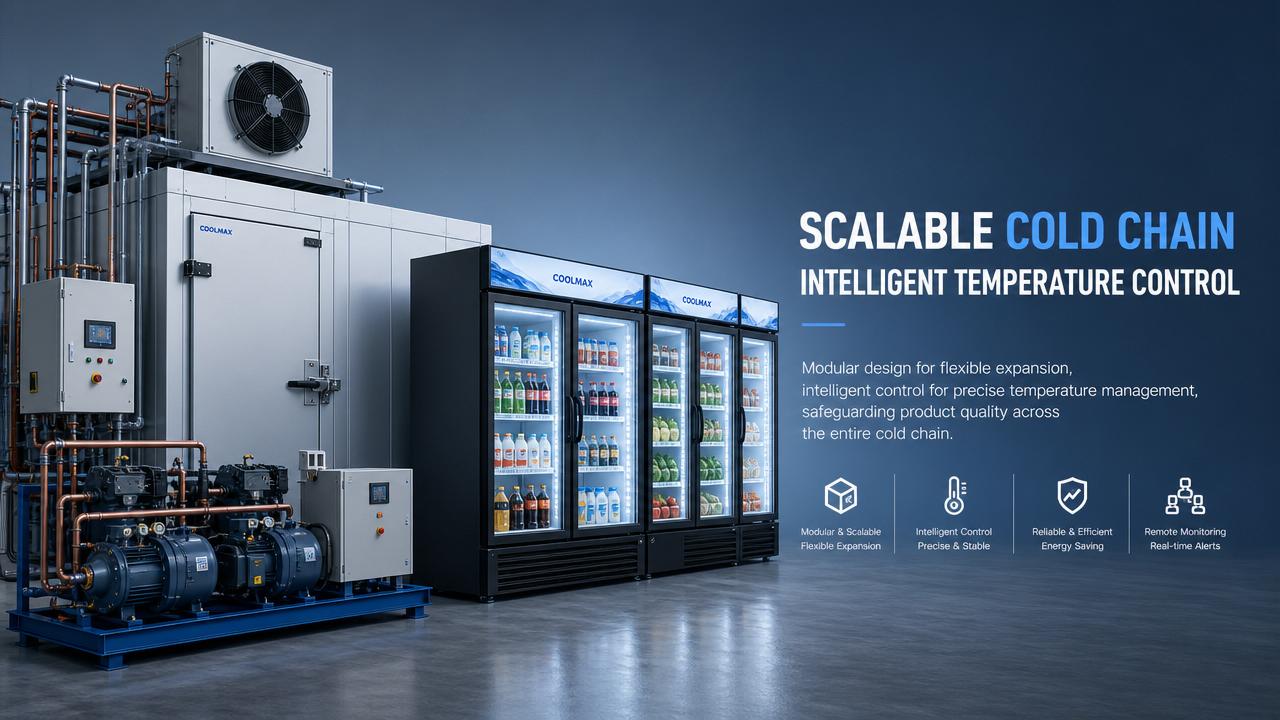
Key indicators of modularity include packaged skid systems, repeatable rack configurations, pre-engineered piping interfaces, and controls that can recognize and coordinate additional units automatically.
From a project perspective, modularity reduces engineering uncertainty. Teams can standardize layout logic, installation sequences, spare parts planning, and commissioning procedures across multiple phases or locations.
It also improves capital timing. Instead of paying for full future capacity on day one, operators can invest according to actual demand while preserving a clean path for expansion.
Load flexibility matters more than maximum capacity
Many cooling systems fail to scale efficiently because they were selected around peak capacity alone. Scalable performance depends just as much on how the system behaves during variable and partial loads.
Commercial cooling solutions that use variable-frequency drives, magnetic bearing technologies, or staged compressor logic usually scale better because they match output to changing demand more precisely.
That improves energy efficiency today and avoids instability tomorrow. As facilities expand in uneven steps, flexible load management prevents short cycling, poor suction control, and avoidable wear.
For project leaders, this is a major decision point. A system that can operate efficiently at 40 percent load and still support future peak demand is often more scalable than a rigid high-capacity design.
Load flexibility is especially important in mixed-use environments. Cold storage, retail cabinets, process chillers, and deep-freeze applications may create overlapping but inconsistent demand patterns throughout the day.
When equipment and controls can absorb those variations smoothly, expansion becomes operationally simpler and financially more defensible.
Standardization reduces both rollout time and retrofit risk
Scaling is rarely a one-time event. It often means repeating successful cooling infrastructure across multiple buildings, regions, or business units. Standardization is what makes that repetition efficient.
Standardized commercial cooling solutions simplify procurement, design review, installation training, and service support. They also reduce the chance that each new site becomes a custom engineering problem.
For example, repeatable compressor rack layouts, common control platforms, and shared sensor architectures make it easier to deploy at speed without compromising performance consistency.
This approach is particularly valuable for organizations expanding retail cold chains or industrial footprints across borders. Engineering teams can carry forward a proven template rather than start from zero each time.
Standardization also improves forecasting. Spare inventory, maintenance intervals, technician skills, and remote diagnostics become easier to plan when system logic remains consistent.
That operational predictability is often more valuable than small differences in initial equipment pricing.
Energy efficiency supports scaling by protecting operating margins
When facilities expand, cooling costs often rise faster than expected. That is why energy performance is not just a sustainability issue. It is a scaling issue.
Commercial cooling solutions become easier to scale when they preserve operating margins as load grows. Efficient heat exchange, inverter-driven compressors, optimized defrost strategies, and intelligent fan control all help.
For project managers, the practical question is simple: will each added unit of cooling capacity create proportional value, or will it erode margins through high energy intensity?
This becomes critical in energy-sensitive applications like industrial chillers, cold storage hubs, and commercial refrigeration cabinets with long daily operating hours.
Systems designed for high seasonal efficiency can justify expansion more easily because they reduce the penalty of growth. In many cases, better efficiency also delays electrical infrastructure upgrades.
That means scalability is improved twice: through lower operating cost and through avoidance of supporting capital expenditure.
Digital controls and visibility make future expansion easier to manage
Cooling systems are much easier to scale when operators can clearly see performance, load trends, alarms, and temperature deviations in real time. Visibility reduces guesswork during expansion planning.
Modern control platforms provide the operational intelligence that project teams need before adding capacity. They show whether bottlenecks come from compressors, airflow, defrost timing, insulation performance, or actual demand growth.
This matters because expansion decisions are often made on incomplete data. A digital system helps separate true capacity constraints from control inefficiencies or maintenance issues.
Commercial cooling solutions with integrated monitoring also streamline commissioning of new phases. Teams can benchmark new modules against existing performance and correct issues faster.
In distributed cold-chain networks, remote visibility is even more valuable. It supports standardized performance management across sites and reduces dependence on local troubleshooting alone.
For engineering leads, scalable cooling is not only physical infrastructure. It is also the ability to supervise a growing asset base without losing control.
Compliance-ready design prevents costly dead ends
One of the biggest threats to scalability is building around a refrigerant, efficiency profile, or safety concept that becomes difficult to support under future regulation.
That is why compliance-ready commercial cooling solutions are easier to scale. They reduce the chance that a successful system design becomes a liability when rolled out across more jurisdictions.
Natural refrigerants, low-GWP transition planning, and documentation aligned with export and local safety requirements all improve long-term flexibility. So does early consideration of room classification and ventilation needs.
For companies expanding internationally, compliance-readiness is not optional. It affects project approval timelines, equipment sourcing, operating permits, and long-term serviceability.
Project managers should evaluate not only current compliance but also transition resilience. Can the system architecture support future refrigerant strategy changes without wholesale replacement?
If the answer is yes, scaling becomes far more practical and far less exposed to regulatory disruption.
Application fit determines whether scaling stays efficient
No cooling strategy scales well if it does not match the application. The right commercial cooling solutions for industrial process heat are not necessarily the right ones for vaccine storage or fresh retail display.
In industrial chiller projects, scalability often depends on heat rejection strategy, process load variability, and maintenance access. In cold storage, compressor staging and room zoning may matter more.
For commercial ice machines, water quality, production redundancy, and logistics flow can determine whether added capacity helps or creates operational friction.
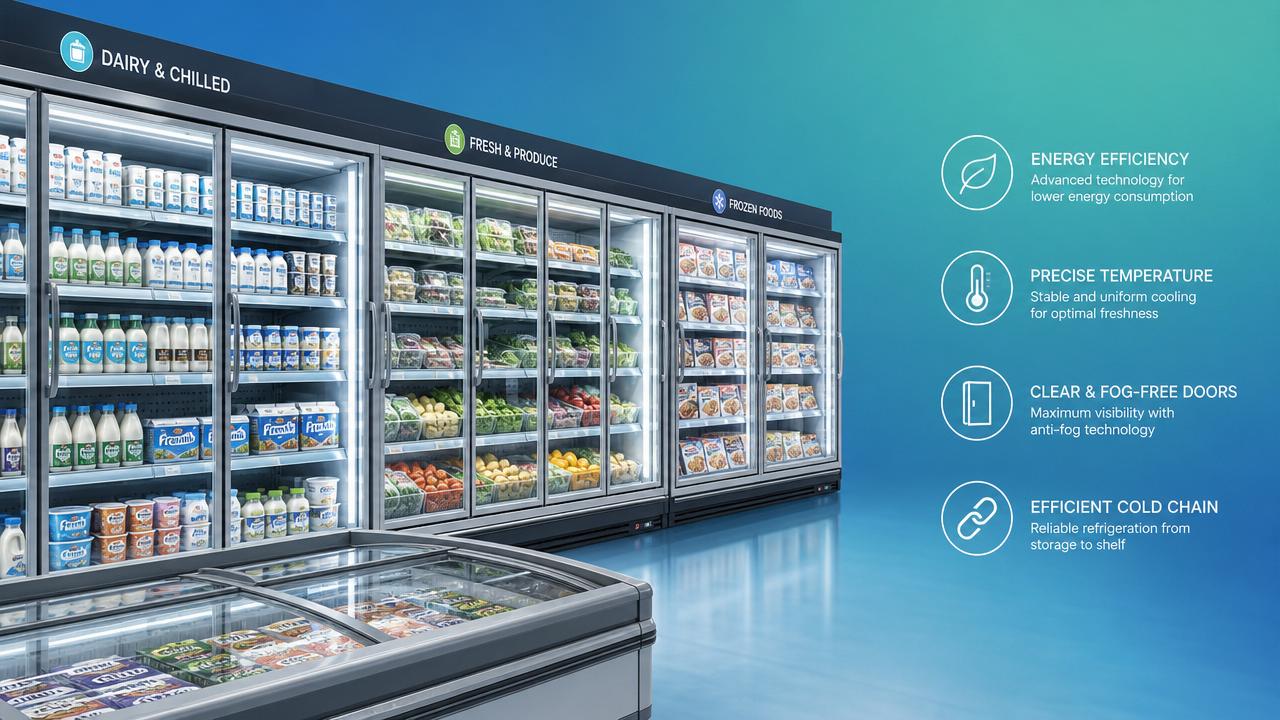
In refrigeration cabinets, air curtain stability, anti-fog performance, and merchandising visibility influence both temperature control and commercial value as store footprints expand.
For ultra-low temperature freezers, cascade reliability, alarm systems, and backup planning are central because scaling without temperature security is unacceptable.
The lesson for decision-makers is clear: scalable design is always application-specific. A technically impressive system is not automatically an expandable one.
How to assess whether a cooling solution is truly scalable
Project teams can make better decisions by using a simple evaluation framework before procurement. The first question is whether capacity can be added without major shutdowns or redesign.
The second is whether the controls platform can integrate future equipment without separate supervisory systems or custom programming that adds complexity over time.
Third, assess partial-load efficiency and redundancy strategy. Expansion typically happens in phases, so the system must perform well before full build-out is reached.
Fourth, review refrigerant and compliance flexibility. A system that is cheap today but difficult to certify, export, or retrofit later is not truly scalable.
Fifth, ask about standardization. Can the same design logic be replicated across sites, or does every new installation require significant re-engineering?
Finally, examine service readiness. Spare parts availability, technician familiarity, remote diagnostics, and maintenance intervals all influence how safely a cooling platform can grow.
Common mistakes that make scaling harder later
One common mistake is oversizing equipment while ignoring control flexibility. This may appear future-proof, but it often creates inefficiency, unstable operation, and poor lifecycle economics.
Another mistake is underestimating infrastructure interfaces. Pipe routing, electrical capacity, structural loading, and ventilation provisions can become hidden limits during later expansion phases.
Some teams also focus too narrowly on equipment purchase price. That can lead to fragmented systems with incompatible controls, inconsistent parts, and higher long-term management effort.
Ignoring compliance trends is another expensive error. Refrigerant strategy should be considered early, especially for businesses planning multi-site or cross-border growth.
Finally, many projects treat monitoring as optional. Without strong operational data, expansion decisions rely too heavily on assumptions rather than measured system behavior.
Conclusion: scalable cooling is built through flexibility, efficiency, and foresight
What makes commercial cooling solutions easier to scale is not a single technology. It is a combination of modular design, load flexibility, standardization, digital visibility, energy efficiency, and compliance readiness.
For project managers and engineering leaders, the best systems are the ones that support phased growth without forcing expensive redesign, unstable performance, or regulatory compromise later.
In practical terms, scalability should be evaluated as a lifecycle capability. If a cooling system can expand cleanly, operate efficiently under changing loads, and remain compliant across markets, it creates real strategic value.
That is the standard worth using when planning cold-chain networks, industrial plants, retail refrigeration environments, or deep-cryogenic facilities built for growth.
Recommended News
 Cold Chain & Retail Energy InsightsWhen Does Cold Storage Stop Saving Energy and Start Losing It?Analyst :Mr. Julian Thorne
 Cold Chain & Retail Energy InsightsCommercial Refrigeration Upgrades: Which Costs Are Easy to Miss?Analyst :Mr. Julian Thorne
 Cold Chain & Retail Energy InsightsCold Chain Logistics Failures Often Start With Small Temperature SwingsAnalyst :Mr. Julian Thorne
 Cold Chain & Retail Energy InsightsCold Storage Solutions That Fit Expansion Plans Without OverbuildingAnalyst :Mr. Julian Thorne
 Cold Chain & Retail Energy InsightsEnergy efficient cooling is not always the cheaper optionAnalyst :Mr. Julian Thorne
 Cold Chain & Retail Energy InsightsCold chain technology gaps still cause avoidable spoilageAnalyst :Mr. Julian Thorne
 Cold Chain & Retail Energy InsightsAPEC Auto Dialogue Sets New Standards for Smart Cold-Chain TrailersAnalyst :Mr. Julian Thorne
 Cold Chain & Retail Energy InsightsWhat makes commercial cooling solutions easier to scaleAnalyst :Mr. Julian Thorne
 Cold Chain & Retail Energy InsightsSouth Korea Extends Fuel Tax Relief to End-JulyAnalyst :Mr. Julian Thorne
 Cold Chain & Retail Energy InsightsWhen does air curtain refrigeration waste more energy?Analyst :Mr. Julian Thorne
 Cold Chain & Retail Energy InsightsCold chain technology failures often start with one gapAnalyst :Mr. Julian Thorne
 Cold Chain & Retail Energy InsightsWhat makes commercial cooling solutions easier to scale?Analyst :Mr. Julian Thorne
 Cold Chain & Retail Energy InsightsCold chain logistics risks that damage product qualityAnalyst :Mr. Julian Thorne
 Cold Chain & Retail Energy InsightsHow to compare energy efficient cooling beyond SEERAnalyst :Mr. Julian Thorne
 Cold Chain & Retail Energy InsightsHow cold chain technology reduces hidden spoilage risksAnalyst :Mr. Julian Thorne
 Cold Chain & Retail Energy InsightsWhat to check before choosing cold storage solutionsAnalyst :Mr. Julian Thorne
 Cold Chain & Retail Energy InsightsWhy commercial cooling solutions vary so much in ROIAnalyst :Mr. Julian Thorne
 Cold Chain & Retail Energy InsightsIs digital refrigeration control worth the upgrade costAnalyst :Mr. Julian Thorne
 Cold Chain & Retail Energy InsightsIs variable frequency cooling worth the energy savings?Analyst :Mr. Julian Thorne
 Cold Chain & Retail Energy InsightsWhy energy efficient cooling pays off faster than expectedAnalyst :Mr. Julian Thorne
 Cold Chain & Retail Energy InsightsIs your cold chain technology ready for stricter standardsAnalyst :Mr. Julian Thorne
 Cold Chain & Retail Energy InsightsHow Do Cold Storage Solutions Cut Energy Waste?Analyst :Mr. Julian Thorne
 Cold Chain & Retail Energy InsightsIs commercial refrigeration wasting energy after hours?Analyst :Mr. Julian Thorne
 Cold Chain & Retail Energy InsightsHow can cold chain logistics cut energy losses?Analyst :Mr. Julian Thorne
 Cold Chain & Retail Energy InsightsCold Storage Design Basics: Temperature Zones, Insulation, and Refrigeration LoadAnalyst :Mr. Julian Thorne
 Cold Chain & Retail Energy InsightsCold Chain Logistics Risks: How to Control Temperature from Plant to ShelfAnalyst :Mr. Julian Thorne
 Cold Chain & Retail Energy InsightsHow Refrigeration Technology Supports Food Safety in Cold Chain Storage and TransportAnalyst :Mr. Julian Thorne
 Cold Chain & Retail Energy InsightsHow Eco-Friendly Cooling Cuts Operating Costs in Food Processing and Cold RoomsAnalyst :Mr. Julian Thorne
 Cold Chain & Retail Energy InsightsWhat Is Cold Chain Technology and Which Industries Depend on It Most?Analyst :Mr. Julian Thorne
 Cold Chain & Retail Energy InsightsEnergy Efficient Cooling for Retail Stores: How to Compare Load, COP, and Defrost StrategyAnalyst :Mr. Julian Thorne
 Cold Chain & Retail Energy InsightsDigital Refrigeration Control in Supermarkets: How to Cut Temperature Drift and Alarm ErrorsAnalyst :Mr. Julian Thorne
 Cold Chain & Retail Energy InsightsDigital Refrigeration Upgrade Cost: When Retrofits Make Sense for Multi-Site OperationsAnalyst :Mr. Julian Thorne
 Cold Chain & Retail Energy InsightsIndustrial Refrigeration Systems for Food Processing: Common Failures and FixesAnalyst :Mr. Julian Thorne
 Cold Chain & Retail Energy InsightsCold Storage Design Basics: Temperature Ranges, Load Factors, and Common LayoutsAnalyst :Mr. Julian Thorne
 Cold Chain & Retail Energy InsightsEnergy Efficient Cooling for Food Retail: How to Cut Power Use Without Risking Product QualityAnalyst :Mr. Julian Thorne
 Cold Chain & Retail Energy InsightsCold Storage Energy Costs: What Drives Power Use and How to Reduce WasteAnalyst :Mr. Julian Thorne
 Cold Chain & Retail Energy InsightsCold Chain Logistics Costs: What Drives Energy, Spoilage, and Equipment InvestmentAnalyst :Mr. Julian Thorne
 Cold Chain & Retail Energy InsightsCold Storage Solutions for Food and Pharma: What to Compare Before System DesignAnalyst :Mr. Julian Thorne
 Cold Chain & Retail Energy InsightsCold Chain Logistics Costs: Where Energy Loss Happens and How to Reduce ItAnalyst :Mr. Julian Thorne
 Cold Chain & Retail Energy InsightsCommercial Cooling Solutions for Retail Stores: How to Balance Display, Efficiency, and CostAnalyst :Mr. Julian Thorne