Industry News
Curation by industry experts
Hot Articles
- Cold Chain & Retail Energy InsightsHow North American Cold Facilities Can Benchmark Refrigeration System Efficiency
- -86℃ ULT FreezersHow to Select Medical Cryogenic Vials for Long-Term Sample Storage
- Cold Chain & Retail Energy InsightsFood-Grade Panel Requirements for Hygienic Meat Cold Storage Systems
Popular Tags
How variable frequency cooling cuts peak energy costs
For finance approvers, variable frequency cooling is more than an engineering upgrade—it is a controllable way to reduce peak energy costs, improve load efficiency, and strengthen long-term asset returns. In commercial refrigeration and cold-chain operations, where demand spikes can erode margins fast, understanding how variable frequency systems align cooling output with real load conditions helps turn energy management into a measurable financial advantage.
Why peak demand costs matter more than many finance teams expect
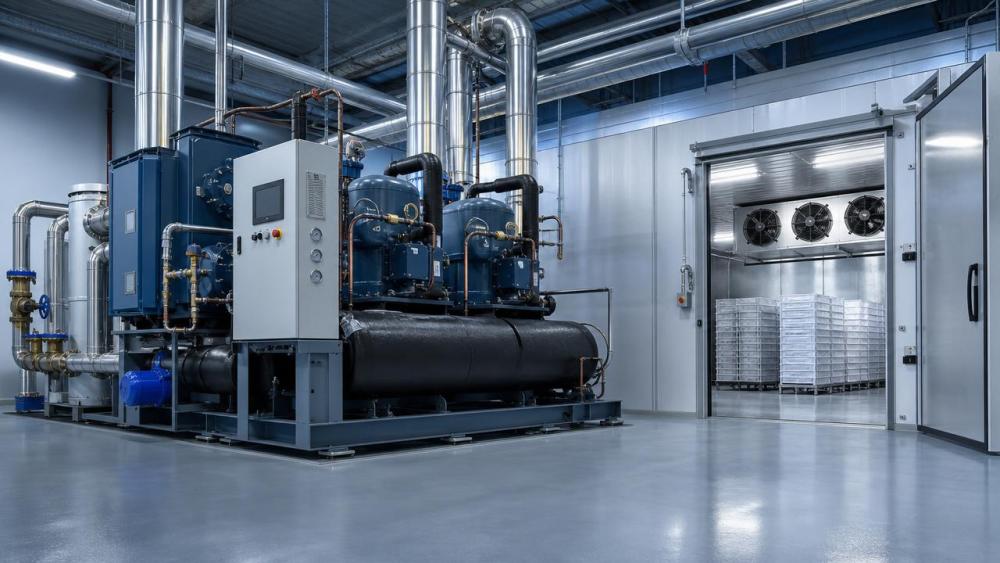
In refrigeration-heavy operations, the electricity bill is rarely driven by consumption alone. Demand charges, time-of-use pricing, and penalty structures can make short periods of high load disproportionately expensive.
That is why variable frequency cooling deserves financial review. Instead of running compressors, pumps, and fans at fixed speed regardless of actual thermal demand, variable speed control adjusts output to the real load profile.
For finance approvers, this means a shift from reactive utility spending to controlled operating expenditure. Lower peak draw can improve budgeting accuracy, reduce seasonal billing shocks, and support stronger payback calculations.
- Cold storage hubs often face simultaneous compressor starts during loading windows, creating avoidable peak demand spikes.
- Industrial chillers may be oversized for safety, but fixed-speed operation leaves part-load efficiency gains unrealized for most working hours.
- Retail refrigeration and medical low-temperature systems usually operate under variable occupancy, ambient temperature, and door-opening conditions, making static control financially inefficient.
CCRS follows these patterns across industrial chillers, commercial ice machines, cold storage compressors, refrigeration cabinets, and ultra-low temperature freezers. The common lesson is clear: load volatility creates cost volatility unless control architecture is built to respond.
How variable frequency cooling cuts peak energy costs in practice
Variable frequency cooling uses drives and intelligent controls to modulate motor speed. In thermodynamic terms, the system reduces unnecessary compression and air or water movement when heat rejection or cooling demand falls.
For a finance audience, the value is not only in energy saved per kilowatt-hour. The stronger result often comes from flattening the load curve, avoiding high-demand intervals, and reducing equipment stress during repeated start-stop cycles.
Main financial mechanisms behind the savings
- Lower maximum demand by ramping motors smoothly rather than drawing full inrush current at startup.
- Higher part-load efficiency because refrigeration assets spend much of their life below design capacity.
- Reduced wear on compressors and auxiliaries, which can translate into fewer emergency maintenance events and longer asset life.
- Better temperature stability, which can lower product loss risk in fresh retail, food logistics, pharmaceuticals, and process cooling.
The last point matters financially. A system that trims demand but causes unstable storage conditions is not a real saving. Good variable frequency cooling balances energy control with product protection and process continuity.
Where finance approvers see the strongest return by application
Not every site produces the same savings profile. The best opportunities appear where operating loads change sharply across shifts, seasons, production batches, or delivery schedules.
The table below shows where variable frequency cooling often creates the most visible business impact across the commercial cold-chain and refrigeration landscape.
For finance approvers, the most attractive projects are usually those with both utility savings and operational risk reduction. CCRS research across these categories shows that the strongest business case often comes from combined value, not from electricity reduction alone.
Variable speed versus fixed speed: what changes in the approval model
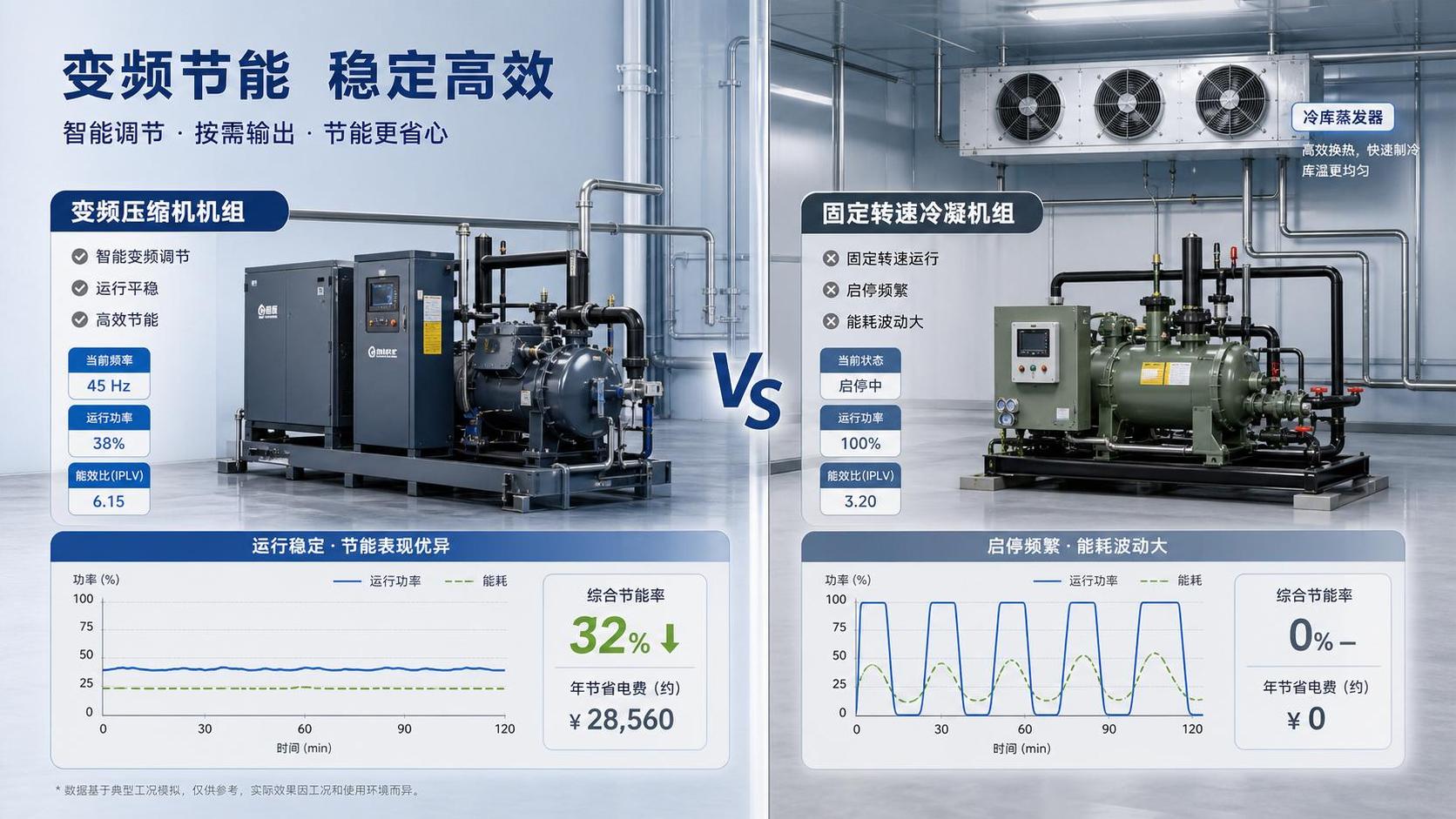
Approvals get delayed when teams compare purchase price only. A fixed-speed system can look cheaper at procurement stage, yet become more expensive over the asset lifecycle because it handles partial load inefficiently.
The comparison below is useful when deciding whether a variable frequency cooling retrofit or new installation deserves priority in the capital plan.
The approval model changes because the financial case becomes multidimensional. Finance should examine tariff structure, annual operating hours, load variability, maintenance history, and the value of temperature-sensitive goods stored or processed on site.
Which technical indicators should finance teams ask for before approval?
Finance teams do not need to become refrigeration engineers, but they do need a short list of decision-grade metrics. Asking for the right parameters reduces the risk of approving an inefficient or oversized project.
Key metrics worth requesting
- Peak electrical demand before and after upgrade, preferably measured by interval data rather than estimated averages.
- Annual operating hours at full load, partial load, and low load, because variable frequency cooling performs best when the load profile is dynamic.
- Coefficient of performance or seasonal efficiency indicators under expected ambient and operating conditions.
- Expected maintenance implications, including compressor cycling reduction, filter care, inverter service requirements, and controls calibration.
- Compatibility with low-GWP refrigerant strategies, export compliance needs, and future retrofit planning.
CCRS places special value on this last point. A cooling investment approved today may face future regulatory pressure if refrigerant pathways and control systems are not aligned with evolving compliance frameworks.
How to evaluate payback without underestimating hidden benefits
A narrow payback model can reject good projects. Many organizations count only direct energy reduction, leaving out demand charge avoidance, lower maintenance volatility, inventory protection, and utility incentive potential.
The table below summarizes a practical review structure for variable frequency cooling proposals.
When these items are included, the financial picture becomes more realistic. That is especially important for finance approvers evaluating retrofits in facilities where electricity pricing, compliance exposure, and product sensitivity are all material factors.
What risks and misconceptions should decision-makers avoid?
Variable frequency cooling is not a universal shortcut. Savings can disappoint when system design, controls logic, or operating conditions are misunderstood.
Common mistakes in project review
- Approving a drive upgrade without checking whether compressors, motors, valves, and control sequences are suitable for variable speed operation.
- Assuming every facility has the same savings potential, even when loads are already stable and near design point most of the time.
- Ignoring harmonics, power quality, and control integration requirements in older electrical environments.
- Comparing bids without a common basis for ambient conditions, temperature setpoints, or defrost strategy.
- Treating refrigerant compliance and energy efficiency as separate decisions, even though regulation can change future operating economics.
This is where CCRS offers practical value. Its Strategic Intelligence Center connects thermodynamic analysis, refrigerant regulation tracking, and energy evaluation, helping procurement and finance teams avoid single-variable decision making.
How finance approvers can structure a smarter procurement process
A disciplined review process shortens approval time and improves outcome quality. Finance does not need to own the engineering details, but it should require a decision framework that is comparable across vendors and system options.
Recommended approval checklist
- Request at least 12 months of utility data, including peak demand intervals where available.
- Confirm actual load profile by season, shift, throughput level, and ambient condition.
- Ask suppliers to separate savings from compressor control, fan control, pump control, and system optimization rather than merging them into one estimate.
- Review refrigerant pathway, future compliance exposure, and compatibility with low-carbon modernization plans.
- Check delivery scope, commissioning responsibility, controls tuning, operator training, and post-installation verification method.
For cold-chain and industrial cooling projects, a good proposal should explain not only how variable frequency cooling saves energy, but also how it will behave during loading surges, door openings, defrost events, process spikes, and power disturbances.
FAQ: practical questions finance teams ask about variable frequency cooling
Is variable frequency cooling only worthwhile for large facilities?
No. Larger facilities often show bigger absolute savings, but smaller sites with strong tariff penalties or highly variable loads can also justify the investment. The key is the load profile, not just equipment size.
What is the biggest factor behind payback speed?
In many cases it is peak demand reduction rather than energy volume alone. Sites with time-of-use pricing, frequent starts, or uneven occupancy often realize faster returns because the billing structure magnifies short-duration peaks.
Which sectors benefit most from this approach?
Industrial process cooling, cold storage logistics, fresh retail refrigeration, ice production, and biomedical temperature control all benefit when thermal demand fluctuates. These are core CCRS observation areas because they combine energy intensity with temperature-critical performance.
What should be included in a supplier quotation?
A useful quotation should cover operating assumptions, control scope, expected demand impact, commissioning responsibilities, electrical compatibility, refrigerant considerations, and verification approach after startup. Without these details, cost comparisons are incomplete.
Why choose us for variable frequency cooling evaluation and project support
CCRS supports decision-makers who need more than generic efficiency claims. Our coverage spans industrial chillers, commercial ice systems, cold storage compressors, refrigeration cabinets, and ultra-low temperature equipment, giving finance teams a broader basis for evaluating where variable frequency cooling will deliver meaningful returns.
Because our intelligence approach combines thermodynamics, compliance tracking, and energy evaluation, we can help you review projects from both technical and financial angles. That matters when peak energy costs, refrigerant transition risk, and asset lifespan all influence approval quality.
- Confirm performance parameters relevant to your tariff structure and load pattern.
- Compare retrofit versus replacement options for chillers, compressors, cabinets, or freezer systems.
- Review likely delivery timelines, commissioning scope, and operating risks before capital approval.
- Assess refrigerant compliance implications, especially for export-oriented or regulation-sensitive projects.
- Discuss customized solution pathways, quotation logic, and decision-ready evaluation points for internal signoff.
If you are reviewing a plant upgrade, cold-chain expansion, or refrigeration retrofit, contact us with your operating profile, equipment category, target temperatures, and billing concerns. We can help you narrow the right variable frequency cooling pathway, clarify selection criteria, and prepare a more defensible approval case.
Recommended News
 Thermodynamic Tech TrendsTemperature Control Problems That Quietly Ruin Product QualityAnalyst :Prof. Sarah Lin
 Thermodynamic Tech TrendsHow heat exchange technology shapes system reliabilityAnalyst :Prof. Sarah Lin
 Thermodynamic Tech TrendsAus Scientists Break Through Anhydrous Proton-Conducting MembraneAnalyst :Prof. Sarah Lin
 Thermodynamic Tech TrendsHow variable frequency cooling cuts peak energy costsAnalyst :Prof. Sarah Lin
 Thermodynamic Tech TrendsHeat exchange technology flaws that raise operating costsAnalyst :Prof. Sarah Lin
 Thermodynamic Tech TrendsWhat makes eco-friendly cooling practical in daily use?Analyst :Prof. Sarah Lin
 Thermodynamic Tech TrendsWhat heat exchange technology cuts cooling energy wasteAnalyst :Prof. Sarah Lin
 Thermodynamic Tech TrendsLow carbon refrigeration is changing project planningAnalyst :Prof. Sarah Lin
 Thermodynamic Tech TrendsHeat Exchange Technology Is Changing Cooling DesignAnalyst :Prof. Sarah Lin
 Thermodynamic Tech TrendsWhat limits heat exchange efficiency in real systems?Analyst :Prof. Sarah Lin
 Thermodynamic Tech TrendsIndustrial Refrigeration System Selection: Key Capacity, Refrigerant, and Load FactorsAnalyst :Prof. Sarah Lin
 Thermodynamic Tech TrendsVariable Frequency Cooling Selection Guide: How to Match Load Range, COP, and Control StrategyAnalyst :Prof. Sarah Lin
 Thermodynamic Tech TrendsHeat Exchange Technology in Refrigeration: Which Design Improves Capacity and Defrost Efficiency?Analyst :Prof. Sarah Lin
![]() Thermodynamic Tech TrendsMagnetic Bearing Technology Explained: How Oil-Free Compression Improves Chiller EfficiencyAnalyst :Prof. Sarah Lin
Thermodynamic Tech TrendsMagnetic Bearing Technology Explained: How Oil-Free Compression Improves Chiller EfficiencyAnalyst :Prof. Sarah Lin Thermodynamic Tech TrendsVariable Frequency Cooling Explained: How It Improves Refrigeration Efficiency and Load ControlAnalyst :Prof. Sarah Lin
 Thermodynamic Tech TrendsHeat Exchange Efficiency: Which Design Factors Matter Most in Industrial Cooling?Analyst :Prof. Sarah Lin
 Thermodynamic Tech TrendsHeat Exchange Technology Comparison: Plate, Shell-and-Tube, or Microchannel?Analyst :Prof. Sarah Lin
 Thermodynamic Tech TrendsIndustrial Cooling Systems Explained: Which Setup Fits Food, Pharma, and Process Plants?Analyst :Prof. Sarah Lin
 Thermodynamic Tech TrendsVariable Frequency Cooling vs Fixed-Speed Systems: Which Cuts Energy Costs Better?Analyst :Prof. Sarah Lin
 Thermodynamic Tech TrendsTemperature Control Systems Explained: Key Components, Control Logic, and Common UsesAnalyst :Prof. Sarah Lin
 Thermodynamic Tech TrendsHow Heat Exchange Efficiency Affects Compressor Load and System StabilityAnalyst :Prof. Sarah Lin
 Thermodynamic Tech TrendsEnergy Saving Low Carbon Cooling: Which Metrics Actually Matter in System Evaluation?Analyst :Prof. Sarah Lin
 Thermodynamic Tech TrendsHow to Compare a Heat Transfer Technology Manufacturer for Custom Process Cooling ProjectsAnalyst :Prof. Sarah Lin
 Thermodynamic Tech TrendsChoosing an Industrial Cooling Systems Supplier: 7 Evaluation Criteria Before RFQAnalyst :Prof. Sarah Lin
 Thermodynamic Tech TrendsHeat Transfer Technology Air Cooler: Key Design Factors for Stable Cooling PerformanceAnalyst :Prof. Sarah Lin
 Thermodynamic Tech TrendsEnergy Efficient Refrigeration Systems with Heat Recovery: Where the Savings Really Come FromAnalyst :Prof. Sarah Lin
 Thermodynamic Tech TrendsWhat Determines Heat Exchange Technology Price in Industrial Cooling Projects?Analyst :Prof. Sarah Lin
 Thermodynamic Tech TrendsHow to Select Heat Exchange Plates for Corrosion Resistance and Thermal EfficiencyAnalyst :Prof. Sarah Lin
 Thermodynamic Tech TrendsHow Microchannel Heat Exchangers Improve Refrigeration System EfficiencyAnalyst :Prof. Sarah Lin
 Thermodynamic Tech TrendsHeat Transfer Technology for Blast Freezers: Speed, Efficiency, and DesignAnalyst :Prof. Sarah Lin
 Thermodynamic Tech TrendsHow to Size Heat Exchange Systems for Refrigeration Plants at Peak LoadAnalyst :Prof. Sarah Lin