Industry News
Curation by industry experts
Hot Articles
- Eco-Refrigerant & ComplianceEco-Friendly Cooling Options: Refrigerants, Energy Use, and Compliance Factors Compared
- Air/Water-cooled ScrewIndustrial Chillers vs Cooling Towers: Which Option Fits Process Cooling Costs Better?
- Flake Ice MachinesCommercial Ice Machines for Restaurants and Bars: Types, Output, and Drainage Needs
Popular Tags
What Is Industrial Cooling? Main System Types and How to Choose by Load
What does industrial cooling actually include?
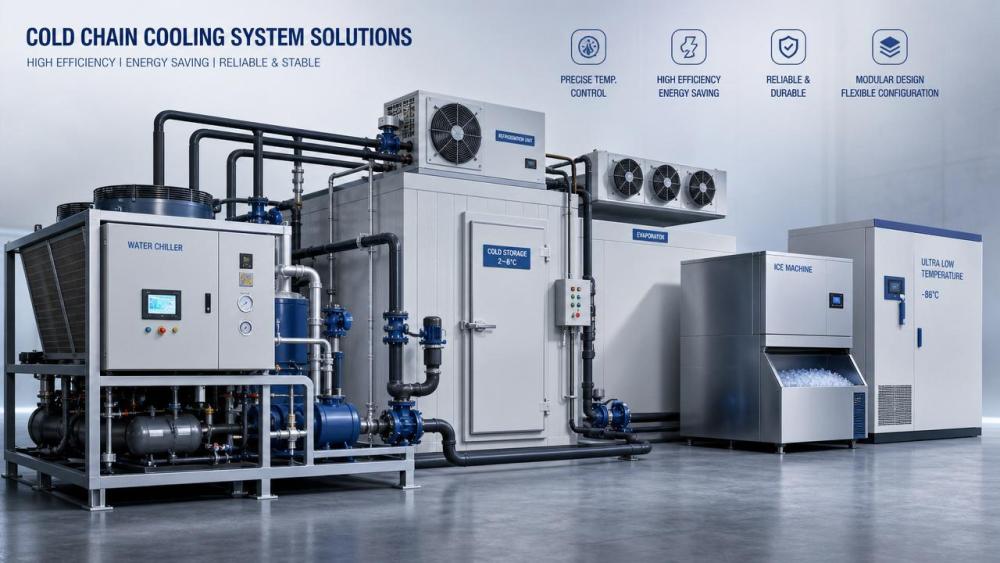
Industrial cooling is the controlled removal of heat from equipment, products, rooms, or processes that cannot run safely at ambient temperature.
That sounds simple, but the applications are very different. A laser cutter, a cold storage compressor room, and a vaccine freezer face different heat loads.
In practice, industrial cooling sits behind manufacturing stability, food freshness, concrete temperature control, medical storage, and precision processing quality.
The core idea is not just “making things cold.” It is matching cooling capacity, temperature range, and control speed to a real operating load.
That is why the topic matters across sectors. If the load is misunderstood, systems short cycle, waste power, drift off temperature, or wear out early.
CCRS follows this field from a systems perspective. It connects thermodynamic performance, refrigerant compliance, and operating economics across factories, cold chain hubs, and deep-cryogenic use.
A more useful way to define industrial cooling is this: a family of engineered refrigeration and heat rejection solutions built around load behavior.
Which main system types are used most often?
People often search for one perfect answer, yet industrial cooling usually comes down to a handful of main architectures.
Each one fits a different mix of process temperature, duty cycle, hygiene demands, and site constraints.
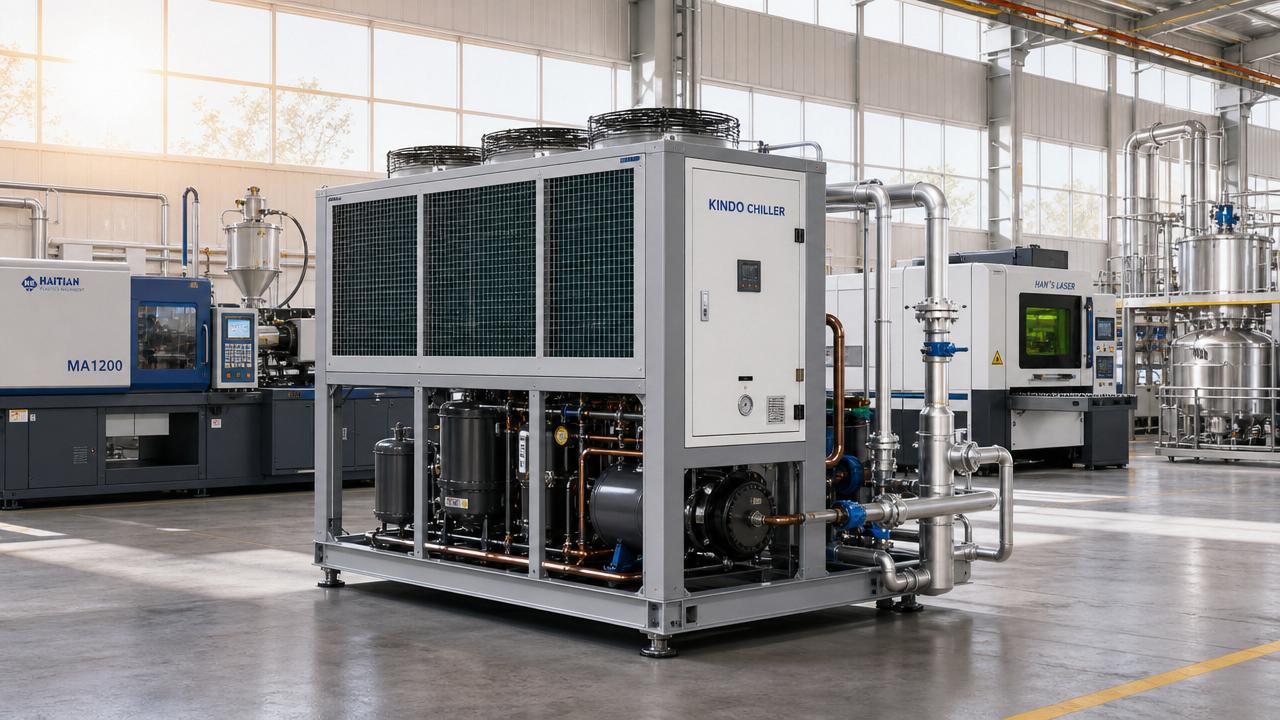
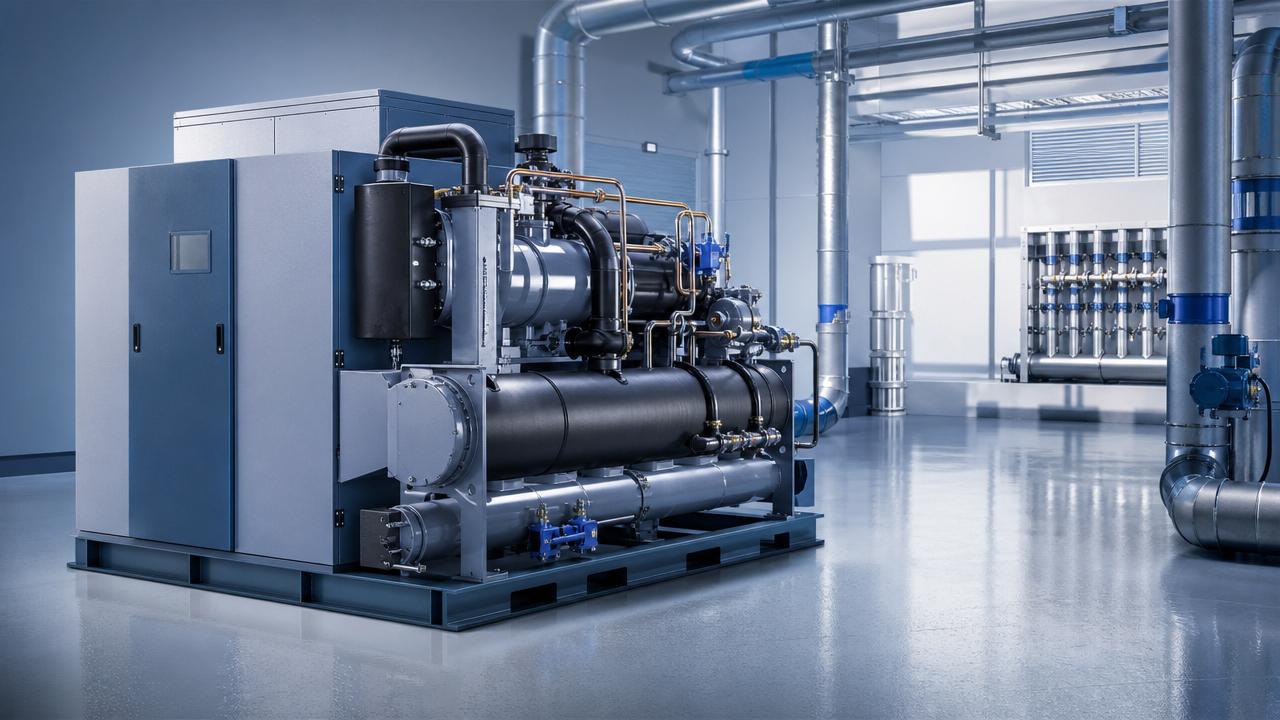
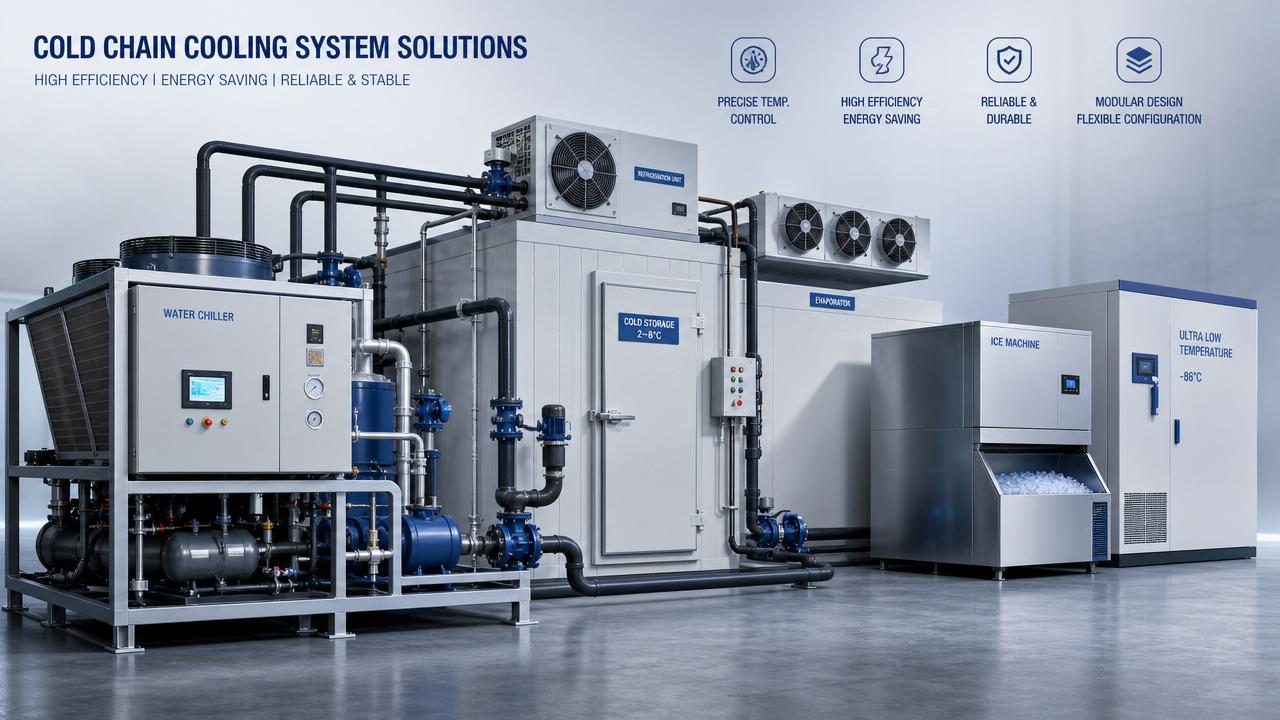
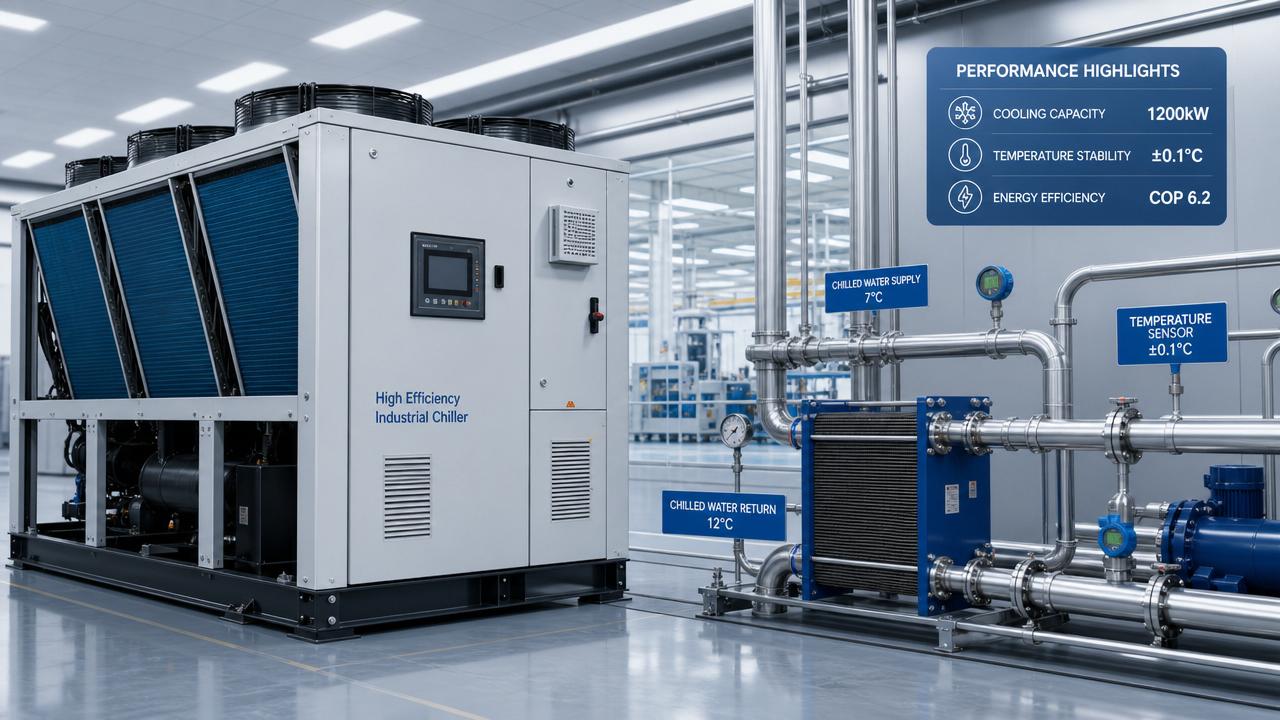
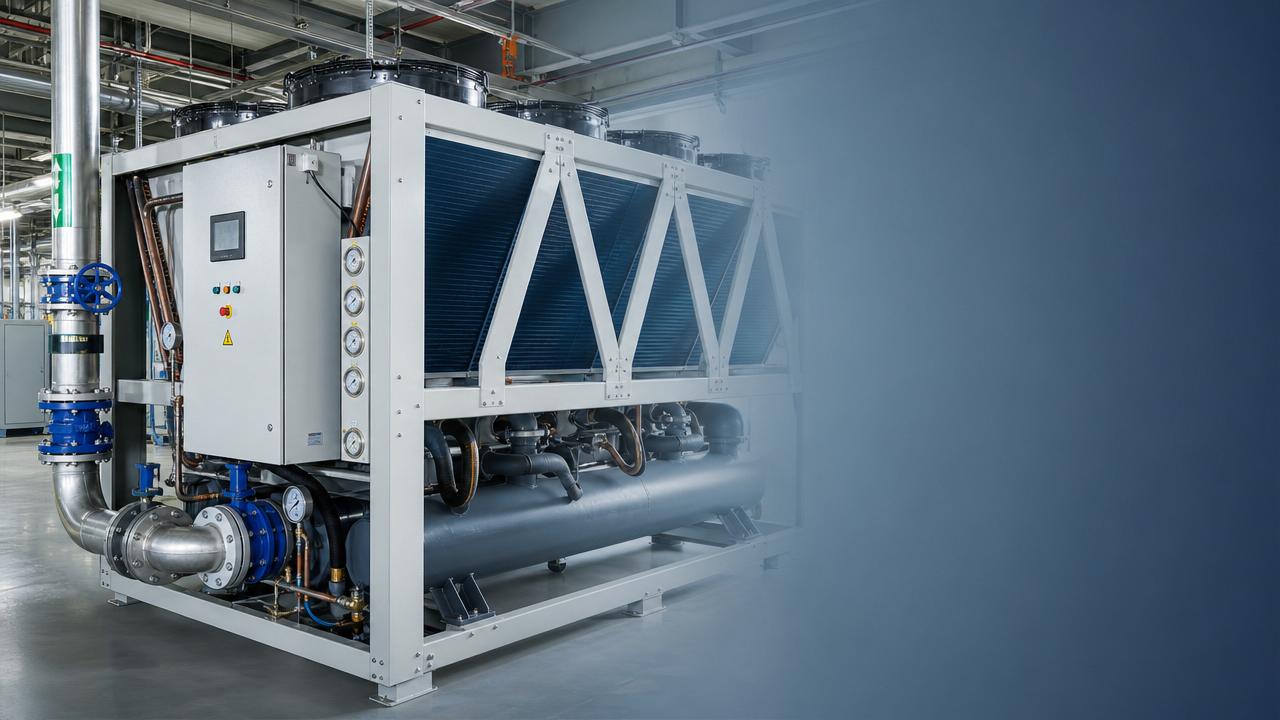
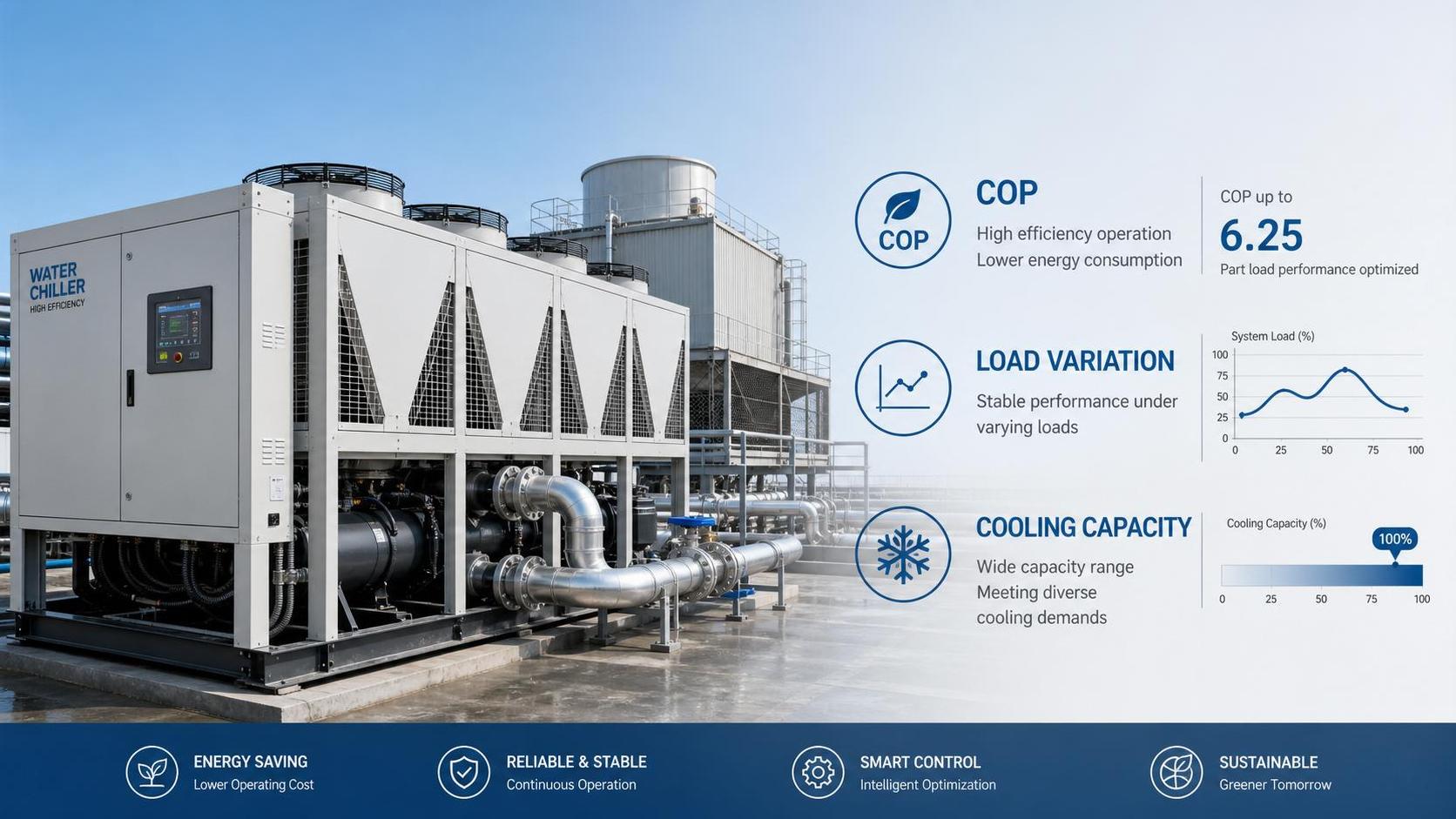
Chiller systems for process heat removal
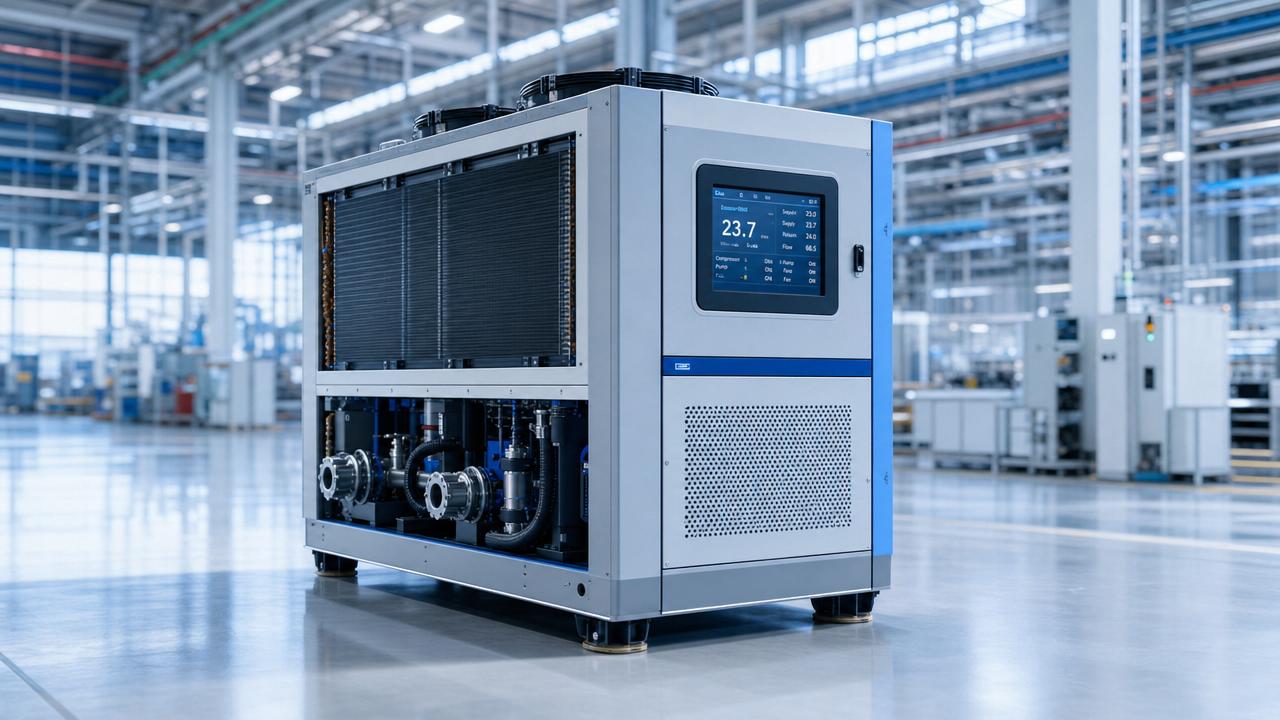
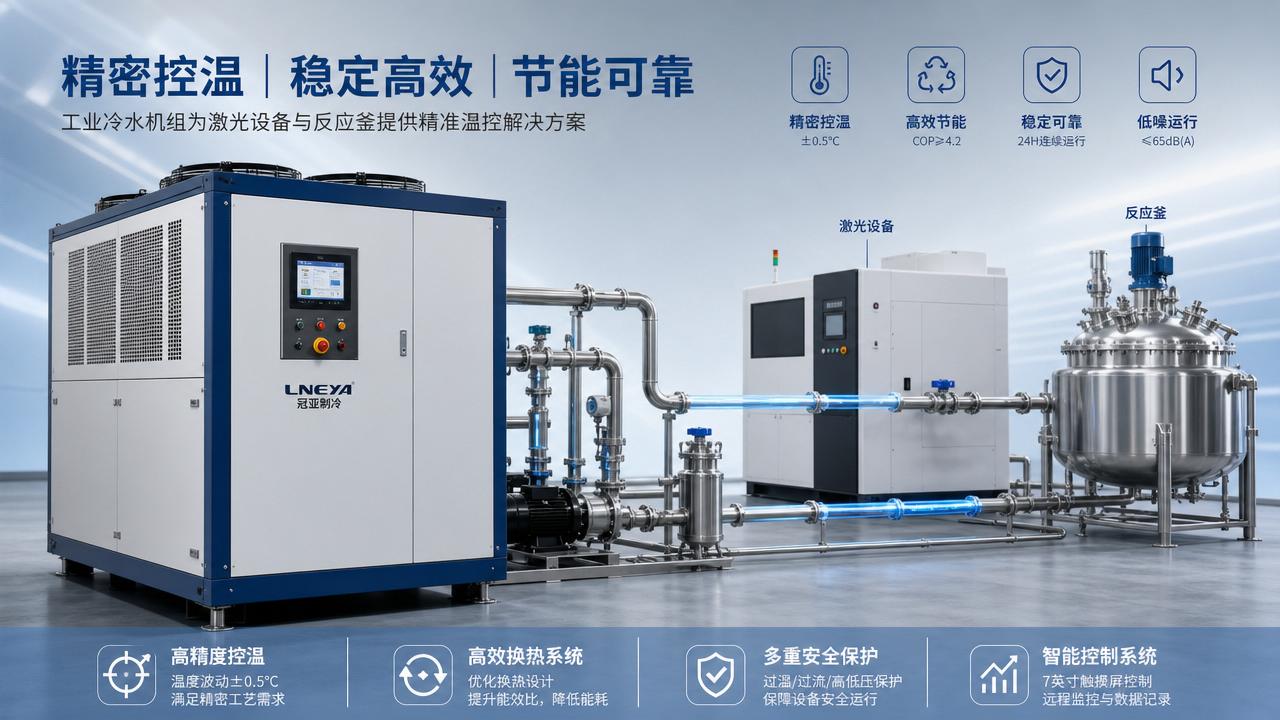
Industrial chillers are common in plastics, metalworking, printing, electronics, and laser applications.
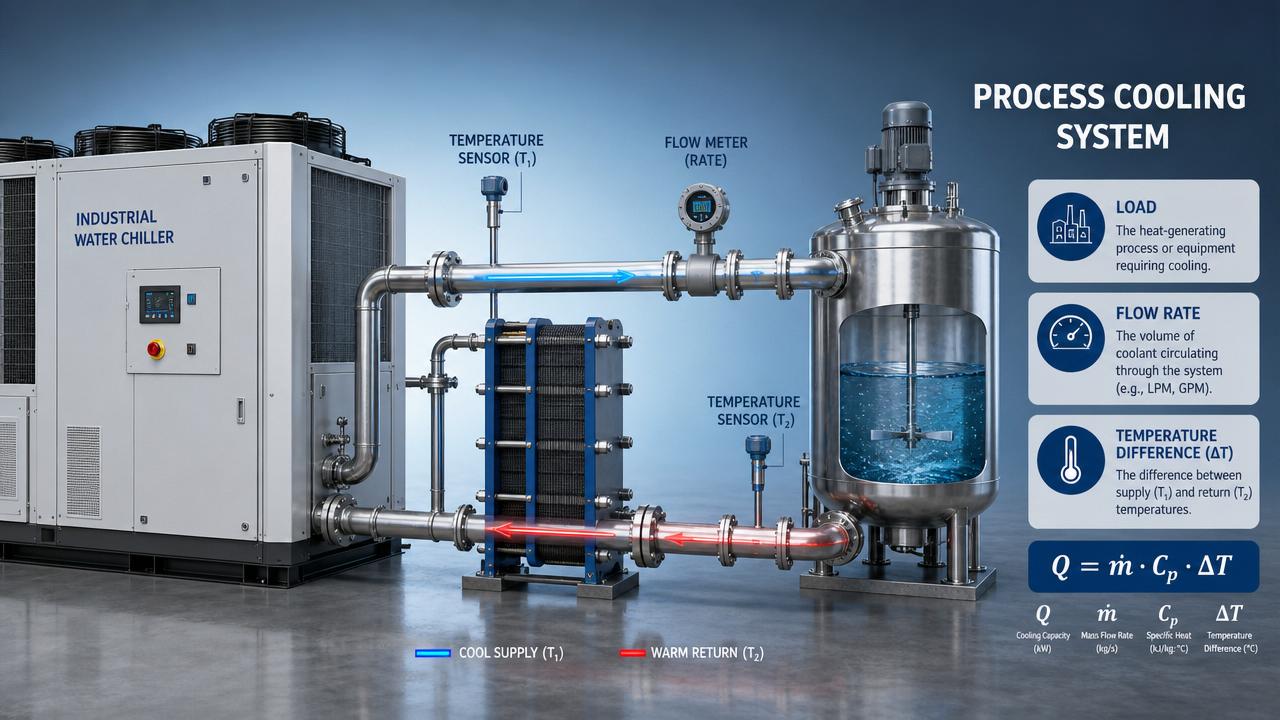
They circulate chilled water or glycol to remove process heat with relatively precise temperature control.
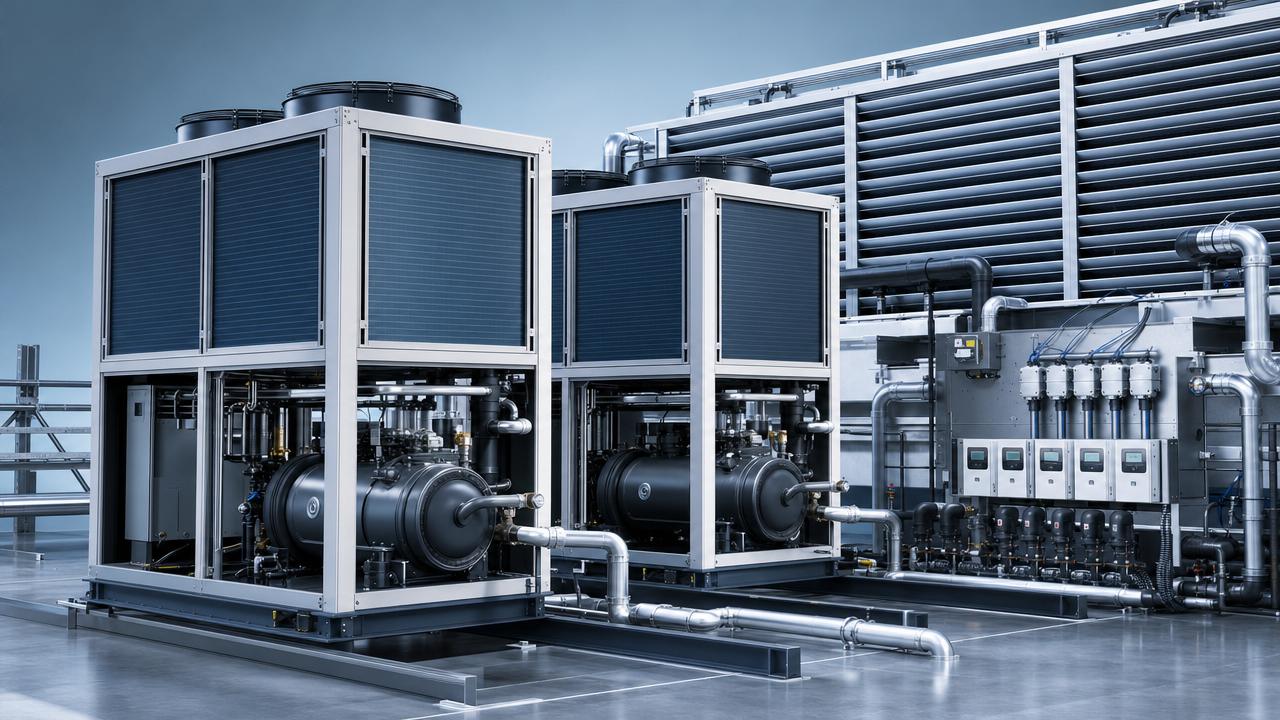
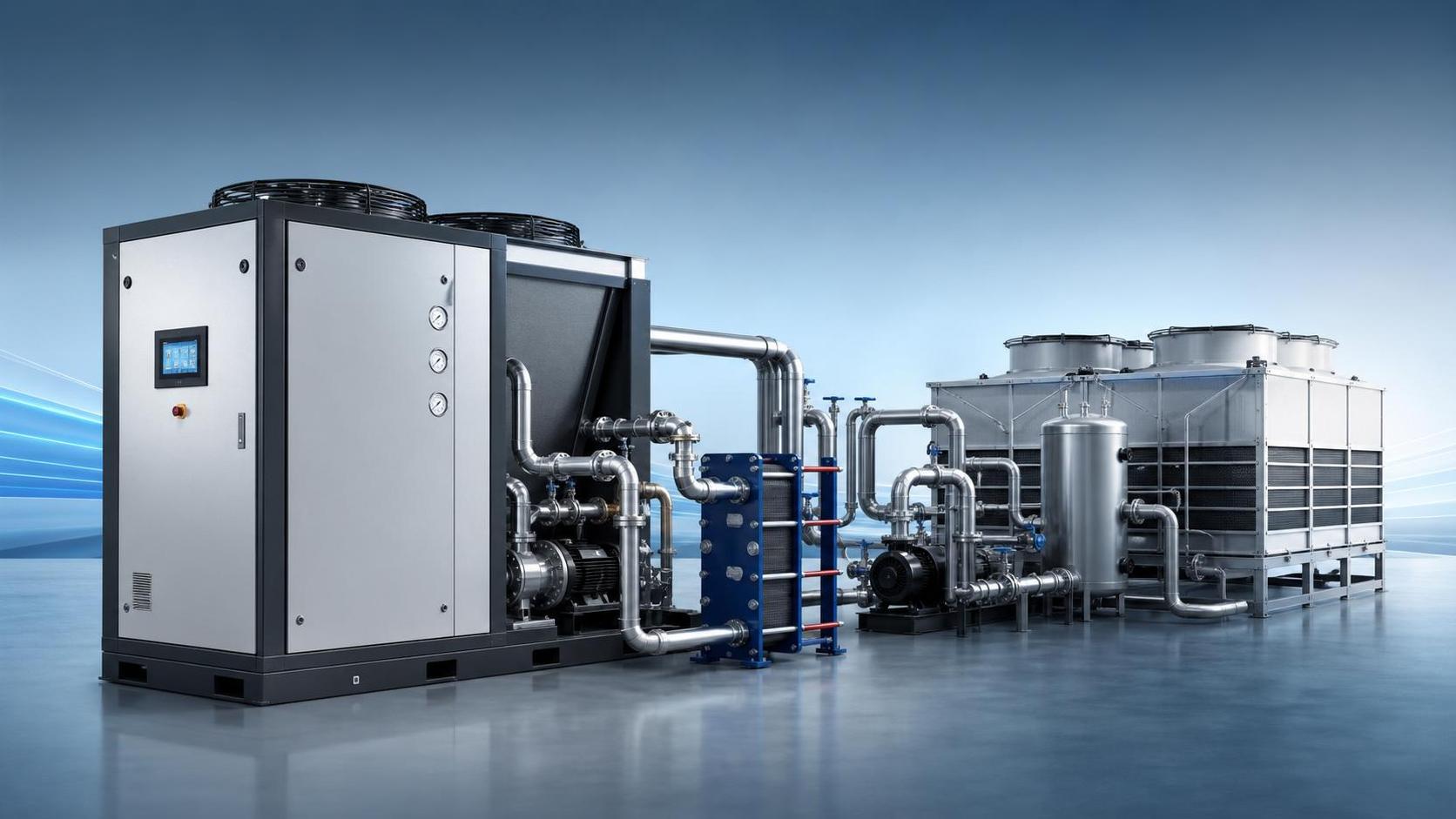
Air-cooled chillers suit sites with limited water access. Water-cooled chillers often perform better under larger, steadier loads.
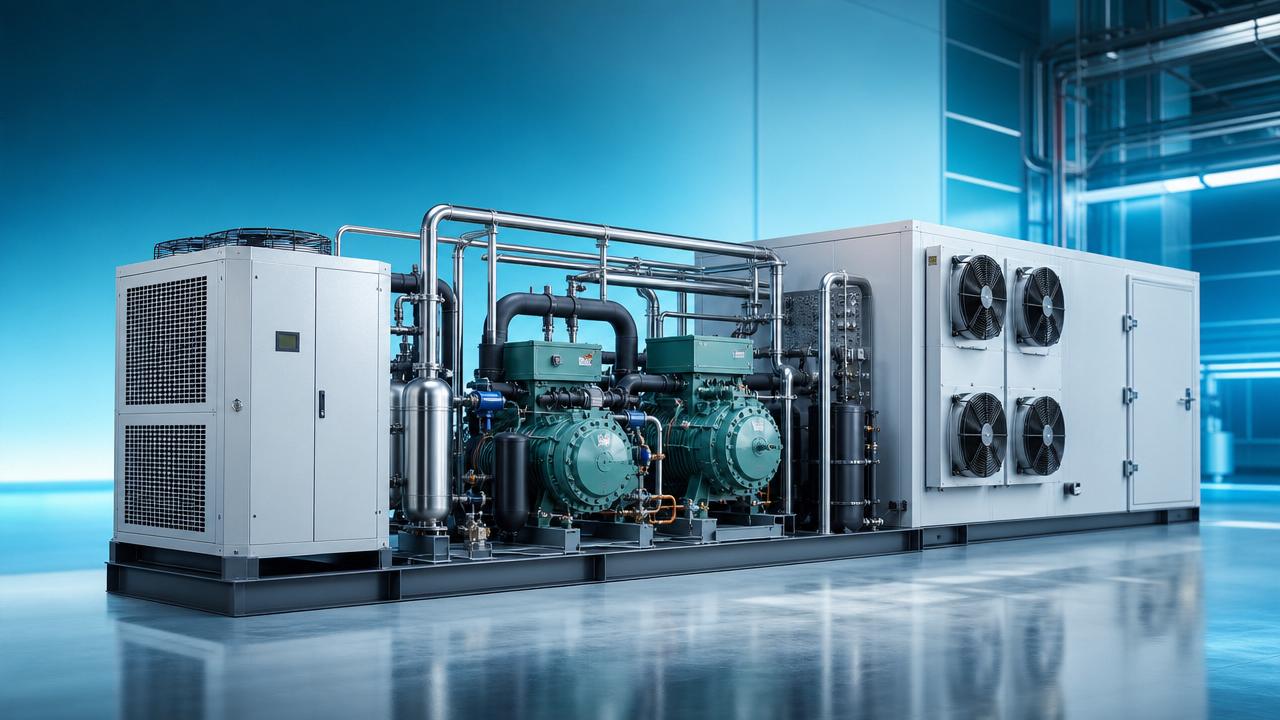
Refrigeration systems for cold rooms and storage
These systems support cold storage, frozen warehousing, food distribution, and retail back-end logistics.
The load here includes product pull-down, door openings, infiltration, lighting, people, and defrost cycles.
CO2 transcritical designs are gaining attention where environmental regulations and refrigerant transition planning matter.
Ice-making systems for thermal buffering
Commercial and industrial ice machines are not only for food presentation.
They are used in fish preservation, produce handling, concrete cooling, and process temperature stabilization where direct chilled fluid is less practical.
Ultra-low temperature systems for deep cryogenic control
Cascade refrigeration and ultra-low freezers serve biomedicine, sample preservation, and some premium food applications.
Here, industrial cooling is less about bulk tonnage and more about tight temperature retention and risk control.
How do you choose industrial cooling by load instead of by label?
This is where many comparisons become clearer. Start with the load, not the equipment name.
A system can look technically advanced and still be wrong if the load profile is misunderstood.
The first question is whether the thermal load is steady, cyclic, seasonal, or sharply peaking.
A mold cooling loop with repeatable production hours needs a different control strategy than a freezer room with frequent door traffic.
The second question is target temperature. Comfort-level cooling, chilled process water, freezer holding, and -86°C preservation are separate engineering zones.
The third question is response time. Some industrial cooling systems can ramp gradually. Others must react quickly to protect product quality or process accuracy.
The fourth question is heat rejection conditions. High ambient temperatures, dusty air, poor water quality, or limited roof space can change the best choice.
A practical load review usually includes these checkpoints:
- Peak thermal load versus average load
- Required supply temperature and allowable fluctuation
- Runtime pattern across day, week, and season
- Redundancy needs for critical storage or continuous production
- Energy cost structure and local refrigerant rules
CCRS often frames industrial cooling decisions around this wider operating picture, because efficiency on paper does not always equal efficiency in the field.
What load clues point to one system type over another?
A quick comparison table helps turn broad theory into usable judgment.
This table is not a shortcut for engineering design, but it is a solid first filter.
More often than not, industrial cooling selection improves when heat load data is paired with operating context, not isolated nameplate numbers.
Where do comparisons go wrong most often?
The most common mistake is choosing by advertised capacity alone.
Capacity is only meaningful when the entering fluid temperature, ambient condition, condensing temperature, and duty assumptions are clear.
Another frequent issue is ignoring part-load behavior. Many systems spend more time below peak than at peak.
If part-load control is poor, the industrial cooling system may consume more energy than a slightly smaller but smarter alternative.
Refrigerant pathway matters too. F-Gas restrictions, natural refrigerant adoption, and export compliance can affect lifecycle risk.
That is one reason industry observers watch not only equipment design, but also regulation, defrost logic, and compressor technology direction.
CCRS pays close attention to these shifts, especially where energy efficiency and eco-refrigerant strategy influence long-term equipment value.
A final trap is forgetting maintenance reality. Water treatment, coil fouling, sensor drift, and door discipline can reshape actual performance fast.
How should cost, lifecycle, and reliability be judged together?
The cheapest industrial cooling option at installation can become the most expensive over five years.
A better comparison looks at total operating life, not just purchase price.
Useful questions include energy use at expected load, spare part access, control complexity, compliance exposure, and downtime cost.
For cold chain and medical environments, reliability often outweighs small efficiency gains because product loss can be far more expensive than electricity.
For process cooling, the balance may shift toward precision, repeatability, and heat exchange stability.
A practical review can be organized like this:
- Match the system to real load variation, not idealized peak only
- Check refrigerant pathway against future regulatory direction
- Estimate maintenance burden under local operating conditions
- Assign a value to downtime, spoilage, or process interruption
- Confirm controls, monitoring, and redundancy for critical temperature zones
If the goal is a sharper comparison, build a simple load-and-risk matrix before discussing brands or model families.
That step alone makes industrial cooling decisions more disciplined and easier to defend.
So, what is the smartest next step when evaluating industrial cooling?
Start by writing down the real load story.
List the heat source, target temperature, runtime pattern, ambient condition, tolerance band, and consequence of failure.
Then compare system types against that picture rather than against generic claims.
For many projects, the right path is not simply bigger capacity. It is better load matching, better controls, and a refrigerant strategy that remains viable.
Industrial cooling works best when thermodynamics, compliance, and operating reality are considered together.
That broader view is exactly why ongoing intelligence matters in this field, especially across cold chain, industrial chillers, ice systems, compressors, and ultra-low storage.
If a comparison still feels crowded, narrow it to three things: load profile, temperature requirement, and lifecycle risk. The right answer usually becomes much easier to see.
Recommended News
 Precision ChillersIndustrial Chillers: What Causes Performance Gaps in Summer?Analyst :Industrial Cooling Architect
 Precision ChillersWhat to compare before buying energy efficient chillersAnalyst :Industrial Cooling Architect
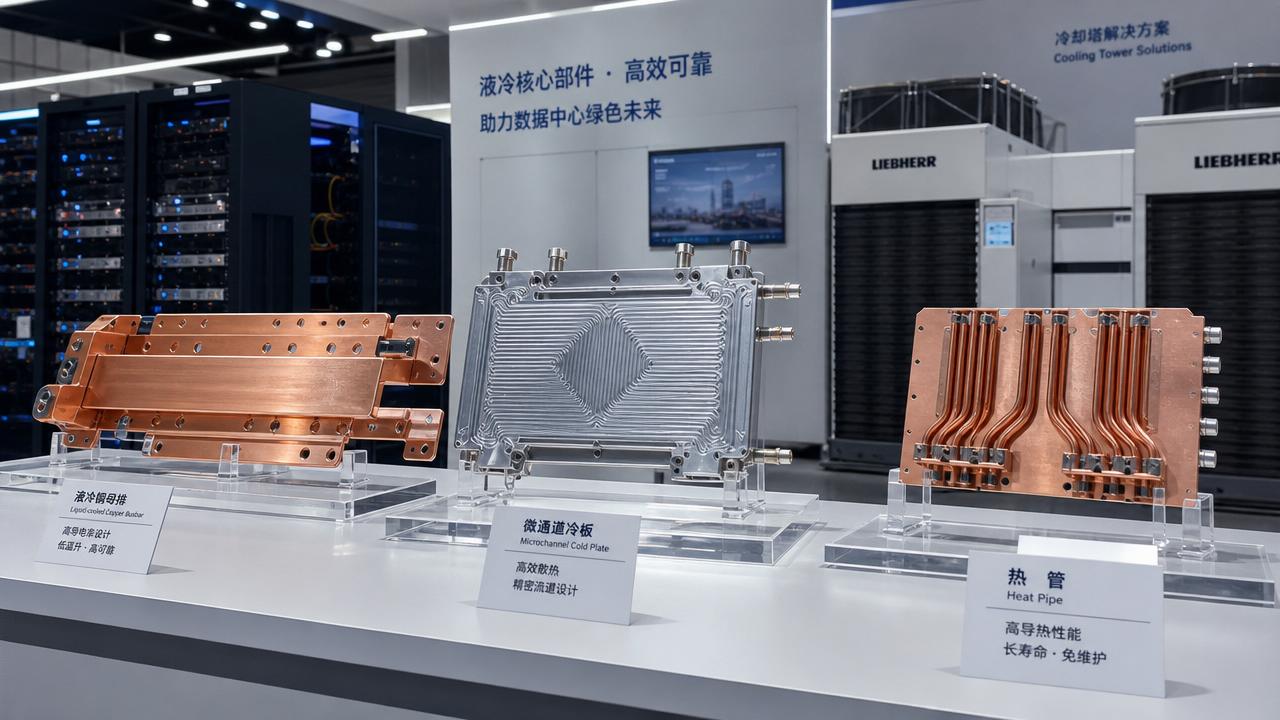
 Precision Chillers2026 China Refrigeration Expo Concludes: Liquid Cooling for Data Centers Gains Global AttentionAnalyst :Industrial Cooling Architect
 Precision ChillersWhat defines energy efficient cooling in real projectsAnalyst :Industrial Cooling Architect
 Precision ChillersUS Court Rules Trump-Era Global Tariffs Lack Legal BasisAnalyst :Industrial Cooling Architect
 Precision ChillersHow to compare temperature control systems with confidenceAnalyst :Industrial Cooling Architect
 Precision ChillersWhy does temperature control fail in precision cooling?Analyst :Industrial Cooling Architect
 Precision ChillersTemperature Control Systems for Process Cooling: Key Specs to CompareAnalyst :Industrial Cooling Architect
![]() Precision ChillersIndustrial Cooling System Selection: Air-Cooled vs Water-Cooled vs EvaporativeAnalyst :Industrial Cooling Architect
Precision ChillersIndustrial Cooling System Selection: Air-Cooled vs Water-Cooled vs EvaporativeAnalyst :Industrial Cooling Architect Precision ChillersLiquid Cooling Parts Draw Middle East Interest at Shanghai ShowAnalyst :Industrial Cooling Architect
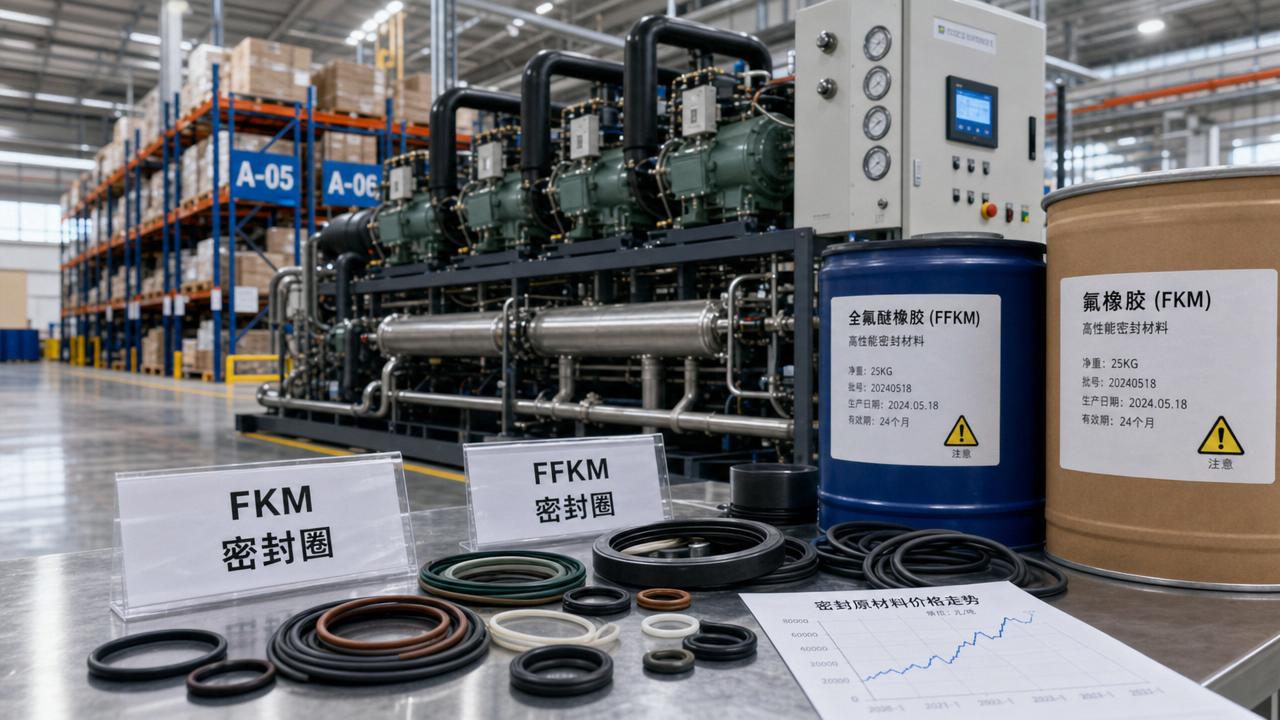
 Precision ChillersUS Probe Into Chinese CBS Raises Sealing Supply Chain ConcernsAnalyst :Industrial Cooling Architect
 Precision ChillersWhat Is Industrial Cooling? Main System Types and How to Choose by LoadAnalyst :Industrial Cooling Architect
 Precision ChillersEnergy Efficient Chillers vs Standard Chillers: What Buyers Should Compare Before PurchaseAnalyst :Industrial Cooling Architect
 Precision ChillersHow to Choose Industrial Chillers for Process Cooling: Capacity, Accuracy, and EfficiencyAnalyst :Industrial Cooling Architect
 Precision ChillersIndustrial Cooling Problems: 7 Common Causes of Unstable Temperature and Low CapacityAnalyst :Industrial Cooling Architect
 Precision ChillersHow to Size Industrial Chillers for Process Cooling: Load, Flow, and Temperature BasicsAnalyst :Industrial Cooling Architect
 Precision ChillersHow to Choose Industrial Chillers: Capacity, Temperature Range, and Cooling MethodAnalyst :Industrial Cooling Architect
 Precision ChillersHow to Choose Energy Efficient Chillers: COP, Load Profile, and Cooling Capacity ExplainedAnalyst :Industrial Cooling Architect