Industry News
Curation by industry experts
Hot Articles
- Eco-Refrigerant & ComplianceEco-Friendly Cooling Options: Refrigerants, Energy Use, and Compliance Factors Compared
- Air/Water-cooled ScrewIndustrial Chillers vs Cooling Towers: Which Option Fits Process Cooling Costs Better?
- Flake Ice MachinesCommercial Ice Machines for Restaurants and Bars: Types, Output, and Drainage Needs
Popular Tags
Energy Efficient Chillers Explained: Which Performance Metrics Matter Most Before Buying?
Energy Efficient Chillers Explained: Which Performance Metrics Matter Most Before Buying?
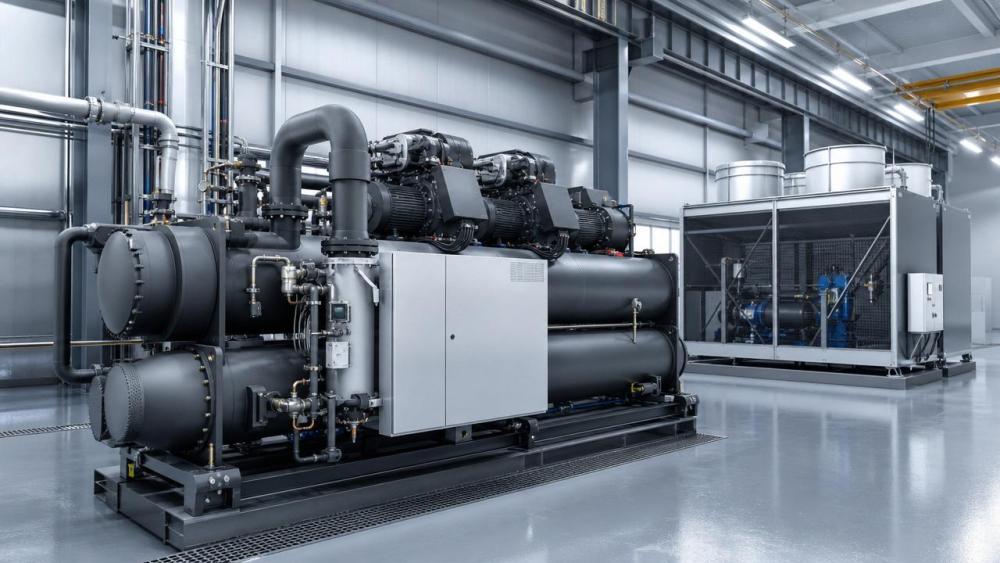
Choosing energy efficient chillers is no longer just about comparing price tags.
The smarter question is simple.
Which performance metrics will actually lower cost, protect uptime, and support future compliance?
That matters because a chiller is rarely a one-time purchase.
It becomes a long-term operating asset tied to electricity bills, maintenance schedules, and production reliability.
In real projects, two chillers with similar capacity can produce very different total ownership costs.
The gap usually comes from overlooked efficiency indicators, weak part-load performance, or poor control logic.
This guide breaks down the metrics that matter most before buying energy efficient chillers.
It also shows how to compare suppliers in a practical, cost-focused way.
Start with total efficiency, not nameplate cooling capacity
Cooling capacity is important, but it tells only part of the story.
A larger number on the datasheet does not automatically mean better value.
For energy efficient chillers, the first priority is how effectively the unit converts power into useful cooling.
Three metrics are usually the starting point.
- COP, or coefficient of performance
- EER, or energy efficiency ratio
- kW per ton, which shows input power per cooling output
Each metric helps, but none should be read in isolation.
COP is useful for broad comparison.
Higher COP means the chiller delivers more cooling for each unit of electricity.
kW per ton is often more intuitive for cost evaluation.
Lower values generally mean lower operating energy consumption.
Still, these numbers depend heavily on test conditions.
That is where many buying mistakes begin.
Why part-load performance often matters more than full-load ratings
Most chillers do not run at full load all day.
In many factories, cold rooms, medical facilities, and process plants, load fluctuates constantly.
That means part-load efficiency often affects annual energy bills more than full-load performance.
This is why IPLV and NPLV deserve close attention.
IPLV measures integrated part-load value under standard conditions.
NPLV adjusts the calculation to reflect actual site conditions more closely.
When comparing energy efficient chillers, these metrics help reveal real operating behavior.
From a cost perspective, this matters a lot.
A unit with average full-load numbers can still outperform competitors over a year.
The reason is stronger part-load control, inverter logic, or compressor staging.
Variable-speed screw chillers and magnetic bearing centrifugal chillers often show this advantage.
So if seasonal load swings are common, part-load performance should move near the top of the checklist.
A practical question to ask suppliers
Ask for efficiency curves at 25%, 50%, 75%, and 100% load.
That single request often exposes whether the proposed unit is truly optimized for your operating profile.
Check leaving water temperature, ambient conditions, and test standards carefully
Efficiency claims can look impressive until the test conditions are examined.
This is a common issue when screening energy efficient chillers from different brands.
A chiller tested at milder ambient temperatures may appear much more efficient.
The same happens when leaving chilled water temperature is set unusually high.
In short, equal capacity does not mean equal testing basis.
Always check whether ratings follow AHRI, ISO, Eurovent, or another recognized standard.
Then compare those conditions with the actual project environment.
- Expected summer ambient temperature
- Required chilled water supply temperature
- Return water temperature range
- Altitude, humidity, and heat rejection constraints
This step protects against unrealistic comparisons.
It also improves budget forecasting because power consumption estimates become more reliable.
Look beyond the compressor and evaluate the whole system
Many buyers focus on compressor technology first.
That makes sense, but system efficiency depends on more than the compressor alone.
For energy efficient chillers, heat exchanger design, control algorithms, pump integration, and fan performance also matter.
A well-designed evaporator and condenser can improve heat transfer significantly.
Better heat transfer reduces compressor workload.
Smarter controls reduce unnecessary cycling.
That supports both energy savings and equipment life.
Metrics that signal stronger system design
- Stable approach temperature across expected load conditions
- Low pressure drop through evaporator and condenser
- Fast but stable unloading and reloading response
- Integrated VFD control for pumps, fans, or compressors
- Reliable oil management and low vibration levels
These details may seem technical, yet they directly affect operating stability.
And in cost-driven procurement, stability is a financial metric too.
Do not ignore refrigerant choice and compliance risk
From recent market changes, this is becoming a bigger buying factor.
Energy efficient chillers should not be evaluated only by electricity use.
Refrigerant type affects future service cost, compliance exposure, and export flexibility.
Global F-Gas restrictions and carbon rules are reshaping equipment selection.
That means a cheaper unit today could become harder to maintain tomorrow.
When reviewing options, ask suppliers to clarify the following.
- Refrigerant GWP and regional compliance status
- Expected availability over the next five to ten years
- Impact on service technician requirements
- Leak detection, safety class, and retrofit options
This also connects back to lifecycle cost.
Efficient performance loses value if refrigerant-related risk increases downtime or replacement pressure later.
Maintenance metrics are part of the buying decision
A highly efficient machine on paper can become expensive if it is difficult to maintain.
That is why serviceability belongs in any energy efficient chillers comparison.
In actual operations, maintenance affects both power performance and system uptime.
Fouled heat exchangers, unstable sensors, or poor control tuning can quietly erase efficiency gains.
Before buying, review practical maintenance indicators.
- Recommended service interval and major wear parts
- Remote monitoring and fault diagnosis capability
- Local spare parts lead time
- Cleaning access for coils and heat exchangers
- Warranty terms linked to performance retention
These points help estimate the real cost of keeping the chiller efficient over time.
Use a simple total cost framework before making the final shortlist
A purchase decision becomes clearer when technical metrics are translated into money.
For energy efficient chillers, a practical total cost framework usually includes five elements.
- Equipment purchase price
- Annual electricity cost under expected load profile
- Maintenance and spare parts cost
- Downtime risk and production impact
- Compliance and refrigerant transition risk
This approach creates a more balanced shortlist.
It also prevents overvaluing low upfront price.
More importantly, it makes supplier discussions more precise.
Instead of asking which unit is best, ask which unit is most cost-effective under your real duty cycle.
A final shortlist checklist
- Compare full-load and part-load efficiency together
- Confirm test conditions and standards line by line
- Review refrigerant compliance over the asset lifecycle
- Assess maintenance access and digital monitoring support
- Model annual cost using actual site load data
The bottom line for buying energy efficient chillers
The best energy efficient chillers are not simply the ones with the highest advertised rating.
They are the units that match real load behavior, local climate, compliance needs, and maintenance capacity.
If there is one takeaway, it is this.
Buy with lifecycle performance in mind, not just upfront cost.
That means checking part-load efficiency, test conditions, system design quality, refrigerant strategy, and service practicality together.
In a tighter cost environment, that level of discipline usually separates a smart asset from an expensive compromise.
The next step is straightforward.
Build your comparison sheet around these metrics, request condition-based data from suppliers, and evaluate energy efficient chillers on total operating value.
Recommended News
 Magnetic Bearing ChillersDOE Updates ASHRAE 90.1-2025 Appendix: Maglev Chiller Efficiency Up 12%Analyst :Industrial Cooling Architect
 Magnetic Bearing ChillersAre magnetic bearing chillers worth the upfront premium?Analyst :Industrial Cooling Architect
 Magnetic Bearing ChillersMIIT Launches 2026 Industrial Energy Conservation InspectionAnalyst :Industrial Cooling Architect
 Magnetic Bearing ChillersWhere magnetic bearing technology delivers real savingsAnalyst :Industrial Cooling Architect
 Magnetic Bearing ChillersU.S. Inflation Reignites Rate Hike Bets, Pressuring USD Pricing for Maglev Chiller ExportsAnalyst :Industrial Cooling Architect
 Magnetic Bearing ChillersAre energy efficient chillers worth the higher upfront cost?Analyst :Industrial Cooling Architect
![]() Magnetic Bearing ChillersMiddle East Adopts IEC 63166:2025 for Maglev ChillersAnalyst :Industrial Cooling Architect
Magnetic Bearing ChillersMiddle East Adopts IEC 63166:2025 for Maglev ChillersAnalyst :Industrial Cooling Architect Magnetic Bearing ChillersWhen does magnetic bearing technology justify the cost?Analyst :Industrial Cooling Architect
 Magnetic Bearing ChillersG7 Prioritizes Critical Minerals Supply Chain SecurityAnalyst :Industrial Cooling Architect
 Magnetic Bearing ChillersAre energy efficient chillers worth the upfront costAnalyst :Industrial Cooling Architect
 Magnetic Bearing ChillersHow magnetic bearing technology cuts chiller downtimeAnalyst :Industrial Cooling Architect
 Magnetic Bearing ChillersIs magnetic bearing technology worth the upgrade?Analyst :Industrial Cooling Architect
 Magnetic Bearing ChillersMagnetic Bearing Technology in Chillers: Efficiency, Maintenance, and LimitsAnalyst :Industrial Cooling Architect
 Magnetic Bearing ChillersJapan Adds Mandatory Chiller Vibration RuleAnalyst :Industrial Cooling Architect
 Magnetic Bearing ChillersASHRAE Raises Magnetic Chiller IPLV Floor by 12%Analyst :Industrial Cooling Architect
 Magnetic Bearing ChillersMagnetic Bearing Chillers vs Screw Chillers: Which Fits High-Efficiency Buildings?Analyst :Industrial Cooling Architect
 Magnetic Bearing ChillersArgentina Ends Bearing Duties, Easing Chiller ExportsAnalyst :Industrial Cooling Architect
 Magnetic Bearing ChillersPD-8 Jet Engine Plan Signals Chiller Export RequirementsAnalyst :Industrial Cooling Architect
![]() Magnetic Bearing ChillersEU FDI Screening Rule Adds AI Chiller FilingsAnalyst :Industrial Cooling Architect
Magnetic Bearing ChillersEU FDI Screening Rule Adds AI Chiller FilingsAnalyst :Industrial Cooling Architect![]() Magnetic Bearing ChillersMagnetic Bearing Chillers vs Screw Chillers: Which Fits High-Efficiency HVAC Projects?Analyst :Industrial Cooling Architect
Magnetic Bearing ChillersMagnetic Bearing Chillers vs Screw Chillers: Which Fits High-Efficiency HVAC Projects?Analyst :Industrial Cooling Architect Magnetic Bearing ChillersHow Magnetic Bearing Technology Improves Chiller Efficiency and Cuts MaintenanceAnalyst :Industrial Cooling Architect
 Magnetic Bearing ChillersEnergy Efficient Chillers Explained: Which Performance Metrics Matter Most Before Buying?Analyst :Industrial Cooling Architect
 Magnetic Bearing ChillersJapan Raises Efficiency Bar for Magnetic Bearing ChillersAnalyst :Industrial Cooling Architect
 Magnetic Bearing ChillersJapan Tightens JIS B 8605-2026 for Magnetic Bearing ChillersAnalyst :Industrial Cooling Architect
 Magnetic Bearing ChillersJapan Raises Efficiency Bar for Magnetic Bearing ChillersAnalyst :Industrial Cooling Architect