Industry News
Curation by industry experts
Hot Articles
- -86℃ ULT FreezersHow to Select Medical Cryogenic Vials for Long-Term Sample Storage
- Cold Chain & Retail Energy InsightsFood-Grade Panel Requirements for Hygienic Meat Cold Storage Systems
- Cold Chain & Retail Energy InsightsU.S. Cold Storage Requirements for Temperature-Sensitive Products: A Compliance Checklist
Popular Tags
Red Sea Disruption Pushes Asia-Europe Freight Up 42%
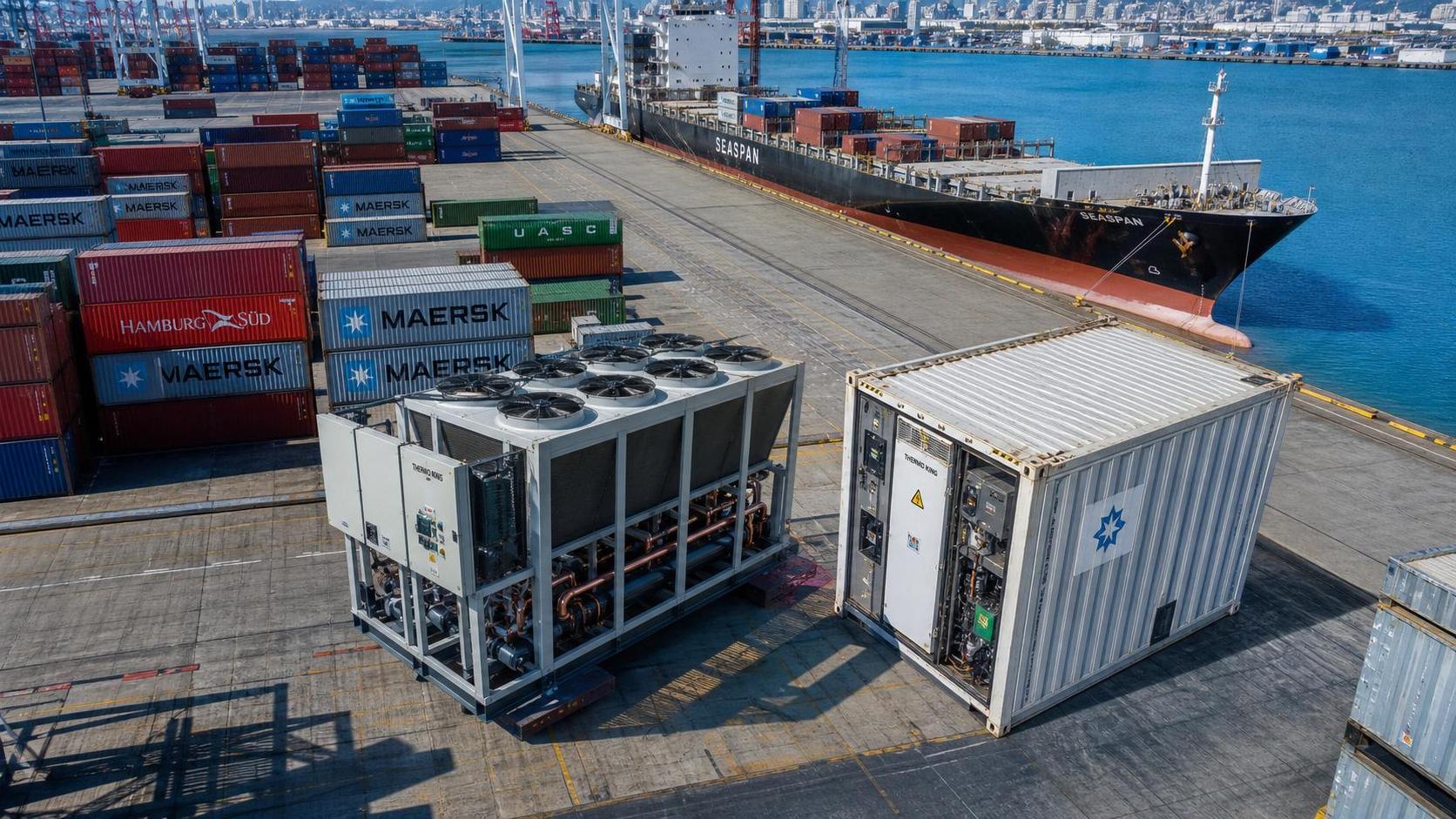
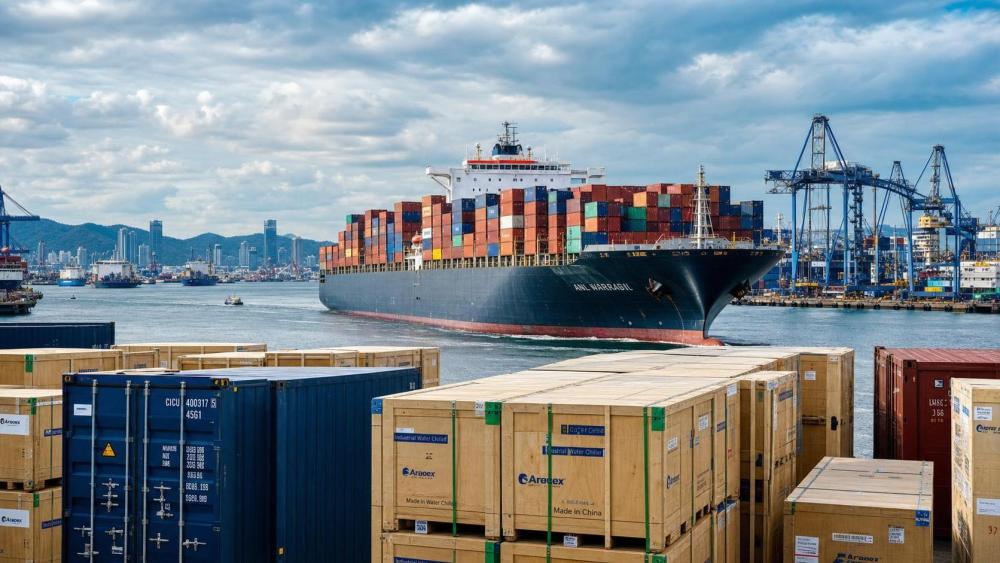
The timing of the underlying disruption is not clearly specified in the available information, but Drewry’s weekly shipping report published on 2026-07-02 points to a sharp escalation in Asia-Europe freight pressure. Spot container rates on the main corridor rose 42% in a single week, while precision chillers, which typically rely on customized ocean delivery, have seen average export lead times stretch from 6 weeks to 9 weeks. For exporters, project suppliers, European buyers, and installation-dependent end users, this is worth close attention because the issue is no longer limited to transport cost alone; it is beginning to affect delivery schedules and project execution.
What the latest shipping data confirms
According to Drewry’s weekly shipping report released on 2026-07-02, continued disruption linked to the Red Sea has driven a steep increase in spot container freight rates on core Asia-Europe routes. The Shanghai-Rotterdam route reached $6,850 per FEU after a 42% week-on-week jump.
The same set of information indicates that precision chillers, as high-value equipment with relatively long delivery cycles, are being affected through their dependence on customized ocean freight arrangements. Average export lead times have extended from 6 weeks to 9 weeks, and some end projects in Europe are already facing installation delay risk.
Where the pressure is likely to appear first
Exporters handling customized equipment
From an industry perspective, exporters of precision chillers are likely to feel the impact directly because their shipments are tied not only to freight availability, but also to customized delivery timing. The main pressure points are likely to be quotation validity, shipment scheduling, and contract delivery windows. What deserves closer attention is whether lead-time extensions start to affect order confirmation and acceptance milestones.
European project buyers and installation teams
For buyers and downstream project teams in Europe, the issue is likely to show up in equipment arrival uncertainty rather than in freight pricing alone. When installation depends on a specific arrival sequence, even a relatively short delay in export transit can disrupt commissioning plans. Observably, the stated installation delay risk makes schedule coordination a more immediate concern than transport cost by itself.
Supply chain and logistics service providers
Supply chain service providers may face tighter coordination demands as clients seek clearer shipment forecasts and more stable delivery commitments. The likely business impact centers on booking arrangements, transit planning, and communication around schedule changes. What deserves closer attention is how often freight volatility translates into repeated delivery-date revisions for customized cargo.
What companies should watch now
Lead times should be treated as moving targets
Analysis shows that the shift from 6 weeks to 9 weeks is material for products already known for longer fulfillment cycles. Companies involved in export, procurement, or project planning should closely track whether quoted lead times remain aligned with actual shipping conditions rather than relying on previous cycle assumptions.
Cost changes and delivery risk need to be managed together
It is more appropriate to understand this development as a combined logistics and execution issue. A freight surge of 42% on a key route affects landed cost expectations, but for precision chillers the practical risk may be even more concentrated in delayed handover, installation, and project sequencing.
Customer communication may become a contract issue
For suppliers and service teams, the immediate operational focus should be on communication cadence with buyers and project stakeholders. Where delivery timing is sensitive, updates on export scheduling, shipment progress, and revised arrival expectations may become central to preserving delivery credibility.
Documentation and fulfillment discipline matter more under volatility
Observably, when shipping conditions are unstable, any weakness in order confirmation, shipment documentation, or milestone coordination can amplify delay exposure. Companies should pay closer attention to the practical readiness of each shipment stage, especially for customized equipment with limited schedule flexibility.
Why this matters beyond one freight spike
Analysis shows that this update should not be read only as a short-lived freight headline. The combination of a sharp weekly rate jump and a three-week extension in average precision chiller export lead times suggests that logistics disruption is spilling into equipment delivery performance. At the same time, it would be premature to treat this as a settled long-term pattern based on the current information alone. It is more appropriate to understand this as an active industry signal that still requires continued observation.
How the market may need to interpret the signal
For the industry, the main significance of this development is that shipping disruption on a major trade corridor is now affecting both transport economics and delivery reliability for specialized equipment. The most balanced reading is not that every exporter or European project will face the same level of disruption, but that businesses exposed to customized ocean shipments should reassess timelines and coordination assumptions now. Current conditions are better understood as a near-term operational warning with broader implications if delays persist.
Basis of this article and what still needs verification
This article is based on the user-provided news title, the note that the event timing was not clearly specified, and the event summary referencing Drewry’s weekly shipping report published on 2026-07-02. For this type of industry update, relevant source categories typically include official notices, company statements, industry association releases, authoritative media coverage, and standard-setting or trade-related documents.
A specific official source link was not provided in the input, so the underlying details still require ongoing verification. Follow-up attention should remain on any updated shipping data, further changes in export lead times for precision chillers, and whether installation delays in Europe become more widespread or remain limited to selected end projects.
Recommended News
 Precision ChillersIndustrial Chillers: What Causes Performance Gaps in Summer?Analyst :Industrial Cooling Architect
 Precision ChillersWhat to compare before buying energy efficient chillersAnalyst :Industrial Cooling Architect
 Precision Chillers2026 China Refrigeration Expo Concludes: Liquid Cooling for Data Centers Gains Global AttentionAnalyst :Industrial Cooling Architect
 Precision ChillersWhat defines energy efficient cooling in real projectsAnalyst :Industrial Cooling Architect
 Precision ChillersUS Court Rules Trump-Era Global Tariffs Lack Legal BasisAnalyst :Industrial Cooling Architect
 Precision ChillersHow to compare temperature control systems with confidenceAnalyst :Industrial Cooling Architect
 Precision ChillersWhy does temperature control fail in precision cooling?Analyst :Industrial Cooling Architect
 Precision ChillersTemperature Control Systems for Process Cooling: Key Specs to CompareAnalyst :Industrial Cooling Architect
![]() Precision ChillersIndustrial Cooling System Selection: Air-Cooled vs Water-Cooled vs EvaporativeAnalyst :Industrial Cooling Architect
Precision ChillersIndustrial Cooling System Selection: Air-Cooled vs Water-Cooled vs EvaporativeAnalyst :Industrial Cooling Architect Precision ChillersLiquid Cooling Parts Draw Middle East Interest at Shanghai ShowAnalyst :Industrial Cooling Architect
 Precision ChillersUS Probe Into Chinese CBS Raises Sealing Supply Chain ConcernsAnalyst :Industrial Cooling Architect
 Precision ChillersWhat Is Industrial Cooling? Main System Types and How to Choose by LoadAnalyst :Industrial Cooling Architect
 Precision ChillersEnergy Efficient Chillers vs Standard Chillers: What Buyers Should Compare Before PurchaseAnalyst :Industrial Cooling Architect
 Precision ChillersHow to Choose Industrial Chillers for Process Cooling: Capacity, Accuracy, and EfficiencyAnalyst :Industrial Cooling Architect
 Precision ChillersIndustrial Cooling Problems: 7 Common Causes of Unstable Temperature and Low CapacityAnalyst :Industrial Cooling Architect
 Precision ChillersHow to Size Industrial Chillers for Process Cooling: Load, Flow, and Temperature BasicsAnalyst :Industrial Cooling Architect
 Precision ChillersHow to Choose Industrial Chillers: Capacity, Temperature Range, and Cooling MethodAnalyst :Industrial Cooling Architect
 Precision ChillersHow to Choose Energy Efficient Chillers: COP, Load Profile, and Cooling Capacity ExplainedAnalyst :Industrial Cooling Architect
 Precision ChillersHow to Size Industrial Chillers for Process Cooling: Load, Flow Rate, and Temperature GuideAnalyst :Industrial Cooling Architect
 Precision ChillersIndustrial Process Cooling: How to Match Cooling Load to the Right SystemAnalyst :Industrial Cooling Architect
 Precision ChillersHow to Compare Commercial Energy Efficient Chiller Systems Price by Load and ROIAnalyst :Industrial Cooling Architect
 Precision ChillersHow to Compare Energy Efficient Chillers with Variable Speed for Process Cooling LoadsAnalyst :Industrial Cooling Architect
 Precision ChillersRed Sea Disruption Lifts Asia-Europe Freight 42%Analyst :Industrial Cooling Architect
 Precision ChillersHow to Choose Air Cooled Chillers with Variable Speed for Stable Load ControlAnalyst :Industrial Cooling Architect
 Precision ChillersRed Sea Disruption Pushes Asia-Europe Freight Up 42%Analyst :Industrial Cooling Architect
 Precision ChillersHow to Evaluate an Energy Efficient Chillers Supplier for Industrial ProjectsAnalyst :Industrial Cooling Architect
 Precision ChillersInjection Molding Cooling Systems ISO Requirements: What to Check Before ApprovalAnalyst :Industrial Cooling Architect
 Precision ChillersHow to Choose Low-Noise Laser Cooling Systems for Precision LabsAnalyst :Industrial Cooling Architect
![]() Precision ChillersInjection Molding Cooling Systems Variable Speed: Where Energy Savings Actually Come FromAnalyst :Industrial Cooling Architect
Precision ChillersInjection Molding Cooling Systems Variable Speed: Where Energy Savings Actually Come FromAnalyst :Industrial Cooling Architect Precision ChillersIndustrial Chillers for Glycol Systems: What Capacity, Temperature Range, and Flow Rate Matter Most?Analyst :Industrial Cooling Architect
 Precision ChillersEU Opens Subsidy Probe Into China Precision ChillersAnalyst :Industrial Cooling Architect
 Precision ChillersIndustrial Injection Molding Cooling Systems: How to Size Flow, Temperature, and LoadAnalyst :Industrial Cooling Architect
 Precision ChillersTemperature Control Units vs Temperature Control Devices: What’s the Difference in Industrial Use?Analyst :Industrial Cooling Architect
 Precision ChillersCopper Spike Extends Precision Chiller Lead Times to 14 WeeksAnalyst :Industrial Cooling Architect
 Precision ChillersHow Inverter Control Improves Industrial Chiller Efficiency and Load StabilityAnalyst :Industrial Cooling Architect
 Precision ChillersHow to Compare an Energy Efficient Chillers Exporter on COP, Controls, and Lifecycle CostAnalyst :Industrial Cooling Architect
 Precision ChillersHow to Evaluate a Laser Cooling Systems Factory: Key Capabilities, Quality Checks, and Lead TimesAnalyst :Industrial Cooling Architect
 Precision ChillersHow to Size Industrial Chiller Systems for Process Cooling Loads and Ambient ConditionsAnalyst :Industrial Cooling Architect
 Precision ChillersWhat Affects Heat Exchange Efficiency in Chillers and How to Improve It?Analyst :Industrial Cooling Architect
 Precision ChillersHow to Evaluate Secure Access Features in Stem Cell Cryogenic Storage Systems?Analyst :Industrial Cooling Architect