Industry News
Curation by industry experts
Hot Articles
- Thermodynamic Tech TrendsHow to Size Heat Exchange Systems for Refrigeration Plants at Peak Load
- Parallel Compressor RacksHow to Size Reciprocating Compressors for Cold Storage Load and Temperature Range
- Flake Ice MachinesHow to Size a Commercial Ice Dispenser for Peak Demand in Foodservice Operations
Popular Tags
EU Launches Green Cabinet Scheme, Speeds Clearance 30%
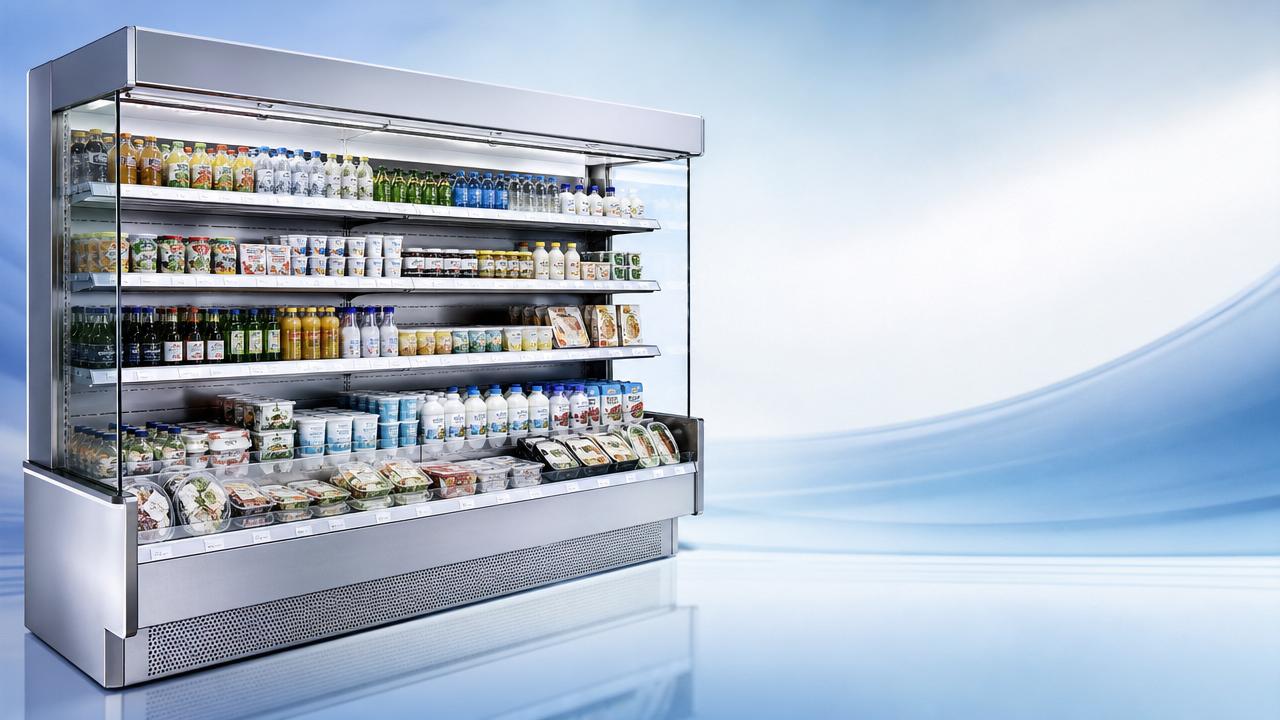
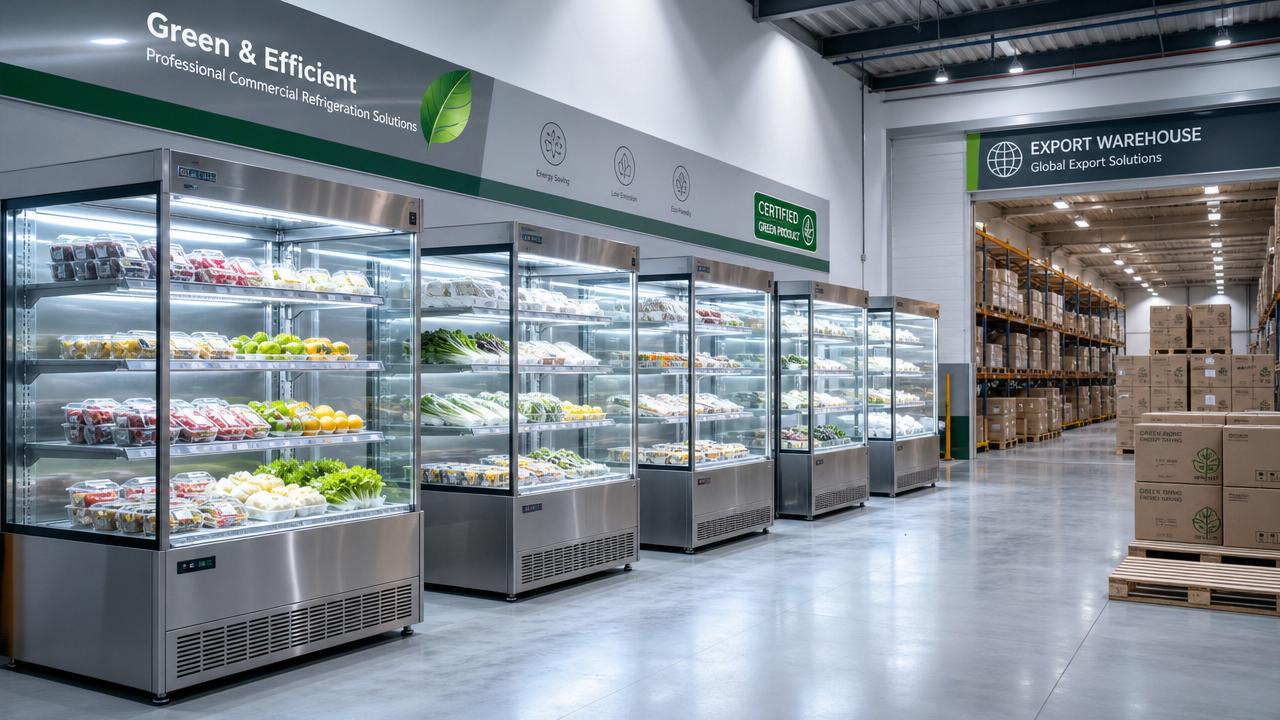
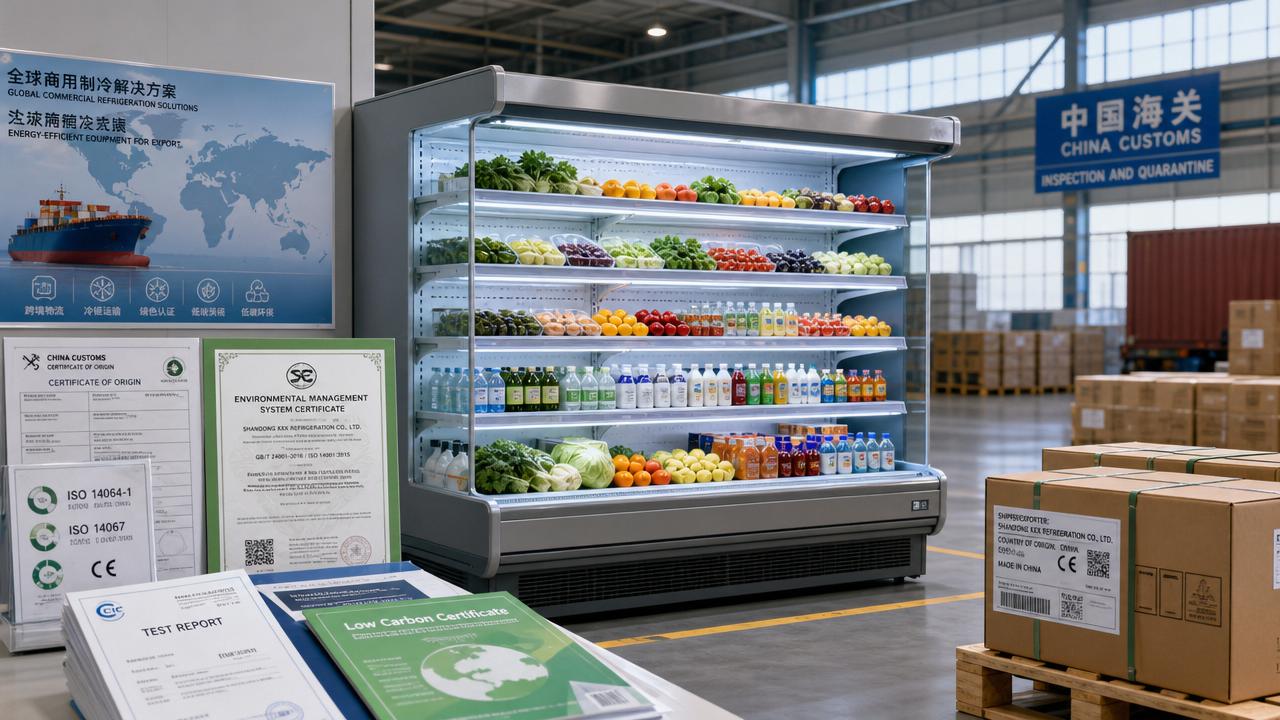
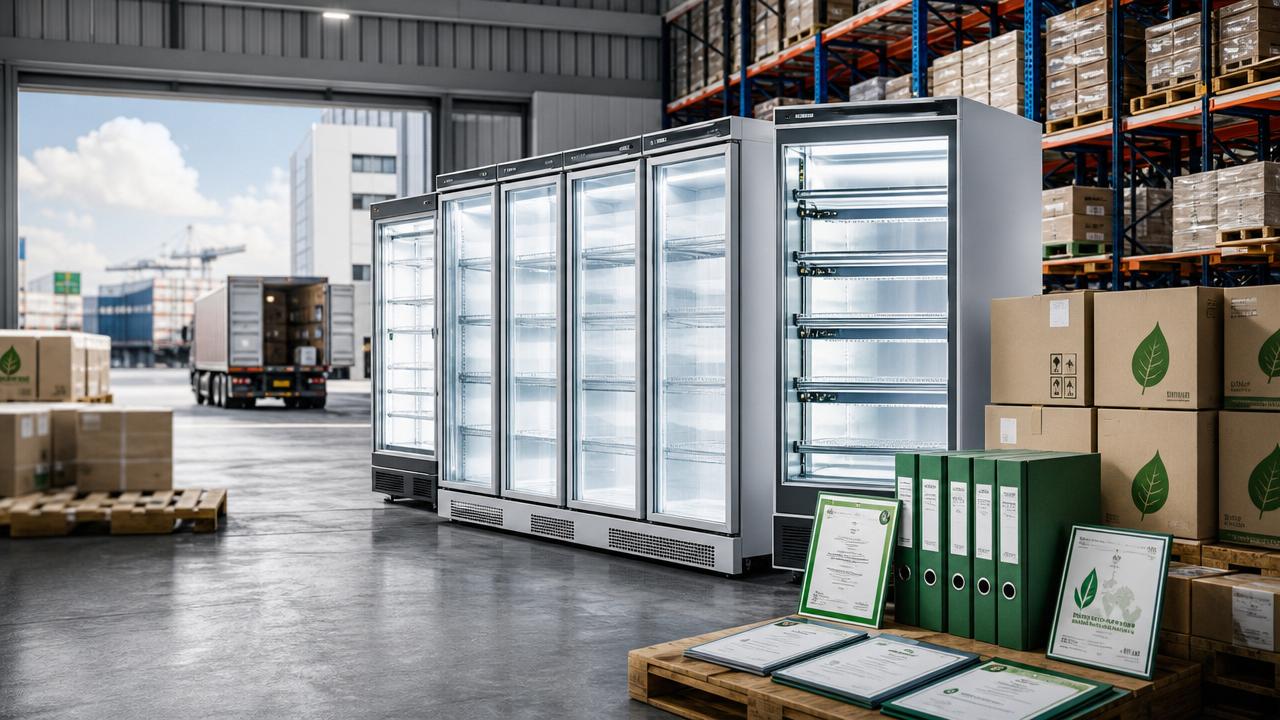
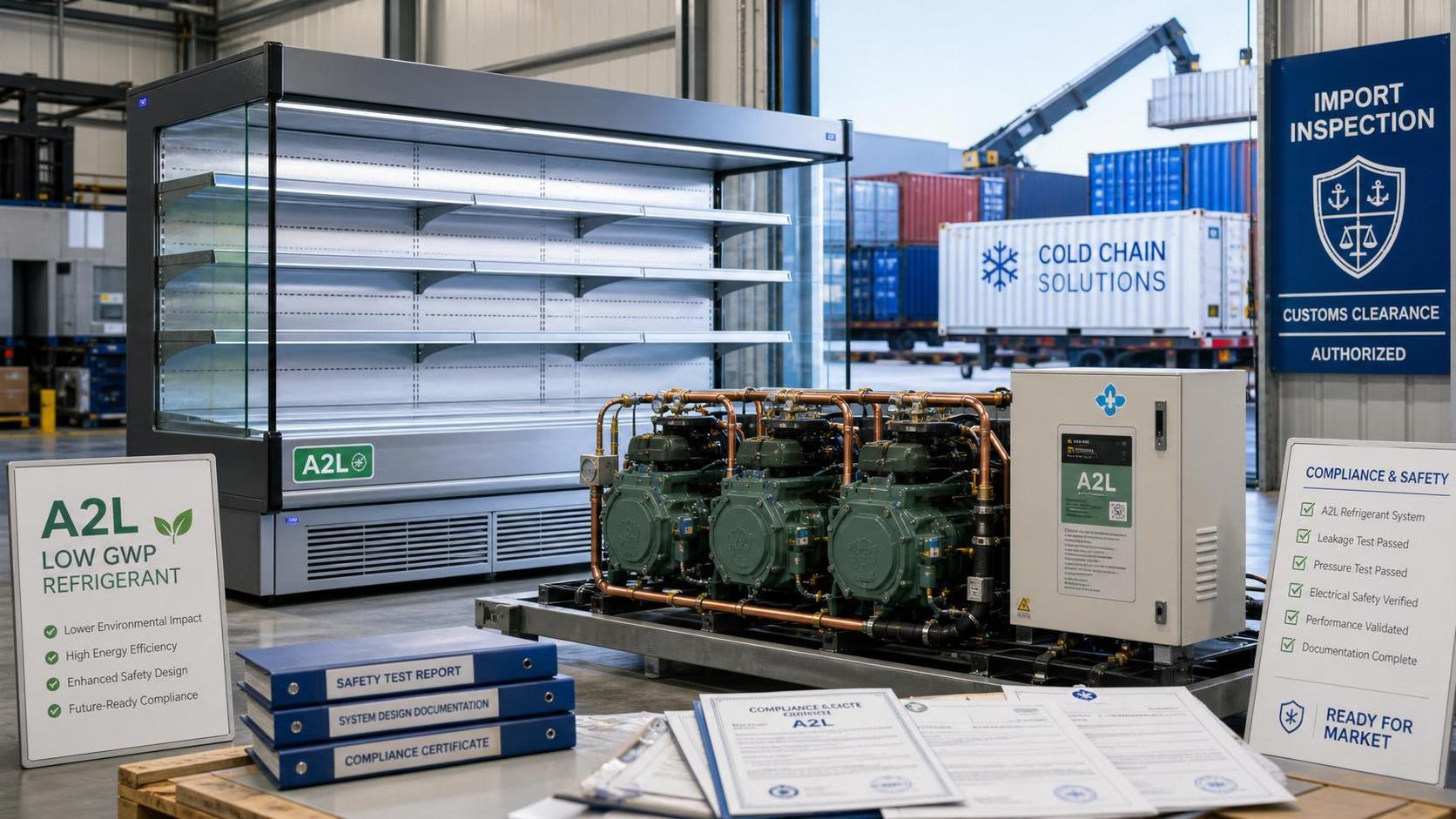
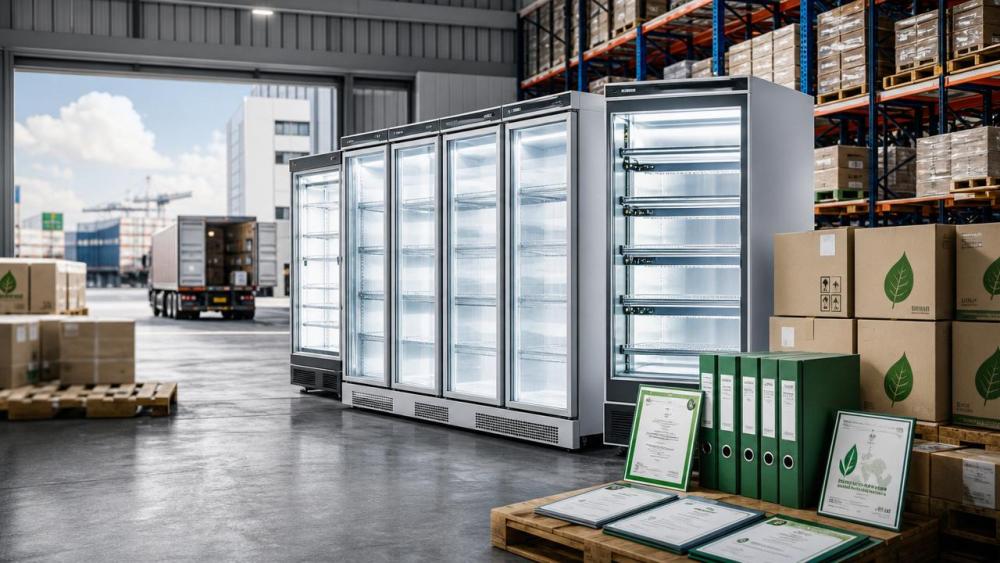
On June 12, 2026, the European Commission and 12 member states put into operation the Green Chiller & Display Cabinet Mutual Recognition Framework (GCDMRF), a move that directly affects cross-border trade in multideck display cabinets. By allowing qualifying products with an Eco-Cold Chain Label issued by designated third-party certification bodies in markets including China, South Korea, and Mexico to avoid duplicate testing while receiving priority customs treatment and simplified tariff verification, the framework deserves close attention from manufacturers, exporters, importers, certification partners, and supply chain service providers watching delivery speed and compliance execution in the EU market.
What the new framework formally puts in place
The confirmed information is clear. The framework, officially named the Green Chiller & Display Cabinet Mutual Recognition Framework, was launched on June 12, 2026, by the European Commission together with 12 member states.
Its scope, based on the information provided, covers multideck display cabinets that have been assessed under ISO/IEC 17065 and issued an Eco-Cold Chain Label by third-party certification bodies in countries including China, South Korea, and Mexico.
For products meeting those conditions, the EU side will apply three facilitation measures: no repeated testing, priority customs clearance, and simplified tariff verification. The first group of certification bodies named in the information provided includes CQC, KTL, and UL Solutions.
Where the immediate business effects may appear
Export-facing manufacturers may see compliance move closer to the sales cycle
From an industry perspective, manufacturers of multideck display cabinets are among the first to feel the operational effect because market access documentation, certification timing, and shipment planning are closely linked. The practical impact may appear in the handoff between product certification and export delivery, especially where EU-bound orders depend on avoiding repeat testing after arrival.
What deserves closer attention is whether internal product files, certification records, and shipment documents are aligned well enough to support the new recognition pathway without delay.
Importers and distributors may focus on customs handling rather than only product acceptance
For EU importers and channel operators, the announced benefits are not limited to product entry in principle; they also touch customs processing and tariff verification steps. Analysis shows that this can shift attention from post-arrival technical rechecking toward document completeness, customs coordination, and the ability to prove that a shipment falls within the mutual recognition framework.
The key issue to watch is whether the claimed facilitation in clearance translates smoothly into day-to-day customs workflows for specific shipments.
Certification and supply chain service providers may become more central in execution
Certification bodies and logistics or customs service partners may also be affected because the framework explicitly recognizes labels issued through designated third-party assessment routes. In practice, the value of the scheme depends not only on policy wording but also on whether supporting documents, declarations, and verification materials are accepted efficiently during clearance and tariff review.
Observably, service providers involved in certification coordination and cross-border documentation may become more important in reducing execution risk for clients shipping to the EU.
What companies should watch next
Track how official wording is reflected in actual clearance practice
Companies should distinguish between the framework's announced treatment and its operational application. The confirmed measures are exemption from duplicate testing, priority customs clearance, and simplified tariff verification, but businesses still need to watch how these terms are interpreted in actual shipment handling.
Review whether target products and certificates clearly fit the stated scope
The current information specifically refers to multideck display cabinets and to Eco-Cold Chain Label certification issued through assessment under ISO/IEC 17065. Firms should therefore check product classification, certificate status, and supporting records to make sure they match the framework as described.
Confirm which certification channels are relevant to current orders
The first named certification bodies are CQC, KTL, and UL Solutions. For exporters, suppliers, and buyers, this makes the choice of certification pathway a practical issue rather than a background compliance detail. The immediate concern is whether current or upcoming orders rely on certificates that are clearly usable under the new arrangement.
Prepare customer and internal communication around delivery expectations
Because the headline change is a reported 30% acceleration in customs clearance, commercial teams may face questions from customers or procurement counterparts about lead times. Analysis shows that companies should communicate carefully: the framework points to a faster route, but actual order timelines still depend on document readiness and execution at the shipment level.
Why this looks more like a policy signal than a finished endpoint
Analysis shows that this development carries both an immediate operational message and a longer-term policy signal. In the short term, it points to a more efficient route for qualifying multideck display cabinets entering the EU under recognized certification conditions. In a broader sense, it suggests stronger policy interest in linking product compliance, green labeling, and trade facilitation within cold-chain equipment flows.
It is more appropriate to understand this as an actionable industry development that still requires continued observation, rather than as a fully settled outcome for every market participant. The reason is straightforward: the announced framework defines the mechanism, but day-to-day business impact depends on how consistently it is applied across certification, customs, and importer-side processes.
How this news is best understood now
At this stage, the most balanced reading is that the EU has introduced a concrete facilitation mechanism for qualifying multideck display cabinets, with potential benefits in testing duplication, customs speed, and tariff review procedures. For companies in manufacturing, export, import, certification, and logistics, the significance lies less in headline interpretation and more in operational readiness.
Current observation suggests this is neither a minor procedural note nor a basis for broad conclusions beyond the stated scope. It is better understood as a targeted policy and trade execution signal that may matter quickly for relevant shipments, while still requiring close monitoring as implementation details become clearer in practice.
Basis of this article and what still needs verification
This article is based on the user-provided news title, event date, and event summary. The information available for this piece states that the event took place on June 12, 2026, and describes the launch of the Green Chiller & Display Cabinet Mutual Recognition Framework, its treatment for qualifying multideck display cabinets, and the first named certification bodies.
No specific official source link was provided in the input, so the exact official publication path still requires follow-up verification. For this type of industry development, the source categories that usually merit continued checking include official government or regulator announcements, corporate statements, industry association releases, authoritative media coverage, and standards-related documents. The main points for further observation are any subsequent official clarification on scope, application procedures, and implementation at the customs and tariff verification level.
Recommended News
 Multideck Display CabinetsCommercial Freezers: Is Lower Temperature Always Better?Analyst :Retail Refrigeration Strategist
 Multideck Display CabinetsWhy Refrigeration Cabinets Lose Efficiency Faster Than ExpectedAnalyst :Retail Refrigeration Strategist
 Multideck Display CabinetsMIIT Launches 2026 Industrial Energy Conservation InspectionAnalyst :Retail Refrigeration Strategist
 Multideck Display CabinetsCan air curtain refrigeration really reduce display losses?Analyst :Retail Refrigeration Strategist
 Multideck Display CabinetsColombia Launches Anti-Dumping Sunset Review on Chinese Acrylic SheetsAnalyst :Retail Refrigeration Strategist
 Multideck Display CabinetsUA Team Solves 3D Vision Glare Recognition for Cold Chain RobotsAnalyst :Retail Refrigeration Strategist
 Multideck Display CabinetsUK-GCC FTA to Phase Out Tariffs on Commercial Cold CabinetsAnalyst :Retail Refrigeration Strategist
 Multideck Display CabinetsCommercial freezers often fail for these avoidable reasonsAnalyst :Retail Refrigeration Strategist
![]() Multideck Display CabinetsDOE Updates ENERGY STAR Commercial Refrigeration StandardsAnalyst :Retail Refrigeration Strategist
Multideck Display CabinetsDOE Updates ENERGY STAR Commercial Refrigeration StandardsAnalyst :Retail Refrigeration Strategist Multideck Display CabinetsIs air curtain refrigeration enough for open displays?Analyst :Retail Refrigeration Strategist
 Multideck Display CabinetsWhy anti-fog technology matters in open display cabinetsAnalyst :Retail Refrigeration Strategist
 Multideck Display CabinetsWhy Anti-Fog Technology Matters in Display CasesAnalyst :Retail Refrigeration Strategist
 Multideck Display CabinetsDoes anti-fog technology really improve display sales?Analyst :Retail Refrigeration Strategist
 Multideck Display CabinetsDoes anti-fog technology really improve display sales?Analyst :Retail Refrigeration Strategist
![]() Multideck Display CabinetsAir Curtain Refrigeration in Open Display Cases: Energy Loss and Setup TipsAnalyst :Retail Refrigeration Strategist
Multideck Display CabinetsAir Curtain Refrigeration in Open Display Cases: Energy Loss and Setup TipsAnalyst :Retail Refrigeration Strategist![]() Multideck Display CabinetsHow to Choose Refrigeration Cabinets for Retail: Size, Temperature Range, and LayoutAnalyst :Retail Refrigeration Strategist
Multideck Display CabinetsHow to Choose Refrigeration Cabinets for Retail: Size, Temperature Range, and LayoutAnalyst :Retail Refrigeration Strategist Multideck Display CabinetsHow to Choose Refrigeration Cabinets for Retail: Display Type, Temperature, and Energy UseAnalyst :Retail Refrigeration Strategist
 Multideck Display CabinetsRefrigeration Cabinets Explained: Types, Temperature Ranges, and Best Use CasesAnalyst :Retail Refrigeration Strategist
 Multideck Display CabinetsRCEP Green Cabinet Scheme Speeds Display Cabinet ExportsAnalyst :Retail Refrigeration Strategist
 Multideck Display CabinetsRCEP Green Cabinet Plan Eases Clearance for Multideck UnitsAnalyst :Retail Refrigeration Strategist
 Multideck Display CabinetsRCEP Green Cabinet Plan Speeds Multideck Cabinet TradeAnalyst :Retail Refrigeration Strategist
 Multideck Display CabinetsEU Launches Green Cabinet Scheme, Speeds Clearance 30%Analyst :Retail Refrigeration Strategist
 Multideck Display CabinetsHow to Choose Refrigeration Cabinets for Supermarkets: Temperature, Layout, and Energy UseAnalyst :Retail Refrigeration Strategist
 Multideck Display CabinetsRefrigeration Cabinets Explained: Types, Use Cases, and Key Energy-Saving FeaturesAnalyst :Retail Refrigeration Strategist
 Multideck Display CabinetsAir Curtain Refrigeration Explained: When It Works Best in Open Display CabinetsAnalyst :Retail Refrigeration Strategist
 Multideck Display CabinetsRACC 2026 to Spotlight EU REACH PFAS Seal RulesAnalyst :Retail Refrigeration Strategist
 Multideck Display CabinetsUpright Display Freezers: Key Features to Compare Before Buying for Retail UseAnalyst :Retail Refrigeration Strategist
 Multideck Display CabinetsRACC 2026 Highlights EU REACH PFAS Shift for Cold-Chain SealsAnalyst :Retail Refrigeration Strategist
 Multideck Display CabinetsCommercial Freezers vs Upright Freezers: Which Format Fits Your Store?Analyst :Retail Refrigeration Strategist
 Multideck Display CabinetsEPA Halts New SNAP Filings for A2L Refrigeration EquipmentAnalyst :Retail Refrigeration Strategist
 Multideck Display CabinetsAir Curtain Refrigeration Cabinets vs Open Display Cases: Which Fits Your Store Layout?Analyst :Retail Refrigeration Strategist
 Multideck Display CabinetsEPA Suspends New SNAP Reviews for A2L SystemsAnalyst :Retail Refrigeration Strategist
 Multideck Display CabinetsEPA Halts New SNAP Filings for A2L Refrigerant UnitsAnalyst :Retail Refrigeration Strategist
 Multideck Display CabinetsMultideck Display Refrigerators in Latin America: Which Store Formats Fit Best?Analyst :Retail Refrigeration Strategist
 Multideck Display CabinetsMETI Sets OTA Update Rule for Multideck CabinetsAnalyst :Retail Refrigeration Strategist
 Multideck Display CabinetsJapan METI to Mandate OTA Support for Multideck CabinetsAnalyst :Retail Refrigeration Strategist
 Multideck Display CabinetsThailand TISI Eyes New Energy Labels for Multideck CabinetsAnalyst :Retail Refrigeration Strategist
 Multideck Display CabinetsCommercial Refrigeration Bakery Display Buying Guide: Capacity, Humidity, and MerchandisingAnalyst :Retail Refrigeration Strategist
 Multideck Display CabinetsJapan Raises JIS Efficiency Bar for Multideck CabinetsAnalyst :Retail Refrigeration Strategist
 Multideck Display CabinetsEPA Clears R290 for Multideck Display CabinetsAnalyst :Retail Refrigeration Strategist