Industry News
Curation by industry experts
Hot Articles
- Thermodynamic Tech TrendsHow to Size Heat Exchange Systems for Refrigeration Plants at Peak Load
- Parallel Compressor RacksHow to Size Reciprocating Compressors for Cold Storage Load and Temperature Range
- Flake Ice MachinesHow to Size a Commercial Ice Dispenser for Peak Demand in Foodservice Operations
Popular Tags
SASO Updates Ice Machine Efficiency Standards, Cuts R290 Certification to 6 Weeks
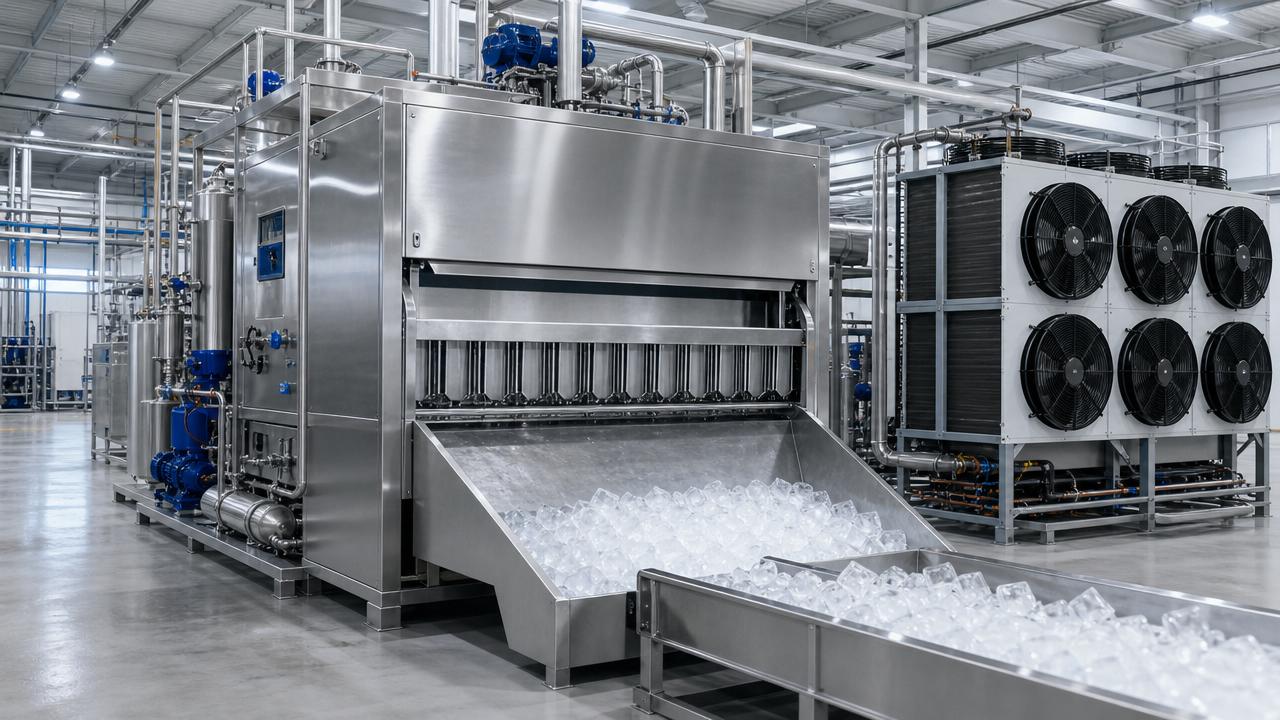
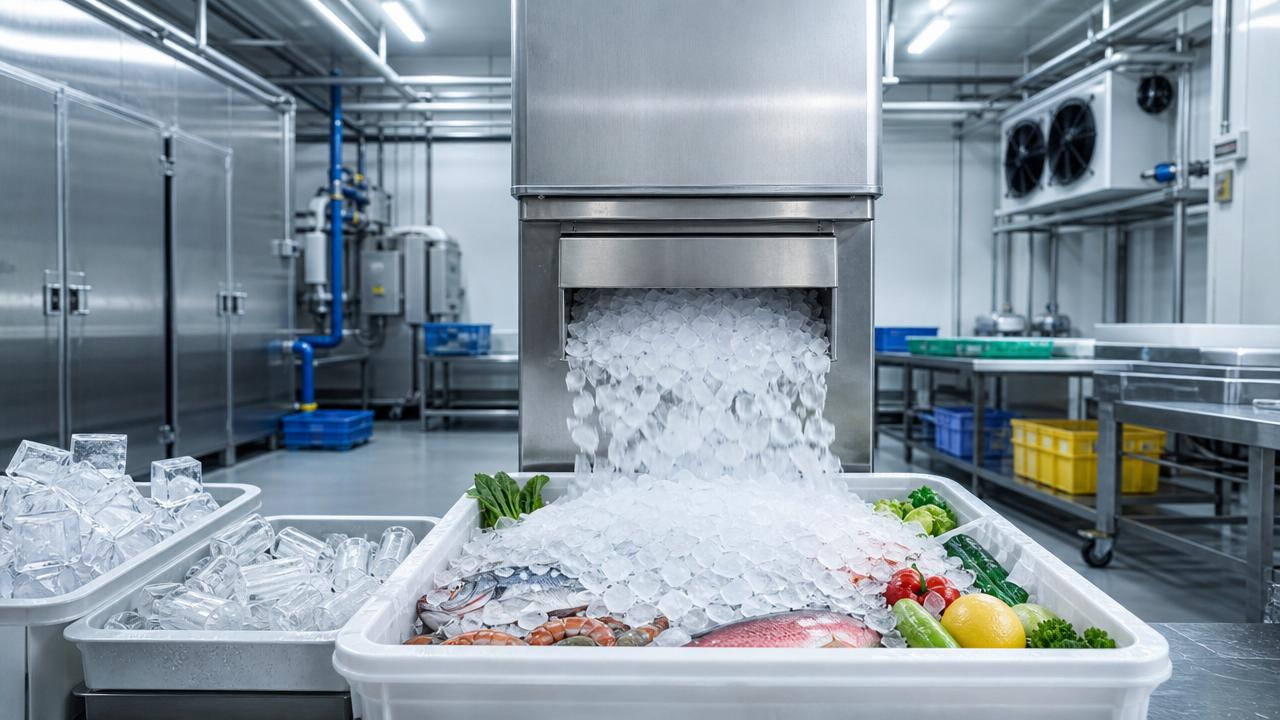
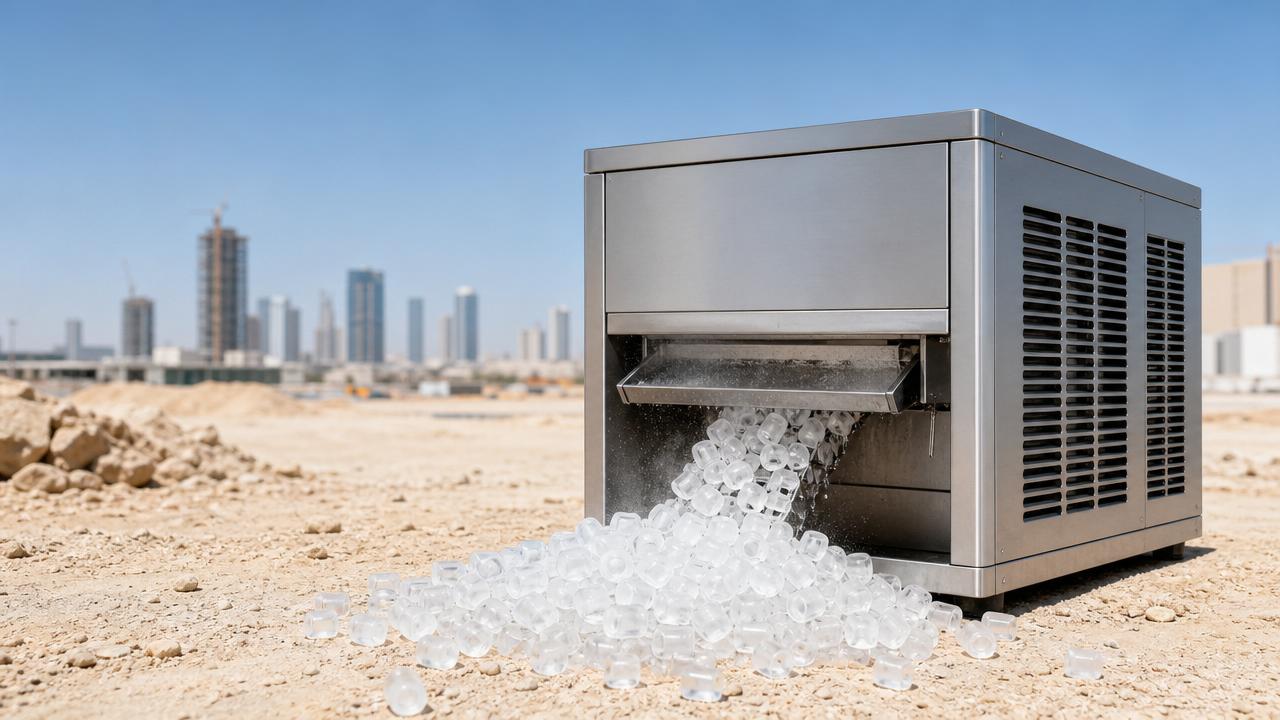
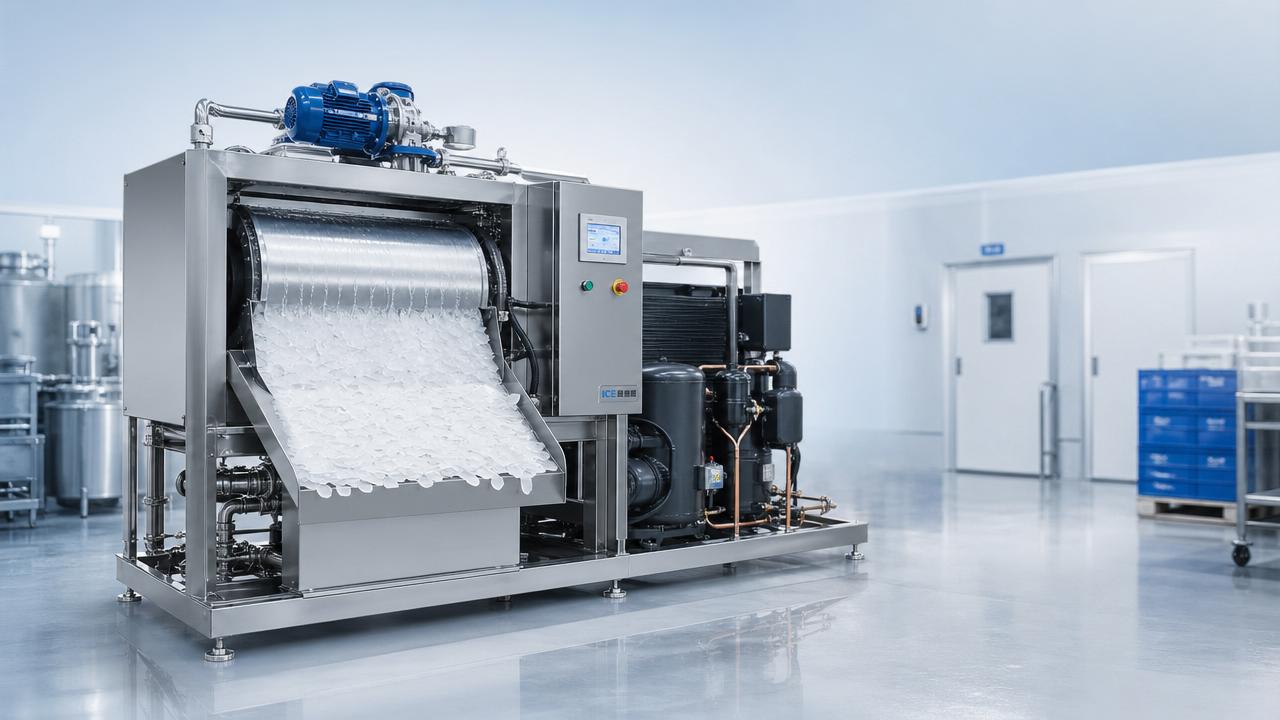
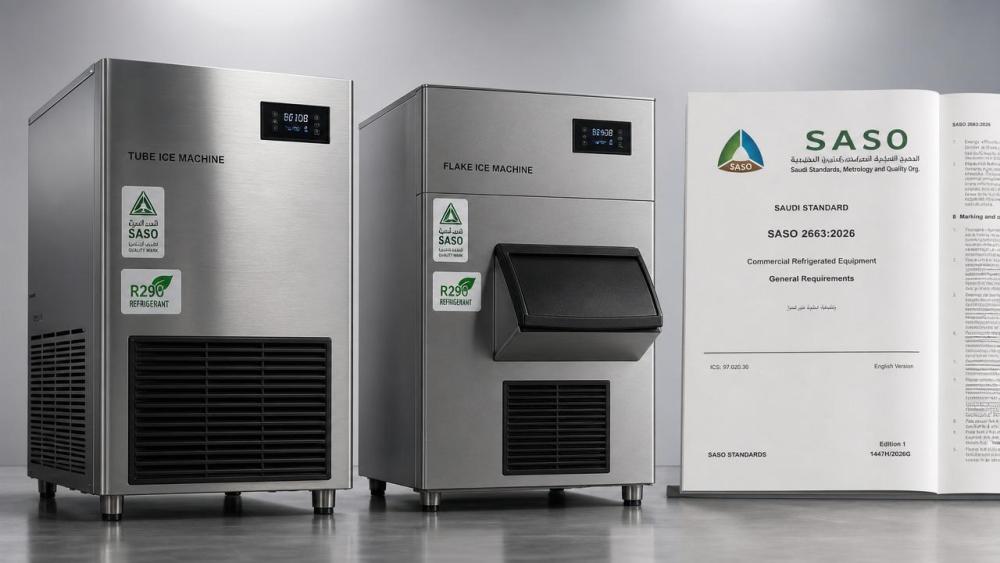
Saudi Arabia’s Standards, Metrology and Quality Organization (SASO) issued the revised SASO 2663:2026 standard on 26 May 2026 — introducing dedicated energy efficiency classifications and an accelerated certification pathway for R290-based tube and flake ice machines. This regulatory update directly impacts manufacturers and exporters of commercial ice equipment targeting the Gulf Cooperation Council (GCC) market, particularly those supplying from China.
Key Regulatory Update Confirmed
On 26 May 2026, SASO published SASO 2663:2026, the latest revision of its energy efficiency standard for commercial ice machines. For the first time, the standard establishes separate energy efficiency tiers and a fast-track certification mechanism specifically for tube ice machines and flake ice machines using R290 refrigerant. Equipment complying with IEC 60335-2-74+A1:2025 qualifies for this expedited route, reducing the average certification timeline from 14 weeks to 6 weeks.
Impact Across Industry Roles
Export-Oriented Trading Companies
These firms benefit most directly from the shortened certification window: faster market entry enables more responsive bidding on GCC tenders and improved inventory turnover. However, they must now align product portfolios with R290-compliant models early in procurement cycles and verify third-party test reports against the new SASO 2663:2026 requirements before shipment.
Raw Material Suppliers
Suppliers of refrigerant-handling components — including copper tubing, pressure relief valves, and sealed compressors rated for R290 — face increased demand and tighter specification scrutiny. Compatibility with IEC 60335-2-74+A1:2025 safety provisions becomes a mandatory qualification criterion, not just a technical preference.
Manufacturers of Ice Equipment
Producers must re-evaluate design validation protocols, especially for charge size limits, leak detection integration, and ventilation compliance under R290’s flammability classification. The 6-week pathway applies only to fully compliant units; non-conforming variants still undergo full 14-week assessment, raising internal quality gate stakes.
Supply Chain & Certification Support Providers
Testing laboratories, SASO-accredited certification bodies, and local representative agents must update their checklists and technical documentation templates to reflect the new R290-specific annexes in SASO 2663:2026. Turnaround time improvements depend on synchronized readiness across this ecosystem.
Strategic Priorities for Enterprises
Validate Compliance Against IEC 60335-2-74+A1:2025 Early
R2290 certification eligibility hinges entirely on demonstrable conformity with this updated safety standard — not just energy performance. Manufacturers should commission pre-assessment testing before initiating formal SASO submission.
Prepare Technical Documentation for Fast-Track Review
The 6-week timeline assumes complete, error-free submissions: Arabic-translated user manuals, R290-specific risk assessments, factory production control records, and certified lab reports referencing IEC 60335-2-74+A1:2025 test clauses must be ready upon application.
Review Procurement Timelines for R290-Specific Components
Long-lead items such as A3-class compressors, flame-retardant insulation materials, and explosion-proof controls require earlier ordering to avoid bottlenecks in the compressed 6-week certification window.
Update Tender Response Templates for GCC Projects
Bid documents for municipal, hospitality, or food processing projects in Saudi Arabia must now explicitly reference SASO 2663:2026 compliance and include valid R290 certification status — with evidence of adherence to the fast-track criteria.
Industry Observation: Beyond Speed — A Shift in Technical Gatekeeping
Analysis shows that SASO’s move signals more than administrative streamlining: it institutionalizes R290 as a preferred low-GWP refrigerant for commercial ice applications in the GCC. What deserves closer attention is how this incentivizes design standardization — favoring modular, safety-integrated architectures over legacy retrofit approaches. Observably, the 6-week pathway lowers the barrier to entry for mid-tier Chinese manufacturers, but raises the technical baseline for all entrants. From an industry perspective, this reflects a broader regional pivot toward harmonized safety-first certification aligned with IEC frameworks — not merely energy labeling.
Broader Significance and Forward Outlook
This revision marks a maturation of GCC regulatory infrastructure for climate-conscious refrigeration technologies. It does not eliminate compliance complexity, but redistributes effort — shifting emphasis from prolonged procedural review to upfront technical rigor. For global suppliers, success will hinge less on navigating bureaucracy and more on embedding IEC-grade safety and efficiency logic into core product development.
Source Attribution and Verification Notes
This article is generated exclusively from the user-provided title, event date (26 May 2026), and summary. Specific official source links were not provided in the input and should be verified continuously. Stakeholders are advised to monitor SASO’s official portal for implementation guidelines, interpretation notes on R290 charge limits, and updates to the accredited laboratory list — all of which may affect real-world certification execution and tender acceptance criteria.
Recommended News
 Cold Chain & Retail Energy InsightsWhen Does Cold Storage Stop Saving Energy and Start Losing It?Analyst :Mr. Julian Thorne
 Thermodynamic Tech TrendsTemperature Control Problems That Quietly Ruin Product QualityAnalyst :Prof. Sarah Lin
 Cold Chain & Retail Energy InsightsCommercial Refrigeration Upgrades: Which Costs Are Easy to Miss?Analyst :Mr. Julian Thorne
 Flake Ice MachinesWhy Some Commercial Ice Machines Cost More After InstallationAnalyst :Commercial Ice Tech Fellow
 Multideck Display CabinetsCommercial Freezers: Is Lower Temperature Always Better?Analyst :Retail Refrigeration Strategist
 Precision ChillersIndustrial Chillers: What Causes Performance Gaps in Summer?Analyst :Industrial Cooling Architect
 Concrete Cooling Ice PlantsIndustrial Ice Makers: What Separates Stable Output From Downtime?Analyst :Commercial Ice Tech Fellow
 Cold Chain & Retail Energy InsightsCold Chain Logistics Failures Often Start With Small Temperature SwingsAnalyst :Mr. Julian Thorne
 Air/Water-cooled ScrewIndustrial Cooling Systems: When Oversizing Becomes a Cost ProblemAnalyst :Industrial Cooling Architect
 Flake Ice MachinesFlake Ice Machines vs Other Ice Types for Fast Heat RemovalAnalyst :Commercial Ice Tech Fellow
 Multideck Display CabinetsWhy Refrigeration Cabinets Lose Efficiency Faster Than ExpectedAnalyst :Retail Refrigeration Strategist
 Smart Evaporator SystemsTemperature Control Systems: Which Alerts Actually Prevent Losses?Analyst :Cold Chain Dynamics Scientist
 Tube Ice MachinesTube Ice Machines: What Affects Ice Uniformity and Melt Rate?Analyst :Commercial Ice Tech Fellow
 Parallel Compressor RacksIndustrial Refrigeration Retrofits: Repair or Replace This Year?Analyst :Cold Chain Dynamics Scientist
 CO2 Transcritical SystemsCO2 Refrigeration: Where It Pays Off and Where It Still StrugglesAnalyst :Cold Chain Dynamics Scientist
 Eco-Refrigerant & ComplianceF-Gas Regulations Are Changing Equipment Choices Faster Than ExpectedAnalyst :Dr. Henrik Weber
 Cascade Refrigeration SystemsWhy Refrigeration Systems Keep Short Cycling After CommissioningAnalyst :Cryogenic Preservation Expert
 Eco-Refrigerant & ComplianceEco-Friendly Refrigeration: What Looks Green but Performs Poorly?Analyst :Dr. Henrik Weber
 Eco-Refrigerant & ComplianceNatural Refrigerants: Are Compliance Benefits Worth the Transition Cost?Analyst :Dr. Henrik Weber
 Cold Chain & Retail Energy InsightsCold Storage Solutions That Fit Expansion Plans Without OverbuildingAnalyst :Mr. Julian Thorne
 CO2 Transcritical SystemsEU F-Gas Regulation Revision Effective Oct 2026, CO₂ Transcritical Certification Window NarrowsAnalyst :Cold Chain Dynamics Scientist
 Multideck Display CabinetsMIIT Launches 2026 Industrial Energy Conservation InspectionAnalyst :Retail Refrigeration Strategist
 -86℃ ULT FreezersGlobal Deep-Sea Tuna Fishing Season Starts Early; China’s -86°C ULT Vessel Orders Surge 300%Analyst :Cryogenic Preservation Expert
 Magnetic Bearing ChillersDOE Updates ASHRAE 90.1-2025 Appendix: Maglev Chiller Efficiency Up 12%Analyst :Industrial Cooling Architect
 Tube Ice MachinesMiddle East Heatwave Boosts Chinese Tube Ice Machine ExportsAnalyst :Commercial Ice Tech Fellow
 Air/Water-cooled ScrewWhen does a variable frequency screw cut cooling costs?Analyst :Industrial Cooling Architect
 -86℃ ULT FreezersWhy is medical cryogenic storage under stricter review?Analyst :Cryogenic Preservation Expert
 Multideck Display CabinetsCan air curtain refrigeration really reduce display losses?Analyst :Retail Refrigeration Strategist
 Flake Ice MachinesWhat affects flake ice production more than output specs?Analyst :Commercial Ice Tech Fellow
 Deep-sea Fishery FreezersDeep cryogenic storage failures often start unnoticedAnalyst :Cryogenic Preservation Expert
 Microclimate ModulesHow anti-fog technology changes cold display performanceAnalyst :Retail Refrigeration Strategist
 Cold Chain & Retail Energy InsightsEnergy efficient cooling is not always the cheaper optionAnalyst :Mr. Julian Thorne
 Eco-Refrigerant & ComplianceWhat drives low carbon refrigeration adoption in 2026?Analyst :Dr. Henrik Weber
 Magnetic Bearing ChillersAre magnetic bearing chillers worth the upfront premium?Analyst :Industrial Cooling Architect
 Cold Chain & Retail Energy InsightsCold chain technology gaps still cause avoidable spoilageAnalyst :Mr. Julian Thorne
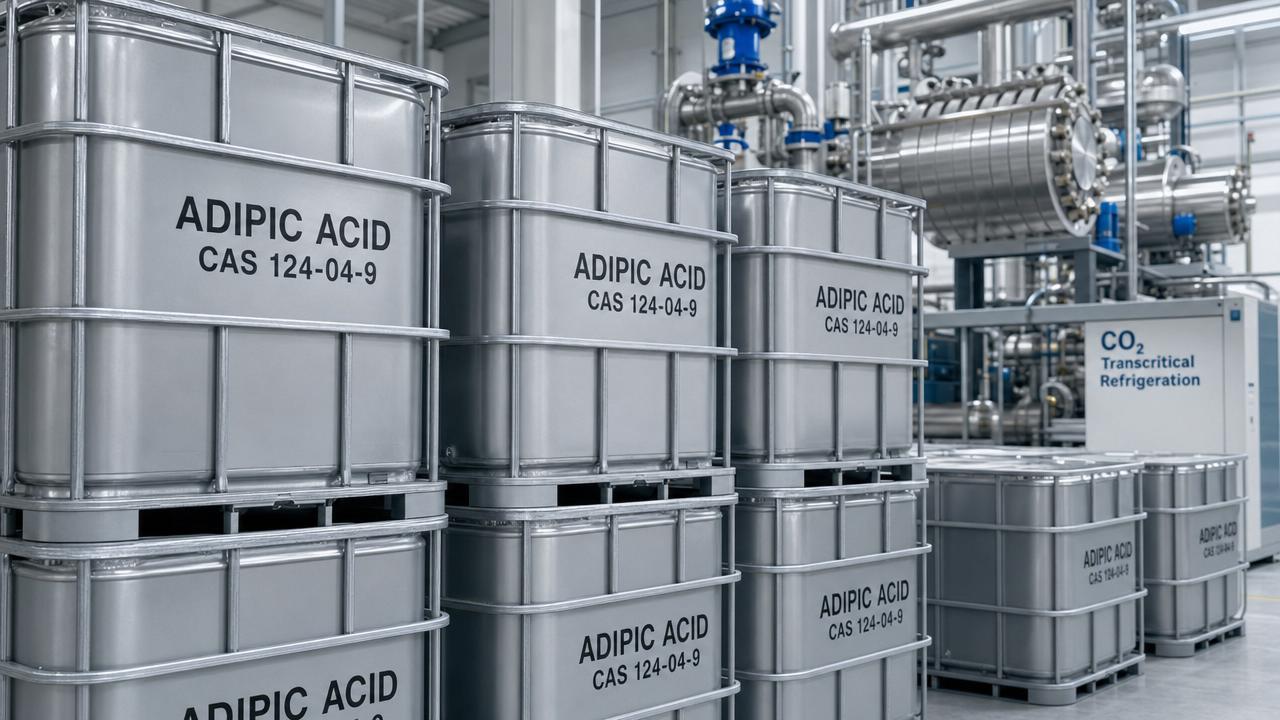
 CO2 Transcritical SystemsEU Imposes Final Anti-Dumping Duty on Chinese Adipic AcidAnalyst :Cold Chain Dynamics Scientist
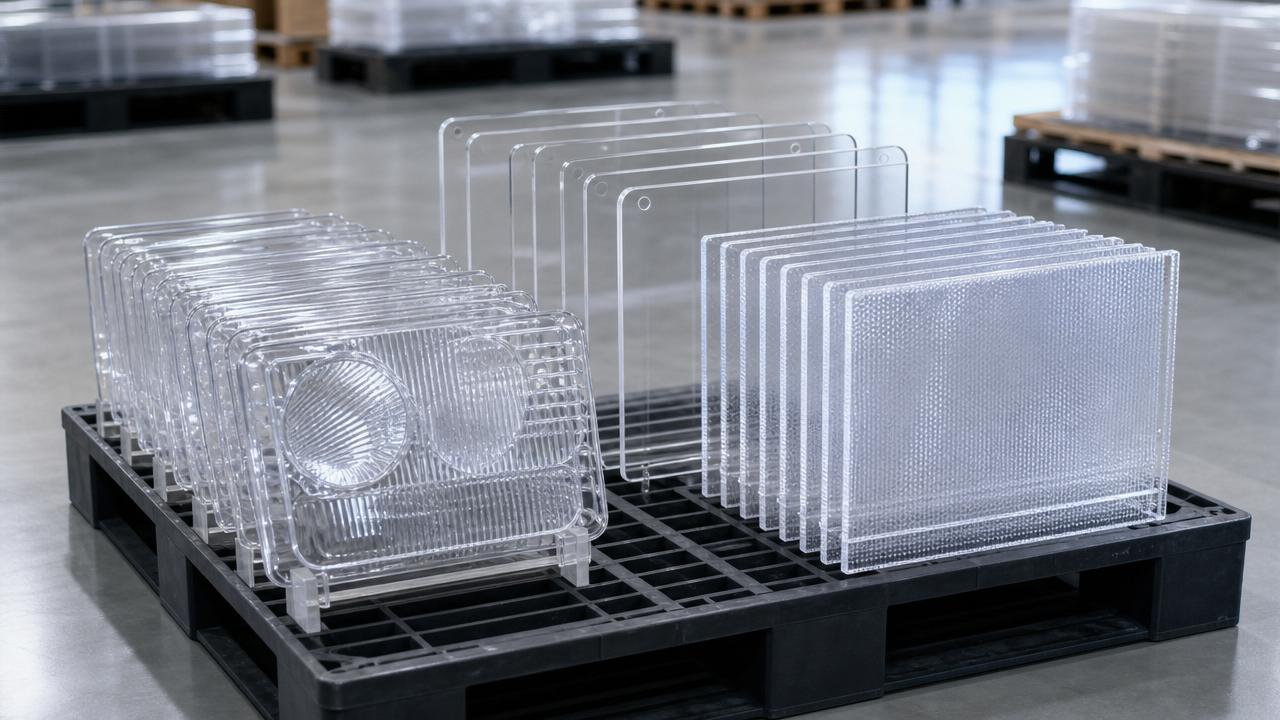
 Multideck Display CabinetsColombia Launches Anti-Dumping Sunset Review on Chinese Acrylic SheetsAnalyst :Retail Refrigeration Strategist
 Magnetic Bearing ChillersMIIT Launches 2026 Industrial Energy Conservation InspectionAnalyst :Industrial Cooling Architect
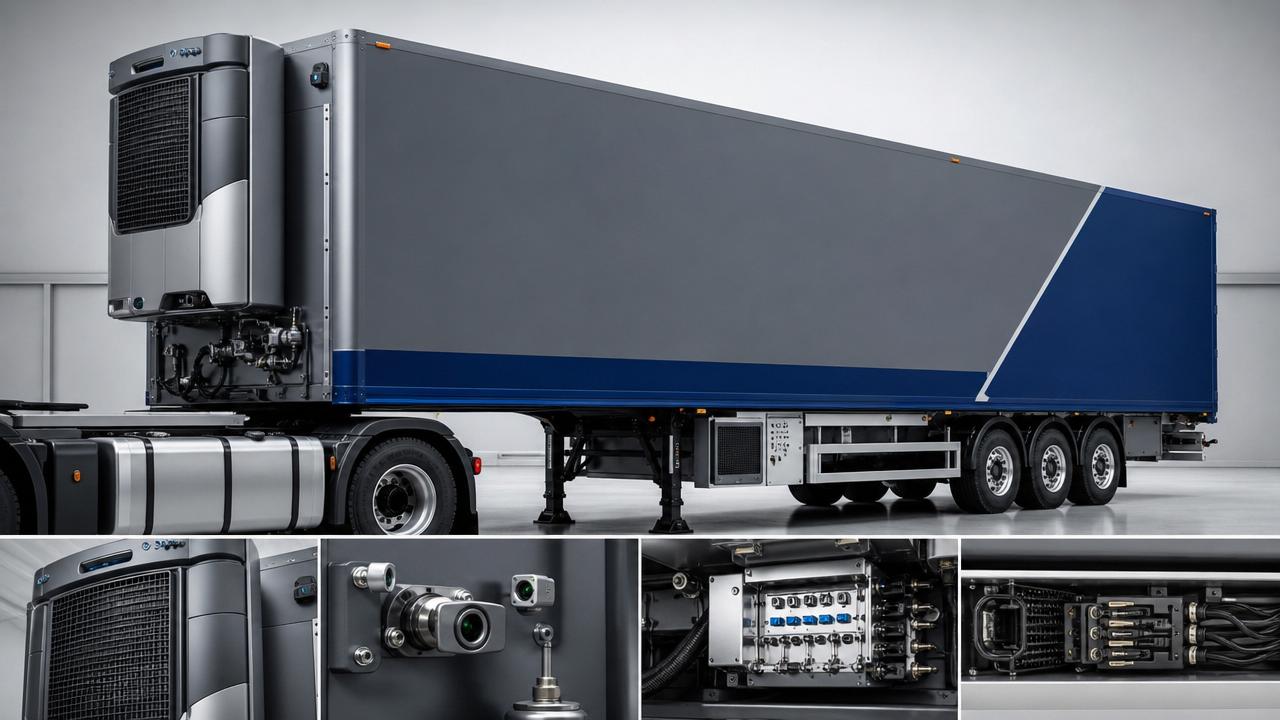
 Cold Chain & Retail Energy InsightsAPEC Auto Dialogue Sets New Standards for Smart Cold-Chain TrailersAnalyst :Mr. Julian Thorne
 Concrete Cooling Ice PlantsGlobal LNG Shortage Drives 23% Rise in Industrial Gas Costs for Ice PlantsAnalyst :Commercial Ice Tech Fellow