Industry News
Curation by industry experts
Hot Articles
- Thermodynamic Tech TrendsHow to Size Heat Exchange Systems for Refrigeration Plants at Peak Load
- Parallel Compressor RacksHow to Size Reciprocating Compressors for Cold Storage Load and Temperature Range
- Flake Ice MachinesHow to Size a Commercial Ice Dispenser for Peak Demand in Foodservice Operations
Popular Tags
US EPA Delays R410A Ban to 2028, Extending CO₂ System Export Window
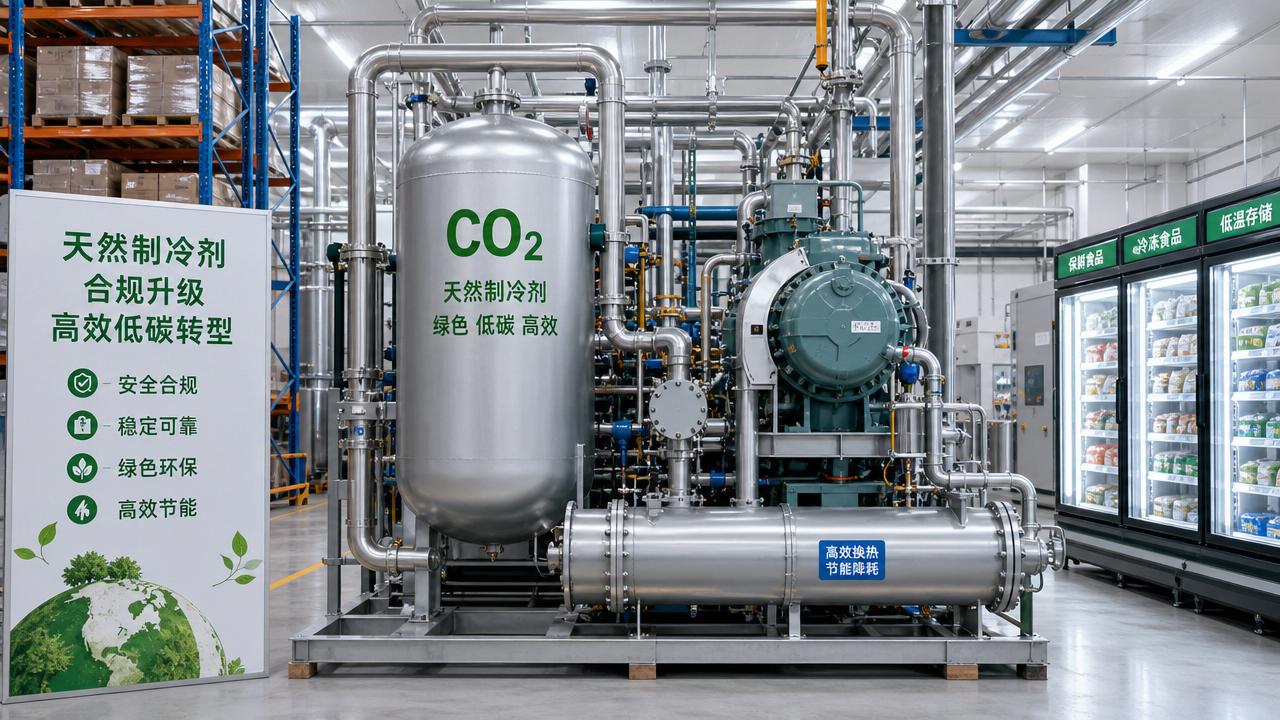
The U.S. Environmental Protection Agency (EPA) announced on May 30, 2026, a two-year postponement of the R410A refrigerant phaseout for new equipment—from the original January 1, 2026, effective date to January 1, 2028. This adjustment creates critical breathing room for manufacturers and exporters of CO₂ transcritical refrigeration systems, particularly those serving North American supermarket cold chains, multi-deck display cases, and low-temperature logistics centers.
Event Overview
On May 30, 2026, the U.S. EPA officially confirmed the delay of its rule prohibiting the use of R410A in new stationary air-conditioning and heat pump equipment. The prohibition is now scheduled to take effect on January 1, 2028. The agency has not released additional regulatory details beyond this timeline update. No revision to the underlying Global Warming Potential (GWP) thresholds or alternative compliance pathways was announced at this time.
Industries Affected
Direct Exporters of CO₂ Refrigeration Equipment
These companies—especially those supplying complete units or core components (e.g., compressors, ejectors, controllers) to U.S. grocery retailers and cold-chain infrastructure developers—are directly impacted. The extension provides additional time to align production, certification, and logistics with U.S. market entry requirements. Impact manifests as extended lead time for order fulfillment, reduced pressure on near-term capacity ramp-up, and more flexibility in managing UL 60335-2-89 certification rollouts.
Manufacturers of CO₂ Compressor Assemblies
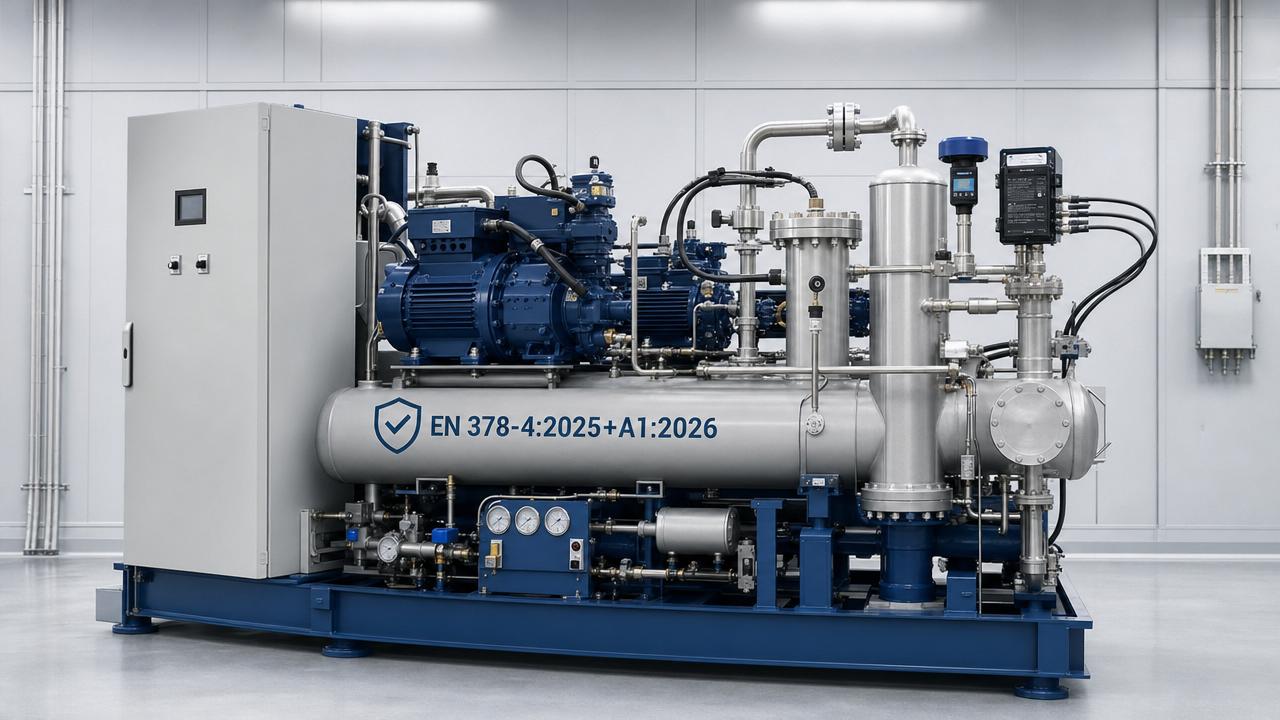
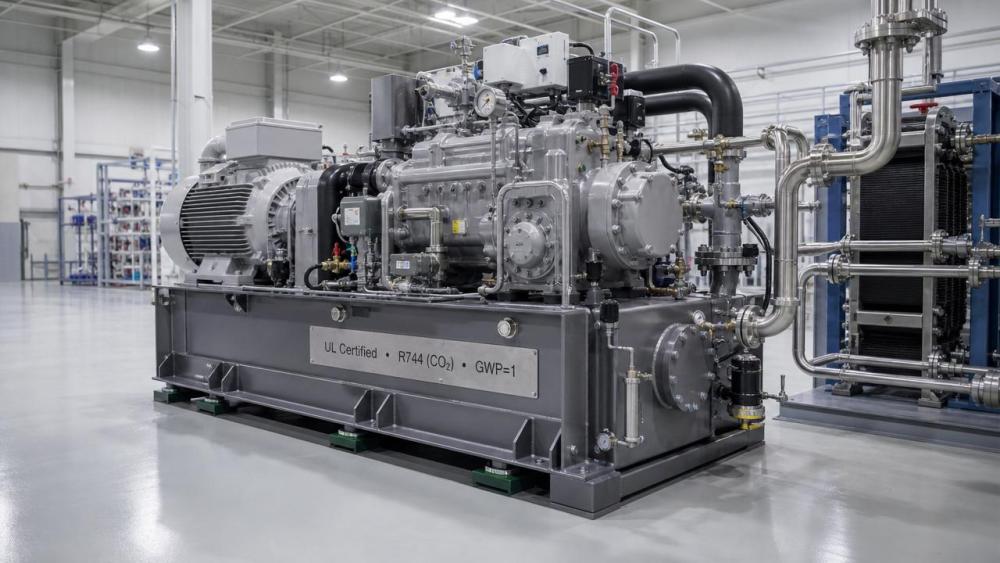
Chinese OEMs producing CO₂ transcritical compressor units have reported achieving UL 60335-2-89 (2nd edition) certification. With the ban delayed, these firms gain additional months to scale certified production lines, validate supply chain resilience, and respond to early commercial inquiries from North American system integrators—without facing immediate regulatory cutoff risk.
Suppliers of Critical Subcomponents (e.g., High-Pressure Valves, Heat Exchangers)
Component-level suppliers face indirect but consequential effects. Demand for GWP-compliant parts is now expected to grow more gradually through 2027, allowing for phased retooling and qualification efforts. However, inventory planning must account for potential acceleration in late-2027 as customers prepare for the 2028 deadline.
What Relevant Companies or Practitioners Should Focus On
Monitor official EPA guidance on implementation scope and enforcement timelines
The May 30 announcement confirms only the new effective date—not whether exemptions, transitional allowances, or field retrofit provisions will be introduced. Stakeholders should track upcoming Federal Register notices and EPA’s SNAP program updates for clarity on applicability to specific equipment categories (e.g., chillers vs. unit coolers).
Verify alignment between product certification status and target end-use applications
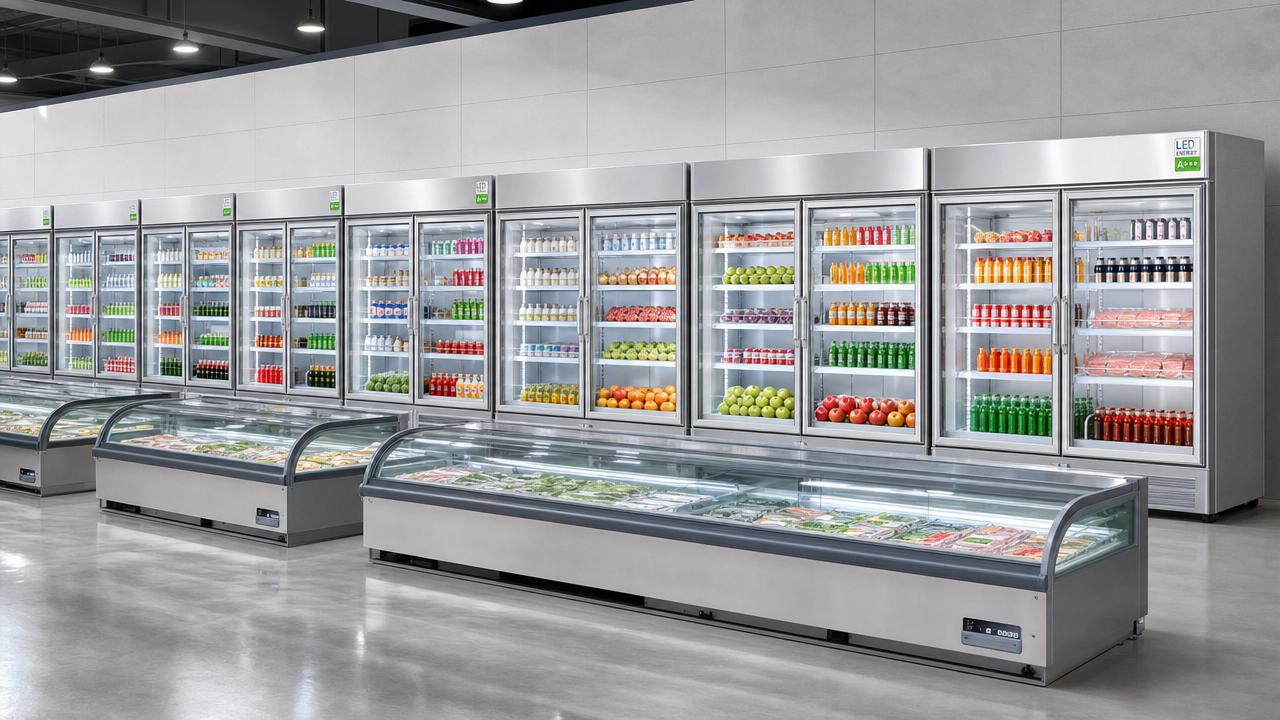
UL 60335-2-89 (2nd ed.) covers CO₂-based refrigerating appliances—but certification scope varies by configuration (e.g., single-stage vs. parallel compression). Exporters must confirm their certified models match the exact system architecture specified by North American buyers, especially for multi-deck island cases requiring precise pressure and temperature control.
Distinguish policy signal from operational readiness
The delay reflects regulatory pragmatism—not a relaxation of long-term decarbonization goals. Buyers in the U.S. retail and logistics sectors are already specifying CO₂-ready designs in RFPs. Companies should treat the 2028 deadline as fixed for commercial planning, even while acknowledging the extra time for technical and logistical preparation.
Prepare documentation and supply chain validation for North American compliance audits
U.S. importers and distributors increasingly require traceable evidence of refrigerant charge verification, component-level GWP declarations, and conformity with ASHRAE Standard 15 safety requirements. Exporters should begin compiling auditable records now—including refrigerant sourcing logs, pressure vessel test reports, and UL certificate reference numbers—to avoid customs delays or post-import rejection.
Editorial Perspective / Industry Observation
Observably, this delay functions less as a policy reversal and more as a calibrated pause—intended to mitigate disruption while preserving the trajectory toward low-GWP refrigerants. Analysis shows that the 2028 date remains consistent with EPA’s broader SNAP Rule 23 framework and aligns with similar timelines under the AIM Act’s phasedown schedule. From an industry perspective, it signals that regulatory agencies recognize current supply chain constraints for CO₂ systems—not that the transition itself is in doubt. Current monitoring should focus on how quickly downstream demand (e.g., from major supermarket chains) accelerates in response to the clarified timeline, rather than on further extensions.
Conclusion
This development does not alter the fundamental direction of U.S. refrigerant regulation but reshapes the near-term execution window. It affirms CO₂ transcritical technology as a commercially viable pathway for North American cold-chain applications—and underscores that successful market access hinges less on timing alone and more on demonstrable compliance readiness, component interoperability, and alignment with evolving end-user specifications. For stakeholders, it is better understood as a tactical adjustment—not a strategic reprieve.
Information Sources
Main source: U.S. Environmental Protection Agency (EPA), official announcement dated May 30, 2026.
Note: Further details—including scope clarifications, enforcement protocols, or potential amendments to SNAP listing criteria—remain pending and warrant continued observation.
Recommended News
 Cold Chain & Retail Energy InsightsWhen Does Cold Storage Stop Saving Energy and Start Losing It?Analyst :Mr. Julian Thorne
 Thermodynamic Tech TrendsTemperature Control Problems That Quietly Ruin Product QualityAnalyst :Prof. Sarah Lin
 Cold Chain & Retail Energy InsightsCommercial Refrigeration Upgrades: Which Costs Are Easy to Miss?Analyst :Mr. Julian Thorne
 Flake Ice MachinesWhy Some Commercial Ice Machines Cost More After InstallationAnalyst :Commercial Ice Tech Fellow
 Multideck Display CabinetsCommercial Freezers: Is Lower Temperature Always Better?Analyst :Retail Refrigeration Strategist
 Precision ChillersIndustrial Chillers: What Causes Performance Gaps in Summer?Analyst :Industrial Cooling Architect
 Concrete Cooling Ice PlantsIndustrial Ice Makers: What Separates Stable Output From Downtime?Analyst :Commercial Ice Tech Fellow
 Cold Chain & Retail Energy InsightsCold Chain Logistics Failures Often Start With Small Temperature SwingsAnalyst :Mr. Julian Thorne
 Air/Water-cooled ScrewIndustrial Cooling Systems: When Oversizing Becomes a Cost ProblemAnalyst :Industrial Cooling Architect
 Flake Ice MachinesFlake Ice Machines vs Other Ice Types for Fast Heat RemovalAnalyst :Commercial Ice Tech Fellow
 Multideck Display CabinetsWhy Refrigeration Cabinets Lose Efficiency Faster Than ExpectedAnalyst :Retail Refrigeration Strategist
 Smart Evaporator SystemsTemperature Control Systems: Which Alerts Actually Prevent Losses?Analyst :Cold Chain Dynamics Scientist
 Tube Ice MachinesTube Ice Machines: What Affects Ice Uniformity and Melt Rate?Analyst :Commercial Ice Tech Fellow
 Parallel Compressor RacksIndustrial Refrigeration Retrofits: Repair or Replace This Year?Analyst :Cold Chain Dynamics Scientist
 CO2 Transcritical SystemsCO2 Refrigeration: Where It Pays Off and Where It Still StrugglesAnalyst :Cold Chain Dynamics Scientist
 Eco-Refrigerant & ComplianceF-Gas Regulations Are Changing Equipment Choices Faster Than ExpectedAnalyst :Dr. Henrik Weber
 Cascade Refrigeration SystemsWhy Refrigeration Systems Keep Short Cycling After CommissioningAnalyst :Cryogenic Preservation Expert
 Eco-Refrigerant & ComplianceEco-Friendly Refrigeration: What Looks Green but Performs Poorly?Analyst :Dr. Henrik Weber
 Eco-Refrigerant & ComplianceNatural Refrigerants: Are Compliance Benefits Worth the Transition Cost?Analyst :Dr. Henrik Weber
 Cold Chain & Retail Energy InsightsCold Storage Solutions That Fit Expansion Plans Without OverbuildingAnalyst :Mr. Julian Thorne
 CO2 Transcritical SystemsEU F-Gas Regulation Revision Effective Oct 2026, CO₂ Transcritical Certification Window NarrowsAnalyst :Cold Chain Dynamics Scientist
 Multideck Display CabinetsMIIT Launches 2026 Industrial Energy Conservation InspectionAnalyst :Retail Refrigeration Strategist
 -86℃ ULT FreezersGlobal Deep-Sea Tuna Fishing Season Starts Early; China’s -86°C ULT Vessel Orders Surge 300%Analyst :Cryogenic Preservation Expert
 Magnetic Bearing ChillersDOE Updates ASHRAE 90.1-2025 Appendix: Maglev Chiller Efficiency Up 12%Analyst :Industrial Cooling Architect
 Tube Ice MachinesMiddle East Heatwave Boosts Chinese Tube Ice Machine ExportsAnalyst :Commercial Ice Tech Fellow
 Air/Water-cooled ScrewWhen does a variable frequency screw cut cooling costs?Analyst :Industrial Cooling Architect
 -86℃ ULT FreezersWhy is medical cryogenic storage under stricter review?Analyst :Cryogenic Preservation Expert
 Multideck Display CabinetsCan air curtain refrigeration really reduce display losses?Analyst :Retail Refrigeration Strategist
 Flake Ice MachinesWhat affects flake ice production more than output specs?Analyst :Commercial Ice Tech Fellow
 Deep-sea Fishery FreezersDeep cryogenic storage failures often start unnoticedAnalyst :Cryogenic Preservation Expert
 Microclimate ModulesHow anti-fog technology changes cold display performanceAnalyst :Retail Refrigeration Strategist
 Cold Chain & Retail Energy InsightsEnergy efficient cooling is not always the cheaper optionAnalyst :Mr. Julian Thorne
 Eco-Refrigerant & ComplianceWhat drives low carbon refrigeration adoption in 2026?Analyst :Dr. Henrik Weber
 Magnetic Bearing ChillersAre magnetic bearing chillers worth the upfront premium?Analyst :Industrial Cooling Architect
 Cold Chain & Retail Energy InsightsCold chain technology gaps still cause avoidable spoilageAnalyst :Mr. Julian Thorne
 CO2 Transcritical SystemsEU Imposes Final Anti-Dumping Duty on Chinese Adipic AcidAnalyst :Cold Chain Dynamics Scientist
 Multideck Display CabinetsColombia Launches Anti-Dumping Sunset Review on Chinese Acrylic SheetsAnalyst :Retail Refrigeration Strategist
 Magnetic Bearing ChillersMIIT Launches 2026 Industrial Energy Conservation InspectionAnalyst :Industrial Cooling Architect
 Cold Chain & Retail Energy InsightsAPEC Auto Dialogue Sets New Standards for Smart Cold-Chain TrailersAnalyst :Mr. Julian Thorne
 Concrete Cooling Ice PlantsGlobal LNG Shortage Drives 23% Rise in Industrial Gas Costs for Ice PlantsAnalyst :Commercial Ice Tech Fellow