Industry News
Curation by industry experts
Hot Articles
Popular Tags
Commercial Refrigeration Trends Reshaping Equipment Specifications in 2026
Equipment specifications are now being shaped less by nameplate capacity alone and more by how a system manages energy, refrigerant risk, temperature data, serviceability, and changing operating conditions. The most consequential refrigeration trends in 2026 point to a clear shift: commercial cooling investments must be specified as long-term operating systems, not isolated pieces of equipment.
A refrigerated cabinet, cold room, industrial chiller, ice machine, or ultra-low temperature freezer can still meet its immediate cooling duty while creating avoidable exposure later through high electrical demand, difficult maintenance, unsupported controls, or a refrigerant choice that narrows future options. The procurement question has therefore changed from “What unit can achieve the required temperature?” to “What system can maintain the required temperature reliably, efficiently, and compliantly through its service life?”
Natural Refrigerants Are Changing the System Design Conversation
The transition toward lower-impact refrigerants is one of the strongest forces reshaping commercial refrigeration specifications. This is not simply a matter of replacing one refrigerant with another. Refrigerant choice affects compressor selection, piping design, safety measures, ventilation, heat rejection, technician capability, control logic, and maintenance procedures.
Carbon dioxide systems are increasingly considered for larger cold storage sites, food distribution facilities, and retail refrigeration applications because they can support low-temperature duty while reducing reliance on high-global-warming-potential refrigerants. Their suitability, however, depends on local climate, load profile, system design quality, and the availability of competent service support. A poorly matched CO2 system can be harder to optimize than a conventional installation, particularly where ambient conditions place greater pressure on heat rejection.
Ammonia remains relevant in many industrial applications because of its thermodynamic performance, but it requires an operating environment designed around its safety characteristics. It is generally more appropriate for professionally managed facilities with established engineering controls than for small, lightly staffed locations. Hydrocarbon refrigerants can be highly efficient in self-contained equipment, though charge limits, equipment layout, and site safety rules must be considered early rather than treated as a late-stage compliance task.
The practical lesson is not that one refrigerant fits every facility. It is that refrigerant selection must happen before final equipment sizing. Choosing a low-impact refrigerant after the plant room, cabinet layout, ventilation route, or service contract has already been defined often leads to compromise.
Energy Efficiency Is Moving From a Product Claim to an Operating Requirement
Energy performance remains central to commercial refrigeration trends, but the most useful evaluation is no longer a single efficiency rating. Cooling equipment behaves differently at part load, during pull-down, in hot weather, after repeated door openings, and when heat exchangers begin to foul. A specification that looks efficient under one operating point may not produce the best annual outcome.
Variable-speed compressors, electronically commutated fans, floating head pressure controls, electronic expansion valves, and variable-frequency drives are increasingly being specified because they allow capacity to follow actual demand. Their value is greatest when loads fluctuate significantly. A cold storage hub with changing inventory, a retail display line exposed to varying customer traffic, or an industrial process with intermittent heat load can benefit from modulation far more than a site that runs at a stable load around the clock.
Efficiency also depends on the system surrounding the compressor. Door discipline, insulation integrity, evaporator condition, condenser cleanliness, defrost strategy, air curtain performance, and heat recovery opportunities can materially affect power consumption and temperature stability. Specifying a premium compressor while accepting weak enclosure performance is a common mismatch. The compressor then works harder to compensate for heat gain that should have been controlled at the building or cabinet level.
Procurement documents should therefore require performance information across expected operating conditions, not just at a nominal test point. It is also sensible to ask how the unit behaves during defrost, high ambient temperatures, low-load periods, and power recovery after an interruption.
Controls Are Becoming Part of the Refrigeration Plant, Not an Optional Add-On
Digital controls have moved beyond simple temperature display. Modern systems can combine temperature, pressure, compressor status, door position, defrost activity, ambient conditions, and energy data into a usable operating picture. This supports earlier fault detection, better maintenance planning, and clearer accountability when temperature excursions occur.
Artificial intelligence is often discussed in relation to refrigeration, especially for predictive maintenance and defrost optimization. The useful question is not whether a product carries an AI label. It is whether the control system has reliable inputs, understandable alarms, retained trend data, and a clear response path for site teams. Sophisticated algorithms cannot compensate for inaccurate sensors, disconnected communication devices, or unclear responsibility for alarm response.
Sensor placement deserves more attention than it usually receives. A sensor located near an evaporator outlet, cabinet light, doorway, or product loading zone may not represent the temperature that matters most. For food storage, the concern may be product temperature and recovery time after loading. For biomedical storage, stability, alarm integrity, and traceable records may take priority over rapid cycling. For process cooling, return-water temperature and production continuity may be the critical indicators.
Control specifications should define who can change setpoints, how alarm thresholds are managed, what happens during communication loss, and whether data can be exported into existing facility systems. A connected unit with inaccessible data creates little operational value.
Resilience Is Being Designed Into Capacity, Layout, and Maintenance Access
Earlier refrigeration specifications often treated redundancy as a premium feature. In 2026, resilience is increasingly a business continuity issue. The appropriate level of backup depends on the consequences of interruption: product spoilage, production downtime, medical sample risk, retail stock loss, or contractual exposure.
Redundancy does not always mean duplicating every component. It may involve staged compressor capacity, independent refrigeration circuits, standby power provisions, spare-parts strategy, remote monitoring, or the ability to isolate one section without shutting down an entire facility. The right design depends on the failure modes that matter at that site.
A cold room designed for one very large refrigeration circuit can appear cost-effective until a service event takes the whole room offline. Conversely, excessive redundancy can add capital cost and maintenance complexity without improving the actual recovery plan. The better approach is to identify the temperature-critical zones, the acceptable outage period, the availability of temporary cooling, and the time needed to obtain specialist support.
Maintenance access is part of resilience as well. Condensers positioned where they cannot be cleaned, evaporators that cannot be inspected without disrupting operations, and refrigeration packs installed in congested plant rooms all increase the likelihood that routine work is deferred. Equipment that is difficult to service will rarely receive ideal service throughout its life.
Different Equipment Categories Are Being Specified More Precisely
The broad refrigeration market is moving toward application-specific design. This matters because a system built around the wrong load profile may operate reliably at first yet deliver poor product protection or excessive energy use over time.
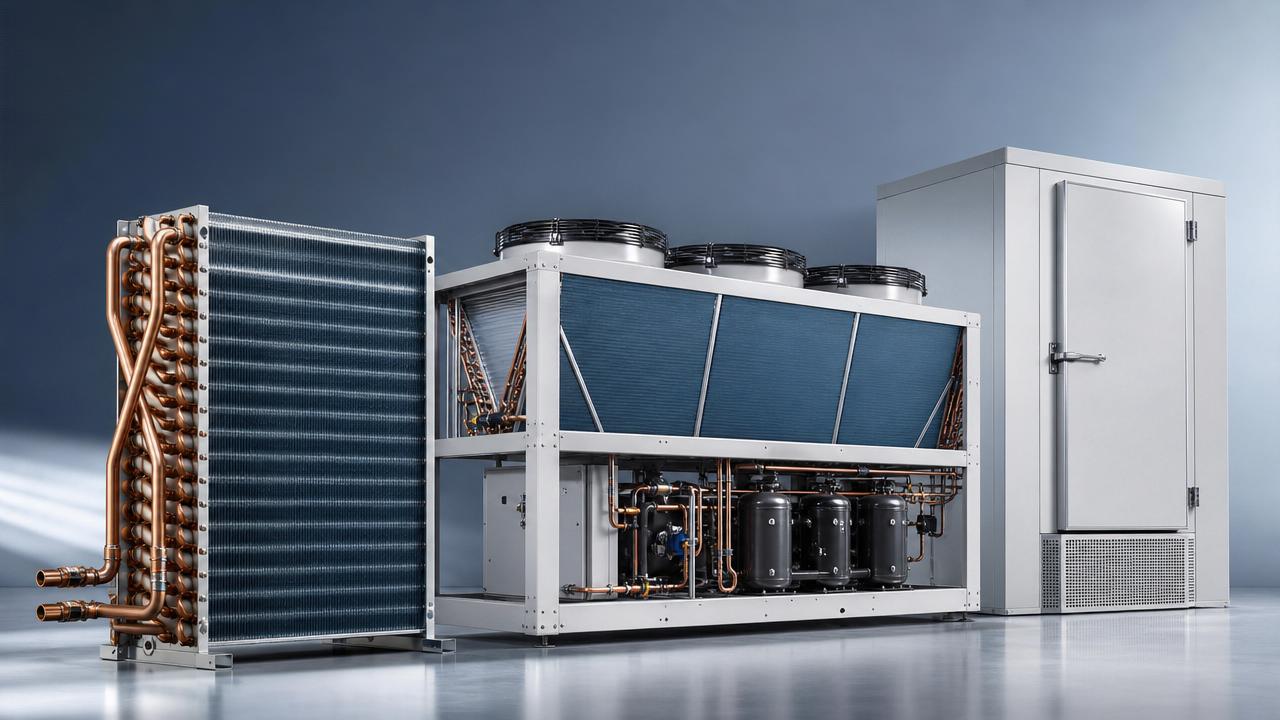
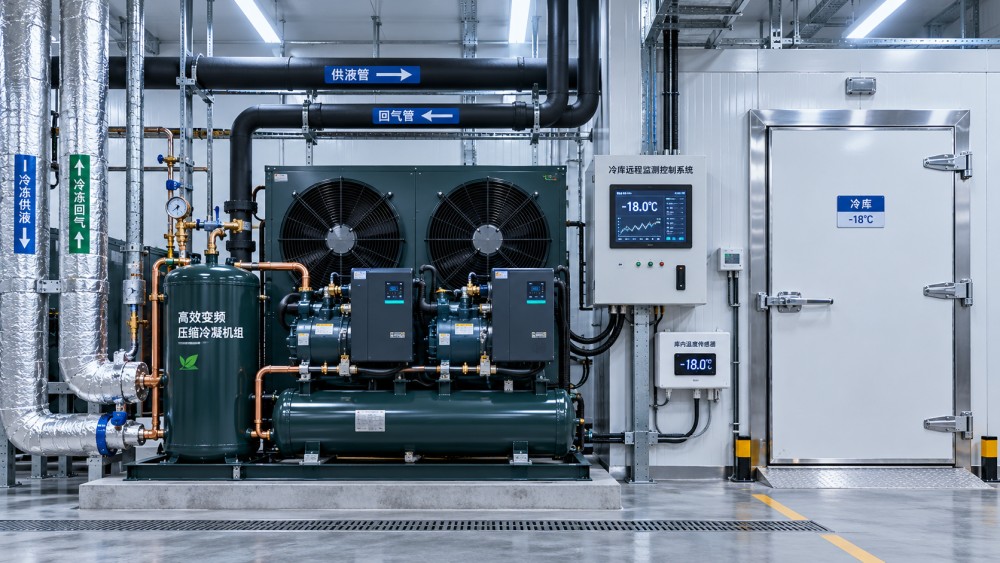
Cold storage compressors and condensing units
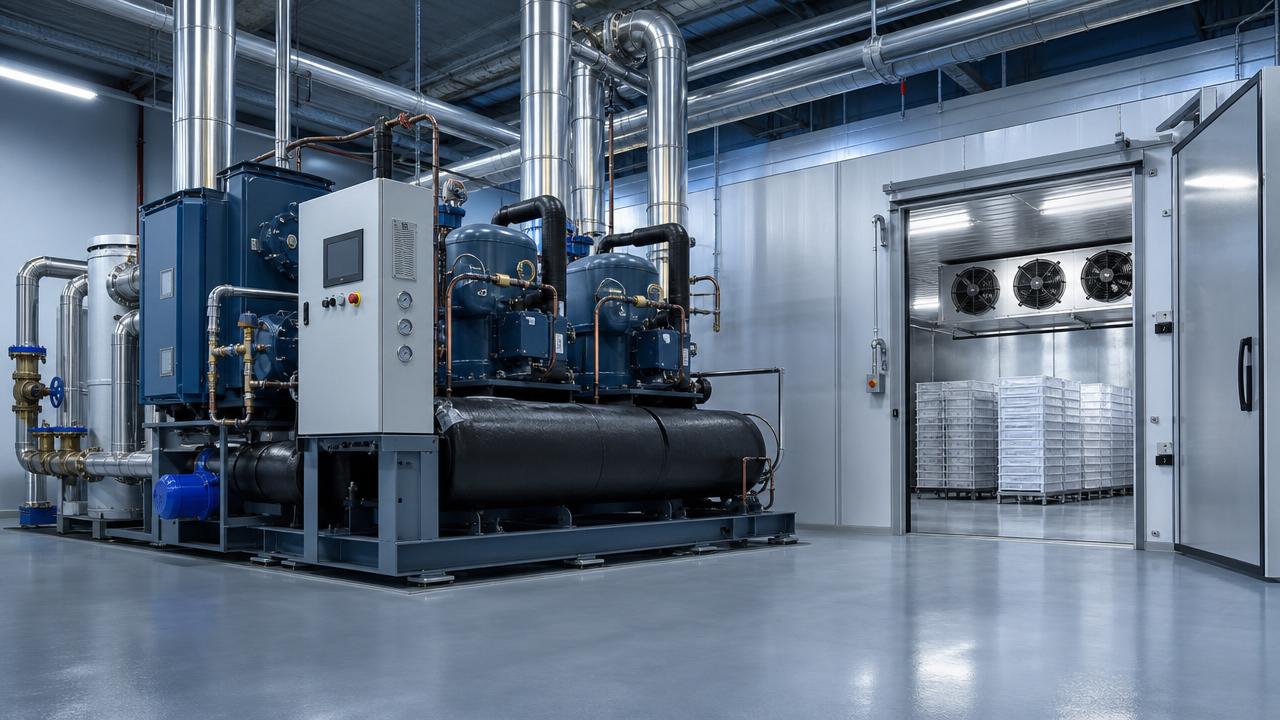
For cold stores, the priority is increasingly stable capacity across changing loads, rapid recovery after door activity, and a compressor configuration that can continue operating efficiently outside peak demand. Compressor selection should reflect product pull-down, storage temperature, loading patterns, room volume, and expected expansion. A unit sized only for steady holding load can struggle during heavy inbound activity.
Refrigerant architecture, oil management, suction stability, defrost coordination, and heat rejection should be reviewed as one system. Focusing only on compressor brand or nominal capacity misses the conditions that determine actual uptime.
Commercial refrigeration cabinets
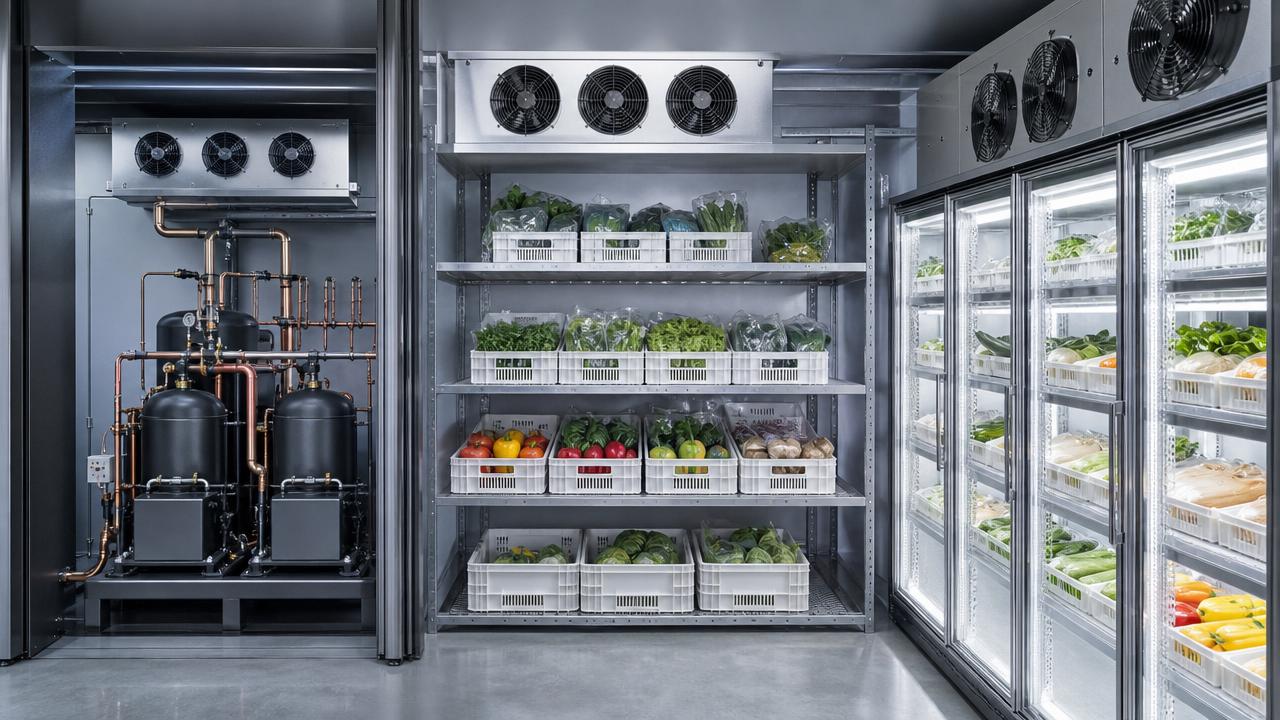
Retail cabinets are now expected to protect product quality and support presentation at the same time. Air curtains, cabinet geometry, lighting heat output, anti-fog performance, night covers, and defrost management all affect both energy use and the customer-facing condition of the display.
Open cabinets can suit high-turnover areas where visibility is essential, but they require careful attention to store temperature, humidity, placement near entrances, and airflow disruption. A cabinet that performs well in a controlled test setting may lose stability when located beside external doors, hot food counters, or air-conditioning diffusers.
Industrial chillers
Industrial chillers are being specified around process stability rather than cooling capacity alone. Laser cutting, injection molding, electronics, chemical processing, and other heat-intensive operations can have different tolerance for temperature drift. Magnetic bearing and variable-speed screw technologies can be valuable where load variation, noise, maintenance intervals, or energy consumption justify the added system sophistication.
The selection should begin with the process heat profile, water quality, required supply temperature, seasonal ambient conditions, and consequences of an unplanned shutdown. Oversizing “for safety” may lead to unstable cycling and poor part-load performance.
Ice machines and ultra-low temperature freezers
Large-scale flake and tube ice systems must be matched to the physical role of ice: rapid product cooling, transport protection, seafood handling, concrete temperature control, or another defined process. Ice type, production timing, storage, water treatment, and delivery method matter as much as total daily output.
Ultra-low temperature freezers require a different level of discipline. Cascade refrigeration systems, backup arrangements, alarm architecture, door-opening patterns, and service response all influence protection at very low temperatures. A freezer should not be selected solely by its lowest stated setpoint; stability under normal use and recovery after access are usually more meaningful operational measures.
Lifecycle Compliance Must Be Considered Before Equipment Reaches Site
Refrigerant rules, energy expectations, safety practices, and documentation requirements are influencing equipment access across markets. The commercial risk is not limited to a prohibited refrigerant. It can also arise when replacement parts, technician competence, pressure equipment requirements, recordkeeping, or installation conditions were not considered before procurement.
This is particularly relevant for equipment intended for export, multi-site rollout, or operation across more than one regulatory environment. A standardized design can reduce complexity, but only if it remains suitable for local power supply, ambient conditions, service capability, and refrigerant handling practices.
CCRS tracks how environmental regulation, refrigeration engineering, and operating economics interact across industrial cooling, cold storage, retail refrigeration, ice production, and deep-cryogenic applications. That perspective is useful because compliance is no longer a document prepared after technical design; it is one of the factors that determines whether the chosen design remains viable.
Questions That Should Be Settled Before Issuing a Specification
Better refrigeration projects begin with a disciplined operating brief. Before comparing suppliers, establish the conditions that the equipment must genuinely handle:
- Required temperature range, permitted variation, and recovery expectations after loading or door openings.
- Peak, average, and low-load conditions rather than a single capacity estimate.
- Ambient temperature, humidity, ventilation limits, water availability, and site power characteristics.
- Refrigerant strategy, safety constraints, and available maintenance capability.
- Consequences of failure, acceptable downtime, and the level of redundancy that addresses the real risk.
- Required alarms, data retention, remote access, and integration with facility management systems.
- Cleaning access, spare-parts availability, and whether routine maintenance can be completed without prolonged shutdown.
The most expensive mistake is often selecting on first cost while leaving these inputs undefined. Suppliers then price against different assumptions, making quotations difficult to compare and increasing the likelihood of later variations. A lower purchase price may simply reflect omitted controls, reduced access provisions, less robust heat rejection, or a system design that transfers future risk back to the operator.
The defining refrigeration trend for 2026 is therefore specification maturity. Strong projects connect cooling duty with refrigerant strategy, energy behavior, digital oversight, maintenance reality, and product risk. When those elements are evaluated together, equipment selection becomes more resilient and far easier to defend over the full operating life of the system.
- industrial cooling
- cold storage
- industrial chillers
- cold storage compressors
- refrigeration cabinets
- ultra-low temperature freezers
- cascade refrigeration
- natural refrigerants
- commercial refrigeration
- refrigeration systems
- temperature control
- commercial refrigeration cabinets
- cascade refrigeration systems
Recommended News
 Thermodynamic Tech TrendsTemperature Control Problems That Quietly Ruin Product QualityAnalyst :Prof. Sarah Lin
 Thermodynamic Tech TrendsHow heat exchange technology shapes system reliabilityAnalyst :Prof. Sarah Lin
 Thermodynamic Tech TrendsAus Scientists Break Through Anhydrous Proton-Conducting MembraneAnalyst :Prof. Sarah Lin
 Thermodynamic Tech TrendsHow variable frequency cooling cuts peak energy costsAnalyst :Prof. Sarah Lin
 Thermodynamic Tech TrendsHeat exchange technology flaws that raise operating costsAnalyst :Prof. Sarah Lin
 Thermodynamic Tech TrendsWhat makes eco-friendly cooling practical in daily use?Analyst :Prof. Sarah Lin
 Thermodynamic Tech TrendsWhat heat exchange technology cuts cooling energy wasteAnalyst :Prof. Sarah Lin
 Thermodynamic Tech TrendsLow carbon refrigeration is changing project planningAnalyst :Prof. Sarah Lin
 Thermodynamic Tech TrendsHeat Exchange Technology Is Changing Cooling DesignAnalyst :Prof. Sarah Lin
 Thermodynamic Tech TrendsWhat limits heat exchange efficiency in real systems?Analyst :Prof. Sarah Lin
 Thermodynamic Tech TrendsIndustrial Refrigeration System Selection: Key Capacity, Refrigerant, and Load FactorsAnalyst :Prof. Sarah Lin
 Thermodynamic Tech TrendsVariable Frequency Cooling Selection Guide: How to Match Load Range, COP, and Control StrategyAnalyst :Prof. Sarah Lin
 Thermodynamic Tech TrendsHeat Exchange Technology in Refrigeration: Which Design Improves Capacity and Defrost Efficiency?Analyst :Prof. Sarah Lin
![]() Thermodynamic Tech TrendsMagnetic Bearing Technology Explained: How Oil-Free Compression Improves Chiller EfficiencyAnalyst :Prof. Sarah Lin
 Thermodynamic Tech TrendsVariable Frequency Cooling Explained: How It Improves Refrigeration Efficiency and Load ControlAnalyst :Prof. Sarah Lin
 Thermodynamic Tech TrendsHeat Exchange Efficiency: Which Design Factors Matter Most in Industrial Cooling?Analyst :Prof. Sarah Lin
 Thermodynamic Tech TrendsHeat Exchange Technology Comparison: Plate, Shell-and-Tube, or Microchannel?Analyst :Prof. Sarah Lin
 Thermodynamic Tech TrendsIndustrial Cooling Systems Explained: Which Setup Fits Food, Pharma, and Process Plants?Analyst :Prof. Sarah Lin
 Thermodynamic Tech TrendsVariable Frequency Cooling vs Fixed-Speed Systems: Which Cuts Energy Costs Better?Analyst :Prof. Sarah Lin
 Thermodynamic Tech TrendsTemperature Control Systems Explained: Key Components, Control Logic, and Common UsesAnalyst :Prof. Sarah Lin
 Thermodynamic Tech TrendsHow Heat Exchange Efficiency Affects Compressor Load and System StabilityAnalyst :Prof. Sarah Lin
 Thermodynamic Tech TrendsEnergy Saving Low Carbon Cooling: Which Metrics Actually Matter in System Evaluation?Analyst :Prof. Sarah Lin
 Thermodynamic Tech TrendsHow to Compare a Heat Transfer Technology Manufacturer for Custom Process Cooling ProjectsAnalyst :Prof. Sarah Lin
 Thermodynamic Tech TrendsChoosing an Industrial Cooling Systems Supplier: 7 Evaluation Criteria Before RFQAnalyst :Prof. Sarah Lin
 Thermodynamic Tech TrendsHeat Transfer Technology Air Cooler: Key Design Factors for Stable Cooling PerformanceAnalyst :Prof. Sarah Lin
 Thermodynamic Tech TrendsEnergy Efficient Refrigeration Systems with Heat Recovery: Where the Savings Really Come FromAnalyst :Prof. Sarah Lin
 Thermodynamic Tech TrendsWhat Determines Heat Exchange Technology Price in Industrial Cooling Projects?Analyst :Prof. Sarah Lin
 Thermodynamic Tech TrendsHow to Select Heat Exchange Plates for Corrosion Resistance and Thermal EfficiencyAnalyst :Prof. Sarah Lin
 Thermodynamic Tech TrendsHow Microchannel Heat Exchangers Improve Refrigeration System EfficiencyAnalyst :Prof. Sarah Lin
 Thermodynamic Tech TrendsHeat Transfer Technology for Blast Freezers: Speed, Efficiency, and DesignAnalyst :Prof. Sarah Lin
 Thermodynamic Tech TrendsHow to Size Heat Exchange Systems for Refrigeration Plants at Peak LoadAnalyst :Prof. Sarah Lin
 Thermodynamic Tech TrendsThermodynamic Technologies in Commercial Cooling: Which Heat-Rejection Method Fits?Analyst :Prof. Sarah Lin
 Thermodynamic Tech TrendsCommercial Refrigeration Trends Reshaping Equipment Specifications in 2026Analyst :Prof. Sarah Lin
 Thermodynamic Tech TrendsLG Unveils Multi V 7 Commercial Air Conditioning System With Dual AI at HARFKO 2026Analyst :Prof. Sarah Lin
 Thermodynamic Tech TrendsTecnofreddo Unveils Air-Cooled Ammonia Chiller at Chillventa 2026Analyst :Prof. Sarah Lin