Industry News
Curation by industry experts
Hot Articles
- Thermodynamic Tech TrendsHow to Size Heat Exchange Systems for Refrigeration Plants at Peak Load
- Parallel Compressor RacksHow to Size Reciprocating Compressors for Cold Storage Load and Temperature Range
- Flake Ice MachinesHow to Size a Commercial Ice Dispenser for Peak Demand in Foodservice Operations
Popular Tags
Eco-Friendly Cooling Options: Refrigerants, Efficiency, and Compliance Checks
As refrigerant rules tighten and energy costs rise, eco-friendly cooling is no longer a sustainability add-on—it is a strategic requirement for cold chain, industrial, retail, and life-science operations. For enterprise decision makers, the right choices in low-GWP refrigerants, high-efficiency system design, and compliance checks can reduce risk, protect margins, and strengthen market competitiveness. This guide explores how modern cooling leaders can align performance, regulation, and long-term decarbonization goals.
Across industrial chillers, cold storage compressors, commercial ice machines, retail display cabinets, and ultra-low temperature freezers, the same question is becoming urgent: how can cooling capacity be maintained while emissions, leakage risk, and operating cost fall over a 10–15 year asset lifecycle?
Why Eco-Friendly Cooling Is Now a Board-Level Decision
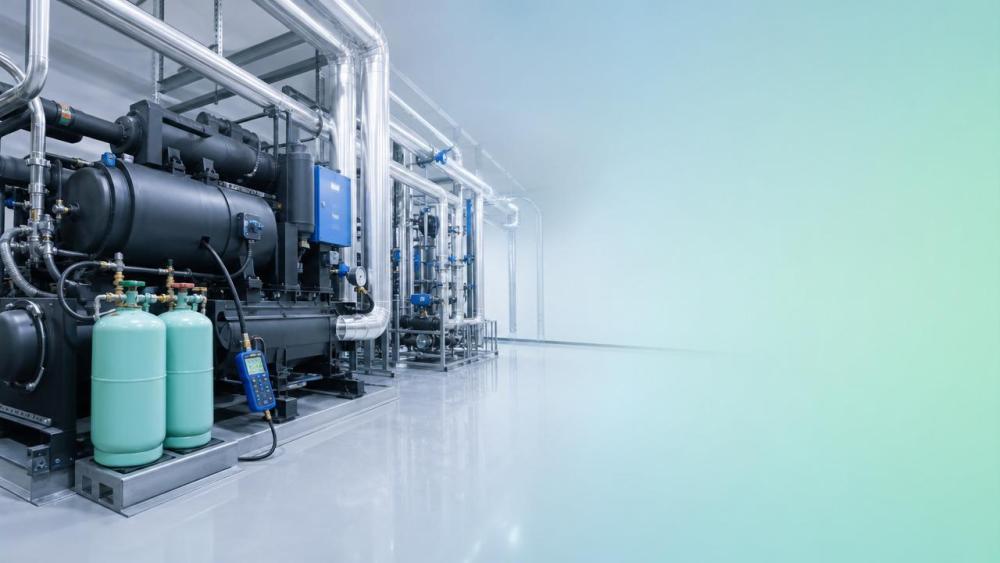
Cooling infrastructure used to be treated as a technical purchase. Today, eco-friendly cooling affects export access, energy budgets, product loss, carbon reporting, and brand trust. A compressor room decision can influence both compliance exposure and daily margin.
For cold chain hubs, a 1°C temperature deviation may damage sensitive produce, seafood, vaccines, or biologics. For industrial plants, unstable process cooling can reduce equipment uptime and production consistency within hours.
The 3 pressures shaping investment priorities
- Regulatory pressure: many markets are tightening high-GWP refrigerant controls, especially for new installations and exported equipment.
- Energy pressure: refrigeration can represent a large share of electricity use in cold storage, retail, and food processing sites.
- Operational pressure: leakage, poor defrost control, dirty condensers, and oversized compressors can raise costs every month.
The strongest eco-friendly cooling strategy does not focus on refrigerant alone. It combines low-GWP media, thermodynamic efficiency, digital controls, preventive maintenance, and documented compliance checks.
Where decision makers see the fastest value
In many commercial refrigeration retrofits, payback depends on 4 variables: compressor efficiency, heat rejection quality, operating hours, and maintenance discipline. A 24/7 cold room has a very different business case from a seasonal ice plant.
CCRS evaluates these variables through the lens of reversed Carnot cycle performance, heat exchanger behavior, refrigerant compatibility, and procurement risk. The goal is not only greener equipment, but dependable cooling economics.
Refrigerant Choices: Low-GWP Options and Application Fit
Refrigerant selection is the first visible step in eco-friendly cooling, but it must be tied to temperature level, charge size, safety class, service capability, and local code requirements. A poor match can create avoidable risk.
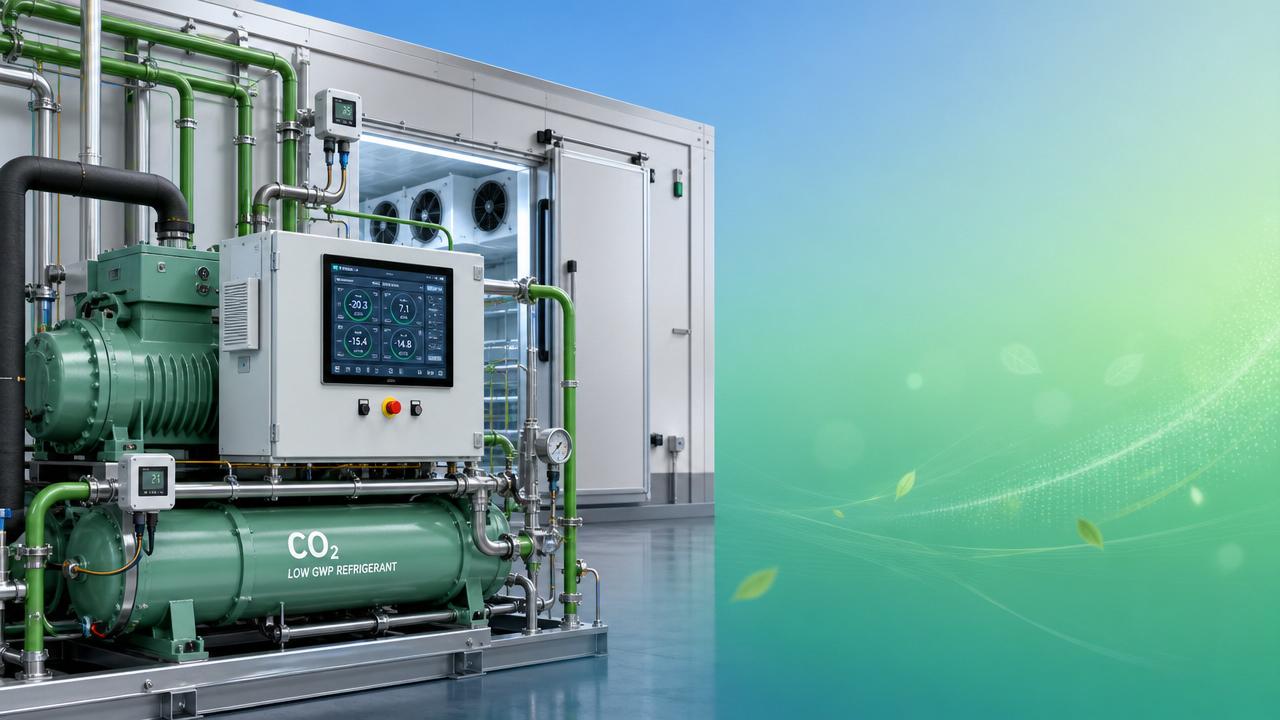
Natural refrigerants such as CO2, ammonia, propane, and isobutane are gaining ground. Low-GWP HFO blends are also used where flammability, toxicity, or retrofit constraints require a balanced transition path.
Comparing typical refrigerant pathways
The table below outlines common eco-friendly cooling refrigerant routes for enterprise buyers. Final selection should consider operating temperature, site safety, technician availability, and national or regional rules.
The main conclusion is practical: eco-friendly cooling should be specified by application, not by trend. A -86°C cascade freezer and a retail cabinet need different refrigerant logic, safety controls, and lifecycle assumptions.
Temperature levels influence the best route
Medium-temperature retail systems often operate around 0°C to 8°C, while frozen storage may require -18°C to -25°C. Ultra-low temperature freezers can reach -86°C or below using cascade refrigeration.
For deep-cryogenic applications, refrigerant selection must account for discharge temperature, oil return, compressor staging, and heat exchanger approach temperature. Eco-friendly cooling is only credible when temperature stability remains verifiable.
Common refrigerant mistakes to avoid
- Choosing a low-GWP refrigerant without checking pressure ratings, seals, valves, and lubricant compatibility.
- Ignoring technician training for A2L, A3, high-pressure CO2, or ammonia systems.
- Assuming refrigerant replacement alone will reduce energy use by 10% or more without system redesign.
Efficiency Design: Turning Sustainability Into Operating Savings
Eco-friendly cooling becomes financially persuasive when energy performance improves. For enterprise sites running 16–24 hours per day, even small gains in coefficient of performance can compound across thousands of operating hours.
The most effective projects start with load calculation, not equipment replacement. Oversized compressors, undersized condensers, and uncontrolled defrost cycles can waste energy while still appearing technically functional.
Key equipment levers across CCRS focus sectors
- Industrial chillers: variable-frequency screw compressors and magnetic bearing compressors help match cooling output to real-time process loads.
- Commercial ice machines: optimized evaporator surfaces and harvest controls reduce wasted compressor runtime in flake and tube ice production.
- Cold storage compressors: floating suction and floating condensing control reduce lift when ambient and load conditions allow.
- Retail cabinets: efficient fans, night curtains, LED lighting, and air curtain stability reduce heat infiltration.
- Ultra-low freezers: cascade condenser optimization and door-opening discipline protect both energy use and sample safety.
A useful benchmark is to examine energy intensity per ton of refrigeration, per cubic meter of storage, or per kilogram of ice. These indicators reveal hidden inefficiencies better than equipment nameplate data alone.
Efficiency checkpoints before procurement
Before approving a capital project, decision makers should ask for 6 measurable items: design load, part-load performance, control strategy, defrost method, heat rejection condition, and maintenance access.
The table shows why eco-friendly cooling procurement should compare lifecycle performance rather than purchase price alone. A lower initial cost may become expensive if part-load control is weak.
Digital monitoring changes the economics
Sensor networks can track suction pressure, discharge temperature, cabinet air temperature, condenser approach, door activity, and power draw at intervals of 1–15 minutes. This creates evidence for better decisions.
When alarms are tied to root-cause analysis, maintenance teams can act before a small fault becomes a product-loss event. Eco-friendly cooling therefore depends on information discipline as much as hardware.
Compliance Checks: Reducing Export, Safety, and Lifecycle Risk
Regulation is now a moving target. Refrigerant phase-downs, safety classifications, labeling duties, leak inspection rules, and recovery requirements can differ by market. Exported equipment needs verification before shipment, not after customs questions arise.
A structured compliance check protects manufacturers, distributors, and end users. It also helps procurement teams compare suppliers using evidence instead of broad claims about eco-friendly cooling capability.
A practical 5-step compliance workflow
- Identify the destination market and applicable refrigerant restrictions for new equipment, servicing, and replacement parts.
- Verify refrigerant safety class, charge quantity, pressure design, ventilation, sensors, and electrical protection.
- Review documentation, including labels, manuals, service instructions, recovery procedures, and material compatibility statements.
- Confirm commissioning requirements, leak testing method, evacuation quality, and baseline performance records.
- Schedule recurring inspection intervals, often monthly, quarterly, or annually depending on system size and local rules.
This workflow is especially important for large cold storage compressors, CO2 transcritical racks, ammonia machinery rooms, and ultra-low cascade systems, where a single design gap can affect safety and delivery commitments.
What documentation should buyers request?
Decision makers should request a compliance file before final order confirmation. It does not need to be excessive, but it should prove that design, refrigerant selection, and servicing assumptions are aligned.
- Refrigerant type, charge quantity, safety classification, and expected service availability in the target market.
- Pressure test records, leak test method, commissioning checklist, and operating envelope.
- Energy performance assumptions, including ambient design point, load profile, and control sequence.
- Maintenance plan covering filters, fans, oil, valves, sensors, defrost, and condenser cleaning.
For multinational operators, a central compliance register can track refrigerant inventory, leak events, repair dates, and phase-down exposure across 10, 50, or 200 facilities.
Risk signals during supplier evaluation
Be cautious if a supplier cannot explain charge limits, service tooling, retrofit boundaries, or destination-market requirements. Eco-friendly cooling requires engineering clarity, not only marketing vocabulary.
Another warning sign is a quotation that omits commissioning, operator training, or spare parts planning. These items often determine whether the system remains compliant after 12–24 months of operation.
Application Roadmap for Cold Chain, Retail, Industry, and Life Sciences
The best eco-friendly cooling roadmap varies by sector. A fresh retail chain may prioritize cabinet energy, food visibility, and refrigerant retrofit scheduling. A biomedical facility may prioritize redundancy and deep-freeze stability.
Enterprise leaders should separate urgent fixes from strategic upgrades. In many facilities, 3 phases work well: stabilize current operation, optimize controls, then replace high-risk equipment during a planned capital cycle.
Scenario-based priorities
Each sector has a different failure cost. Seafood storage, vaccine preservation, injection molding, and concrete cooling do not share the same tolerance for downtime, temperature drift, or delayed maintenance.
The comparison makes one point clear: eco-friendly cooling is not a single product category. It is a tailored operating strategy built around risk, load profile, regulation, and commercial value.
Budgeting and implementation timing
A small cabinet upgrade may be planned in 2–4 weeks, while a cold storage compressor plant replacement can require 3–6 months for design, procurement, installation, and commissioning.
For complex sites, CCRS recommends using a phased decision gate: feasibility review, technical specification, supplier comparison, compliance screening, commissioning verification, and post-installation performance tracking.
Questions for the executive team
- Which assets depend on refrigerants that may become harder or more expensive to service within 5 years?
- Which facilities have the highest electricity intensity per unit of cooling output or stored volume?
- Which temperature-controlled products create the largest financial loss if cooling fails for 2–6 hours?
- Which suppliers can document both refrigerant compliance and measurable efficiency performance?
Building a Long-Term Eco-Friendly Cooling Strategy
A durable strategy should connect engineering, procurement, operations, compliance, and finance. If these teams work separately, projects often miss either regulatory detail or lifecycle cost opportunity.
The most resilient enterprises maintain a cooling asset register. It should list equipment age, refrigerant type, charge, service history, energy use, criticality level, and replacement priority.
Use 4 decision lenses
- Regulatory resilience: evaluate refrigerant phase-down exposure and export-market acceptance.
- Energy performance: compare full-load and part-load efficiency under realistic ambient conditions.
- Operational reliability: review redundancy, alarms, spare parts, training, and service response planning.
- Commercial impact: quantify product loss risk, downtime cost, maintenance budget, and retrofit payback.
This structure helps avoid isolated decisions. Eco-friendly cooling works best when the refrigerant path, control architecture, and maintenance model support the same business outcome.
How CCRS supports decision makers
CCRS brings together compliance observation, thermodynamic analysis, and energy evaluation for global cooling stakeholders. The focus is practical intelligence for manufacturers, operators, exporters, and investors.
From low-GWP refrigerant transition to AI-assisted defrosting and cascade condenser evaluation, CCRS helps teams translate complex technical variables into procurement-ready decision criteria.
From compliance burden to competitive advantage
Companies that act early can reduce emergency retrofits, negotiate better equipment specifications, and present stronger sustainability credentials in international bids. Eco-friendly cooling becomes part of market positioning.
The path forward is clear: audit current assets, classify refrigerant and efficiency risks, prioritize high-impact sites, and build a phased modernization plan supported by measurable performance data.
For enterprise decision makers, eco-friendly cooling is a disciplined balance of refrigerant choice, system efficiency, and compliance control. The winners will be the organizations that treat cooling as strategic infrastructure.
If your team is planning a cold chain upgrade, industrial chiller replacement, retail refrigeration retrofit, ice-making expansion, or ultra-low temperature storage project, CCRS can help frame the technical and commercial choices. Contact us to get a customized solution, consult product details, or explore more refrigeration intelligence for your next investment decision.
Recommended News
 Eco-Refrigerant & ComplianceF-Gas Regulations Are Changing Equipment Choices Faster Than ExpectedAnalyst :Dr. Henrik Weber
 Eco-Refrigerant & ComplianceEco-Friendly Refrigeration: What Looks Green but Performs Poorly?Analyst :Dr. Henrik Weber
 Eco-Refrigerant & ComplianceNatural Refrigerants: Are Compliance Benefits Worth the Transition Cost?Analyst :Dr. Henrik Weber
 Eco-Refrigerant & ComplianceWhat drives low carbon refrigeration adoption in 2026?Analyst :Dr. Henrik Weber
 Eco-Refrigerant & ComplianceEco-friendly cooling is changing compliance planning fastAnalyst :Dr. Henrik Weber
 Eco-Refrigerant & ComplianceLow carbon cooling trends that could reshape investmentsAnalyst :Dr. Henrik Weber
 Eco-Refrigerant & ComplianceHow F-Gas regulations are changing refrigerant decisionsAnalyst :Dr. Henrik Weber
 Eco-Refrigerant & ComplianceIs eco-friendly refrigeration worth the higher upfront costAnalyst :Dr. Henrik Weber
 Eco-Refrigerant & ComplianceWhy low carbon cooling is becoming a compliance priorityAnalyst :Dr. Henrik Weber
 Eco-Refrigerant & ComplianceLow carbon refrigeration options that cut long-term costsAnalyst :Dr. Henrik Weber
 Eco-Refrigerant & ComplianceWhat buyers miss when choosing eco-friendly refrigerationAnalyst :Dr. Henrik Weber
 Eco-Refrigerant & ComplianceWhy low carbon refrigeration is becoming a board issueAnalyst :Dr. Henrik Weber
 Eco-Refrigerant & ComplianceWhat F-Gas regulations mean for equipment choices in 2026Analyst :Dr. Henrik Weber
![]() Eco-Refrigerant & ComplianceIndonesia Launches Green Refrigeration Channel for R290 Cold CabinetsAnalyst :Dr. Henrik Weber
Eco-Refrigerant & ComplianceIndonesia Launches Green Refrigeration Channel for R290 Cold CabinetsAnalyst :Dr. Henrik Weber Eco-Refrigerant & ComplianceWhy low carbon cooling is becoming a safer long betAnalyst :Dr. Henrik Weber
 Eco-Refrigerant & ComplianceWhat makes eco-friendly cooling cheaper over time?Analyst :Dr. Henrik Weber
 Eco-Refrigerant & ComplianceF-Gas regulations are changing how cooling gets approvedAnalyst :Dr. Henrik Weber
 Eco-Refrigerant & ComplianceHow eco-friendly refrigeration cuts compliance riskAnalyst :Dr. Henrik Weber
 Eco-Refrigerant & ComplianceHow low carbon cooling cuts compliance risk in 2026Analyst :Dr. Henrik Weber
 Eco-Refrigerant & ComplianceLow Carbon Refrigeration: Compare Refrigerants, Energy Use, and ComplianceAnalyst :Dr. Henrik Weber
 Eco-Refrigerant & ComplianceEco-Friendly Cooling Options: Refrigerants, Efficiency, and Compliance ChecksAnalyst :Dr. Henrik Weber
![]() Eco-Refrigerant & ComplianceWhat Are Natural Refrigerants? Types, GWP Limits, and Where They Fit BestAnalyst :Dr. Henrik Weber
Eco-Refrigerant & ComplianceWhat Are Natural Refrigerants? Types, GWP Limits, and Where They Fit BestAnalyst :Dr. Henrik Weber Eco-Refrigerant & ComplianceEco-Friendly Cooling vs Conventional Systems: What Buyers Should Compare FirstAnalyst :Dr. Henrik Weber
 Eco-Refrigerant & ComplianceEco-Friendly Refrigeration vs Conventional Systems: Refrigerants, Energy Use, and ComplianceAnalyst :Dr. Henrik Weber
 Eco-Refrigerant & ComplianceLow Carbon Refrigeration: Key Standards, Refrigerant Options, and ROI FactorsAnalyst :Dr. Henrik Weber
 Eco-Refrigerant & ComplianceTemperature Control Standards for Food Storage: Critical Limits, Logging, and Audit ChecksAnalyst :Dr. Henrik Weber
 Eco-Refrigerant & ComplianceLow Carbon Cooling Options Explained: Refrigerants, Compliance, and System Trade-OffsAnalyst :Dr. Henrik Weber
 Eco-Refrigerant & ComplianceDigital Refrigeration vs Conventional Controls: What Improves Monitoring and Compliance?Analyst :Dr. Henrik Weber
 Eco-Refrigerant & ComplianceLow Carbon Cooling Options for Commercial Refrigeration: CO2, Ammonia, and Hybrid SystemsAnalyst :Dr. Henrik Weber
 Eco-Refrigerant & ComplianceLow Carbon Cooling Options Compared: CO2, Ammonia, and HFO Systems for ComplianceAnalyst :Dr. Henrik Weber
 Eco-Refrigerant & ComplianceIndustrial Refrigeration Systems Buying Guide: Lifecycle Cost, Efficiency, and ComplianceAnalyst :Dr. Henrik Weber
 Eco-Refrigerant & ComplianceEco-Friendly Cooling Options: Refrigerants, Energy Use, and Compliance Factors ComparedAnalyst :Dr. Henrik Weber
 Eco-Refrigerant & ComplianceNatural Refrigerants vs HFCs: How to Compare Compliance, Safety, and System DesignAnalyst :Dr. Henrik Weber
 Eco-Refrigerant & ComplianceHow to Read Specification-Oriented Product Guides for Refrigeration EquipmentAnalyst :Dr. Henrik Weber
 Eco-Refrigerant & ComplianceLow Carbon Refrigeration Options for Supermarkets: CAPEX, Energy Use, and Compliance ComparedAnalyst :Dr. Henrik Weber
 Eco-Refrigerant & ComplianceRACC 2026 to Host PFAS Compliance Briefing in HangzhouAnalyst :Dr. Henrik Weber
 Eco-Refrigerant & ComplianceEPA Rule Challenge Raises HFC Supply Chain ConcernsAnalyst :Dr. Henrik Weber
 Eco-Refrigerant & ComplianceLow Carbon Refrigeration Systems vs Conventional Setups: Which Delivers Lower Lifecycle Cost?Analyst :Dr. Henrik Weber
 Eco-Refrigerant & ComplianceLow GWP Refrigeration Explained: Refrigerants, Regulations, and System Trade-OffsAnalyst :Dr. Henrik Weber
 Eco-Refrigerant & ComplianceLow Carbon Refrigeration Systems Retrofit: When to Upgrade and Which Changes Matter MostAnalyst :Dr. Henrik Weber