Industry News
Curation by industry experts
Hot Articles
- Thermodynamic Tech TrendsHow to Size Heat Exchange Systems for Refrigeration Plants at Peak Load
- Parallel Compressor RacksHow to Size Reciprocating Compressors for Cold Storage Load and Temperature Range
- Flake Ice MachinesHow to Size a Commercial Ice Dispenser for Peak Demand in Foodservice Operations
Popular Tags
Why low carbon cooling is becoming a safer long bet
As energy costs, refrigerant regulations, and uptime risks reshape industrial investment, low carbon cooling is emerging as a safer long-term bet for business decision-makers.
From cold storage and commercial refrigeration to medical deep-freezing and industrial chillers, companies need systems balancing compliance, efficiency, and resilience.
This shift is not only about sustainability. It is about protecting assets, supporting supply continuity, and improving future competitiveness across temperature-sensitive operations.
What does low carbon cooling really mean today?
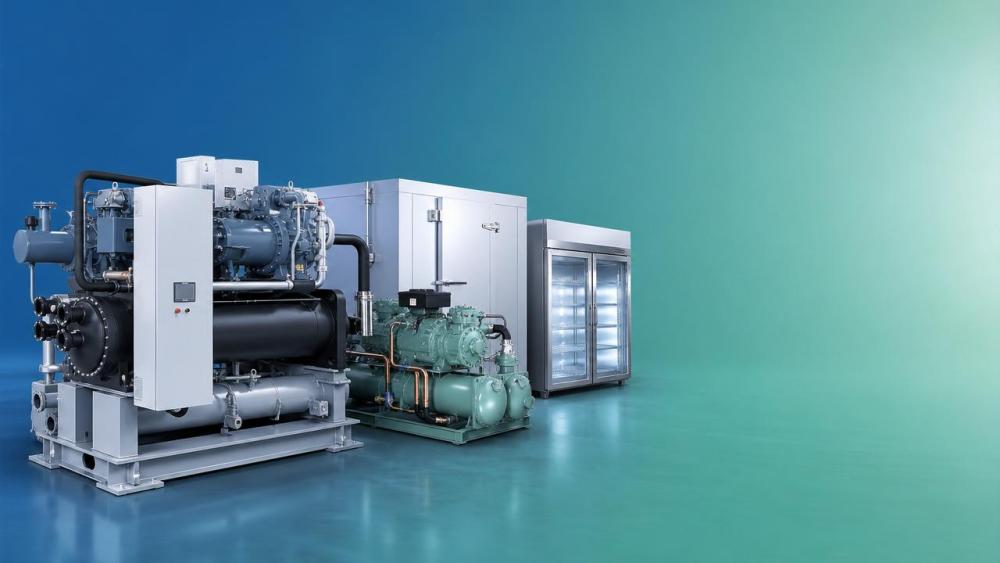
Low carbon cooling refers to cooling systems designed to cut direct and indirect emissions across their full operating life.
Direct emissions come from refrigerant leakage. Indirect emissions come from electricity use, defrost cycles, poor controls, and aging equipment performance.
In practical terms, low carbon cooling combines four elements:
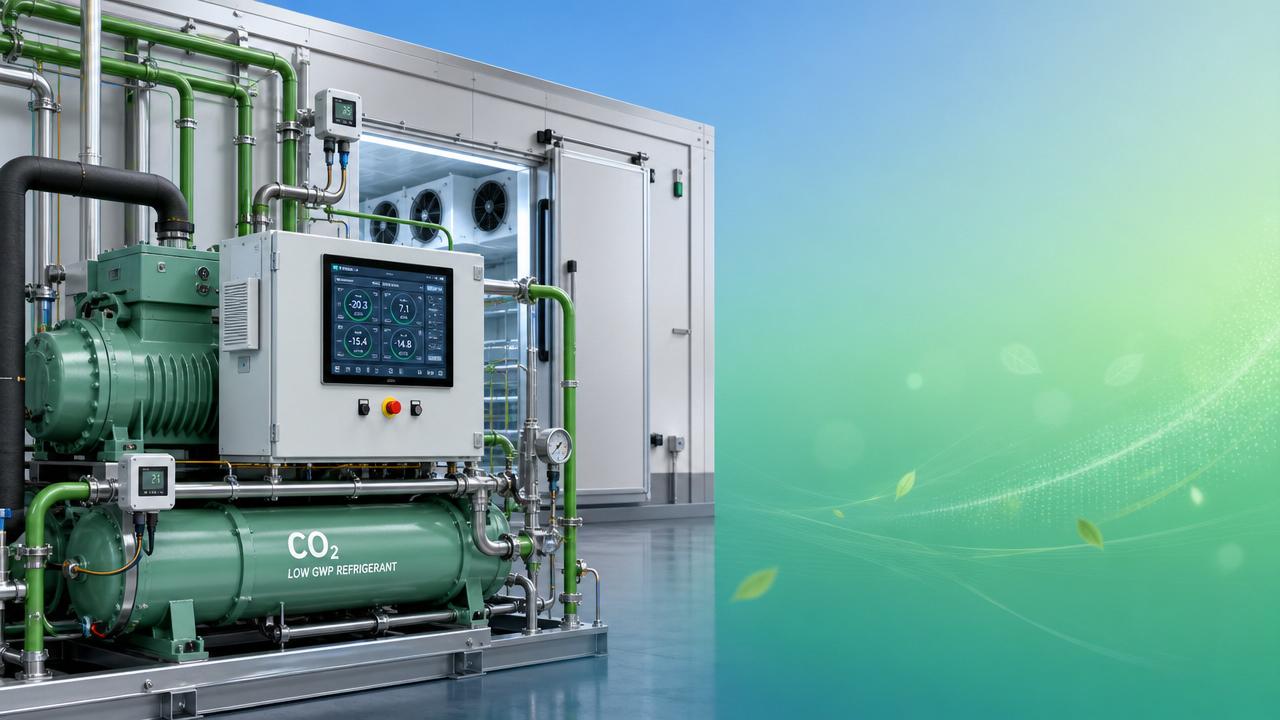
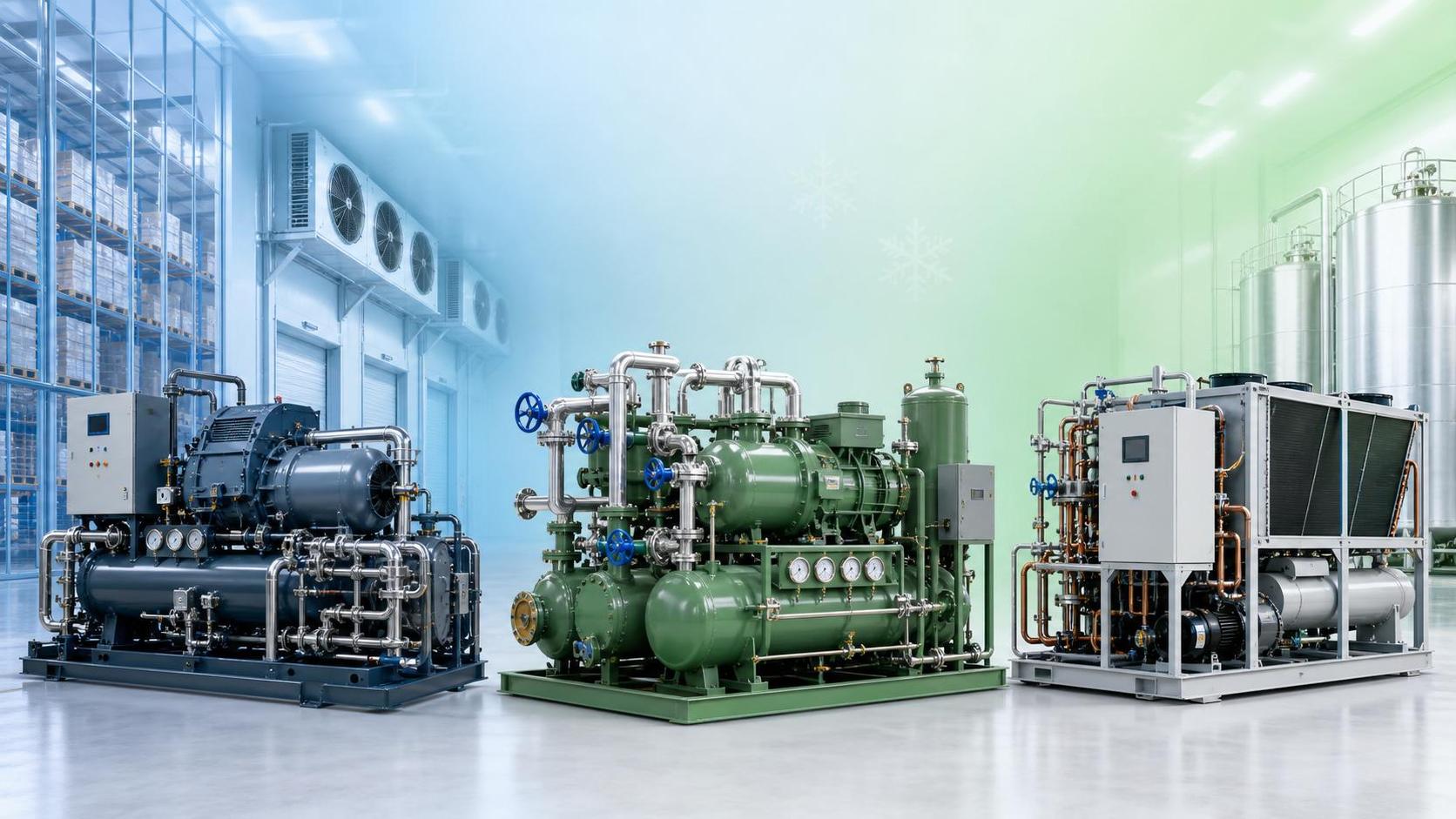
- Lower-GWP or natural refrigerants such as CO2, ammonia, propane, or advanced blends
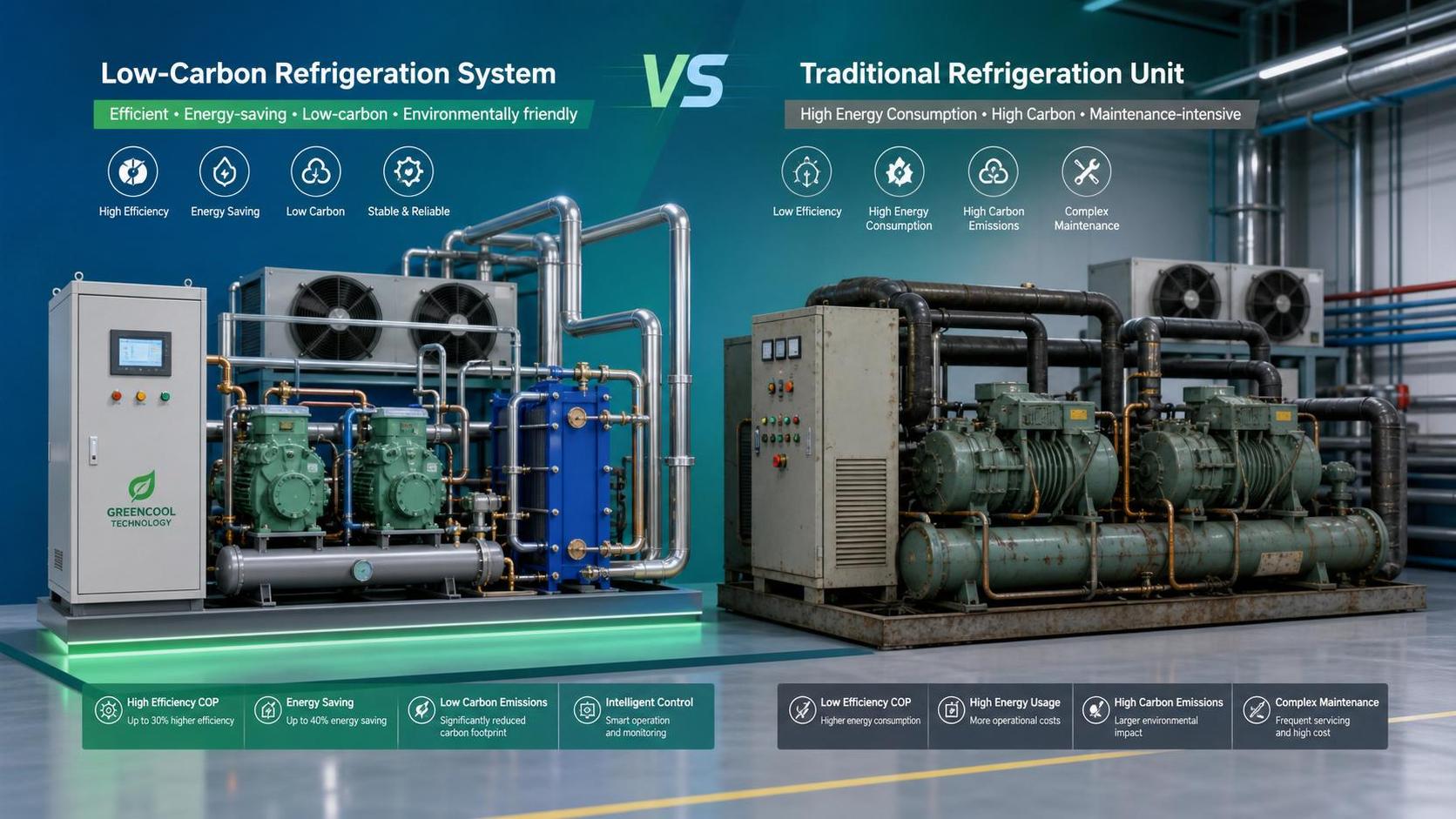
- Higher energy efficiency through compressor, fan, and heat-exchanger optimization
- Smarter controls for temperature stability, defrost management, and load matching
- Lifecycle planning that reduces maintenance risk and regulatory exposure
That broader view matters. A system with a greener refrigerant can still be a weak choice if it wastes power or fails under unstable operating conditions.
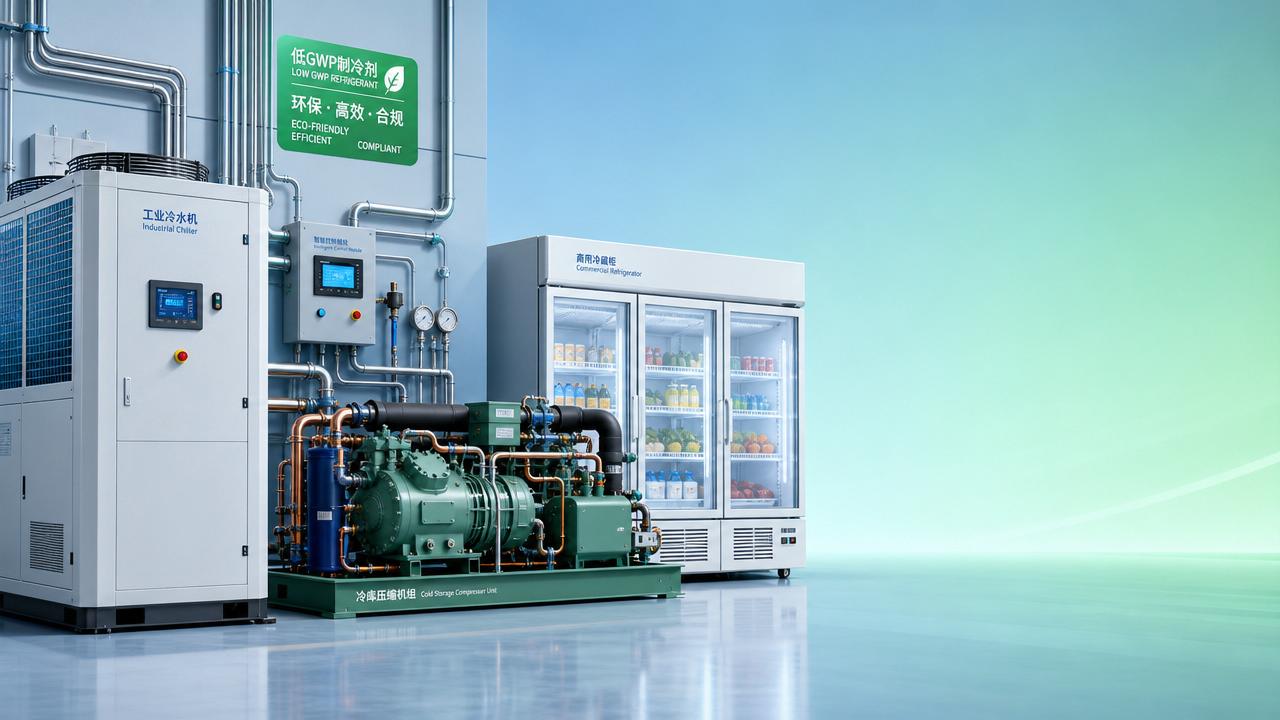
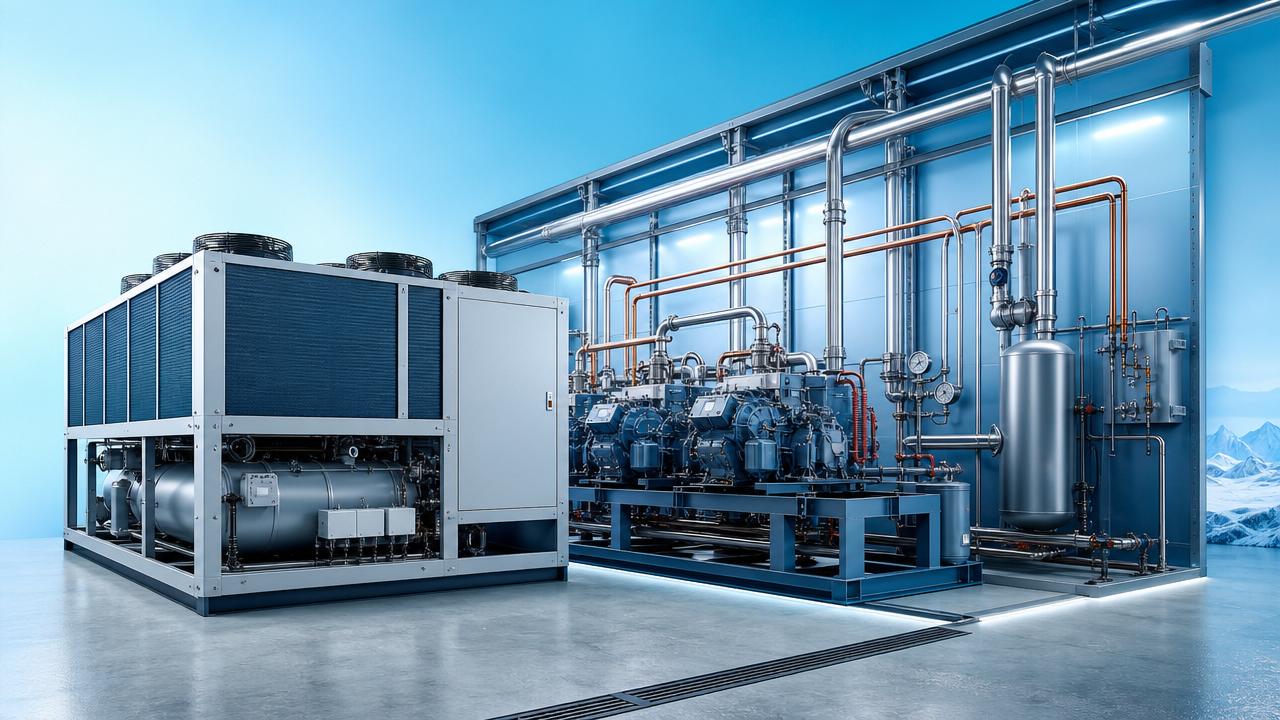
For integrated sectors served by CCRS, the conversation now includes industrial chillers, cold storage compressors, refrigeration cabinets, ice systems, and ultra-low temperature freezers.
Each application has different thermal loads, safety demands, and uptime pressures. Still, the logic behind low carbon cooling remains consistent: fewer compliance shocks and better operational control.
Why is low carbon cooling becoming a safer long bet instead of a niche option?
Three trends are pushing low carbon cooling from preference to strategic necessity: regulation, energy volatility, and reliability expectations.
1. Refrigerant rules are tightening
F-Gas phase-down policies, refrigerant taxes, leakage reporting, and export requirements are changing equipment economics faster than many budgets expect.
A cooling asset built around restricted refrigerants may face rising service costs, limited gas availability, or reduced resale value.
2. Power costs remain uncertain
Cooling is one of the largest energy loads in logistics, food processing, retail preservation, and laboratory storage.
Efficient compressors, inverter control, floating condensing strategies, and improved insulation can sharply reduce exposure to price spikes.
3. Downtime has become more expensive
When cooling fails, losses spread quickly. Spoiled inventory, interrupted production, vaccine risk, and damaged customer confidence can exceed equipment savings.
That is why low carbon cooling increasingly means stable temperatures, predictive maintenance, and better system visibility, not just lower emissions.
A safer long bet is one that remains viable under future policy, cost, and performance conditions. Low carbon cooling fits that definition well.
Which applications benefit most from low carbon cooling?
The best answer depends on thermal sensitivity, run hours, and compliance burden. However, several applications show especially strong returns.
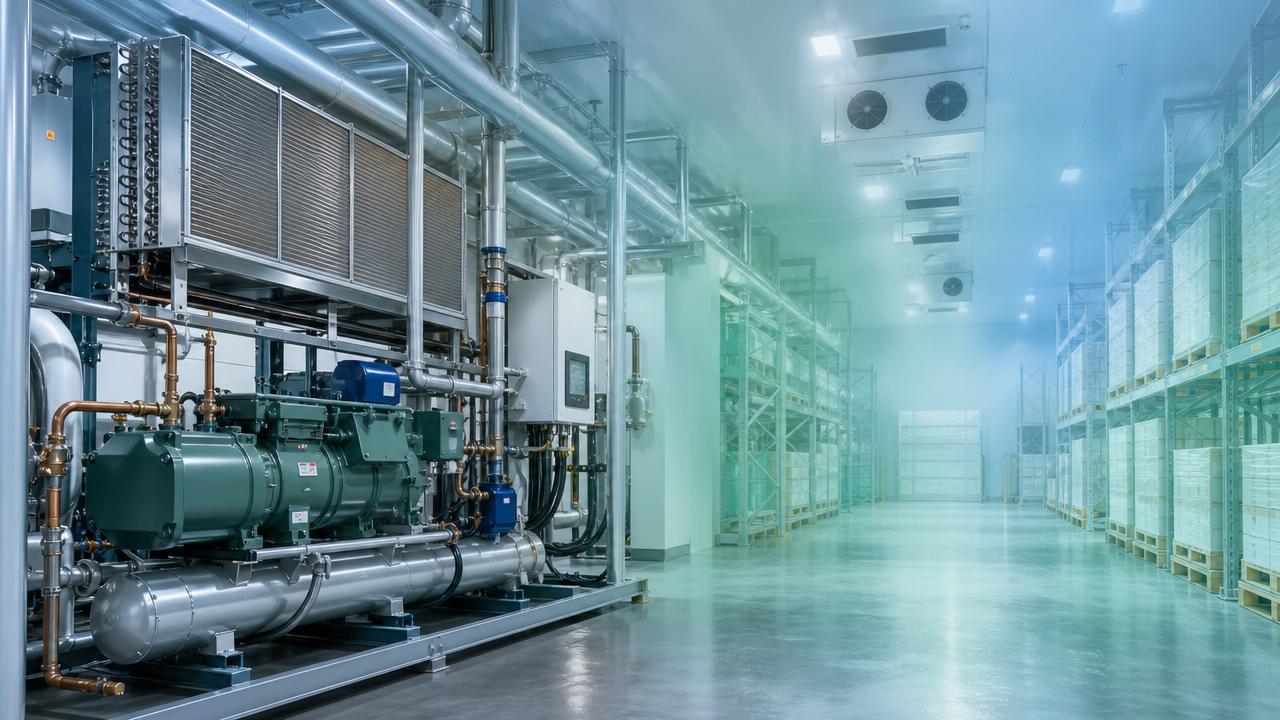
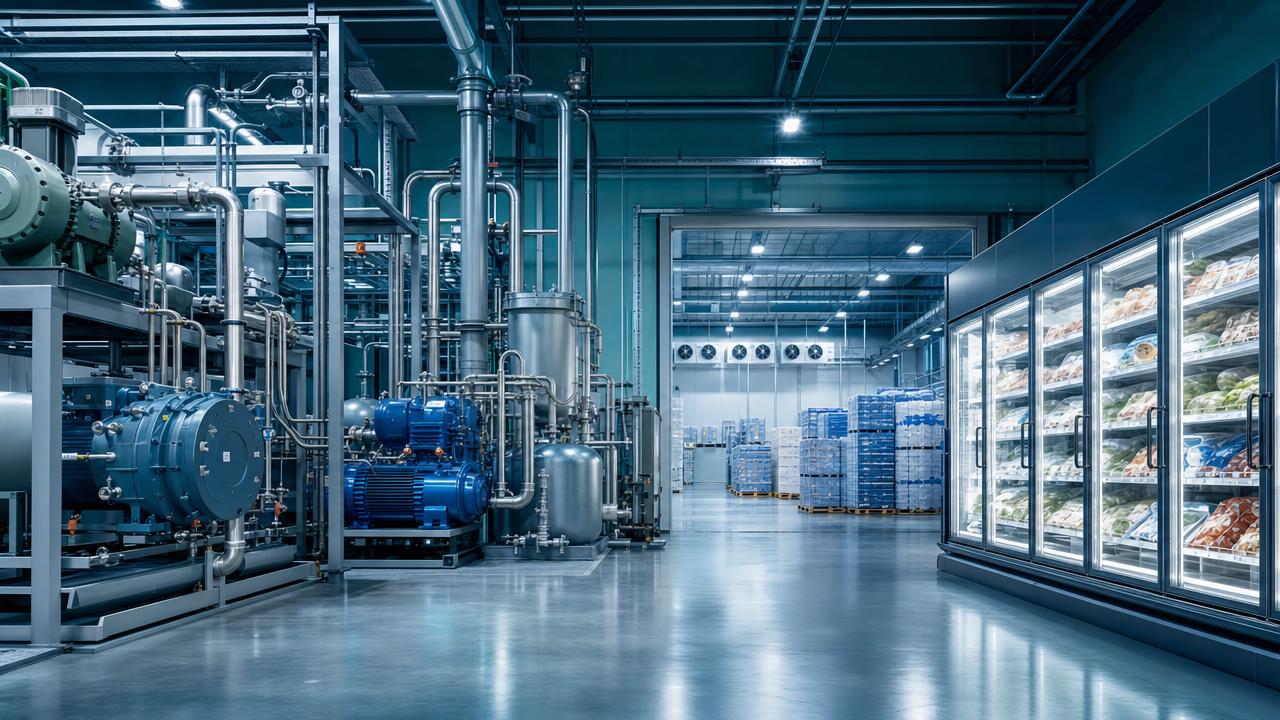
Cold storage and distribution hubs
These facilities run continuously and face large refrigeration loads. Small efficiency gains produce significant annual savings.
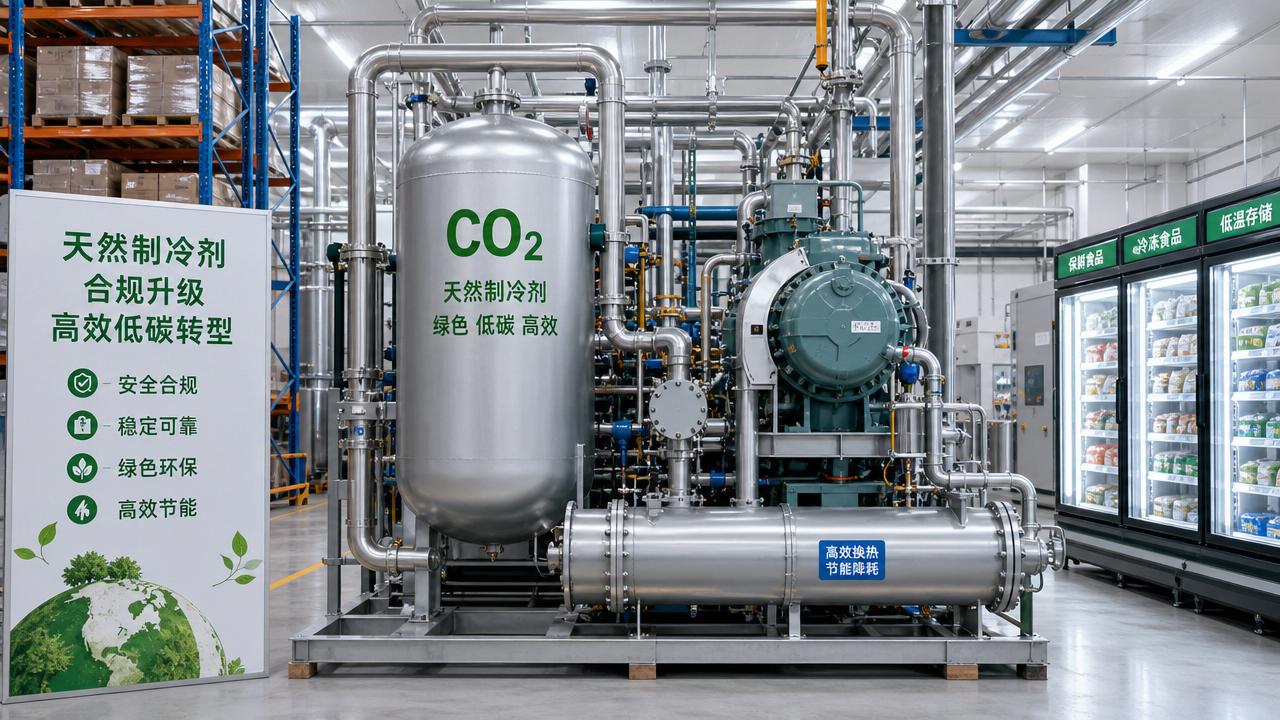
CO2 transcritical systems, advanced rack controls, and tighter door management can improve both sustainability and inventory protection.
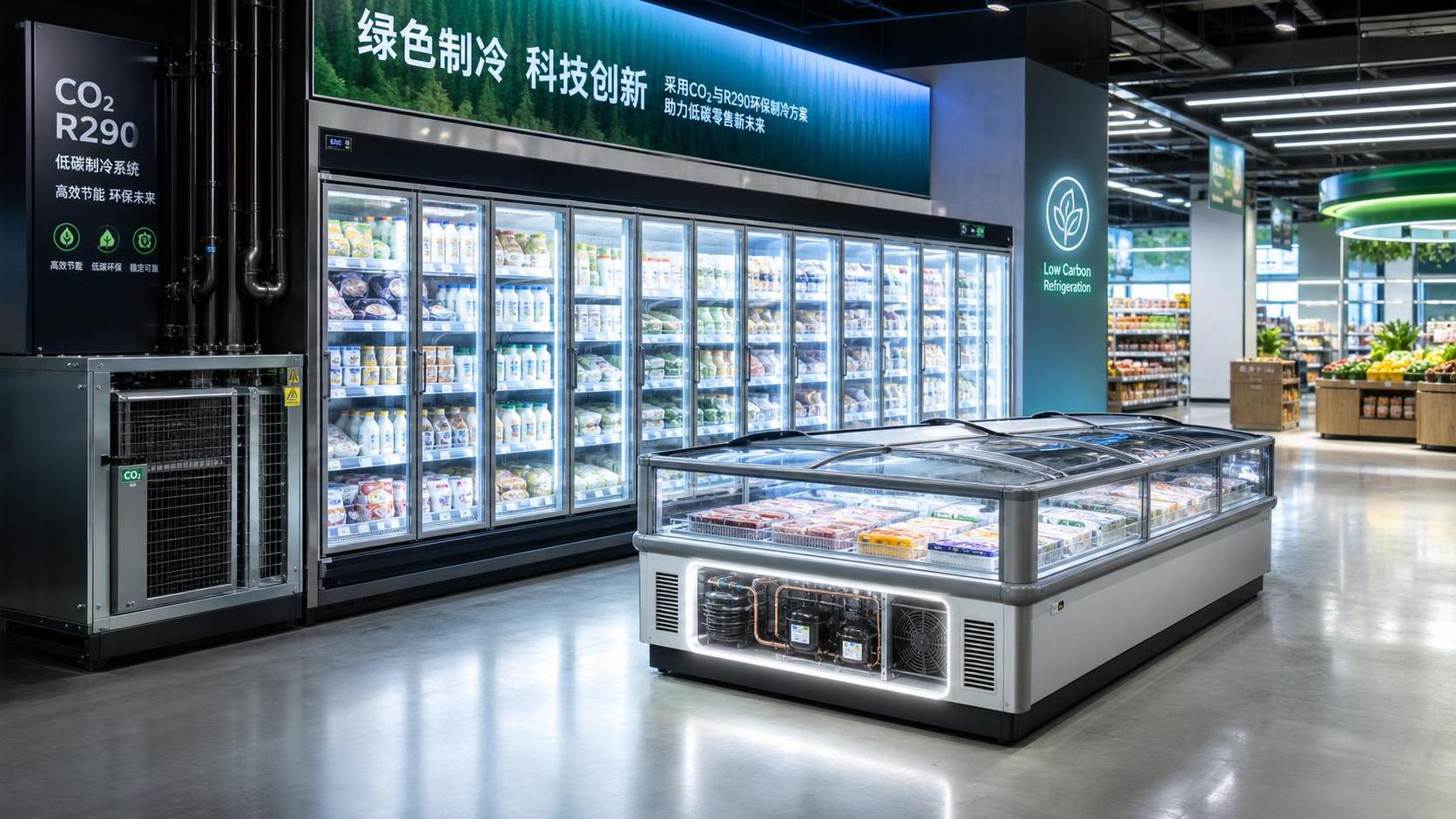
Commercial refrigeration cabinets
Retail cabinets must hold product temperature while encouraging visibility and customer access. Air curtain design and anti-fog performance matter as much as compressor efficiency.
Low carbon cooling in this segment often includes ECM fans, LED lighting, better controls, and lower-impact refrigerants.
Industrial chillers
Factories need precise process cooling. Unstable temperatures can reduce output quality, damage tooling, or limit machine throughput.
Magnetic bearing chillers, variable-speed screw compressors, and optimized heat rejection support lower operating carbon and stronger process consistency.
Ultra-low temperature freezers
Medical and life science storage requires extreme reliability. At -86°C or below, energy use and cascade performance become critical.
Low carbon cooling here means careful refrigerant selection, thermal backup planning, and smarter alarm response, not simple equipment swapping.
Commercial ice systems
Large-scale flake and tube ice production supports seafood, construction, and industrial cooling. Water quality, ambient conditions, and compressor cycling strongly affect efficiency.
Retrofitting controls or replacing high-loss components can turn these heavy-load systems into strong low carbon cooling candidates.
How can you judge whether a low carbon cooling option is truly future-proof?
Not every green-looking upgrade is equally durable. Future-proof decisions usually score well across five dimensions.
- Regulatory fit: Does the refrigerant align with expected phase-down and safety standards?
- Energy profile: How does seasonal efficiency perform under real operating loads?
- Service readiness: Are technicians, spare parts, and monitoring tools realistically available?
- System resilience: Can the design handle ambient swings, partial loads, and defrost stress?
- Lifecycle economics: What happens to cost after maintenance, leakage, downtime, and compliance are included?
A common mistake is comparing capital price alone. That can hide the bigger financial impact of energy use, refrigerant replacement, and interrupted operations.
Another mistake is assuming one refrigerant works best everywhere. CO2, ammonia, hydrocarbons, and lower-GWP blends each have strengths and operating boundaries.
The strongest low carbon cooling decisions usually emerge from application-specific analysis rather than generic specification sheets.
What risks and misconceptions should be considered before switching?
The move toward low carbon cooling is compelling, but it still requires disciplined planning. Several misconceptions can create avoidable setbacks.
Misconception: lower-GWP always means lower total cost
A refrigerant with lower climate impact may require different pressures, safety procedures, or component upgrades. Total value depends on full system integration.
Misconception: retrofit is always easier than replacement
Some legacy systems can be upgraded cost-effectively. Others become patchwork assets with higher leakage risk and inconsistent control performance.
Misconception: efficiency ratings tell the whole story
Lab ratings do not capture door openings, ambient heat, frost buildup, poor airflow, or unstable product loading patterns.
Misconception: sustainability and uptime compete with each other
In well-engineered systems, lower leakage, smarter controls, and better heat exchange often support both carbon reduction and operational stability.
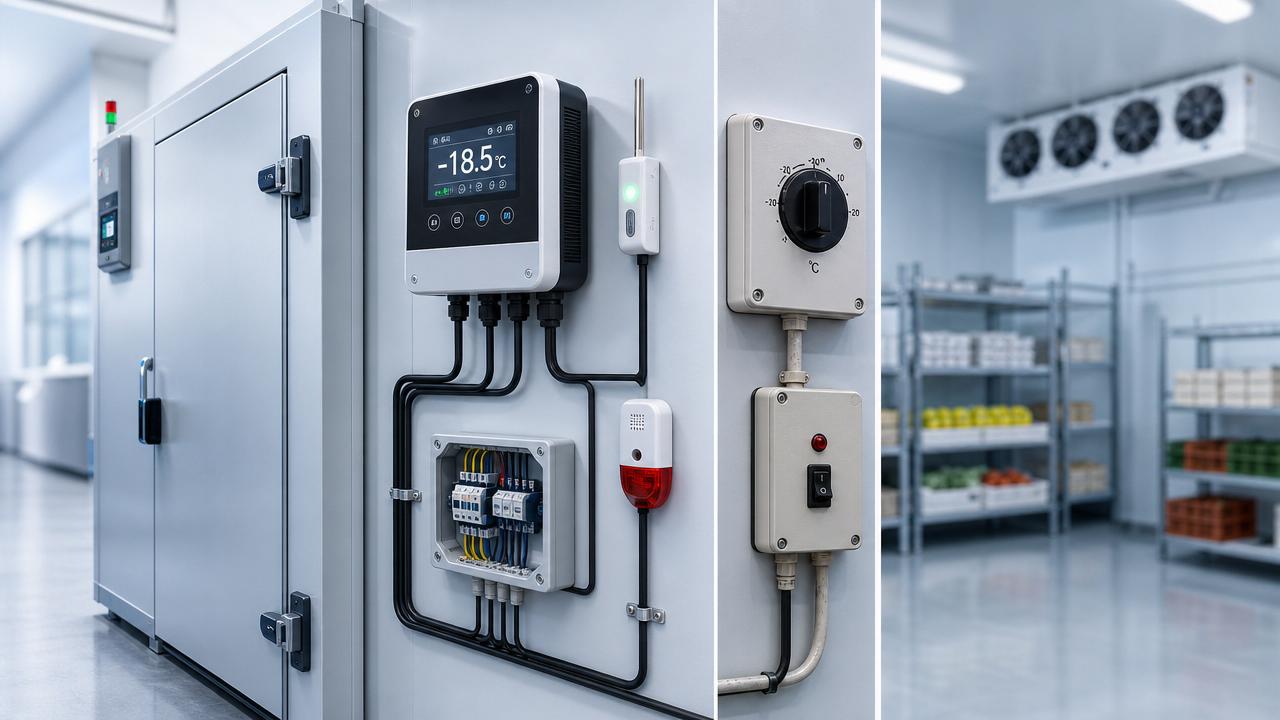
Risk management should include leak detection, technician training, spare parts planning, power backup, and remote alarms.
These measures make low carbon cooling safer in practice, especially where product spoilage or temperature excursions carry severe consequences.
What does implementation look like in real planning cycles?
A practical low carbon cooling roadmap usually starts with operating data, not vendor brochures.
- Audit current energy use, refrigerant history, downtime records, and temperature deviations.
- Map the highest-risk assets by run hours, leakage exposure, and critical product value.
- Compare retrofit, phased replacement, and full redesign using lifecycle cost logic.
- Test monitoring, alarm, and control strategies before scaling across sites.
- Review future policy exposure to avoid stranded equipment investments.
For many facilities, a phased path works best. Quick wins may include control tuning, airflow correction, door discipline, and leak reduction.
Larger steps may include compressor rack upgrades, natural refrigerant adoption, or replacing outdated chillers and freezers entirely.
The point is not speed alone. It is building a cooling portfolio that remains efficient, compliant, and dependable under changing market conditions.
FAQ table: how to evaluate low carbon cooling options quickly
Why is low carbon cooling becoming a safer long bet? Because it addresses the real pressures shaping modern cooling investment.
It reduces exposure to refrigerant restrictions, limits energy volatility, and supports more dependable temperature control across diverse industries.
For systems covered by CCRS intelligence, the best next step is a structured review of refrigerants, controls, efficiency, and risk concentration by application.
When low carbon cooling is evaluated through lifecycle performance instead of short-term cost, it becomes more than an environmental upgrade. It becomes a strategic safeguard.
Recommended News
 Eco-Refrigerant & ComplianceF-Gas Regulations Are Changing Equipment Choices Faster Than ExpectedAnalyst :Dr. Henrik Weber
 Eco-Refrigerant & ComplianceEco-Friendly Refrigeration: What Looks Green but Performs Poorly?Analyst :Dr. Henrik Weber
 Eco-Refrigerant & ComplianceNatural Refrigerants: Are Compliance Benefits Worth the Transition Cost?Analyst :Dr. Henrik Weber
 Eco-Refrigerant & ComplianceWhat drives low carbon refrigeration adoption in 2026?Analyst :Dr. Henrik Weber
 Eco-Refrigerant & ComplianceEco-friendly cooling is changing compliance planning fastAnalyst :Dr. Henrik Weber
 Eco-Refrigerant & ComplianceLow carbon cooling trends that could reshape investmentsAnalyst :Dr. Henrik Weber
 Eco-Refrigerant & ComplianceHow F-Gas regulations are changing refrigerant decisionsAnalyst :Dr. Henrik Weber
 Eco-Refrigerant & ComplianceIs eco-friendly refrigeration worth the higher upfront costAnalyst :Dr. Henrik Weber
 Eco-Refrigerant & ComplianceWhy low carbon cooling is becoming a compliance priorityAnalyst :Dr. Henrik Weber
 Eco-Refrigerant & ComplianceLow carbon refrigeration options that cut long-term costsAnalyst :Dr. Henrik Weber
 Eco-Refrigerant & ComplianceWhat buyers miss when choosing eco-friendly refrigerationAnalyst :Dr. Henrik Weber
 Eco-Refrigerant & ComplianceWhy low carbon refrigeration is becoming a board issueAnalyst :Dr. Henrik Weber
 Eco-Refrigerant & ComplianceWhat F-Gas regulations mean for equipment choices in 2026Analyst :Dr. Henrik Weber
![]() Eco-Refrigerant & ComplianceIndonesia Launches Green Refrigeration Channel for R290 Cold CabinetsAnalyst :Dr. Henrik Weber
Eco-Refrigerant & ComplianceIndonesia Launches Green Refrigeration Channel for R290 Cold CabinetsAnalyst :Dr. Henrik Weber Eco-Refrigerant & ComplianceWhy low carbon cooling is becoming a safer long betAnalyst :Dr. Henrik Weber
 Eco-Refrigerant & ComplianceWhat makes eco-friendly cooling cheaper over time?Analyst :Dr. Henrik Weber
 Eco-Refrigerant & ComplianceF-Gas regulations are changing how cooling gets approvedAnalyst :Dr. Henrik Weber
 Eco-Refrigerant & ComplianceHow eco-friendly refrigeration cuts compliance riskAnalyst :Dr. Henrik Weber
 Eco-Refrigerant & ComplianceHow low carbon cooling cuts compliance risk in 2026Analyst :Dr. Henrik Weber
 Eco-Refrigerant & ComplianceLow Carbon Refrigeration: Compare Refrigerants, Energy Use, and ComplianceAnalyst :Dr. Henrik Weber
 Eco-Refrigerant & ComplianceEco-Friendly Cooling Options: Refrigerants, Efficiency, and Compliance ChecksAnalyst :Dr. Henrik Weber
![]() Eco-Refrigerant & ComplianceWhat Are Natural Refrigerants? Types, GWP Limits, and Where They Fit BestAnalyst :Dr. Henrik Weber
Eco-Refrigerant & ComplianceWhat Are Natural Refrigerants? Types, GWP Limits, and Where They Fit BestAnalyst :Dr. Henrik Weber Eco-Refrigerant & ComplianceEco-Friendly Cooling vs Conventional Systems: What Buyers Should Compare FirstAnalyst :Dr. Henrik Weber
 Eco-Refrigerant & ComplianceEco-Friendly Refrigeration vs Conventional Systems: Refrigerants, Energy Use, and ComplianceAnalyst :Dr. Henrik Weber
 Eco-Refrigerant & ComplianceLow Carbon Refrigeration: Key Standards, Refrigerant Options, and ROI FactorsAnalyst :Dr. Henrik Weber
 Eco-Refrigerant & ComplianceTemperature Control Standards for Food Storage: Critical Limits, Logging, and Audit ChecksAnalyst :Dr. Henrik Weber
 Eco-Refrigerant & ComplianceLow Carbon Cooling Options Explained: Refrigerants, Compliance, and System Trade-OffsAnalyst :Dr. Henrik Weber
 Eco-Refrigerant & ComplianceDigital Refrigeration vs Conventional Controls: What Improves Monitoring and Compliance?Analyst :Dr. Henrik Weber
 Eco-Refrigerant & ComplianceLow Carbon Cooling Options for Commercial Refrigeration: CO2, Ammonia, and Hybrid SystemsAnalyst :Dr. Henrik Weber
 Eco-Refrigerant & ComplianceLow Carbon Cooling Options Compared: CO2, Ammonia, and HFO Systems for ComplianceAnalyst :Dr. Henrik Weber
 Eco-Refrigerant & ComplianceIndustrial Refrigeration Systems Buying Guide: Lifecycle Cost, Efficiency, and ComplianceAnalyst :Dr. Henrik Weber
 Eco-Refrigerant & ComplianceEco-Friendly Cooling Options: Refrigerants, Energy Use, and Compliance Factors ComparedAnalyst :Dr. Henrik Weber
 Eco-Refrigerant & ComplianceNatural Refrigerants vs HFCs: How to Compare Compliance, Safety, and System DesignAnalyst :Dr. Henrik Weber
 Eco-Refrigerant & ComplianceHow to Read Specification-Oriented Product Guides for Refrigeration EquipmentAnalyst :Dr. Henrik Weber
 Eco-Refrigerant & ComplianceLow Carbon Refrigeration Options for Supermarkets: CAPEX, Energy Use, and Compliance ComparedAnalyst :Dr. Henrik Weber
 Eco-Refrigerant & ComplianceRACC 2026 to Host PFAS Compliance Briefing in HangzhouAnalyst :Dr. Henrik Weber
 Eco-Refrigerant & ComplianceEPA Rule Challenge Raises HFC Supply Chain ConcernsAnalyst :Dr. Henrik Weber
 Eco-Refrigerant & ComplianceLow Carbon Refrigeration Systems vs Conventional Setups: Which Delivers Lower Lifecycle Cost?Analyst :Dr. Henrik Weber
 Eco-Refrigerant & ComplianceLow GWP Refrigeration Explained: Refrigerants, Regulations, and System Trade-OffsAnalyst :Dr. Henrik Weber
 Eco-Refrigerant & ComplianceLow Carbon Refrigeration Systems Retrofit: When to Upgrade and Which Changes Matter MostAnalyst :Dr. Henrik Weber