Industry News
Curation by industry experts
Hot Articles
- Thermodynamic Tech TrendsHow to Size Heat Exchange Systems for Refrigeration Plants at Peak Load
- Parallel Compressor RacksHow to Size Reciprocating Compressors for Cold Storage Load and Temperature Range
- Flake Ice MachinesHow to Size a Commercial Ice Dispenser for Peak Demand in Foodservice Operations
Popular Tags
Low Carbon Refrigeration: Compare Refrigerants, Energy Use, and Compliance
Low carbon refrigeration is no longer a technical upgrade—it is a board-level decision shaping energy costs, regulatory risk, and long-term competitiveness. As F-Gas restrictions tighten and cold-chain demand expands, business leaders must compare refrigerants, system efficiency, lifecycle emissions, and compliance pathways with precision. This guide explains how to evaluate low-GWP alternatives, optimize power consumption, and align refrigeration investments with global sustainability and performance expectations.
Why low carbon refrigeration has become a board-level decision
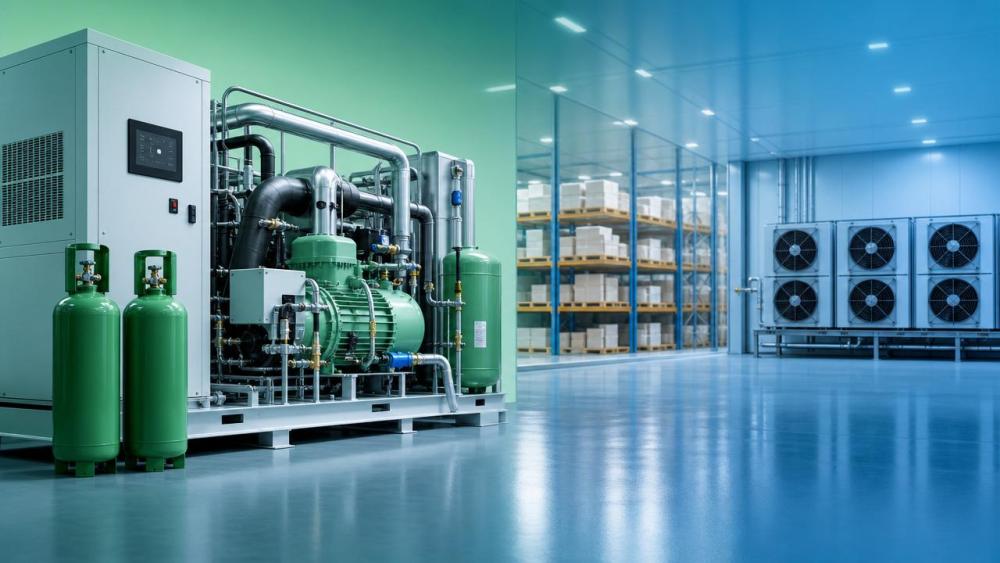
For enterprise decision makers, refrigeration is not only a utility expense. It influences product loss, export eligibility, facility resilience, and brand credibility.
Low carbon refrigeration connects three business priorities: lower indirect emissions from electricity, lower direct emissions from refrigerant leakage, and lower compliance exposure.
In cold storage hubs, food retail, industrial processing, ice production, and biomedical preservation, cooling systems often run continuously. Small efficiency gaps become significant lifetime costs.
The business risks behind outdated cooling assets
- Rising power prices can turn inefficient compressors, pumps, fans, and defrost cycles into recurring margin pressure.
- High-GWP refrigerants may face phase-down pressure, supply uncertainty, service restrictions, or reporting obligations in target markets.
- Poor temperature stability can increase spoilage, shorten equipment life, and weaken customer confidence in cold-chain reliability.
- Retrofit decisions made without lifecycle analysis may reduce one cost while increasing safety, maintenance, or training burdens.
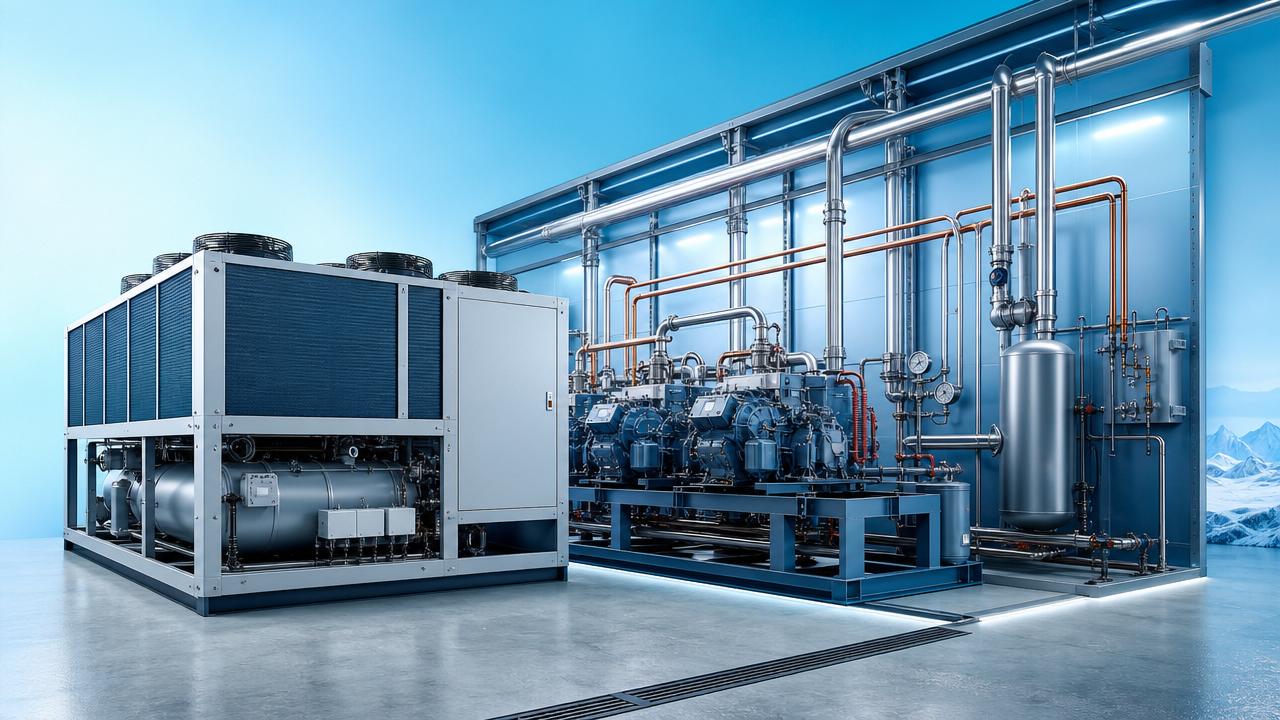
CCRS evaluates low carbon refrigeration through thermodynamics, refrigerant chemistry, digital controls, and market compliance. That integrated view helps leaders avoid isolated decisions.
How to compare refrigerants for low carbon refrigeration projects
The refrigerant choice affects capital cost, compressor architecture, operating pressure, flammability strategy, service skills, and long-term regulatory acceptance.
A low-GWP refrigerant is not automatically the best option. The correct decision depends on cooling temperature, ambient conditions, leakage risk, safety class, and supply continuity.
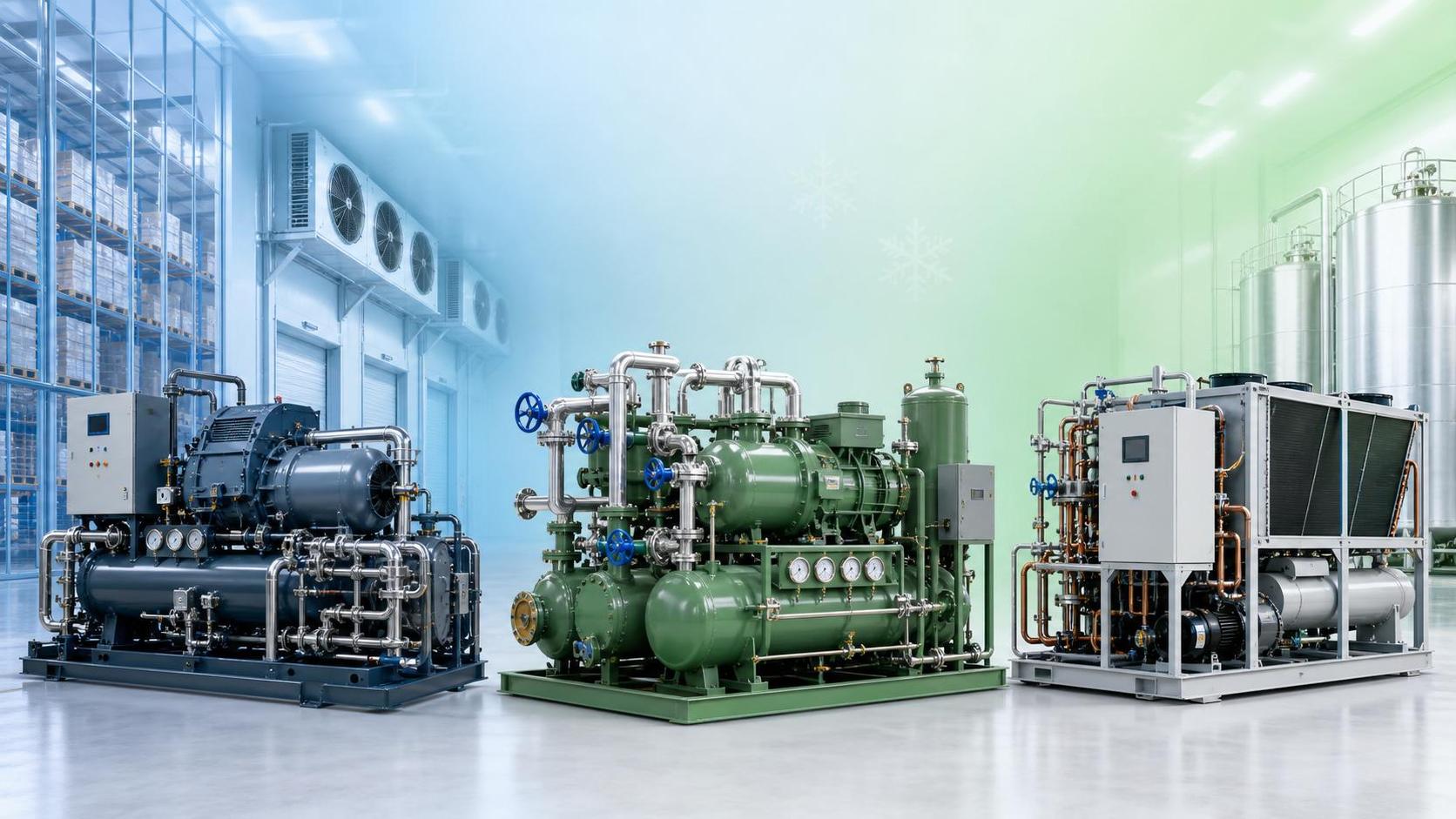
The following comparison summarizes common refrigerant pathways used in commercial, industrial, and cold-chain applications.
This table shows why low carbon refrigeration procurement should not begin with refrigerant names alone. System design and operating context determine the final value.
CCRS often recommends a scenario-first comparison: define temperature level, annual load profile, climate zone, maintenance capacity, and export market before shortlisting refrigerants.
Where energy use is won or lost in refrigeration systems
Low carbon refrigeration depends heavily on electricity consumption. In many facilities, indirect emissions from power use exceed direct refrigerant emissions.
Energy performance is shaped by compressors, heat exchangers, fans, pumps, doors, cabinet air curtains, defrost logic, and control algorithms.
Energy evaluation points for enterprise buyers
- Review seasonal efficiency instead of only rated efficiency at one laboratory point.
- Check whether variable-frequency drives can match partial-load operation without unstable cycling.
- Assess condenser approach temperature, evaporator pressure drop, and coil cleanliness management.
- Model defrost frequency, door opening behavior, lighting heat, anti-fog heating, and fan control.
- Calculate lifecycle electricity cost using local tariffs and expected operating hours, not only purchase price.
For industrial chillers, magnetic bearing compressors and variable-frequency screw technologies can reduce wasted energy when production loads fluctuate.
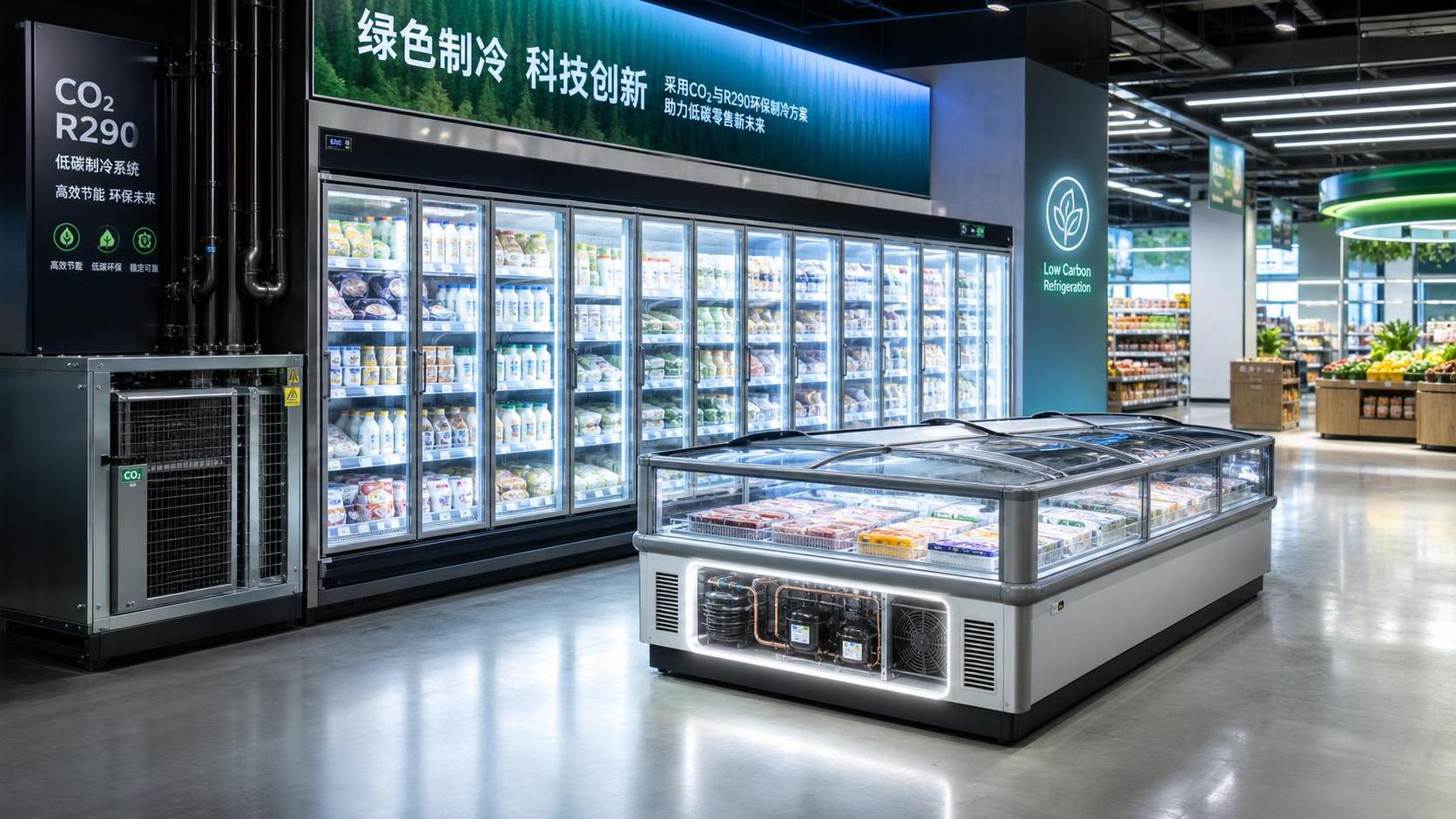
For retail cabinets, precise air curtain circulation, LED lighting, and anti-fog control affect both merchandising appeal and cooling load.
For ultra-low temperature freezers, cascade system stability matters. A small efficiency improvement at deep cryogenic conditions can significantly reduce heat rejection and backup demand.
Application scenarios: which low carbon refrigeration route fits your facility?
Different facilities need different answers. A medical deep-freeze room, an ice plant, and a fresh retail chain do not share the same risk profile.
This selection table helps decision makers link applications to practical low carbon refrigeration priorities.
The strongest solution is usually not the cheapest unit. It is the configuration that protects product value while reducing energy and compliance risk.
CCRS connects these application differences to reversed Carnot cycle analysis, condenser performance, and field operating data for clearer investment judgment.
Compliance: what should executives verify before approving investment?
Regulation is moving faster than many asset replacement cycles. Low carbon refrigeration planning should anticipate policy direction, not only today’s minimum rule.
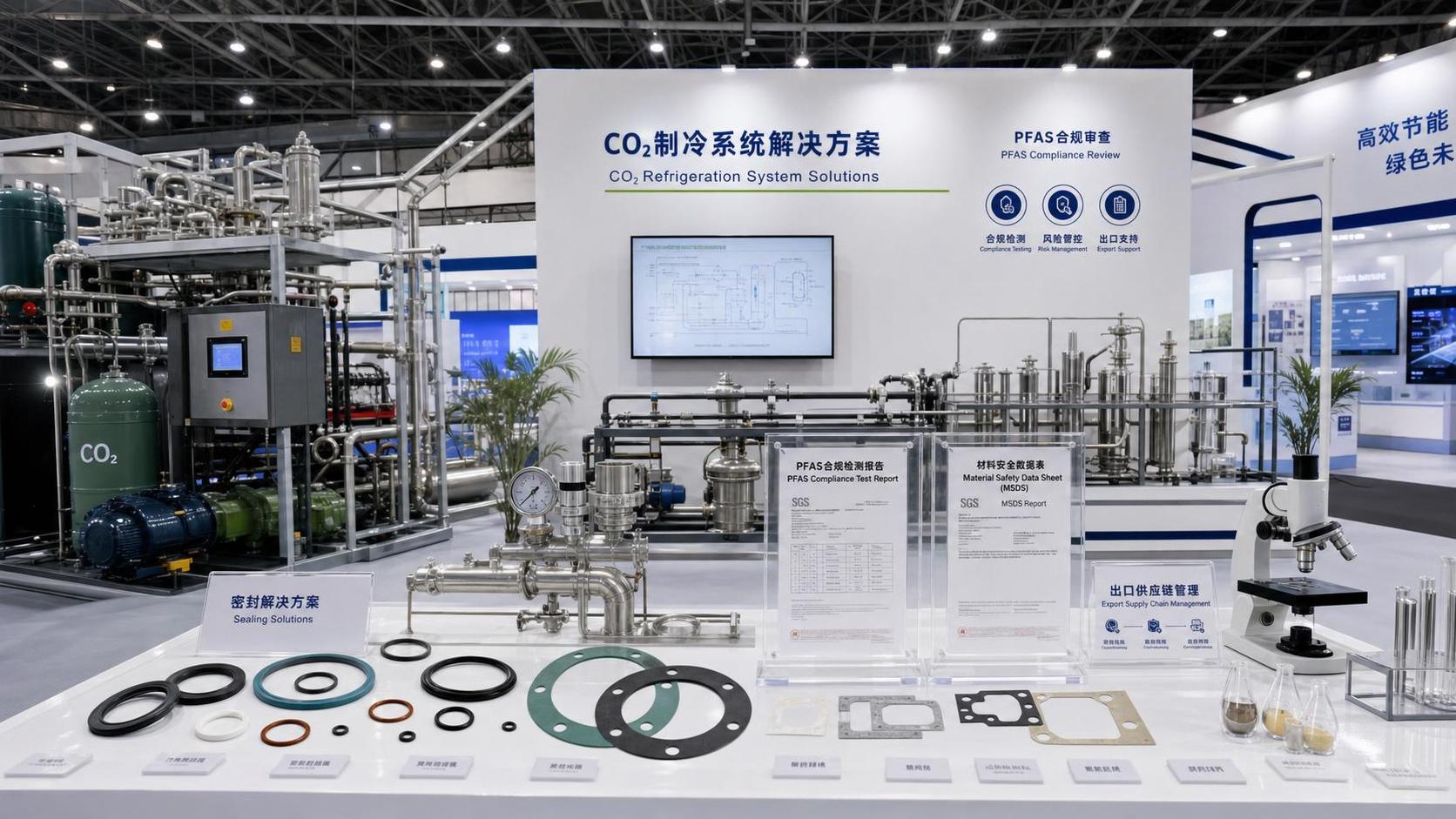
Companies exporting equipment or operating across regions must watch F-Gas phase-downs, safety standards, charge limits, labeling, recovery rules, and technician requirements.
Key compliance checkpoints
- Confirm refrigerant GWP, safety classification, charge quantity, and leakage reporting duties for each destination market.
- Review applicable frameworks such as regional F-Gas rules, the Kigali Amendment direction, ISO 5149, IEC 60335-2-89, and EN 378 where relevant.
- Check whether installation rooms, ventilation, alarms, pressure relief, and emergency procedures match refrigerant characteristics.
- Prepare documentation for refrigerant handling, commissioning, maintenance logs, end-of-life recovery, and operator training.
Dr. Henrik Weber’s compliance perspective within CCRS focuses on avoiding late-stage export obstacles. That is important when delivery schedules are tight.
A compliant low carbon refrigeration project also improves future resale, financing, insurance review, and tender scoring in sustainability-sensitive markets.
Cost comparison: capex is only one part of the decision
Many enterprises hesitate because low carbon refrigeration can require new equipment, training, controls, or safety modifications. The concern is reasonable.
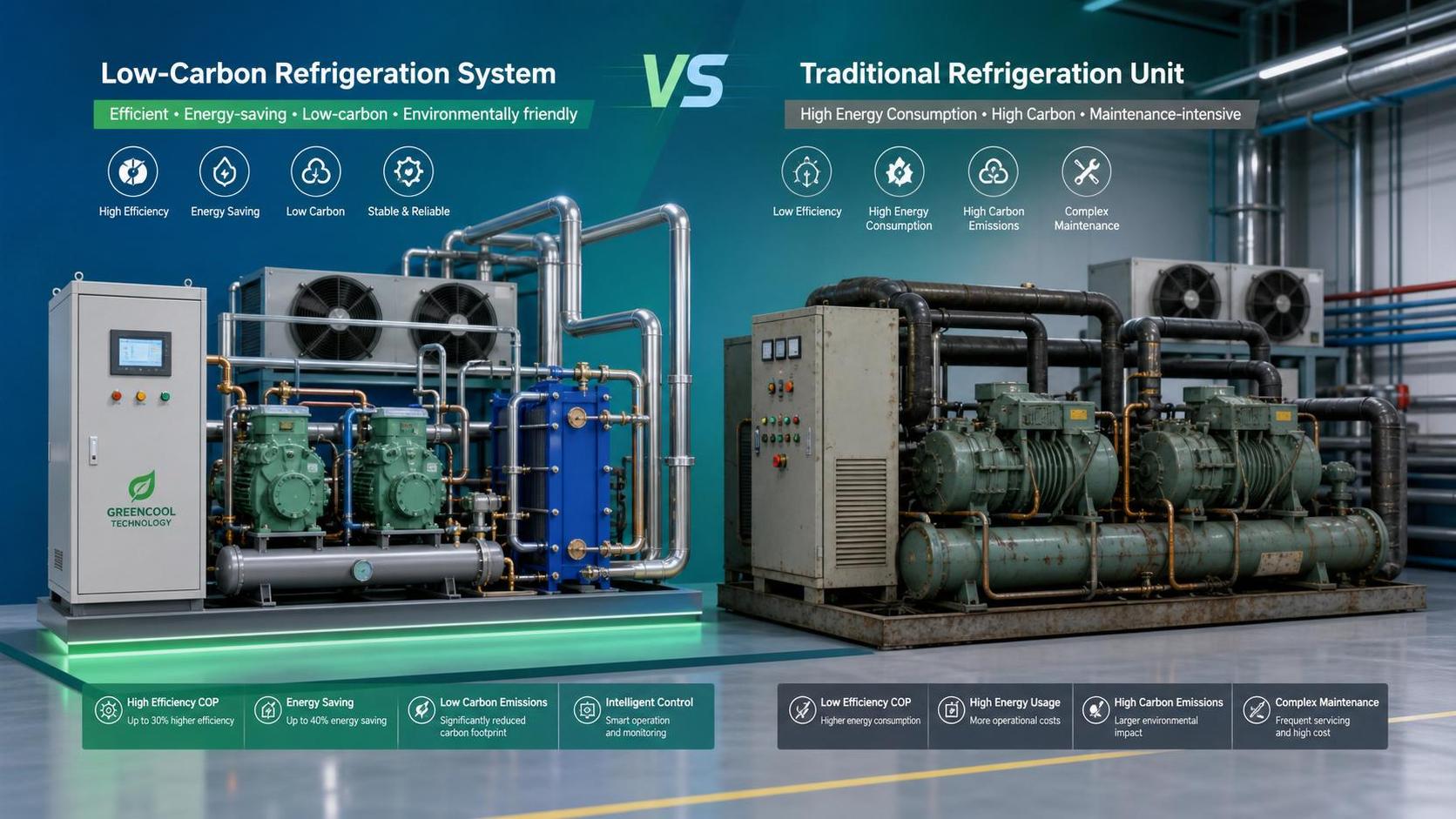
However, the business case should include electricity, refrigerant leakage, downtime, product loss, maintenance intensity, and regulatory replacement risk.
The table below outlines cost categories that should appear in a procurement comparison, especially for multi-site or high-load facilities.
Mr. Julian Thorne’s energy evaluation approach emphasizes payback under real operating patterns. That is more reliable than comparing catalogue efficiency alone.
Executives should request total cost of ownership scenarios for at least five to ten years, including expected regulation-driven refrigerant price movement.
Implementation roadmap for a controlled transition
A low carbon refrigeration transition should be managed like a strategic infrastructure project. Rushing the refrigerant change can create safety and uptime problems.
Recommended project sequence
- Map existing assets, refrigerants, charge volumes, energy data, maintenance records, and failure history.
- Define business requirements, including temperature range, uptime target, expansion plan, and compliance markets.
- Build comparison scenarios covering refrigerant options, compressor technology, controls, safety systems, and payback assumptions.
- Pilot the solution in one representative site or process area before full network deployment when feasible.
- Train operators and service partners on alarms, refrigerant handling, pressure systems, and emergency response.
- Monitor post-commissioning performance through energy dashboards, temperature logs, leakage checks, and maintenance reviews.
Prof. Sarah Lin’s thermodynamic analysis within CCRS supports this roadmap by examining condenser approach, cascade heat transfer, and AI defrost algorithms.
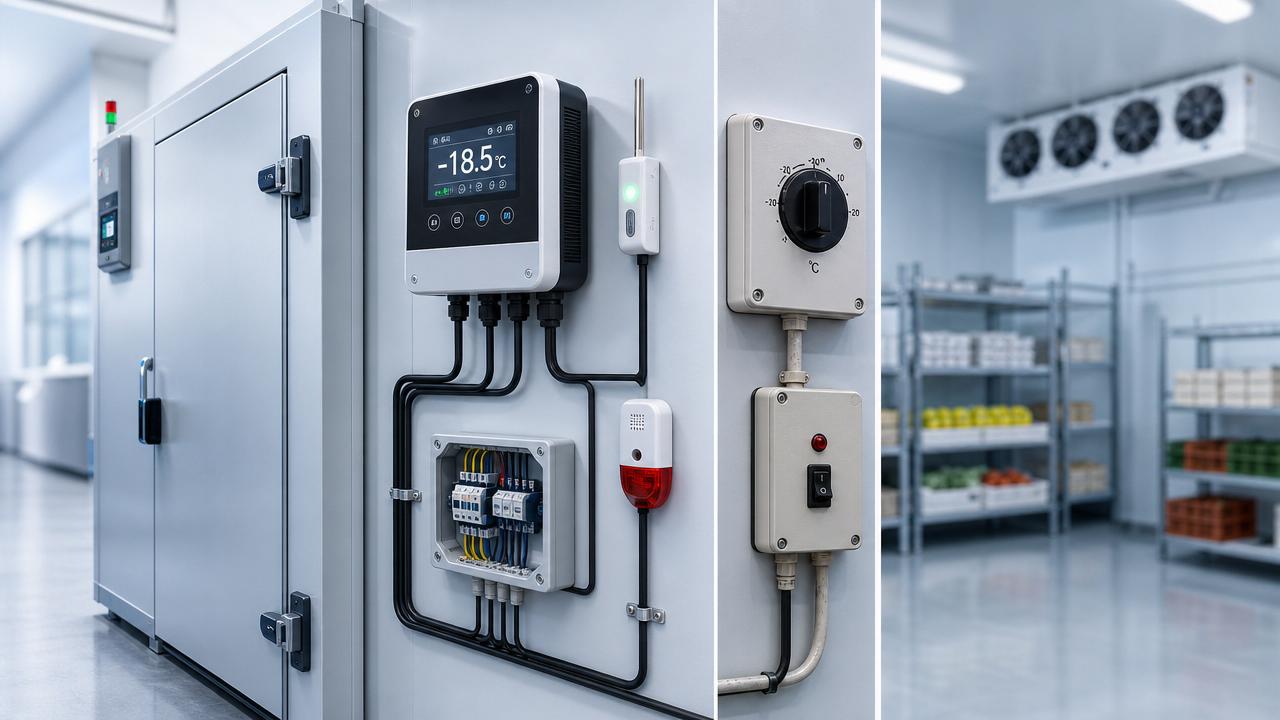
Digital temperature control is especially valuable when facilities operate across multiple temperature zones, from chilled retail displays to deep-freeze biomedical rooms.
Common misconceptions that weaken low carbon refrigeration ROI
The wrong assumption can waste budget. Decision makers should challenge simple claims and ask for evidence linked to their operating environment.
Misconception 1: low GWP always means low emissions
Direct emissions matter, but electricity consumption may dominate lifecycle emissions. A poorly optimized low-GWP system can still carry high carbon intensity.
Misconception 2: retrofit is always cheaper than replacement
Retrofit can be sensible, yet old heat exchangers, controls, or piping may limit performance. Safety classification changes can also add hidden costs.
Misconception 3: compliance is only the supplier’s responsibility
Owners and operators often hold documentation, maintenance, and leakage control obligations. Contracts should clearly define responsibility across the equipment lifecycle.
FAQ for procurement teams evaluating low carbon refrigeration
These questions often appear during budget approval, supplier comparison, and technical review meetings for low carbon refrigeration investments.
How should we choose between CO2, ammonia, hydrocarbons, and HFO blends?
Start with application temperature, facility scale, safety capacity, and regional regulation. CO2 fits many cold-chain hubs, while ammonia is strong in large industrial plants.
Hydrocarbons suit low-charge equipment, and HFO blends may support selected chillers or transitional retrofits. Final selection needs lifecycle modeling.
What data should suppliers provide before quotation approval?
Request refrigerant type, charge, safety class, rated and seasonal efficiency, expected annual energy use, operating envelope, control logic, and service requirements.
For export-facing equipment, also request documentation on applicable standards, labeling, refrigerant recovery, and destination-market restrictions.
Can low carbon refrigeration reduce product loss?
Yes, when the system improves temperature stability, defrost control, humidity management, and alarm response. The benefit is critical for seafood, vaccines, produce, and frozen inventory.
How long does a transition project usually take?
Timing depends on facility size, permitting, equipment availability, commissioning complexity, and operator training. Multi-site rollouts should include pilot validation before broad deployment.
Why choose CCRS for refrigeration intelligence and decision support
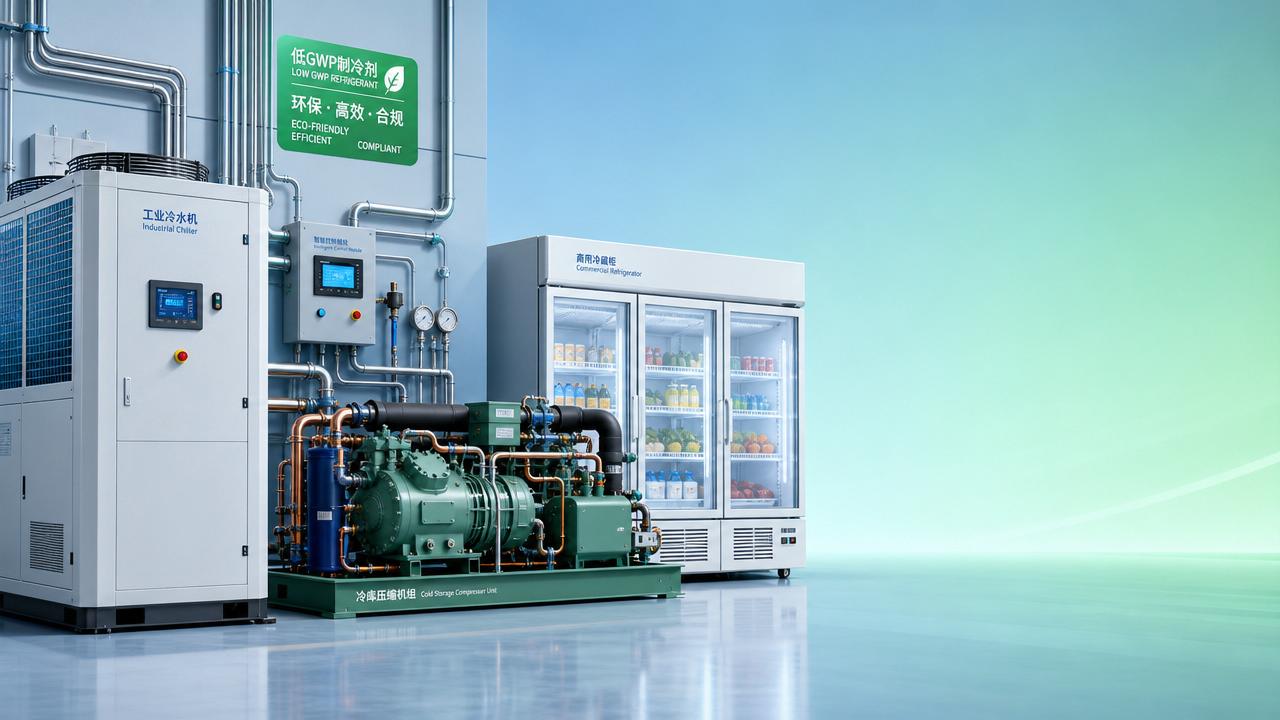
CCRS is built for enterprises that need more than product brochures. Our focus is practical intelligence across industrial chillers, ice machines, cold storage compressors, retail cabinets, and ultra-low temperature freezers.
We help decision makers connect reversed Carnot cycle fundamentals, eco-refrigerant properties, energy modeling, and compliance risk into a clear investment pathway.
What you can consult CCRS about
- Refrigerant comparison for CO2, ammonia, hydrocarbons, HFO blends, and legacy replacement planning.
- Parameter confirmation for chillers, cold rooms, ice-making equipment, retail cabinets, and -86°C storage systems.
- Energy evaluation covering compressor selection, defrost strategy, condenser performance, and partial-load operation.
- Compliance review for F-Gas exposure, documentation needs, safety standards, and export-market refrigerant restrictions.
- Procurement support for budget comparison, delivery planning, customization requirements, and quotation communication.
If your organization is planning low carbon refrigeration upgrades, CCRS can help define the right technical route before capital is committed.
Contact us to discuss refrigerant options, energy targets, compliance requirements, delivery timelines, sample support, and customized refrigeration system evaluation.
Recommended News
 Eco-Refrigerant & ComplianceF-Gas Regulations Are Changing Equipment Choices Faster Than ExpectedAnalyst :Dr. Henrik Weber
 Eco-Refrigerant & ComplianceEco-Friendly Refrigeration: What Looks Green but Performs Poorly?Analyst :Dr. Henrik Weber
 Eco-Refrigerant & ComplianceNatural Refrigerants: Are Compliance Benefits Worth the Transition Cost?Analyst :Dr. Henrik Weber
 Eco-Refrigerant & ComplianceWhat drives low carbon refrigeration adoption in 2026?Analyst :Dr. Henrik Weber
 Eco-Refrigerant & ComplianceEco-friendly cooling is changing compliance planning fastAnalyst :Dr. Henrik Weber
 Eco-Refrigerant & ComplianceLow carbon cooling trends that could reshape investmentsAnalyst :Dr. Henrik Weber
 Eco-Refrigerant & ComplianceHow F-Gas regulations are changing refrigerant decisionsAnalyst :Dr. Henrik Weber
 Eco-Refrigerant & ComplianceIs eco-friendly refrigeration worth the higher upfront costAnalyst :Dr. Henrik Weber
 Eco-Refrigerant & ComplianceWhy low carbon cooling is becoming a compliance priorityAnalyst :Dr. Henrik Weber
 Eco-Refrigerant & ComplianceLow carbon refrigeration options that cut long-term costsAnalyst :Dr. Henrik Weber
 Eco-Refrigerant & ComplianceWhat buyers miss when choosing eco-friendly refrigerationAnalyst :Dr. Henrik Weber
 Eco-Refrigerant & ComplianceWhy low carbon refrigeration is becoming a board issueAnalyst :Dr. Henrik Weber
 Eco-Refrigerant & ComplianceWhat F-Gas regulations mean for equipment choices in 2026Analyst :Dr. Henrik Weber
![]() Eco-Refrigerant & ComplianceIndonesia Launches Green Refrigeration Channel for R290 Cold CabinetsAnalyst :Dr. Henrik Weber
Eco-Refrigerant & ComplianceIndonesia Launches Green Refrigeration Channel for R290 Cold CabinetsAnalyst :Dr. Henrik Weber Eco-Refrigerant & ComplianceWhy low carbon cooling is becoming a safer long betAnalyst :Dr. Henrik Weber
 Eco-Refrigerant & ComplianceWhat makes eco-friendly cooling cheaper over time?Analyst :Dr. Henrik Weber
 Eco-Refrigerant & ComplianceF-Gas regulations are changing how cooling gets approvedAnalyst :Dr. Henrik Weber
 Eco-Refrigerant & ComplianceHow eco-friendly refrigeration cuts compliance riskAnalyst :Dr. Henrik Weber
 Eco-Refrigerant & ComplianceHow low carbon cooling cuts compliance risk in 2026Analyst :Dr. Henrik Weber
 Eco-Refrigerant & ComplianceLow Carbon Refrigeration: Compare Refrigerants, Energy Use, and ComplianceAnalyst :Dr. Henrik Weber
 Eco-Refrigerant & ComplianceEco-Friendly Cooling Options: Refrigerants, Efficiency, and Compliance ChecksAnalyst :Dr. Henrik Weber
![]() Eco-Refrigerant & ComplianceWhat Are Natural Refrigerants? Types, GWP Limits, and Where They Fit BestAnalyst :Dr. Henrik Weber
Eco-Refrigerant & ComplianceWhat Are Natural Refrigerants? Types, GWP Limits, and Where They Fit BestAnalyst :Dr. Henrik Weber Eco-Refrigerant & ComplianceEco-Friendly Cooling vs Conventional Systems: What Buyers Should Compare FirstAnalyst :Dr. Henrik Weber
 Eco-Refrigerant & ComplianceEco-Friendly Refrigeration vs Conventional Systems: Refrigerants, Energy Use, and ComplianceAnalyst :Dr. Henrik Weber
 Eco-Refrigerant & ComplianceLow Carbon Refrigeration: Key Standards, Refrigerant Options, and ROI FactorsAnalyst :Dr. Henrik Weber
 Eco-Refrigerant & ComplianceTemperature Control Standards for Food Storage: Critical Limits, Logging, and Audit ChecksAnalyst :Dr. Henrik Weber
 Eco-Refrigerant & ComplianceLow Carbon Cooling Options Explained: Refrigerants, Compliance, and System Trade-OffsAnalyst :Dr. Henrik Weber
 Eco-Refrigerant & ComplianceDigital Refrigeration vs Conventional Controls: What Improves Monitoring and Compliance?Analyst :Dr. Henrik Weber
 Eco-Refrigerant & ComplianceLow Carbon Cooling Options for Commercial Refrigeration: CO2, Ammonia, and Hybrid SystemsAnalyst :Dr. Henrik Weber
 Eco-Refrigerant & ComplianceLow Carbon Cooling Options Compared: CO2, Ammonia, and HFO Systems for ComplianceAnalyst :Dr. Henrik Weber
 Eco-Refrigerant & ComplianceIndustrial Refrigeration Systems Buying Guide: Lifecycle Cost, Efficiency, and ComplianceAnalyst :Dr. Henrik Weber
 Eco-Refrigerant & ComplianceEco-Friendly Cooling Options: Refrigerants, Energy Use, and Compliance Factors ComparedAnalyst :Dr. Henrik Weber
 Eco-Refrigerant & ComplianceNatural Refrigerants vs HFCs: How to Compare Compliance, Safety, and System DesignAnalyst :Dr. Henrik Weber
 Eco-Refrigerant & ComplianceHow to Read Specification-Oriented Product Guides for Refrigeration EquipmentAnalyst :Dr. Henrik Weber
 Eco-Refrigerant & ComplianceLow Carbon Refrigeration Options for Supermarkets: CAPEX, Energy Use, and Compliance ComparedAnalyst :Dr. Henrik Weber
 Eco-Refrigerant & ComplianceRACC 2026 to Host PFAS Compliance Briefing in HangzhouAnalyst :Dr. Henrik Weber
 Eco-Refrigerant & ComplianceEPA Rule Challenge Raises HFC Supply Chain ConcernsAnalyst :Dr. Henrik Weber
 Eco-Refrigerant & ComplianceLow Carbon Refrigeration Systems vs Conventional Setups: Which Delivers Lower Lifecycle Cost?Analyst :Dr. Henrik Weber
 Eco-Refrigerant & ComplianceLow GWP Refrigeration Explained: Refrigerants, Regulations, and System Trade-OffsAnalyst :Dr. Henrik Weber
 Eco-Refrigerant & ComplianceLow Carbon Refrigeration Systems Retrofit: When to Upgrade and Which Changes Matter MostAnalyst :Dr. Henrik Weber