Industry News
Curation by industry experts
Hot Articles
- Thermodynamic Tech TrendsHow to Size Heat Exchange Systems for Refrigeration Plants at Peak Load
- Parallel Compressor RacksHow to Size Reciprocating Compressors for Cold Storage Load and Temperature Range
- Flake Ice MachinesHow to Size a Commercial Ice Dispenser for Peak Demand in Foodservice Operations
Popular Tags
Industrial Refrigeration Systems Buying Guide: Lifecycle Cost, Efficiency, and Compliance
Why does buying industrial refrigeration systems require a lifecycle view now?
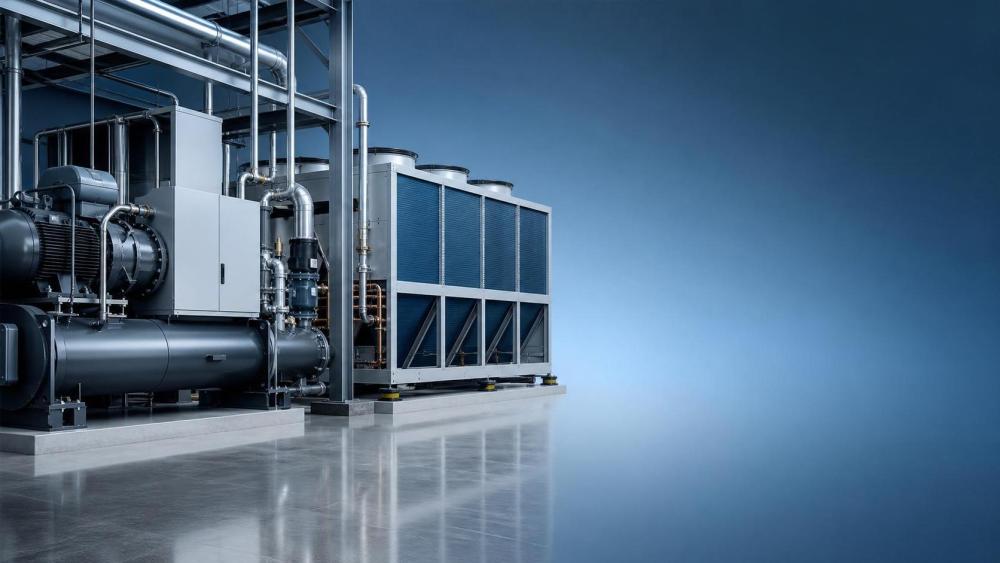
Buying industrial refrigeration systems used to center on capital cost. That approach is now risky, especially where energy tariffs, refrigerant rules, and uptime targets keep shifting.
In practice, the lowest quote often becomes the highest-cost asset. Power consumption, service intervals, refrigerant availability, and compliance upgrades can outweigh the purchase price within a few years.
That is why industrial refrigeration systems are increasingly compared as long-term operating platforms, not isolated machines. The decision affects cooling stability, product quality, maintenance planning, and export readiness.
This matters across fresh retail, food processing, biomedicine, industrial cooling, and cold storage hubs. A chiller for laser cutting and a freezer for deep-cryogenic storage face different loads, but the buying logic is similar.
Reliable market intelligence helps here. CCRS follows industrial chillers, ice-making equipment, cold storage compressors, refrigerated display systems, and ultra-low temperature freezers with an emphasis on thermodynamics, eco-refrigerants, and efficiency trends.
The useful takeaway is simple. Evaluate industrial refrigeration systems by lifecycle cost, energy performance, compliance exposure, and real operating fit before comparing brand or headline capacity.
What should be checked before comparing quotes?
A fair comparison starts with load definition. Many buying mistakes happen before quotations arrive, because the cooling duty is described too broadly or with missing temperature details.
Industrial refrigeration systems should be matched to the actual application profile, not to peak demand alone. A system serving intermittent molding loads behaves differently from one protecting vaccine storage around the clock.
The most important inputs usually include:
- Required suction and discharge temperatures
- Hourly and seasonal load variation
- Ambient conditions and installation altitude
- Defrost method and humidity conditions
- Acceptable noise, footprint, and redundancy level
- Target refrigerant pathway over the asset life
More careful buyers also ask how controls react to partial load. Variable-frequency screw technology, magnetic bearing chillers, AI-supported defrost logic, and digital monitoring can change operating economics significantly.
The point is not to chase every new feature. It is to confirm which features reduce real energy draw, stabilize temperature, or lower manual intervention in the intended operating environment.
A quick comparison framework
Before a final shortlist, it helps to line up the main decision variables in one place. This keeps industrial refrigeration systems from being judged only by nominal capacity.
How is lifecycle cost calculated for industrial refrigeration systems?
Lifecycle cost means the total cost to own and operate the asset, usually across ten to fifteen years. It gives a more honest picture than capital expense alone.
For many industrial refrigeration systems, electricity is the dominant cost line. That is especially true in cold storage hubs, 24-hour process cooling, and ultra-low temperature applications.
A practical lifecycle review should include:
- Equipment purchase and installation
- Annual electricity use at realistic load profiles
- Water treatment or condenser cleaning needs
- Planned maintenance and major overhaul timing
- Refrigerant refill, leak management, and reporting
- Downtime exposure and product-loss risk
- Retrofit or end-of-life compliance adjustments
A useful test is this: if two systems differ by 8% to 12% in annual energy use, what does that mean over the expected life at local power prices? The answer can easily reshape the shortlist.
CCRS energy analysis often highlights hidden savings from retrofit logic, compressor selection, and control refinement. That kind of insight matters because efficiency gains are rarely created by one component alone.
In other words, buy the system that remains economical when utility rates rise, maintenance windows tighten, and compliance rules become stricter.
Which efficiency indicators actually help with selection?
Efficiency claims can be confusing because industrial refrigeration systems operate under very different conditions. A single performance number is rarely enough for a sound decision.
More reliable comparisons focus on part-load behavior, annualized energy performance, compressor control strategy, and heat-exchange quality. These factors reflect how the system will behave after commissioning.
For example, a variable-frequency screw package may deliver better seasonal efficiency than a simpler fixed-speed design under fluctuating loads. A magnetic bearing chiller may cut friction losses and reduce maintenance needs.
Heat exchanger design also deserves attention. Condenser approach temperature, evaporator efficiency, and defrost management directly affect power draw and temperature stability.
Where food safety, medical storage, or precision manufacturing is involved, stable control can be as valuable as raw efficiency. A slightly higher-cost unit may protect process continuity far better.
That is why experienced teams ask for performance data at real ambient and load conditions, not only best-case laboratory values.
How should refrigerant compliance and future regulations influence the decision?
This is no longer a secondary issue. Refrigerant selection can affect legal use, service cost, export access, technician requirements, and the future retrofit burden of industrial refrigeration systems.
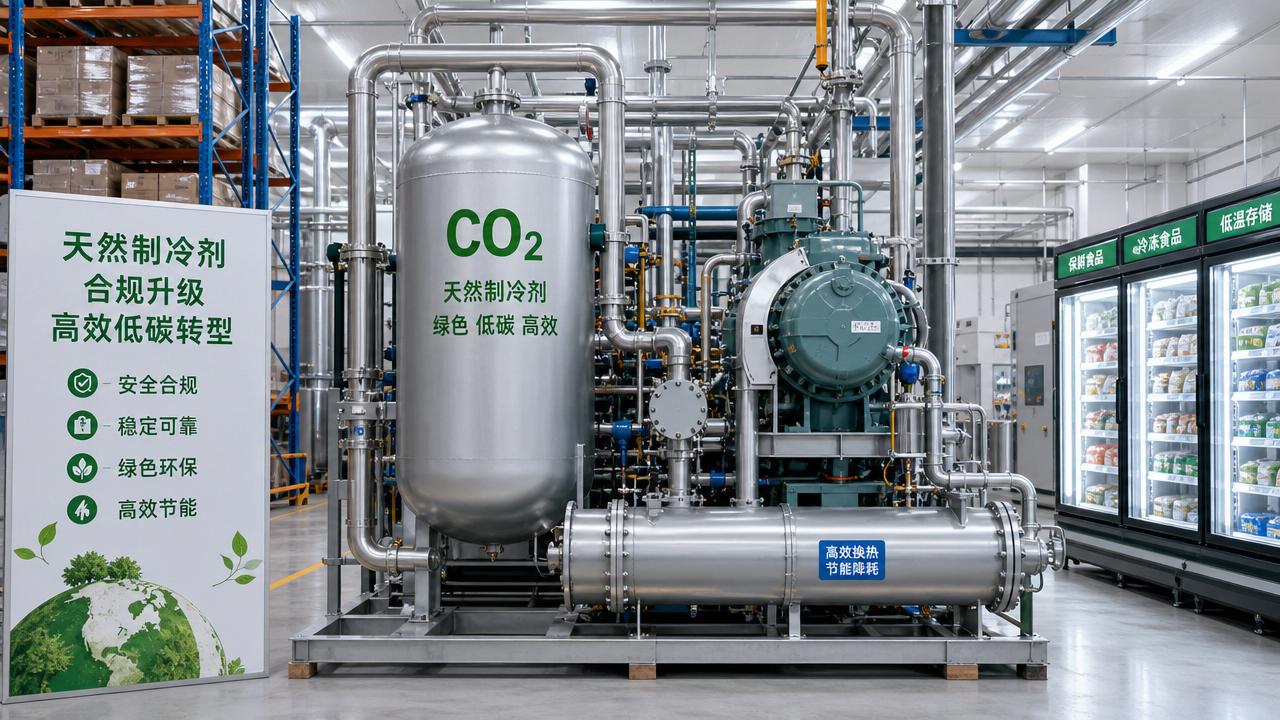
The market is moving toward lower-GWP and natural refrigerants, including CO2 systems in cold chain hubs. For some applications, that shift is already shaping equipment architecture and maintenance planning.
A practical compliance review should ask three things. Is the refrigerant acceptable in the destination market? Is trained service support available? And what is the likely rule position five years from now?
This is where CCRS-style intelligence becomes useful. Tracking F-Gas changes, eco-refrigerant pathways, and export standards helps avoid buying an asset that becomes awkward to service or difficult to place internationally.
The most common mistake is choosing a refrigerant only because it lowers initial price. The better question is whether it protects operational continuity and regulatory flexibility over the system life.
Common compliance checks before approval
- Local phase-down schedules and reporting duties
- Leak detection and safety code requirements
- Availability of compliant replacement refrigerant
- Impact on insurance, facility design, and ventilation
- Cross-border acceptance for exported equipment
Where do buyers misjudge risk most often?
The biggest errors are usually not technical failures. They are decision shortcuts that look reasonable during tendering and become expensive after installation.
One common issue is oversizing. It feels safe, yet oversized industrial refrigeration systems can short-cycle, waste energy, and struggle to maintain stable control under partial load.
Another problem is treating all downtime as equal. In frozen food, product loss may be manageable. In biomedicine or deep-cryogenic storage, downtime can carry much higher consequences.
Service access is also underestimated. A technically advanced system still becomes risky if spare parts, trained technicians, or remote diagnostics are unavailable in the operating region.
It is also worth checking how the system will age. Fouling, defrost drift, sensor inaccuracies, and refrigerant leakage slowly erode efficiency. Without monitoring, industrial refrigeration systems may meet specification only on paper.
A stronger buying process usually includes acceptance criteria for energy performance, alarm history, commissioning data, and service response expectations.
What does a sound final decision look like?
A sound decision is rarely the cheapest quote or the most advanced specification. It is the option that balances thermal performance, compliance resilience, operating cost, and maintainability.
For industrial refrigeration systems, that usually means narrowing the choice with a few disciplined questions. Does the design fit the real load profile? Is the refrigerant future-ready? Can the controls prove efficiency in operation?
Then review the softer factors that still affect cost. Commissioning quality, documentation depth, parts availability, and integration with site monitoring often separate smooth projects from expensive ones.
If the application spans cold storage, process cooling, large-scale ice production, or ultra-low temperature protection, align the evaluation method with that operating reality. A generic scorecard is usually too shallow.
The next practical step is to build a short comparison sheet using lifecycle cost, seasonal efficiency, refrigerant pathway, redundancy, and service response as weighted criteria.
That approach makes industrial refrigeration systems easier to judge on business value, not just on purchase price. It also creates a clearer basis for internal approval, vendor discussion, and long-term operating confidence.
Recommended News
 Eco-Refrigerant & ComplianceF-Gas Regulations Are Changing Equipment Choices Faster Than ExpectedAnalyst :Dr. Henrik Weber
 Eco-Refrigerant & ComplianceEco-Friendly Refrigeration: What Looks Green but Performs Poorly?Analyst :Dr. Henrik Weber
 Eco-Refrigerant & ComplianceNatural Refrigerants: Are Compliance Benefits Worth the Transition Cost?Analyst :Dr. Henrik Weber
 Eco-Refrigerant & ComplianceWhat drives low carbon refrigeration adoption in 2026?Analyst :Dr. Henrik Weber
 Eco-Refrigerant & ComplianceEco-friendly cooling is changing compliance planning fastAnalyst :Dr. Henrik Weber
 Eco-Refrigerant & ComplianceLow carbon cooling trends that could reshape investmentsAnalyst :Dr. Henrik Weber
 Eco-Refrigerant & ComplianceHow F-Gas regulations are changing refrigerant decisionsAnalyst :Dr. Henrik Weber
 Eco-Refrigerant & ComplianceIs eco-friendly refrigeration worth the higher upfront costAnalyst :Dr. Henrik Weber
 Eco-Refrigerant & ComplianceWhy low carbon cooling is becoming a compliance priorityAnalyst :Dr. Henrik Weber
 Eco-Refrigerant & ComplianceLow carbon refrigeration options that cut long-term costsAnalyst :Dr. Henrik Weber
 Eco-Refrigerant & ComplianceWhat buyers miss when choosing eco-friendly refrigerationAnalyst :Dr. Henrik Weber
 Eco-Refrigerant & ComplianceWhy low carbon refrigeration is becoming a board issueAnalyst :Dr. Henrik Weber
 Eco-Refrigerant & ComplianceWhat F-Gas regulations mean for equipment choices in 2026Analyst :Dr. Henrik Weber
![]() Eco-Refrigerant & ComplianceIndonesia Launches Green Refrigeration Channel for R290 Cold CabinetsAnalyst :Dr. Henrik Weber
Eco-Refrigerant & ComplianceIndonesia Launches Green Refrigeration Channel for R290 Cold CabinetsAnalyst :Dr. Henrik Weber Eco-Refrigerant & ComplianceWhy low carbon cooling is becoming a safer long betAnalyst :Dr. Henrik Weber
 Eco-Refrigerant & ComplianceWhat makes eco-friendly cooling cheaper over time?Analyst :Dr. Henrik Weber
 Eco-Refrigerant & ComplianceF-Gas regulations are changing how cooling gets approvedAnalyst :Dr. Henrik Weber
 Eco-Refrigerant & ComplianceHow eco-friendly refrigeration cuts compliance riskAnalyst :Dr. Henrik Weber
 Eco-Refrigerant & ComplianceHow low carbon cooling cuts compliance risk in 2026Analyst :Dr. Henrik Weber
 Eco-Refrigerant & ComplianceLow Carbon Refrigeration: Compare Refrigerants, Energy Use, and ComplianceAnalyst :Dr. Henrik Weber
 Eco-Refrigerant & ComplianceEco-Friendly Cooling Options: Refrigerants, Efficiency, and Compliance ChecksAnalyst :Dr. Henrik Weber
![]() Eco-Refrigerant & ComplianceWhat Are Natural Refrigerants? Types, GWP Limits, and Where They Fit BestAnalyst :Dr. Henrik Weber
Eco-Refrigerant & ComplianceWhat Are Natural Refrigerants? Types, GWP Limits, and Where They Fit BestAnalyst :Dr. Henrik Weber Eco-Refrigerant & ComplianceEco-Friendly Cooling vs Conventional Systems: What Buyers Should Compare FirstAnalyst :Dr. Henrik Weber
 Eco-Refrigerant & ComplianceEco-Friendly Refrigeration vs Conventional Systems: Refrigerants, Energy Use, and ComplianceAnalyst :Dr. Henrik Weber
 Eco-Refrigerant & ComplianceLow Carbon Refrigeration: Key Standards, Refrigerant Options, and ROI FactorsAnalyst :Dr. Henrik Weber
 Eco-Refrigerant & ComplianceTemperature Control Standards for Food Storage: Critical Limits, Logging, and Audit ChecksAnalyst :Dr. Henrik Weber
 Eco-Refrigerant & ComplianceLow Carbon Cooling Options Explained: Refrigerants, Compliance, and System Trade-OffsAnalyst :Dr. Henrik Weber
 Eco-Refrigerant & ComplianceDigital Refrigeration vs Conventional Controls: What Improves Monitoring and Compliance?Analyst :Dr. Henrik Weber
 Eco-Refrigerant & ComplianceLow Carbon Cooling Options for Commercial Refrigeration: CO2, Ammonia, and Hybrid SystemsAnalyst :Dr. Henrik Weber
 Eco-Refrigerant & ComplianceLow Carbon Cooling Options Compared: CO2, Ammonia, and HFO Systems for ComplianceAnalyst :Dr. Henrik Weber
 Eco-Refrigerant & ComplianceIndustrial Refrigeration Systems Buying Guide: Lifecycle Cost, Efficiency, and ComplianceAnalyst :Dr. Henrik Weber
 Eco-Refrigerant & ComplianceEco-Friendly Cooling Options: Refrigerants, Energy Use, and Compliance Factors ComparedAnalyst :Dr. Henrik Weber
 Eco-Refrigerant & ComplianceNatural Refrigerants vs HFCs: How to Compare Compliance, Safety, and System DesignAnalyst :Dr. Henrik Weber
 Eco-Refrigerant & ComplianceHow to Read Specification-Oriented Product Guides for Refrigeration EquipmentAnalyst :Dr. Henrik Weber
 Eco-Refrigerant & ComplianceLow Carbon Refrigeration Options for Supermarkets: CAPEX, Energy Use, and Compliance ComparedAnalyst :Dr. Henrik Weber
 Eco-Refrigerant & ComplianceRACC 2026 to Host PFAS Compliance Briefing in HangzhouAnalyst :Dr. Henrik Weber
 Eco-Refrigerant & ComplianceEPA Rule Challenge Raises HFC Supply Chain ConcernsAnalyst :Dr. Henrik Weber
 Eco-Refrigerant & ComplianceLow Carbon Refrigeration Systems vs Conventional Setups: Which Delivers Lower Lifecycle Cost?Analyst :Dr. Henrik Weber
 Eco-Refrigerant & ComplianceLow GWP Refrigeration Explained: Refrigerants, Regulations, and System Trade-OffsAnalyst :Dr. Henrik Weber
 Eco-Refrigerant & ComplianceLow Carbon Refrigeration Systems Retrofit: When to Upgrade and Which Changes Matter MostAnalyst :Dr. Henrik Weber