Industry News
Curation by industry experts
Hot Articles
Popular Tags
CE Marking for Refrigeration Retrofits: When Is Reassessment Required?
A refrigerant conversion, compressor replacement, or control-system upgrade can improve efficiency and extend equipment life. Each change also raises a critical question: is a new CE conformity assessment required?
The answer depends on what was changed, the resulting hazards, and whether the modified equipment is treated as a new product under applicable EU legislation.
For technical assessors comparing refrigeration retrofit solutions CE marking is therefore a case-by-case question, not a simple consequence of replacing a component.
Start by separating three decisions: whether the existing equipment remains safe to use, whether modified parts require assessment, and whether the entire system requires new conformity assessment.
When does a refrigeration retrofit require a new CE assessment?
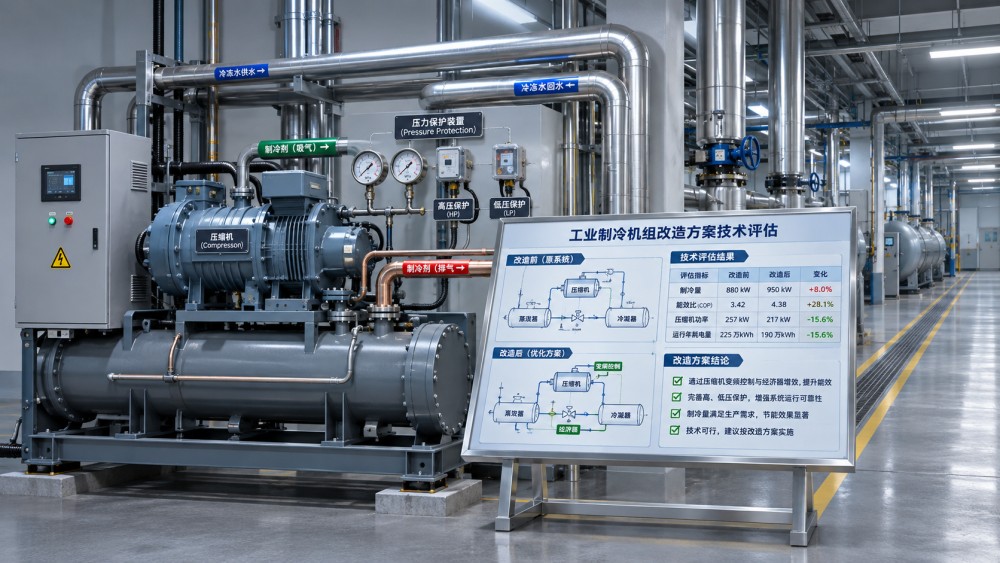
A full new assessment may be required when a modification creates a product considered new under the legislation applicable to that product. The assessment must address the relevant requirements.
Changing a part does not automatically make the entire installation a new product. Equally, retaining the original cabinet, compressor frame, or CE plate does not settle the question.
Assessors should establish the original intended use, compare the equipment before and after modification, and identify new hazards or increased risks introduced by the retrofit.
For machinery, EU guidance considers whether a modification substantially changes performance, purpose, or type, and whether the risk profile requires significant protective measures or design changes.
There is no universal percentage increase in capacity, refrigerant charge, or power that automatically determines the outcome. The technical consequences and applicable legal definitions matter.
Even where a complete reassessment is unnecessary, the operator must address workplace safety, pressure-system integrity, refrigerant handling, and any requirements applicable to replacement components.
How should assessors screen a proposed retrofit?
A useful first screen compares the original design envelope with the proposed configuration. Collect the following evidence before approving the scope or ordering major components.
- Original manufacturer documentation, intended use, declarations, equipment ratings, and known operating restrictions.
- Current configuration and modification history, including changes made since the original installation.
- Proposed refrigerant, charge, pressure limits, operating temperatures, and compressor or heat-exchanger capacity.
- Electrical schematics, control logic, safety functions, alarm settings, and protective-device specifications.
- Installation details, occupied spaces, ventilation, ignition sources, and access for operation and maintenance.
Then ask whether the proposed change remains within verified limits and whether existing protective measures remain effective. Record assumptions that require testing or manufacturer confirmation.
If the retrofit introduces a new hazard, increases an existing risk, changes intended use, or requires new safety measures, escalate it for a documented assessment.
Escalation does not itself mean the whole system needs a new CE mark. It means the team must determine the legal and technical consequences before commissioning.
Which refrigerant conversions raise the strongest reassessment questions?
A conversion between refrigerants can affect pressure, temperature, materials compatibility, lubricant return, leak detection, and emergency response. The refrigerant name alone does not determine the outcome.
For example, replacing a refrigerant with one of comparable safety characteristics may still require validation of pressure settings, component compatibility, capacity, and the original manufacturer’s limits.
If the conversion stays within documented design parameters and does not introduce significant new risks, a whole-product reassessment may not be required. Evidence remains essential.
Conversion to a flammable refrigerant presents a different risk profile. Assess charge, leak scenarios, ventilation, ignition sources, electrical equipment, and protection of people in affected spaces.
Applicable explosion-protection requirements must be considered where an explosive atmosphere may arise. Relevant duties can concern equipment, the workplace, or both, depending on the circumstances.
Converting an existing system to CO₂ requires particular attention to design pressure, standstill pressure, relief arrangements, and pressure-temperature limits across every affected component and assembly.
If vessels, piping, valves, or protective devices cannot operate safely under the new conditions, replacement or redesign is necessary. That may trigger additional pressure-equipment conformity obligations.
Refrigerant availability and permitted uses must also be checked against current EU F-gas rules and national implementation. CE marking does not establish refrigerant compliance.
Do compressor, electrical, and control upgrades change the answer?
A like-for-like compressor replacement generally raises fewer questions when capacity, pressures, electrical characteristics, protective settings, and intended use remain within the documented original design.
Nevertheless, verify the replacement against actual operating conditions. A nominally equivalent compressor can differ in starting current, discharge temperature, lubrication requirements, or permitted refrigerants.
A larger compressor may increase pressure, flow, heat rejection, or electrical loading. Assess the entire circuit, including condensers, receivers, piping, relief devices, and protective controls.
Variable-speed drives can reduce energy consumption, but they can also alter compressor operating ranges and interfere with electrical protection. Confirm minimum speeds and safe shutdown behavior.
A control upgrade deserves particular scrutiny when it changes a safety function. Examples include high-pressure cut-out, gas detection, emergency ventilation, or a protective interlock.
Check sensor placement, setpoints, response times, failure modes, access permissions, and restart logic. A software update can alter risk even when no mechanical component changes.
Maintain independence between operating controls and protective functions where the design requires it. Demonstrate that failures, communications loss, or incorrect settings cannot defeat necessary protection.
Replacing a controller with an equivalent device may be manageable within the existing design. Redesigning the safety architecture or intended operation warrants a more extensive review.
Which EU rules should be checked?
First define the product and its boundaries: a packaged chiller, a compressor unit, a pressure assembly, or a site installation may involve different legal questions.
The Machinery Directive 2006/42/EC applies to relevant machinery until 19 January 2027. Regulation (EU) 2023/1230 generally applies from 20 January 2027, subject to its transitional provisions.
The Machinery Regulation expressly addresses substantial modifications, including physical or digital changes made after placing on the market or putting into service that meet its defined conditions.
Those conditions concern changes not foreseen by the manufacturer that affect machinery safety by creating a new hazard or increasing risk, requiring specified protective measures.
Where the regulation applies, the person making a substantial modification is treated as a manufacturer for the relevant obligations. Assess the actual modification against the regulation’s definition.
The Pressure Equipment Directive 2014/68/EU may apply to pressure equipment or assemblies within its scope. Evaluate newly supplied items and affected assemblies against its provisions.
Pressure testing or replacing a vessel does not automatically establish that an entire existing installation is a new PED assembly. Determine the relevant equipment boundaries and obligations.
Depending on the equipment, the Low Voltage Directive, EMC Directive, ATEX legislation, and other product rules may also apply. Check scope and exclusions individually.
Workplace obligations remain relevant throughout the equipment’s life, regardless of whether new product legislation requires a fresh CE marking. National inspection rules can add specific requirements.
Use current official EU legislation and guidance, together with competent national advice where needed. Harmonised standards can support assessment when relevant, but they do not replace legislation.
Who is responsible, and when is a notified body involved?
The original manufacturer remains relevant for its original product, but its declaration cannot automatically cover changes it did not design, approve, or assess.
A retrofit contractor, integrator, owner, or another party may acquire manufacturer obligations if that party creates a product treated as new under the applicable legislation.
Responsibility follows the actual activity and legal framework, not simply the contract title. Agree roles before work starts, including who prepares evidence and signs any declaration.
A notified body is not automatically required for every retrofit or every new CE assessment. Its involvement depends on the applicable legislation and conformity assessment procedure.
For pressure equipment, categorisation and the chosen conformity assessment module can affect whether notified-body involvement is required. Make that determination before finalising design and procurement.
If a notified body is involved, define the scope clearly. Its work does not relieve the responsible manufacturer of the applicable conformity and documentation obligations.
What evidence should the assessment file contain?
Create a traceable record that connects each proposed change to its hazards, protective measures, verification results, and legal conclusion. The following sequence supports a defensible decision.
- Define the equipment boundary and identify the party responsible for the retrofit and subsequent operation.
- Document the original and modified configurations, including drawings, ratings, refrigerant data, and safety functions.
- Identify applicable product legislation, workplace duties, and any national pressure-system requirements.
- Assess foreseeable hazards and determine whether existing safeguards remain adequate after modification.
- Verify components, calculations, protective settings, software behavior, and installation conditions against the revised design.
- Decide whether the change creates a product treated as new, documenting the reasons and applicable assessment route.
- Complete required testing, instructions, declarations, marking, and handover records before the relevant legal deadline.
Verification may include pressure integrity checks, leak testing, electrical tests, functional trips, alarm responses, ventilation performance, and simulated sensor or communications failures where appropriate.
If a new conformity assessment is required, prepare the technical documentation and EU declaration of conformity required by the applicable legislation, and affix CE marking where required.
If it is not required, retain the assessment rationale and safety records. Update operating instructions, maintenance procedures, labels, and emergency information to reflect the actual configuration.
Do not issue a new declaration merely to make the file look complete. A declaration must identify the responsible manufacturer and the product and legislation it covers.
How should a technical assessor make the final decision?
Consider a cold-store system receiving a compatible compressor replacement within verified original limits. If risks and safety functions remain controlled, a whole-system reassessment may be unnecessary.
Now consider conversion to a flammable refrigerant that requires new detection, ventilation, and ignition controls. The new hazards justify a detailed legal and technical assessment.
In the second case, the result still depends on the equipment boundary, the actual changes, and the applicable rules. The presence of new controls alone is not conclusive.
The practical decision is to approve a retrofit only when its design limits, safety measures, legal responsibilities, and verification evidence are clear to everyone involved.
For refrigeration retrofit solutions CE compliance begins with that documented comparison. A well-supported assessment identifies when existing safeguards suffice and when a new conformity route is necessary.
Recommended News
 Eco-Refrigerant & ComplianceF-Gas Regulations Are Changing Equipment Choices Faster Than ExpectedAnalyst :Dr. Henrik Weber
 Eco-Refrigerant & ComplianceEco-Friendly Refrigeration: What Looks Green but Performs Poorly?Analyst :Dr. Henrik Weber
 Eco-Refrigerant & ComplianceNatural Refrigerants: Are Compliance Benefits Worth the Transition Cost?Analyst :Dr. Henrik Weber
 Eco-Refrigerant & ComplianceWhat drives low carbon refrigeration adoption in 2026?Analyst :Dr. Henrik Weber
 Eco-Refrigerant & ComplianceEco-friendly cooling is changing compliance planning fastAnalyst :Dr. Henrik Weber
 Eco-Refrigerant & ComplianceLow carbon cooling trends that could reshape investmentsAnalyst :Dr. Henrik Weber
 Eco-Refrigerant & ComplianceHow F-Gas regulations are changing refrigerant decisionsAnalyst :Dr. Henrik Weber
 Eco-Refrigerant & ComplianceIs eco-friendly refrigeration worth the higher upfront costAnalyst :Dr. Henrik Weber
 Eco-Refrigerant & ComplianceWhy low carbon cooling is becoming a compliance priorityAnalyst :Dr. Henrik Weber
 Eco-Refrigerant & ComplianceLow carbon refrigeration options that cut long-term costsAnalyst :Dr. Henrik Weber
 Eco-Refrigerant & ComplianceWhat buyers miss when choosing eco-friendly refrigerationAnalyst :Dr. Henrik Weber
 Eco-Refrigerant & ComplianceWhy low carbon refrigeration is becoming a board issueAnalyst :Dr. Henrik Weber
 Eco-Refrigerant & ComplianceWhat F-Gas regulations mean for equipment choices in 2026Analyst :Dr. Henrik Weber
![]() Eco-Refrigerant & ComplianceIndonesia Launches Green Refrigeration Channel for R290 Cold CabinetsAnalyst :Dr. Henrik Weber
 Eco-Refrigerant & ComplianceWhy low carbon cooling is becoming a safer long betAnalyst :Dr. Henrik Weber
 Eco-Refrigerant & ComplianceWhat makes eco-friendly cooling cheaper over time?Analyst :Dr. Henrik Weber
 Eco-Refrigerant & ComplianceF-Gas regulations are changing how cooling gets approvedAnalyst :Dr. Henrik Weber
 Eco-Refrigerant & ComplianceHow eco-friendly refrigeration cuts compliance riskAnalyst :Dr. Henrik Weber
 Eco-Refrigerant & ComplianceHow low carbon cooling cuts compliance risk in 2026Analyst :Dr. Henrik Weber
 Eco-Refrigerant & ComplianceLow Carbon Refrigeration: Compare Refrigerants, Energy Use, and ComplianceAnalyst :Dr. Henrik Weber
 Eco-Refrigerant & ComplianceEco-Friendly Cooling Options: Refrigerants, Efficiency, and Compliance ChecksAnalyst :Dr. Henrik Weber
![]() Eco-Refrigerant & ComplianceWhat Are Natural Refrigerants? Types, GWP Limits, and Where They Fit BestAnalyst :Dr. Henrik Weber
 Eco-Refrigerant & ComplianceEco-Friendly Cooling vs Conventional Systems: What Buyers Should Compare FirstAnalyst :Dr. Henrik Weber
 Eco-Refrigerant & ComplianceEco-Friendly Refrigeration vs Conventional Systems: Refrigerants, Energy Use, and ComplianceAnalyst :Dr. Henrik Weber
 Eco-Refrigerant & ComplianceLow Carbon Refrigeration: Key Standards, Refrigerant Options, and ROI FactorsAnalyst :Dr. Henrik Weber
 Eco-Refrigerant & ComplianceTemperature Control Standards for Food Storage: Critical Limits, Logging, and Audit ChecksAnalyst :Dr. Henrik Weber
 Eco-Refrigerant & ComplianceLow Carbon Cooling Options Explained: Refrigerants, Compliance, and System Trade-OffsAnalyst :Dr. Henrik Weber
 Eco-Refrigerant & ComplianceDigital Refrigeration vs Conventional Controls: What Improves Monitoring and Compliance?Analyst :Dr. Henrik Weber
 Eco-Refrigerant & ComplianceLow Carbon Cooling Options for Commercial Refrigeration: CO2, Ammonia, and Hybrid SystemsAnalyst :Dr. Henrik Weber
 Eco-Refrigerant & ComplianceLow Carbon Cooling Options Compared: CO2, Ammonia, and HFO Systems for ComplianceAnalyst :Dr. Henrik Weber
 Eco-Refrigerant & ComplianceIndustrial Refrigeration Systems Buying Guide: Lifecycle Cost, Efficiency, and ComplianceAnalyst :Dr. Henrik Weber
 Eco-Refrigerant & ComplianceEco-Friendly Cooling Options: Refrigerants, Energy Use, and Compliance Factors ComparedAnalyst :Dr. Henrik Weber
 Eco-Refrigerant & ComplianceNatural Refrigerants vs HFCs: How to Compare Compliance, Safety, and System DesignAnalyst :Dr. Henrik Weber
 Eco-Refrigerant & ComplianceHow to Read Specification-Oriented Product Guides for Refrigeration EquipmentAnalyst :Dr. Henrik Weber
 Eco-Refrigerant & ComplianceLow Carbon Refrigeration Options for Supermarkets: CAPEX, Energy Use, and Compliance ComparedAnalyst :Dr. Henrik Weber
 Eco-Refrigerant & ComplianceRACC 2026 to Host PFAS Compliance Briefing in HangzhouAnalyst :Dr. Henrik Weber
 Eco-Refrigerant & ComplianceEPA Rule Challenge Raises HFC Supply Chain ConcernsAnalyst :Dr. Henrik Weber
 Eco-Refrigerant & ComplianceLow Carbon Refrigeration Systems vs Conventional Setups: Which Delivers Lower Lifecycle Cost?Analyst :Dr. Henrik Weber
 Eco-Refrigerant & ComplianceLow GWP Refrigeration Explained: Refrigerants, Regulations, and System Trade-OffsAnalyst :Dr. Henrik Weber
 Eco-Refrigerant & ComplianceLow Carbon Refrigeration Systems Retrofit: When to Upgrade and Which Changes Matter MostAnalyst :Dr. Henrik Weber