Industry News
Curation by industry experts
Hot Articles
Popular Tags
Italian Police Seize 42.8 Tonnes of Illegal HFC Refrigerants
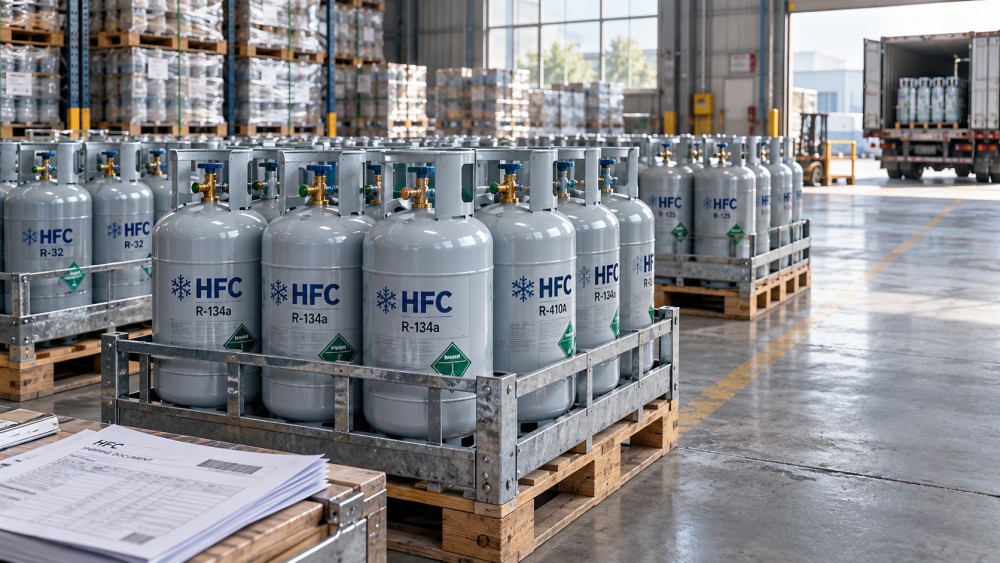
Italian law enforcement authorities arrested seven suspects and seized 42.8 tonnes of illegal HFC refrigerants during an operation in Castellaneta, near Taranto. The date of the operation was not specified in the supplied information. The action highlights enforcement against illegal refrigerant trade under the F-Gas regulatory framework. From an industry perspective, refrigerant traders, distributors and buyers may need to give closer attention to supply legitimacy and traceability when assessing procurement and delivery risks.
Seven Arrests in the Castellaneta Operation
The targeted operation took place in Castellaneta, near Taranto, where Italian authorities seized 42.8 tonnes of illegal HFC refrigerants and arrested seven suspects. The action targeted illegal trading and smuggling networks involving refrigerants.
The supplied account presents the operation as evidence of strengthening European oversight of refrigerant compliance and supply chain security within the F-Gas regulatory framework.
Supply Legitimacy Comes into Focus Across the Refrigerant Chain
Traders and distributors may face closer scrutiny of sourcing
Analysis suggests that businesses trading or distributing HFC refrigerants could face greater commercial exposure when the legitimacy of their supplies is uncertain. The relevant points of attention are supplier selection, purchasing records and the ability to connect goods received with the documents supporting their origin and movement. The seizure provides a reason to review those controls, although the supplied information does not establish any new documentary requirement.
Buyers may need to reassess delivery assumptions
From a procurement perspective, enforcement against illegal supplies could create delivery uncertainty for buyers whose suppliers cannot demonstrate a legitimate sourcing route. Refrigerant purchasers and equipment manufacturers using these materials may therefore find it useful to examine how supplier documentation supports purchasing commitments and production schedules. This is a potential exposure; the supplied account does not report disruption to any identified buyer or manufacturer.
Service and logistics providers may need clearer traceability
Analysis suggests that maintenance providers handling refrigerants and businesses arranging their storage or transport may benefit from clearer links between suppliers, consignments and transaction records. Such links could help them investigate questionable deliveries or respond to compliance enquiries. The input does not identify obligations newly imposed on these businesses or confirm that any particular logistics or service company was involved.
Practical Checks Before the Next Purchase or Dispatch
The following are suggested review priorities arising from the enforcement signal. They should not be read as newly announced legal obligations.
Check whether supplier records support the transaction
Businesses could review supplier credentials and the consistency of purchasing, delivery and product records. Where information is incomplete or contradictory, seeking clarification before committing to a transaction may help reduce exposure to uncertain sourcing. Any assessment of legal sufficiency would need to refer to the applicable requirements, which are not detailed in the supplied account.
Connect procurement decisions with delivery planning
Buyers could assess whether unresolved sourcing questions might affect planned deliveries and consider how they would respond if a shipment became unavailable. Where alternative suppliers are considered, their compliance position and the suitability of the proposed refrigerant should also be checked. The reported seizure alone does not establish a wider shortage or justify assuming that compliant supplies will be interrupted.
Verify the enforcement basis before changing procedures
Compliance teams could seek official confirmation of the conduct under investigation and any associated guidance before revising internal procedures. The supplied information does not explain the specific grounds on which the refrigerants were deemed illegal, the documents examined or the detailed enforcement approach. It therefore does not support conclusions about particular certification failures or newly introduced approval conditions.
An Enforcement Signal Within the F-Gas Framework
At this stage, it is more appropriate to understand the operation as an enforcement signal within the existing F-Gas framework. The supplied information does not announce a regulatory amendment, a new certification scheme or a revised implementation deadline.
Editorial analysis suggests that the practical significance lies in the attention being given to illegal supply channels and supply chain security. Further official information could help businesses determine whether the case points to particular transaction risks or enforcement priorities. A single operation, however, cannot establish the frequency of future inspections, the scale of illegal trade or a market-wide effect on prices and availability.
Use the Seizure to Review Exposure Proportionately
From an industry perspective, the case supports a proportionate review of refrigerant sourcing, traceability and delivery dependencies. Businesses with unresolved questions about their suppliers may have more reason to investigate those gaps before further purchases. The current information supports attention to compliance execution, while broader conclusions about trade restrictions, certification changes or supply disruption remain unconfirmed.
Reporting Basis and Points Requiring Verification
This article is based solely on the news title, event timing information and event summary supplied by the user. The event date was not specified, and no specific official source link was provided in the input. The underlying account therefore remains subject to further verification.
Potential verification sources include official law enforcement announcements, regulatory publications and customs or trade authority information; none was supplied as a confirmed source for this article. Follow-up monitoring should focus on the stated legal basis for the seizure, any clarification of enforcement procedures, subsequent trade enforcement activity and industry feedback. Any later changes to regulatory details or certification practices would require separate confirmation before being treated as applicable requirements.
Recommended News
 Eco-Refrigerant & ComplianceF-Gas Regulations Are Changing Equipment Choices Faster Than ExpectedAnalyst :Dr. Henrik Weber
 Eco-Refrigerant & ComplianceEco-Friendly Refrigeration: What Looks Green but Performs Poorly?Analyst :Dr. Henrik Weber
 Eco-Refrigerant & ComplianceNatural Refrigerants: Are Compliance Benefits Worth the Transition Cost?Analyst :Dr. Henrik Weber
 Eco-Refrigerant & ComplianceWhat drives low carbon refrigeration adoption in 2026?Analyst :Dr. Henrik Weber
 Eco-Refrigerant & ComplianceEco-friendly cooling is changing compliance planning fastAnalyst :Dr. Henrik Weber
 Eco-Refrigerant & ComplianceLow carbon cooling trends that could reshape investmentsAnalyst :Dr. Henrik Weber
 Eco-Refrigerant & ComplianceHow F-Gas regulations are changing refrigerant decisionsAnalyst :Dr. Henrik Weber
 Eco-Refrigerant & ComplianceIs eco-friendly refrigeration worth the higher upfront costAnalyst :Dr. Henrik Weber
 Eco-Refrigerant & ComplianceWhy low carbon cooling is becoming a compliance priorityAnalyst :Dr. Henrik Weber
 Eco-Refrigerant & ComplianceLow carbon refrigeration options that cut long-term costsAnalyst :Dr. Henrik Weber
 Eco-Refrigerant & ComplianceWhat buyers miss when choosing eco-friendly refrigerationAnalyst :Dr. Henrik Weber
 Eco-Refrigerant & ComplianceWhy low carbon refrigeration is becoming a board issueAnalyst :Dr. Henrik Weber
 Eco-Refrigerant & ComplianceWhat F-Gas regulations mean for equipment choices in 2026Analyst :Dr. Henrik Weber
![]() Eco-Refrigerant & ComplianceIndonesia Launches Green Refrigeration Channel for R290 Cold CabinetsAnalyst :Dr. Henrik Weber
 Eco-Refrigerant & ComplianceWhy low carbon cooling is becoming a safer long betAnalyst :Dr. Henrik Weber
 Eco-Refrigerant & ComplianceWhat makes eco-friendly cooling cheaper over time?Analyst :Dr. Henrik Weber
 Eco-Refrigerant & ComplianceF-Gas regulations are changing how cooling gets approvedAnalyst :Dr. Henrik Weber
 Eco-Refrigerant & ComplianceHow eco-friendly refrigeration cuts compliance riskAnalyst :Dr. Henrik Weber
 Eco-Refrigerant & ComplianceHow low carbon cooling cuts compliance risk in 2026Analyst :Dr. Henrik Weber
 Eco-Refrigerant & ComplianceLow Carbon Refrigeration: Compare Refrigerants, Energy Use, and ComplianceAnalyst :Dr. Henrik Weber
 Eco-Refrigerant & ComplianceEco-Friendly Cooling Options: Refrigerants, Efficiency, and Compliance ChecksAnalyst :Dr. Henrik Weber
![]() Eco-Refrigerant & ComplianceWhat Are Natural Refrigerants? Types, GWP Limits, and Where They Fit BestAnalyst :Dr. Henrik Weber
 Eco-Refrigerant & ComplianceEco-Friendly Cooling vs Conventional Systems: What Buyers Should Compare FirstAnalyst :Dr. Henrik Weber
 Eco-Refrigerant & ComplianceEco-Friendly Refrigeration vs Conventional Systems: Refrigerants, Energy Use, and ComplianceAnalyst :Dr. Henrik Weber
 Eco-Refrigerant & ComplianceLow Carbon Refrigeration: Key Standards, Refrigerant Options, and ROI FactorsAnalyst :Dr. Henrik Weber
 Eco-Refrigerant & ComplianceTemperature Control Standards for Food Storage: Critical Limits, Logging, and Audit ChecksAnalyst :Dr. Henrik Weber
 Eco-Refrigerant & ComplianceLow Carbon Cooling Options Explained: Refrigerants, Compliance, and System Trade-OffsAnalyst :Dr. Henrik Weber
 Eco-Refrigerant & ComplianceDigital Refrigeration vs Conventional Controls: What Improves Monitoring and Compliance?Analyst :Dr. Henrik Weber
 Eco-Refrigerant & ComplianceLow Carbon Cooling Options for Commercial Refrigeration: CO2, Ammonia, and Hybrid SystemsAnalyst :Dr. Henrik Weber
 Eco-Refrigerant & ComplianceLow Carbon Cooling Options Compared: CO2, Ammonia, and HFO Systems for ComplianceAnalyst :Dr. Henrik Weber
 Eco-Refrigerant & ComplianceIndustrial Refrigeration Systems Buying Guide: Lifecycle Cost, Efficiency, and ComplianceAnalyst :Dr. Henrik Weber
 Eco-Refrigerant & ComplianceEco-Friendly Cooling Options: Refrigerants, Energy Use, and Compliance Factors ComparedAnalyst :Dr. Henrik Weber
 Eco-Refrigerant & ComplianceNatural Refrigerants vs HFCs: How to Compare Compliance, Safety, and System DesignAnalyst :Dr. Henrik Weber
 Eco-Refrigerant & ComplianceHow to Read Specification-Oriented Product Guides for Refrigeration EquipmentAnalyst :Dr. Henrik Weber
 Eco-Refrigerant & ComplianceLow Carbon Refrigeration Options for Supermarkets: CAPEX, Energy Use, and Compliance ComparedAnalyst :Dr. Henrik Weber
 Eco-Refrigerant & ComplianceRACC 2026 to Host PFAS Compliance Briefing in HangzhouAnalyst :Dr. Henrik Weber
 Eco-Refrigerant & ComplianceEPA Rule Challenge Raises HFC Supply Chain ConcernsAnalyst :Dr. Henrik Weber
 Eco-Refrigerant & ComplianceLow Carbon Refrigeration Systems vs Conventional Setups: Which Delivers Lower Lifecycle Cost?Analyst :Dr. Henrik Weber
 Eco-Refrigerant & ComplianceLow GWP Refrigeration Explained: Refrigerants, Regulations, and System Trade-OffsAnalyst :Dr. Henrik Weber
 Eco-Refrigerant & ComplianceLow Carbon Refrigeration Systems Retrofit: When to Upgrade and Which Changes Matter MostAnalyst :Dr. Henrik Weber