Industry News
Curation by industry experts
Hot Articles
Popular Tags
Refrigeration System Application Guide: Matching Systems to Cooling Loads
The right refrigeration system is the one that can meet the required temperature at the busiest credible operating condition, then continue to control it efficiently when demand falls. Equipment capacity alone cannot answer that question: a cold room receiving warm products, a factory cooling a continuous process, and a freezer protecting biological samples have different load profiles and failure consequences.
Practical application guidance for refrigeration systems starts with defining the cooling duty, the conditions under which it occurs, and what happens if cooling is interrupted. Those details allow project teams to compare equipment on the same basis, identify missing infrastructure, and avoid paying for capacity that cannot be used effectively.
Define the cooling load before comparing equipment
A cooling load is the rate at which heat must be removed to maintain or bring a product, space, or process to its required condition. Begin with the load at the point of use, then account for heat entering through the distribution system and other relevant equipment. A supplier’s nominal capacity is useful only when its rating conditions match the proposed application.
For a cold store, the load may include heat entering through walls and doors, product brought in above storage temperature, people and equipment working inside, lighting, and evaporator fans. Moisture entering through open doors also creates a load and can lead to frost on evaporators. In a process plant, the main load may come from machinery, but pumps, pipework, tanks, and heat gained from the surroundings can add to the duty.
Product cooling deserves particular attention. The calculation depends on how much product enters, its arrival temperature, its required final temperature, and the time allowed to reach it. If the product freezes during the process, the heat removed during the phase change must also be included. A room designed only to maintain already-chilled goods may struggle when asked to cool a large incoming delivery.
Ask the design team to describe loads over time, not just provide a single peak figure. Identify which loads occur together, how long the peak lasts, and the lowest expected operating load. Adding the individual maximum of every item can exaggerate the simultaneous demand; overlooking a short but critical production peak can leave the system unable to keep up.
Turn the load into a usable equipment specification
Once the load profile is understood, establish the conditions that determine the capacity the equipment can actually deliver. A comparison between quotations should include:
- Required temperature at the load: Specify the product, process fluid, cabinet air, or storage condition that must be maintained, including acceptable variation and recovery time after a disturbance.
- Heat rejection conditions: Record the outdoor design conditions for air-cooled equipment or the available water temperatures and flow for water-cooled equipment. Hotter condensing conditions can reduce available cooling capacity and increase power consumption.
- Operating pattern: State production schedules, delivery peaks, defrost periods, seasonal changes, and expected low-load operation.
- Distribution requirements: Define pipe lengths, fluid temperatures, flow rates, insulation, and the pressure needed at the equipment being served.
- Continuity requirements: Identify whether a temporary temperature rise is acceptable and how quickly service must be restored after a fault.
For a chiller, compare capacity at the specified leaving-fluid temperature and heat rejection conditions, not at a generic catalog rating. A lower required fluid temperature can change both capacity and efficiency. The design must also provide enough temperature difference for heat to move through the process heat exchanger; a target product temperature is not automatically the correct chiller setpoint.
Leave a reasoned allowance for uncertainty and future demand, but make it visible in the calculation. Excess capacity can cause frequent compressor cycling or poor control at low load if the equipment cannot reduce output sufficiently. Staged compressors, variable-speed drives, or a buffer tank may help in the right application, but each needs to be evaluated against the actual minimum load and control strategy.
Match the system configuration to the application
Industrial chillers: follow the process, not just the machine rating
A chiller for injection molding, laser equipment, or another process should be selected around the heat actually transferred to the cooling circuit. The nameplate electrical power of a machine is not necessarily its cooling load. Ask the process equipment supplier for heat rejection, required supply temperature, flow range, and allowable temperature fluctuation.
Air-cooled chillers can simplify a site where cooling water infrastructure is unavailable, provided there is sufficient space and ventilation. Water-cooled systems require a suitable water-side arrangement and ongoing attention to water quality, but can be appropriate where that infrastructure already exists or where the overall plant design supports it. Compare the complete installation, including pumps, heat rejection equipment, and maintenance, rather than only the chiller package.
For variable production, check how the chiller behaves when only one machine is running. A system sized for a full production line may need staged capacity or adequate fluid volume to maintain stable temperatures during partial operation.
Cold storage: separate holding, pull-down, and recovery duties
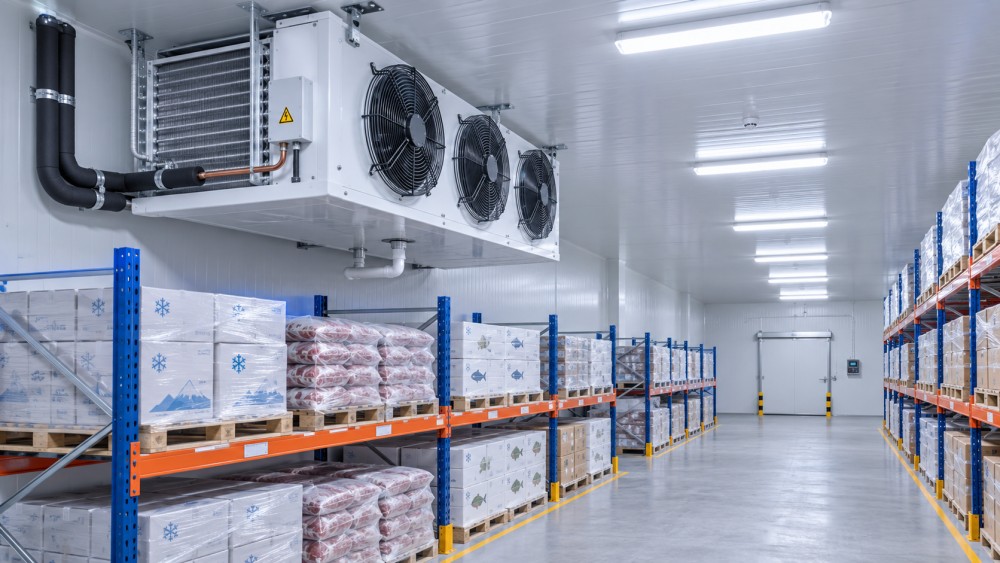
A holding room maintains product that arrives near its target temperature. A pull-down room must remove additional heat from warmer goods within a defined period. A freezing operation adds another duty and may require a different arrangement altogether. Combining these functions without defining their timing can produce misleading capacity estimates.
Evaporator placement and airflow are as important as compressor selection. Racks, packaging, and stacked pallets can obstruct circulation, creating uneven temperatures even when the plant has adequate capacity. Include room loading patterns, door locations, and access for cleaning in the design review.
Defrost also affects the available cooling time. The design should account for the heat introduced during defrost and the subsequent recovery period. Where several evaporators serve one space, a coordinated defrost sequence can help maintain more consistent conditions, subject to the room’s operating needs.
Display cabinets: consider the store as part of the system
Self-contained cabinets can suit a smaller installation or a layout that needs individual units. They reject heat into the surrounding space, so the store’s air-conditioning system and ventilation must be able to handle it. Remote systems move much of that heat rejection away from the sales floor and can serve multiple cabinets, but require refrigerant piping, plant space, and coordinated installation.
Cabinet performance depends on room conditions and use. Air movement from entrances or ventilation outlets can disrupt an open cabinet’s air curtain. Restocking with warm products, overloading shelves, or blocking return-air paths can also affect temperatures. Include the intended display layout and operating conditions in the selection, not just the cabinet dimensions.
Ultra-low-temperature freezers: design around the consequences of a failure
Ultra-low-temperature applications require equipment designed for the specified storage temperature and contents. A cascade system uses separate refrigeration stages to reach temperatures beyond the practical range of many conventional single-stage arrangements. The required setpoint, ambient conditions, door-opening frequency, and heat introduced by incoming material all affect selection.
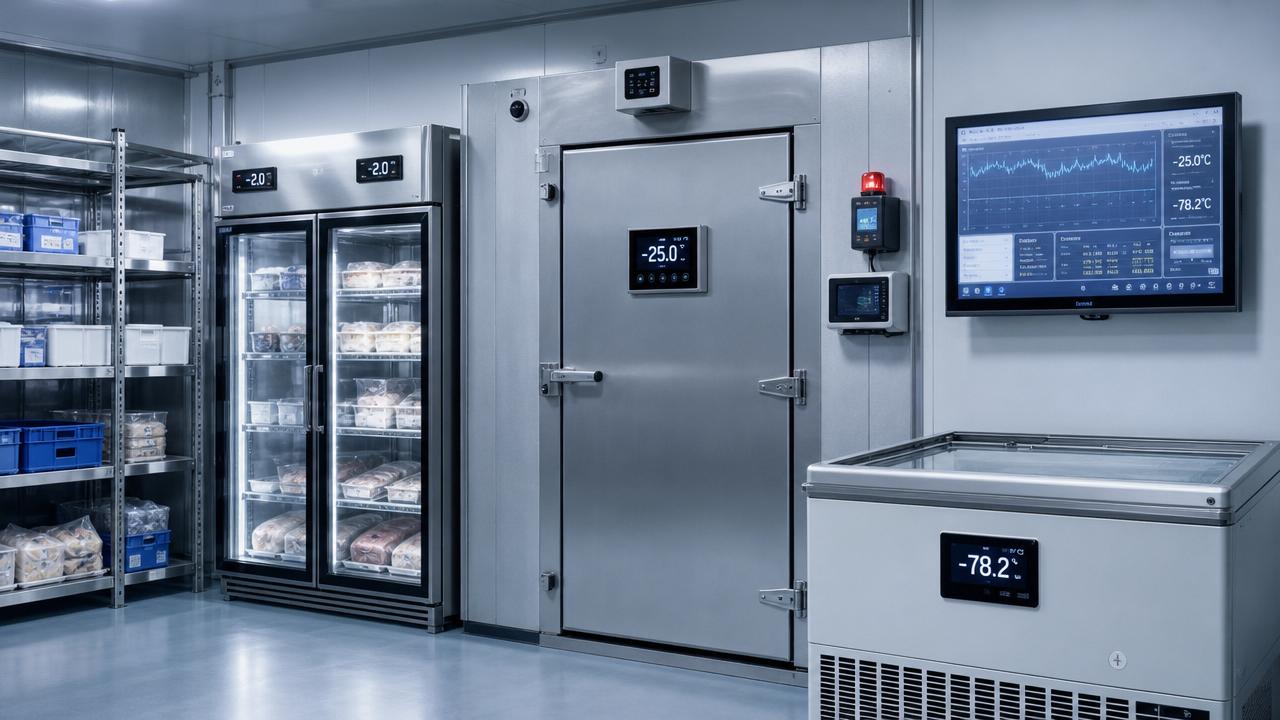
For sensitive samples, capacity is only one part of the decision. Establish alarm routing, temperature monitoring, backup power arrangements, access to spare capacity, and the procedure for transferring contents after a fault. A backup plan should reflect how long the contents can tolerate a temperature excursion and who can respond outside normal working hours.
Ice machines: production rate and usable storage are linked
Choose the ice form for its intended use. Flake ice may suit direct contact and coverage in some food-handling processes, while tube ice may suit applications requiring a different handling or storage format. For industrial cooling, the way ice is stored, conveyed, and introduced into the process matters as much as the machine’s output.
Compare production with the actual demand schedule. A machine operating over an extended period may support a short peak draw if the storage bin is sized appropriately; the same production capacity may be insufficient without storage. Water supply conditions, drainage, cleaning access, and ambient temperature also affect the complete installation.
Compare refrigerants and system layouts in context
Refrigerant selection affects equipment design, service procedures, environmental impact, and applicable safety obligations. It should be considered alongside the system layout and location rather than treated as a separate purchasing preference.
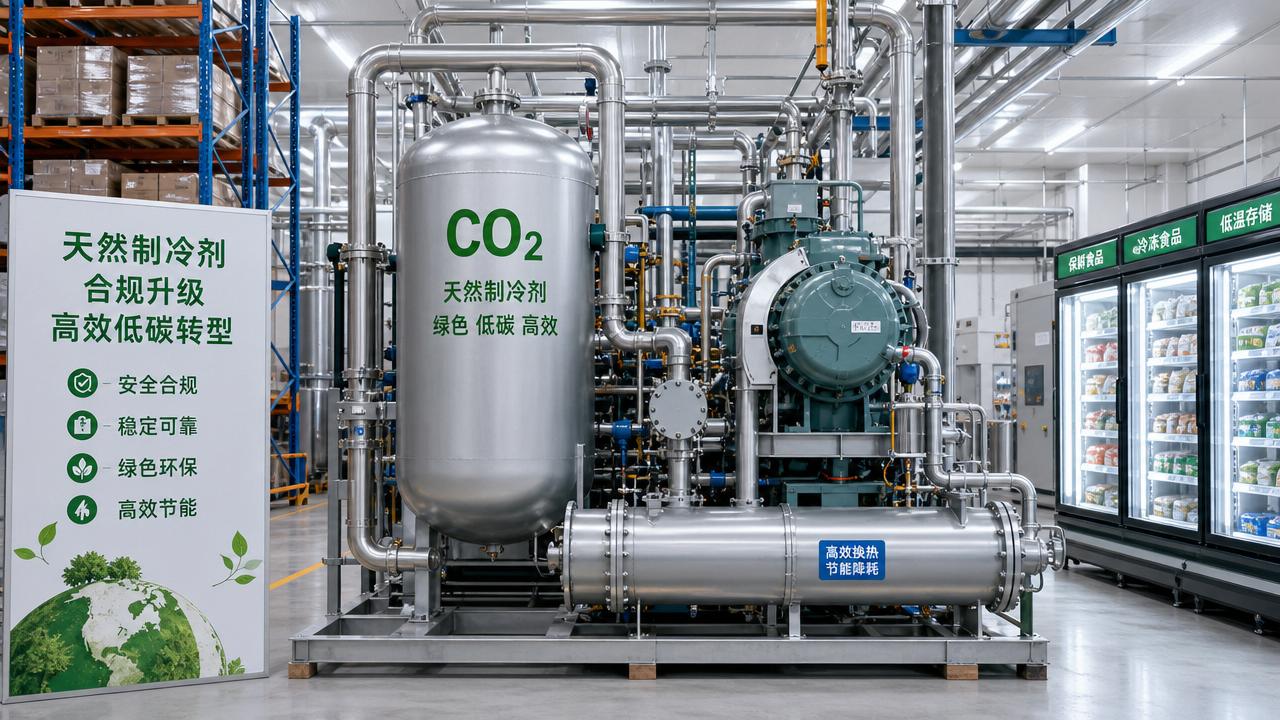
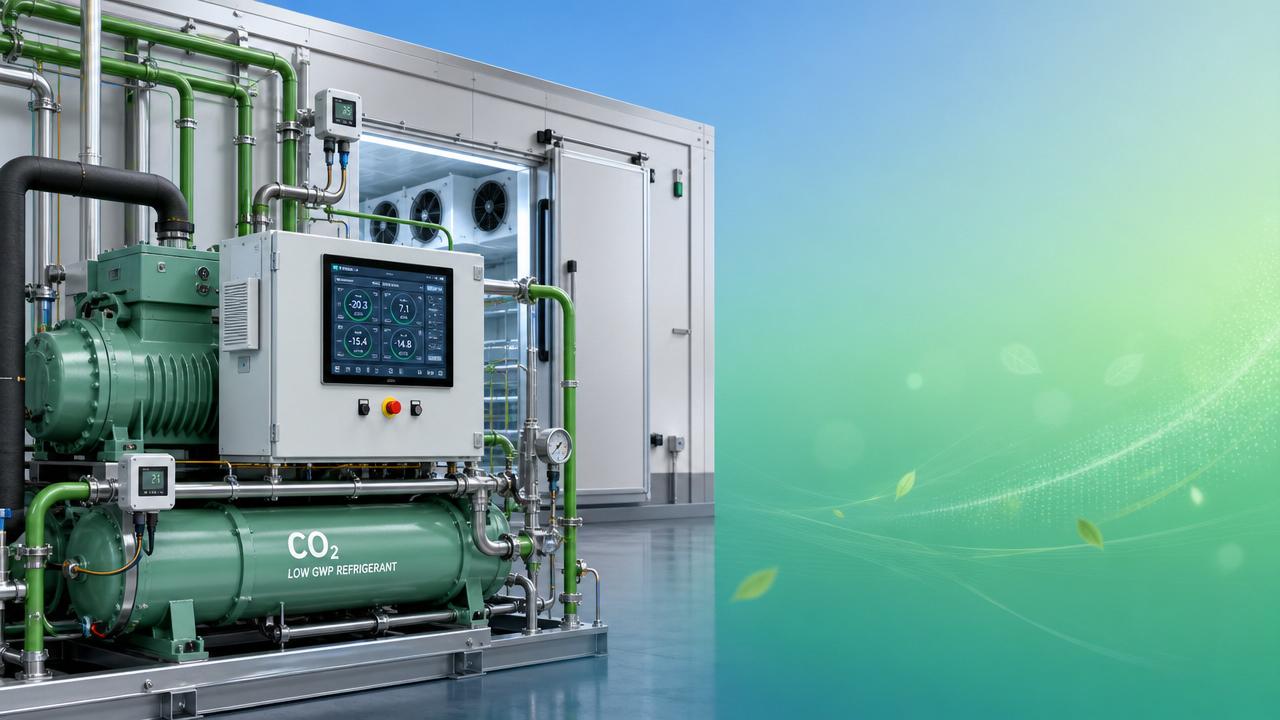
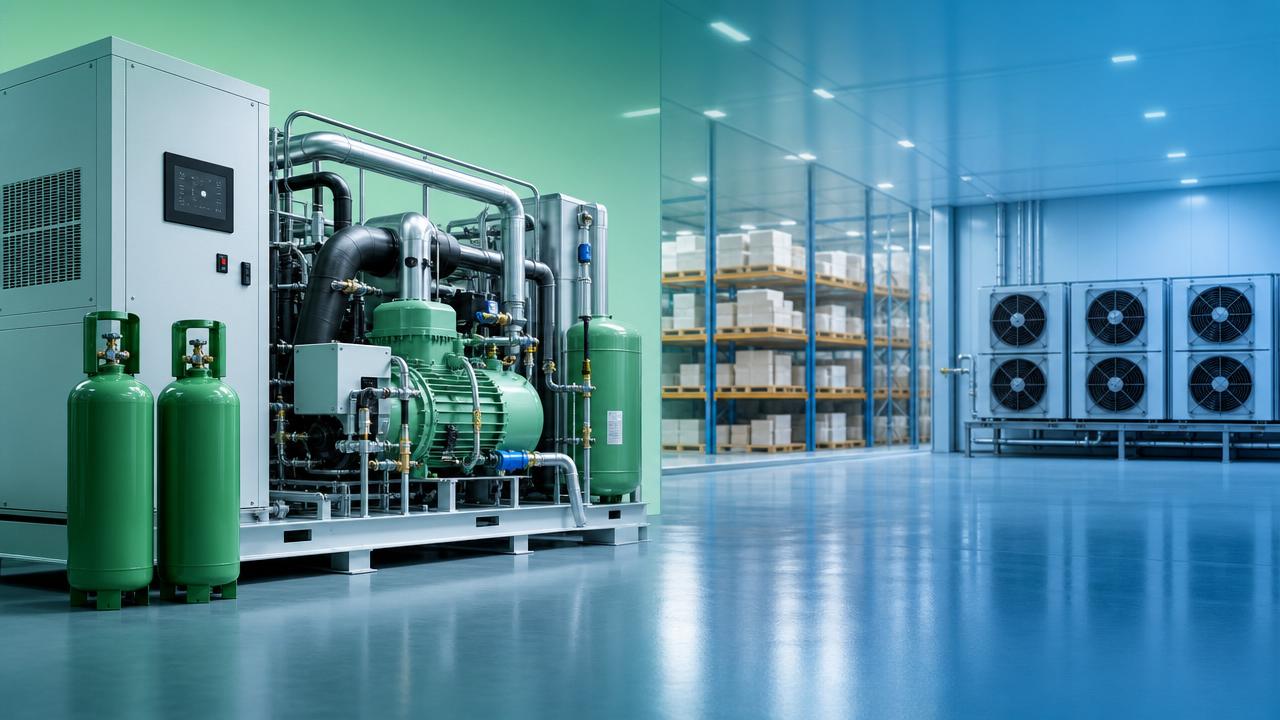
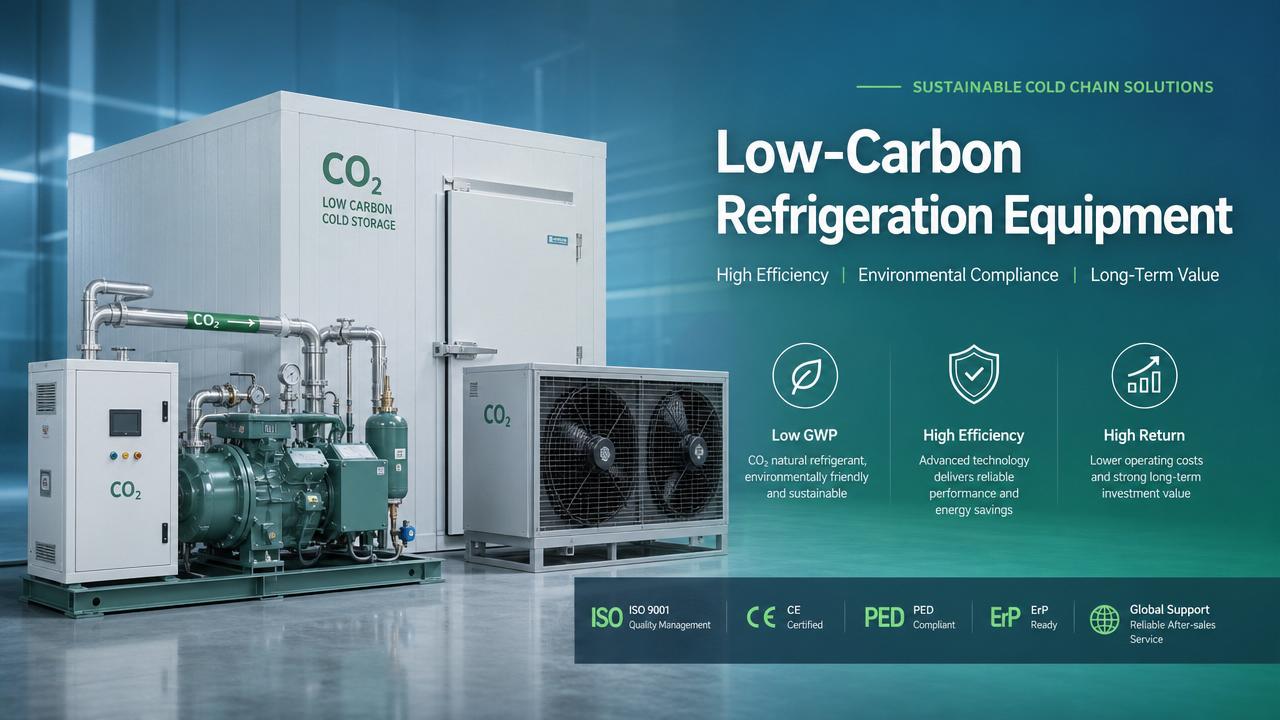
Natural refrigerants such as carbon dioxide, ammonia, and hydrocarbons can be suitable in different applications, but they have different pressure, toxicity, and flammability characteristics. A carbon dioxide system, for example, requires components and service practices designed for its operating pressures. Its performance also depends on the heat rejection conditions and system configuration. No refrigerant is the best fit for every site.
Ask bidders to explain the refrigerant choice in relation to local requirements, machinery-room arrangements, leak detection, ventilation, technician availability, and the expected service life. Also consider refrigerant availability and the practicality of maintaining the system over time. The most attractive equipment quote may become less attractive if the site needs substantial additional safety or service infrastructure.
System layout presents a similar trade-off. A central plant can consolidate equipment and maintenance, but a shared failure may affect several spaces. Distributed systems can isolate some faults and allow staged expansion, while introducing more equipment locations to inspect and maintain. The appropriate choice depends on how the facility operates and which loads can tolerate an interruption.
Evaluate lifecycle cost and reliability together
Request a consistent cost comparison covering installed equipment, electrical work, pipework, heat rejection, controls, and commissioning. Then compare expected energy use under the same load profile and weather assumptions. A full-load efficiency figure alone does not show how a plant will perform when it spends much of its time at partial load.
Maintenance costs should include access, cleaning, water treatment where applicable, routine inspections, and the availability of service support. Dirty condensers, blocked airflow, poor insulation, or incorrect control settings can undermine the performance of otherwise suitable equipment.
For critical loads, define redundancy by the service it must protect. An additional compressor may help with one equipment failure, but it does not automatically protect against a shared electrical supply failure, a control fault, or a leak in common pipework. Identify the failure scenarios that matter, the acceptable recovery time, and the backup measures that address each one.
Make commissioning part of the purchase decision
A sound design still needs proof that it works as an integrated system. Before ordering, agree on the measurements and operating conditions for acceptance: temperatures at the load, fluid flows where relevant, alarm operation, control response, and recovery after a representative disturbance. Include defrost and low-load operation where they affect the application.
Some design conditions may not occur during handover. In that case, agree on which functions can be demonstrated immediately and how remaining performance will be assessed when suitable conditions occur. Provide operators with setpoints, alarm limits, maintenance requirements, and a clear record of the installed configuration.
The most useful next step is a shared load and operating-condition schedule issued to every bidder. With the same temperatures, duty profile, site constraints, and continuity requirements in front of them, suppliers can explain their assumptions and offer proposals that can be compared on the service they deliver.
Recommended News
 Eco-Refrigerant & ComplianceF-Gas Regulations Are Changing Equipment Choices Faster Than ExpectedAnalyst :Dr. Henrik Weber
 Eco-Refrigerant & ComplianceEco-Friendly Refrigeration: What Looks Green but Performs Poorly?Analyst :Dr. Henrik Weber
 Eco-Refrigerant & ComplianceNatural Refrigerants: Are Compliance Benefits Worth the Transition Cost?Analyst :Dr. Henrik Weber
 Eco-Refrigerant & ComplianceWhat drives low carbon refrigeration adoption in 2026?Analyst :Dr. Henrik Weber
 Eco-Refrigerant & ComplianceEco-friendly cooling is changing compliance planning fastAnalyst :Dr. Henrik Weber
 Eco-Refrigerant & ComplianceLow carbon cooling trends that could reshape investmentsAnalyst :Dr. Henrik Weber
 Eco-Refrigerant & ComplianceHow F-Gas regulations are changing refrigerant decisionsAnalyst :Dr. Henrik Weber
 Eco-Refrigerant & ComplianceIs eco-friendly refrigeration worth the higher upfront costAnalyst :Dr. Henrik Weber
 Eco-Refrigerant & ComplianceWhy low carbon cooling is becoming a compliance priorityAnalyst :Dr. Henrik Weber
 Eco-Refrigerant & ComplianceLow carbon refrigeration options that cut long-term costsAnalyst :Dr. Henrik Weber
 Eco-Refrigerant & ComplianceWhat buyers miss when choosing eco-friendly refrigerationAnalyst :Dr. Henrik Weber
 Eco-Refrigerant & ComplianceWhy low carbon refrigeration is becoming a board issueAnalyst :Dr. Henrik Weber
 Eco-Refrigerant & ComplianceWhat F-Gas regulations mean for equipment choices in 2026Analyst :Dr. Henrik Weber
![]() Eco-Refrigerant & ComplianceIndonesia Launches Green Refrigeration Channel for R290 Cold CabinetsAnalyst :Dr. Henrik Weber
 Eco-Refrigerant & ComplianceWhy low carbon cooling is becoming a safer long betAnalyst :Dr. Henrik Weber
 Eco-Refrigerant & ComplianceWhat makes eco-friendly cooling cheaper over time?Analyst :Dr. Henrik Weber
 Eco-Refrigerant & ComplianceF-Gas regulations are changing how cooling gets approvedAnalyst :Dr. Henrik Weber
 Eco-Refrigerant & ComplianceHow eco-friendly refrigeration cuts compliance riskAnalyst :Dr. Henrik Weber
 Eco-Refrigerant & ComplianceHow low carbon cooling cuts compliance risk in 2026Analyst :Dr. Henrik Weber
 Eco-Refrigerant & ComplianceLow Carbon Refrigeration: Compare Refrigerants, Energy Use, and ComplianceAnalyst :Dr. Henrik Weber
 Eco-Refrigerant & ComplianceEco-Friendly Cooling Options: Refrigerants, Efficiency, and Compliance ChecksAnalyst :Dr. Henrik Weber
![]() Eco-Refrigerant & ComplianceWhat Are Natural Refrigerants? Types, GWP Limits, and Where They Fit BestAnalyst :Dr. Henrik Weber
 Eco-Refrigerant & ComplianceEco-Friendly Cooling vs Conventional Systems: What Buyers Should Compare FirstAnalyst :Dr. Henrik Weber
 Eco-Refrigerant & ComplianceEco-Friendly Refrigeration vs Conventional Systems: Refrigerants, Energy Use, and ComplianceAnalyst :Dr. Henrik Weber
 Eco-Refrigerant & ComplianceLow Carbon Refrigeration: Key Standards, Refrigerant Options, and ROI FactorsAnalyst :Dr. Henrik Weber
 Eco-Refrigerant & ComplianceTemperature Control Standards for Food Storage: Critical Limits, Logging, and Audit ChecksAnalyst :Dr. Henrik Weber
 Eco-Refrigerant & ComplianceLow Carbon Cooling Options Explained: Refrigerants, Compliance, and System Trade-OffsAnalyst :Dr. Henrik Weber
 Eco-Refrigerant & ComplianceDigital Refrigeration vs Conventional Controls: What Improves Monitoring and Compliance?Analyst :Dr. Henrik Weber
 Eco-Refrigerant & ComplianceLow Carbon Cooling Options for Commercial Refrigeration: CO2, Ammonia, and Hybrid SystemsAnalyst :Dr. Henrik Weber
 Eco-Refrigerant & ComplianceLow Carbon Cooling Options Compared: CO2, Ammonia, and HFO Systems for ComplianceAnalyst :Dr. Henrik Weber
 Eco-Refrigerant & ComplianceIndustrial Refrigeration Systems Buying Guide: Lifecycle Cost, Efficiency, and ComplianceAnalyst :Dr. Henrik Weber
 Eco-Refrigerant & ComplianceEco-Friendly Cooling Options: Refrigerants, Energy Use, and Compliance Factors ComparedAnalyst :Dr. Henrik Weber
 Eco-Refrigerant & ComplianceNatural Refrigerants vs HFCs: How to Compare Compliance, Safety, and System DesignAnalyst :Dr. Henrik Weber
 Eco-Refrigerant & ComplianceHow to Read Specification-Oriented Product Guides for Refrigeration EquipmentAnalyst :Dr. Henrik Weber
 Eco-Refrigerant & ComplianceLow Carbon Refrigeration Options for Supermarkets: CAPEX, Energy Use, and Compliance ComparedAnalyst :Dr. Henrik Weber
 Eco-Refrigerant & ComplianceRACC 2026 to Host PFAS Compliance Briefing in HangzhouAnalyst :Dr. Henrik Weber
 Eco-Refrigerant & ComplianceEPA Rule Challenge Raises HFC Supply Chain ConcernsAnalyst :Dr. Henrik Weber
 Eco-Refrigerant & ComplianceLow Carbon Refrigeration Systems vs Conventional Setups: Which Delivers Lower Lifecycle Cost?Analyst :Dr. Henrik Weber
 Eco-Refrigerant & ComplianceLow GWP Refrigeration Explained: Refrigerants, Regulations, and System Trade-OffsAnalyst :Dr. Henrik Weber
 Eco-Refrigerant & ComplianceLow Carbon Refrigeration Systems Retrofit: When to Upgrade and Which Changes Matter MostAnalyst :Dr. Henrik Weber