Industry News
Curation by industry experts
Hot Articles
- Thermodynamic Tech TrendsHow to Size Heat Exchange Systems for Refrigeration Plants at Peak Load
- Parallel Compressor RacksHow to Size Reciprocating Compressors for Cold Storage Load and Temperature Range
- Flake Ice MachinesHow to Size a Commercial Ice Dispenser for Peak Demand in Foodservice Operations
Popular Tags
Selecting Natural Refrigerant Systems for Reliable Process Cooling Loads
Selecting Natural Refrigerant Systems for Reliable Process Cooling Loads
Selecting natural refrigerant systems for process cooling requires more than comparing a supplier’s headline efficiency figure. A plant may have an apparently simple requirement—deliver chilled water, glycol, brine, or direct refrigeration at a defined temperature—but the refrigeration system is responding to a moving target. Production schedules change, equipment starts and stops, ambient conditions shift, heat loads arrive in spikes, and cooling failure can affect throughput, dimensional quality, product safety, or sensitive laboratory materials.
For technical evaluators, the central question is not which natural refrigerant is “best” in isolation. It is which system architecture can maintain the required process conditions safely and predictably over its intended operating life. Carbon dioxide, ammonia, and hydrocarbons all offer low-global-warming-potential pathways, yet they place very different demands on pressure design, machinery-room layout, ventilation, service capability, and controls. The right decision begins with the load, not the refrigerant.
Define the Cooling Duty Before Comparing Refrigerants
A process cooling specification should distinguish nominal load from the load profile that actually governs equipment selection. Laser cutting, injection molding, food processing, pharmaceutical production, battery manufacturing, and concrete cooling can each impose different cycling behavior. A system sized only around a peak calculation may run lightly loaded for much of the year; a system sized around an average can fail to recover after a process upset or a production changeover.
Before reviewing a refrigeration package, establish at least the required supply and return temperatures, permitted temperature deviation, peak and minimum load, expected load ramp rate, annual operating hours, heat-rejection conditions, fluid quality, and the consequences of downtime. Also separate “cooling capacity” from “usable process stability.” A chiller may have sufficient rated capacity but still struggle if compressor unloading is coarse, pump control is poorly tuned, or a small fluid volume allows fast temperature swings.
This is especially relevant where the process loop serves several users with different priorities. A mold-cooling circuit may tolerate a modest variation that a plating bath, fermentation vessel, or medical production step cannot. In these applications, a buffer vessel, hydraulic separation, redundant pumps, or a split-temperature arrangement can be more valuable than simply adding refrigeration capacity.
How the Main Natural Refrigerants Change the Design Conversation
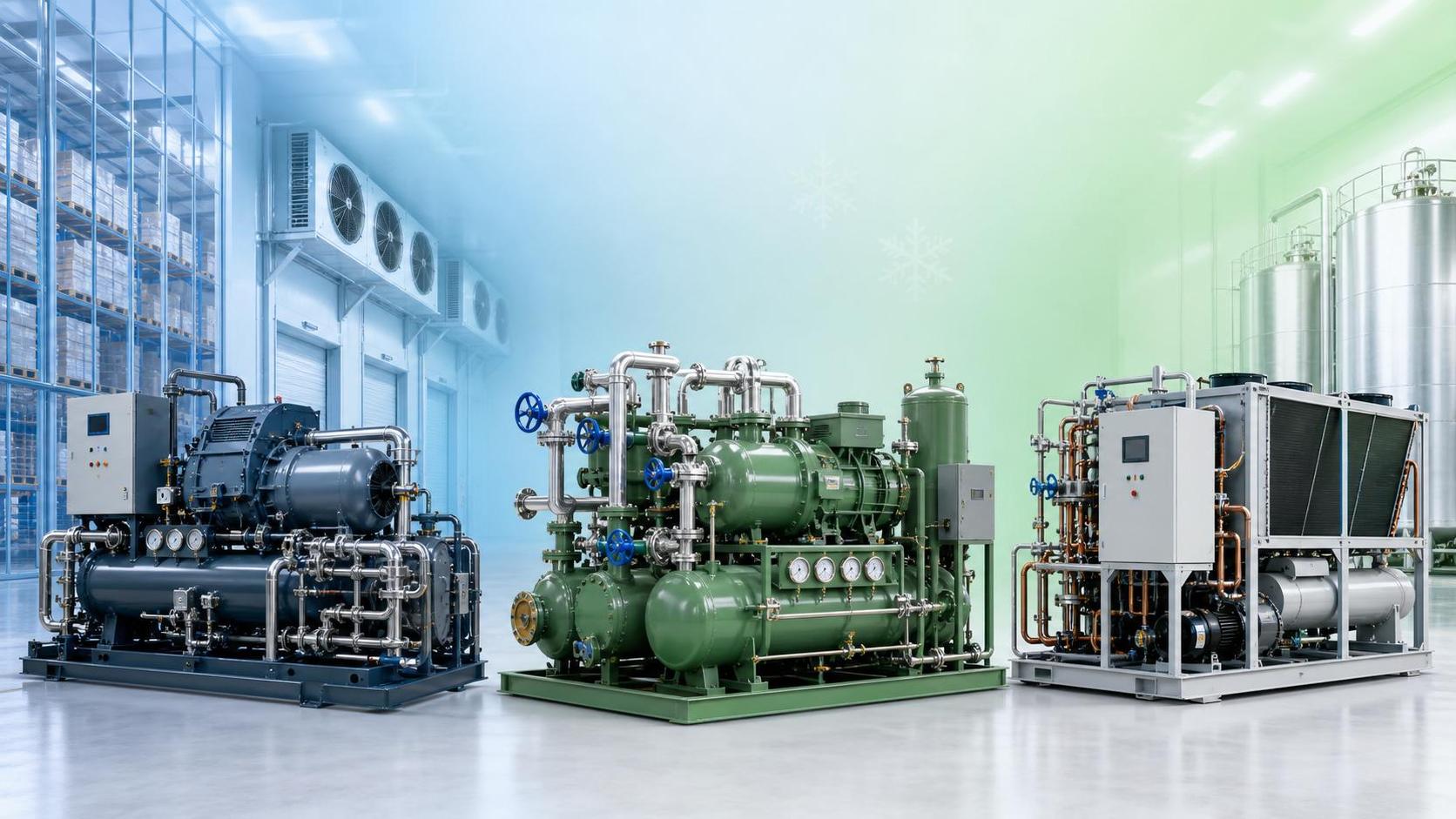
Natural refrigerants are often discussed as a single category, but their physical properties lead to fundamentally different engineering choices. The comparison below is not a substitute for a detailed hazard review or local code assessment. It is a practical starting point for narrowing the field.
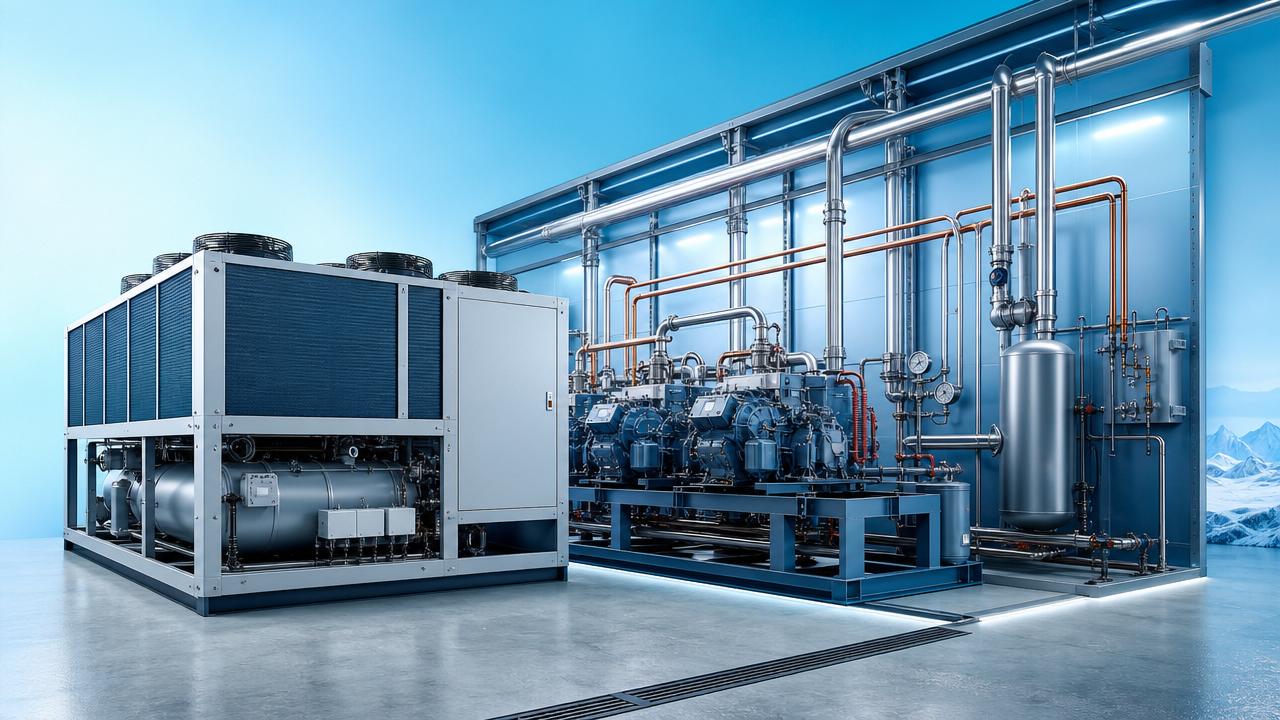
Ammonia remains a serious option where the load is substantial, the site can support industrial refrigeration practices, and the operator is prepared to manage its safety responsibilities. It is often evaluated in pumped, low-charge, packaged, or secondary-loop configurations. The latter can reduce refrigerant inventory in occupied or production areas, although the secondary fluid introduces pump energy and temperature approach penalties that should be included in the system model.
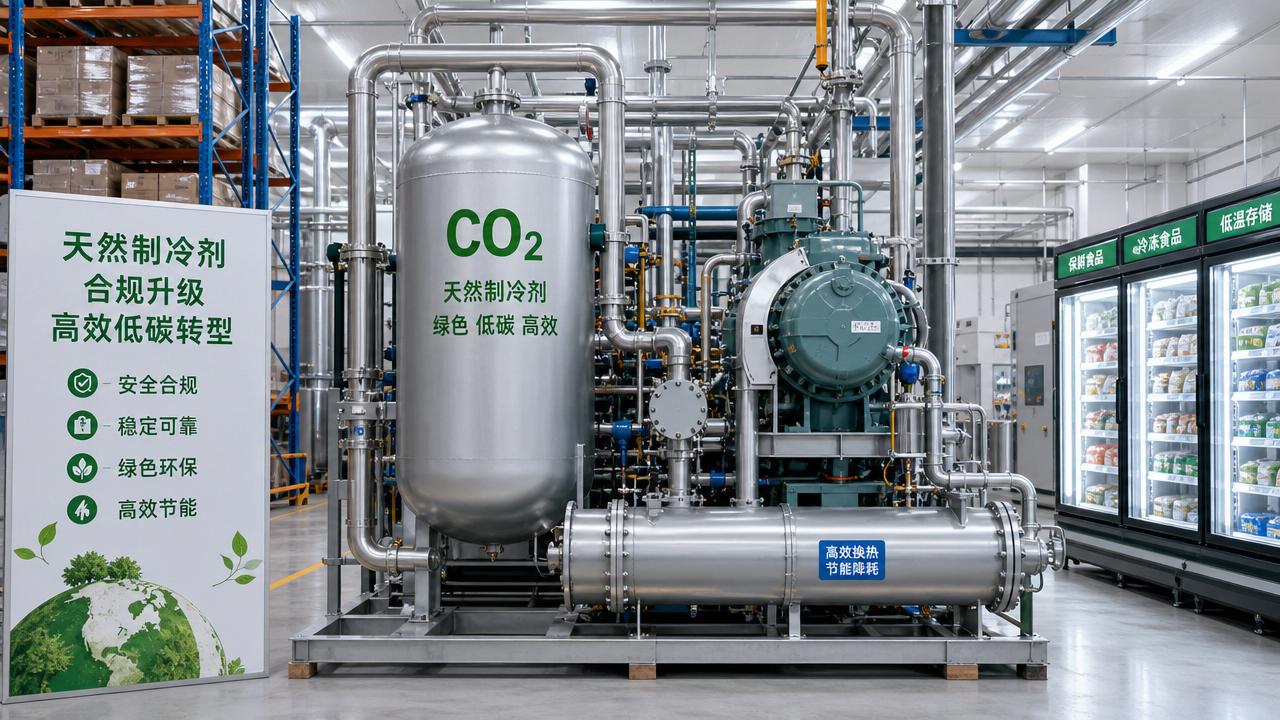
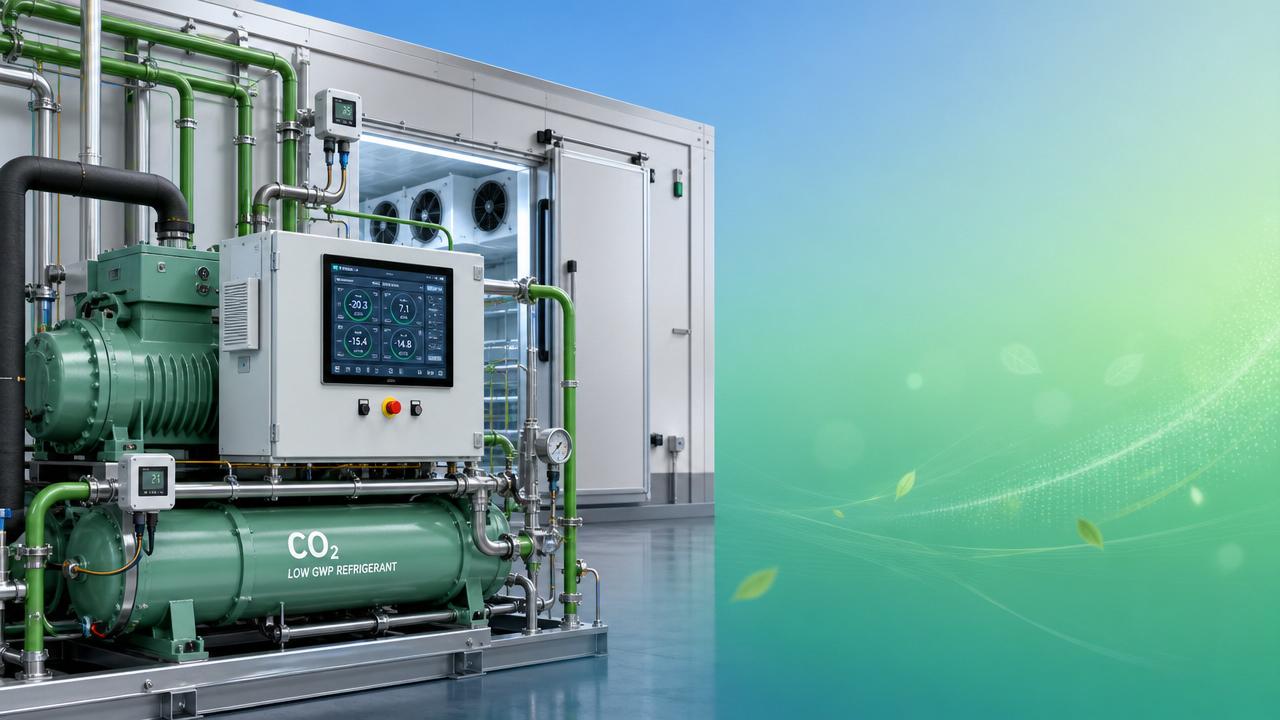
CO2 is increasingly relevant where refrigeration expertise overlaps with cold storage, food logistics, and low-temperature process duties. Yet a CO2 transcritical system should not be selected from a low-ambient performance point alone. The local design ambient, annual temperature distribution, gas-cooler approach, high-pressure control logic, and available heat-rejection options all matter. In warm climates, adiabatic assistance, parallel compression, ejectors, or other architectural measures may be considered, but their value depends on the operating profile rather than the presence of a feature on a quotation.
Hydrocarbon systems can be compelling when a packaged chiller can be located appropriately, refrigerant charge is controlled, and site safety arrangements are designed from the outset. They are not merely “small-system refrigerants.” But their feasibility is inseparable from the installation environment. A rooftop location, isolated enclosure, or well-managed equipment yard may lead to a very different risk assessment than a unit inside a busy production hall.
Temperature Level and Heat Rejection Determine Real Efficiency
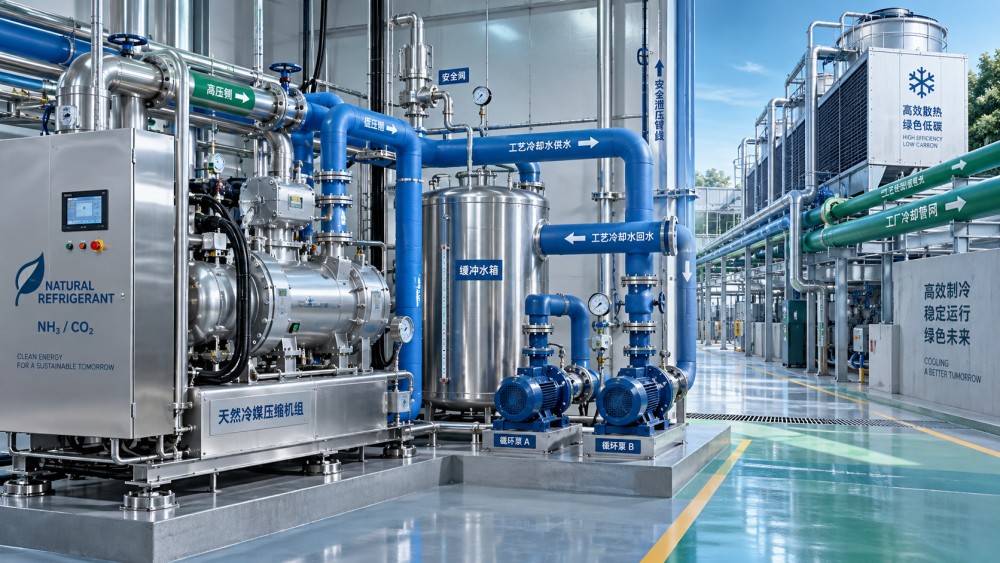
A reliable evaluation starts by mapping the evaporating and condensing—or gas-cooling—conditions that the equipment will experience, rather than relying on a single published coefficient of performance. Every unnecessary temperature lift costs energy. If a process needs water at a moderate temperature, forcing the refrigeration system to provide a much colder supply “for margin” can create a permanent energy penalty. Conversely, selecting a warmer supply temperature without confirming the process heat exchanger and flow conditions can compromise product quality or cycle time.
The heat-rejection side deserves equal scrutiny. Air-cooled equipment simplifies water management but is exposed to ambient peaks, coil fouling, recirculation, and fan energy. Evaporative or water-cooled systems may improve condensing conditions, but they bring water treatment, freeze protection, hygiene procedures, and maintenance obligations. Where a plant has simultaneous heating demand, recovered condenser heat can alter the lifecycle economics. This should be modeled against realistic heat demand timing; recovered heat that cannot be used has little operational value.
Part-load behavior is often more decisive than full-load performance. Variable-speed compressors, fans, and pumps can improve matching between refrigeration output and process demand, but only when the control sequence avoids unstable hunting or unnecessary pressure lift. Technical reviews should ask for expected operating maps, not just a single rating condition. They should also examine how the system behaves during low-load nights, sudden production restart, high-ambient afternoons, and defrost or oil-management events where applicable.
Reliability Is an Architecture Question
Many cooling projects treat redundancy as a simple N+1 compressor decision. That can be inadequate. A redundant compressor does not protect the process if the single controller, circulation pump, electrical feeder, heat-rejection fan bank, or communication network remains a common point of failure. The level of resilience should match the process consequence. Some plants can schedule a repair; others need safe shutdown, short-term thermal ride-through, or continued operation through a component failure.
Thermal storage can be useful where load peaks are short, electricity tariffs vary, or a process needs a controlled bridge during transfer to standby equipment. Ice storage is particularly relevant in some high-load applications, though it must be assessed as part of the overall temperature requirement. A process requiring tight, above-freezing water control may benefit more from a properly sized buffer tank than from an ice-based strategy.
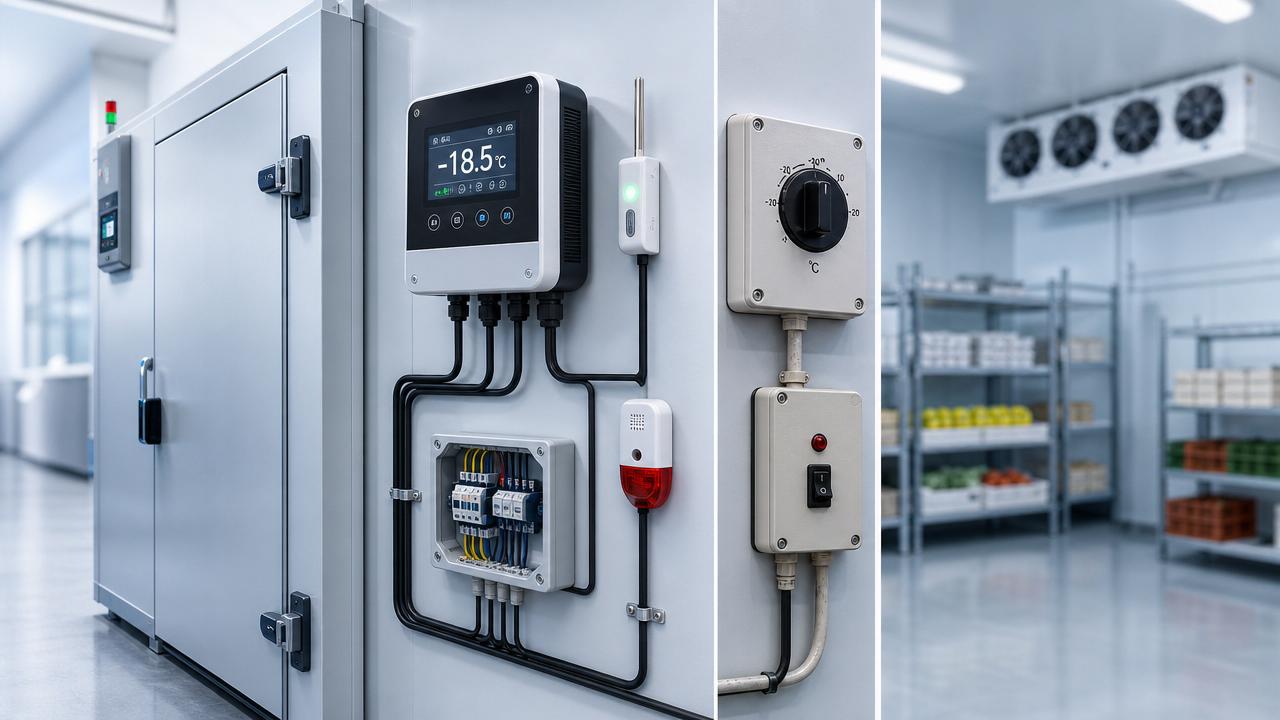
Instrumentation also has a direct reliability role. Supply and return temperatures, pressures, compressor operating limits, pump status, flow confirmation, leak detection, and alarm escalation should be designed around decisions operators can actually make. More data does not automatically mean better control. The priority is to identify a developing failure early enough to protect the load and to distinguish a sensor fault from a refrigeration fault.
Safety, Compliance, and Serviceability Cannot Be Deferred
Natural refrigerants reduce dependence on many high-GWP synthetic refrigerants, but they shift attention toward site-specific safety design. Ammonia requires careful toxic-release planning. Hydrocarbons require ignition-risk management. CO2 requires attention to pressure containment and potential accumulation in enclosed areas. Applicable building, pressure-equipment, electrical, fire, and refrigeration safety requirements differ by jurisdiction and by installation type. These should be reviewed before equipment layout is finalized, not after a purchase order has been issued.
The same discipline applies to refrigerant policy. F-gas restrictions and reporting obligations can affect replacement planning, export markets, and long-term service exposure, but their interpretation should be checked against the relevant local rules and the intended commissioning date. A technical evaluation team should request clarity on refrigerant charge, isolation strategy, relief discharge routing, detection, ventilation interlocks, and the documentation required for operation and inspection.
Service capability is sometimes treated as a commercial detail. It is not. Ask who will commission the controls, who stocks critical parts, what specialist tools are required, whether local technicians are trained for the selected refrigerant, and how remote access is secured. A technically elegant system is a poor operational choice if a routine fault becomes an extended shutdown because the site cannot obtain competent support.
Use Lifecycle Cost, Not Purchase Price, as the Decision Frame
The lifecycle comparison should include electrical consumption at representative load and ambient conditions, water and treatment costs where relevant, planned maintenance, refrigerant management, spare parts, operator training, expected replacement exposure, and the cost of lost process time. It should also recognize that not all risk has a simple monetary value. In a vaccine storage environment, a semiconductor line, or a food safety-critical process, temperature excursion risk may dominate a narrow energy-cost difference.
It is useful to require suppliers to state their assumptions in a comparable format: process temperatures, entering air or water conditions, glycol concentration, fouling allowance, compressor staging, auxiliary power, and whether quoted capacity is net of pumps and fans. Without this discipline, competing proposals can appear comparable while describing different duties. A lower initial price may simply exclude equipment, controls, or safeguards necessary for the specified site.
A Practical Selection Path
A disciplined selection process usually moves from process definition to a short list of feasible refrigerants, then to system architecture and site validation. The most productive technical workshop brings process engineers, facilities staff, EHS specialists, maintenance personnel, and controls representatives into the same discussion. Each sees a different failure mode: the process team sees temperature deviation, maintenance sees access and repair time, EHS sees hazard containment, and facilities sees power, water, and heat-rejection constraints.
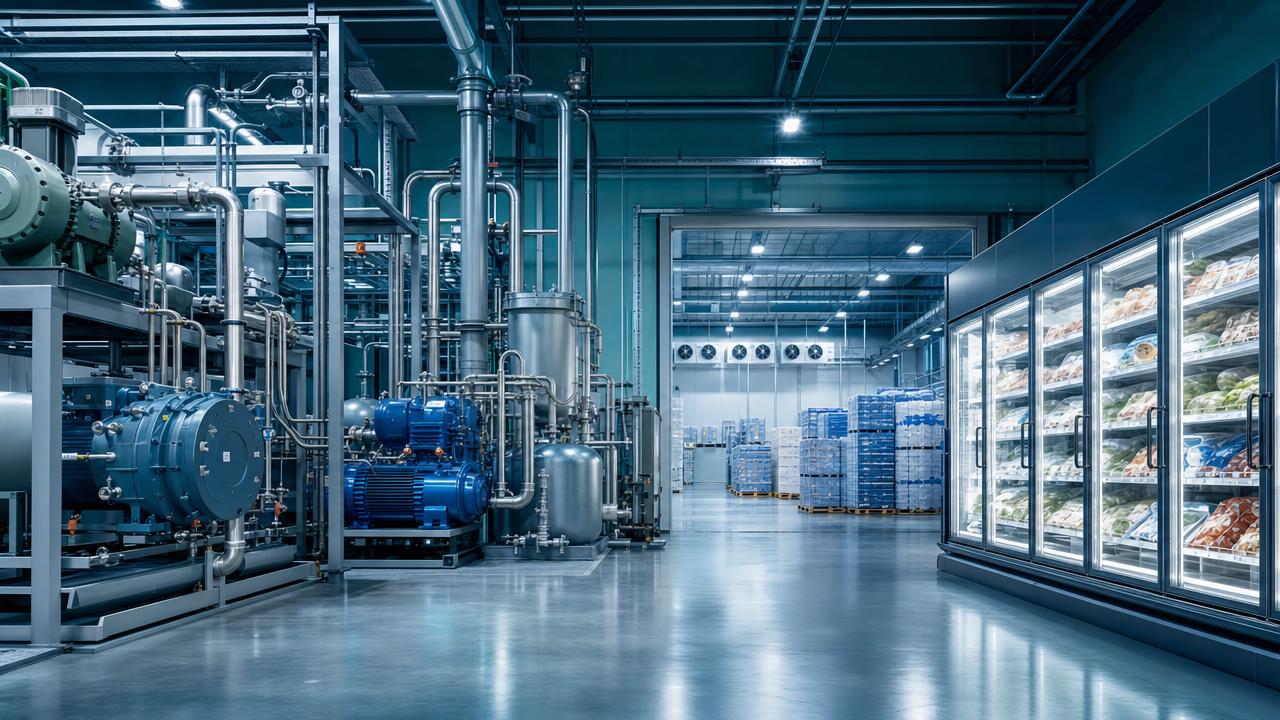
CCRS approaches this decision space through the connected realities of industrial chillers, cold-storage compressor systems, large-scale ice production, retail refrigeration, and ultra-low-temperature preservation. That broader view matters because process cooling rarely exists as a standalone thermodynamic exercise. A factory may also have recoverable heat demand, a cold-chain expansion plan, restricted roof space, unstable utility conditions, or future compliance obligations across several markets.
The final choice should be supported by a written duty schedule, a site layout and hazard review, transparent performance assumptions, and a commissioning plan that tests credible operating extremes. For natural refrigerant systems for process cooling, that level of preparation is not administrative overhead. It is how a low-impact refrigerant choice becomes a dependable source of temperature control when the process needs it most.
Recommended News
 Eco-Refrigerant & ComplianceF-Gas Regulations Are Changing Equipment Choices Faster Than ExpectedAnalyst :Dr. Henrik Weber
 Eco-Refrigerant & ComplianceEco-Friendly Refrigeration: What Looks Green but Performs Poorly?Analyst :Dr. Henrik Weber
 Eco-Refrigerant & ComplianceNatural Refrigerants: Are Compliance Benefits Worth the Transition Cost?Analyst :Dr. Henrik Weber
 Eco-Refrigerant & ComplianceWhat drives low carbon refrigeration adoption in 2026?Analyst :Dr. Henrik Weber
 Eco-Refrigerant & ComplianceEco-friendly cooling is changing compliance planning fastAnalyst :Dr. Henrik Weber
 Eco-Refrigerant & ComplianceLow carbon cooling trends that could reshape investmentsAnalyst :Dr. Henrik Weber
 Eco-Refrigerant & ComplianceHow F-Gas regulations are changing refrigerant decisionsAnalyst :Dr. Henrik Weber
 Eco-Refrigerant & ComplianceIs eco-friendly refrigeration worth the higher upfront costAnalyst :Dr. Henrik Weber
 Eco-Refrigerant & ComplianceWhy low carbon cooling is becoming a compliance priorityAnalyst :Dr. Henrik Weber
 Eco-Refrigerant & ComplianceLow carbon refrigeration options that cut long-term costsAnalyst :Dr. Henrik Weber
 Eco-Refrigerant & ComplianceWhat buyers miss when choosing eco-friendly refrigerationAnalyst :Dr. Henrik Weber
 Eco-Refrigerant & ComplianceWhy low carbon refrigeration is becoming a board issueAnalyst :Dr. Henrik Weber
 Eco-Refrigerant & ComplianceWhat F-Gas regulations mean for equipment choices in 2026Analyst :Dr. Henrik Weber
![]() Eco-Refrigerant & ComplianceIndonesia Launches Green Refrigeration Channel for R290 Cold CabinetsAnalyst :Dr. Henrik Weber
Eco-Refrigerant & ComplianceIndonesia Launches Green Refrigeration Channel for R290 Cold CabinetsAnalyst :Dr. Henrik Weber Eco-Refrigerant & ComplianceWhy low carbon cooling is becoming a safer long betAnalyst :Dr. Henrik Weber
 Eco-Refrigerant & ComplianceWhat makes eco-friendly cooling cheaper over time?Analyst :Dr. Henrik Weber
 Eco-Refrigerant & ComplianceF-Gas regulations are changing how cooling gets approvedAnalyst :Dr. Henrik Weber
 Eco-Refrigerant & ComplianceHow eco-friendly refrigeration cuts compliance riskAnalyst :Dr. Henrik Weber
 Eco-Refrigerant & ComplianceHow low carbon cooling cuts compliance risk in 2026Analyst :Dr. Henrik Weber
 Eco-Refrigerant & ComplianceLow Carbon Refrigeration: Compare Refrigerants, Energy Use, and ComplianceAnalyst :Dr. Henrik Weber
 Eco-Refrigerant & ComplianceEco-Friendly Cooling Options: Refrigerants, Efficiency, and Compliance ChecksAnalyst :Dr. Henrik Weber
![]() Eco-Refrigerant & ComplianceWhat Are Natural Refrigerants? Types, GWP Limits, and Where They Fit BestAnalyst :Dr. Henrik Weber
Eco-Refrigerant & ComplianceWhat Are Natural Refrigerants? Types, GWP Limits, and Where They Fit BestAnalyst :Dr. Henrik Weber Eco-Refrigerant & ComplianceEco-Friendly Cooling vs Conventional Systems: What Buyers Should Compare FirstAnalyst :Dr. Henrik Weber
 Eco-Refrigerant & ComplianceEco-Friendly Refrigeration vs Conventional Systems: Refrigerants, Energy Use, and ComplianceAnalyst :Dr. Henrik Weber
 Eco-Refrigerant & ComplianceLow Carbon Refrigeration: Key Standards, Refrigerant Options, and ROI FactorsAnalyst :Dr. Henrik Weber
 Eco-Refrigerant & ComplianceTemperature Control Standards for Food Storage: Critical Limits, Logging, and Audit ChecksAnalyst :Dr. Henrik Weber
 Eco-Refrigerant & ComplianceLow Carbon Cooling Options Explained: Refrigerants, Compliance, and System Trade-OffsAnalyst :Dr. Henrik Weber
 Eco-Refrigerant & ComplianceDigital Refrigeration vs Conventional Controls: What Improves Monitoring and Compliance?Analyst :Dr. Henrik Weber
 Eco-Refrigerant & ComplianceLow Carbon Cooling Options for Commercial Refrigeration: CO2, Ammonia, and Hybrid SystemsAnalyst :Dr. Henrik Weber
 Eco-Refrigerant & ComplianceLow Carbon Cooling Options Compared: CO2, Ammonia, and HFO Systems for ComplianceAnalyst :Dr. Henrik Weber
 Eco-Refrigerant & ComplianceIndustrial Refrigeration Systems Buying Guide: Lifecycle Cost, Efficiency, and ComplianceAnalyst :Dr. Henrik Weber
 Eco-Refrigerant & ComplianceEco-Friendly Cooling Options: Refrigerants, Energy Use, and Compliance Factors ComparedAnalyst :Dr. Henrik Weber
 Eco-Refrigerant & ComplianceNatural Refrigerants vs HFCs: How to Compare Compliance, Safety, and System DesignAnalyst :Dr. Henrik Weber
 Eco-Refrigerant & ComplianceHow to Read Specification-Oriented Product Guides for Refrigeration EquipmentAnalyst :Dr. Henrik Weber
 Eco-Refrigerant & ComplianceLow Carbon Refrigeration Options for Supermarkets: CAPEX, Energy Use, and Compliance ComparedAnalyst :Dr. Henrik Weber
 Eco-Refrigerant & ComplianceRACC 2026 to Host PFAS Compliance Briefing in HangzhouAnalyst :Dr. Henrik Weber
 Eco-Refrigerant & ComplianceEPA Rule Challenge Raises HFC Supply Chain ConcernsAnalyst :Dr. Henrik Weber
 Eco-Refrigerant & ComplianceLow Carbon Refrigeration Systems vs Conventional Setups: Which Delivers Lower Lifecycle Cost?Analyst :Dr. Henrik Weber
 Eco-Refrigerant & ComplianceLow GWP Refrigeration Explained: Refrigerants, Regulations, and System Trade-OffsAnalyst :Dr. Henrik Weber
 Eco-Refrigerant & ComplianceLow Carbon Refrigeration Systems Retrofit: When to Upgrade and Which Changes Matter MostAnalyst :Dr. Henrik Weber